Category Archives: Running

Wet weather finds in the fynbos

The weather and our travel arrangements have played against the Fynbos Blog for the last couple of weeks.  We are in Ireland for a short holiday visiting friends and family.  The Cape may seem green in winter but nothing compares to the overwhelming lush greenness of the Irish countryside.  

Meanwhile in the Cape everything flowering and especially the bulbs seems to thrive in the wet wet weather. At this time of year the Arum lilies line the roads whereever there is a bit of damp or water. I have never seen them more prolific than this year – the verges are shining with white trumpets set in the glossy greenness of their leaves. Extraordinary that this magnificent flower should be so very common here.

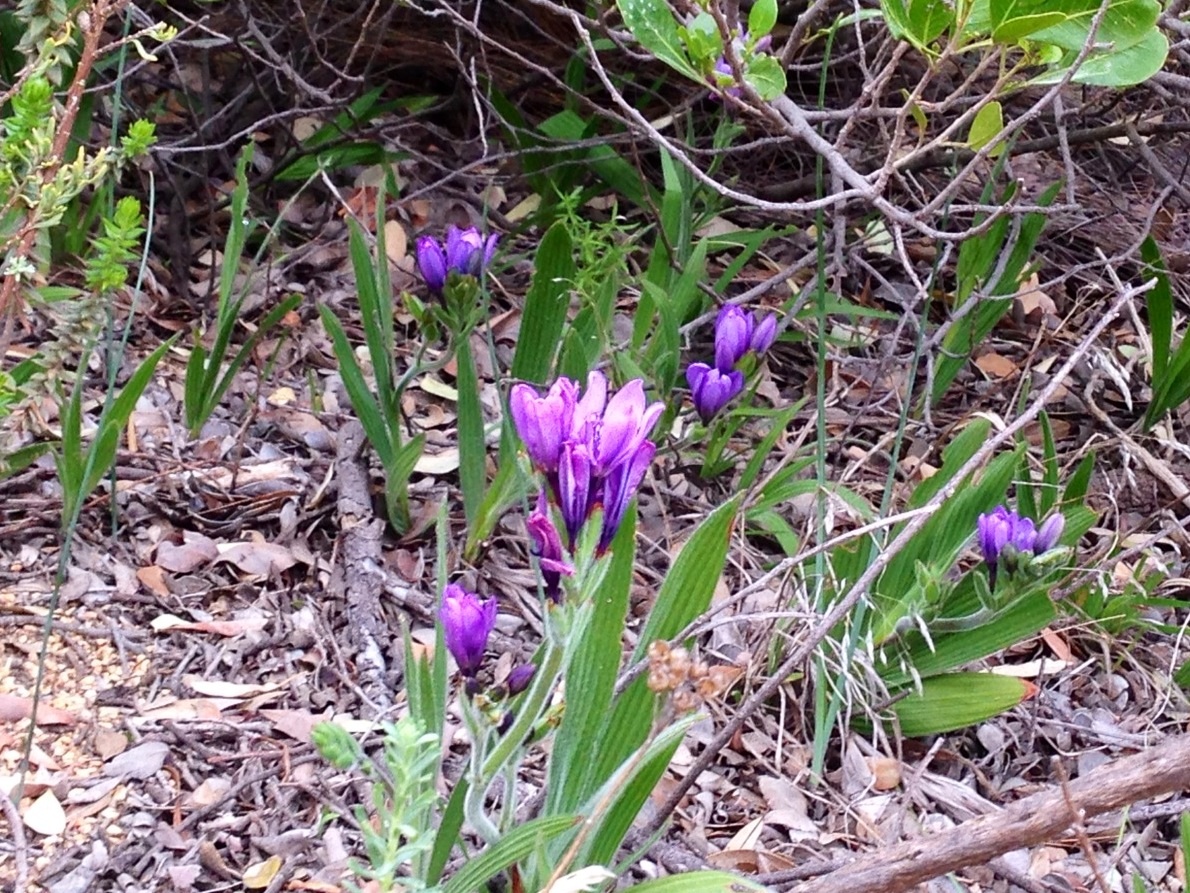
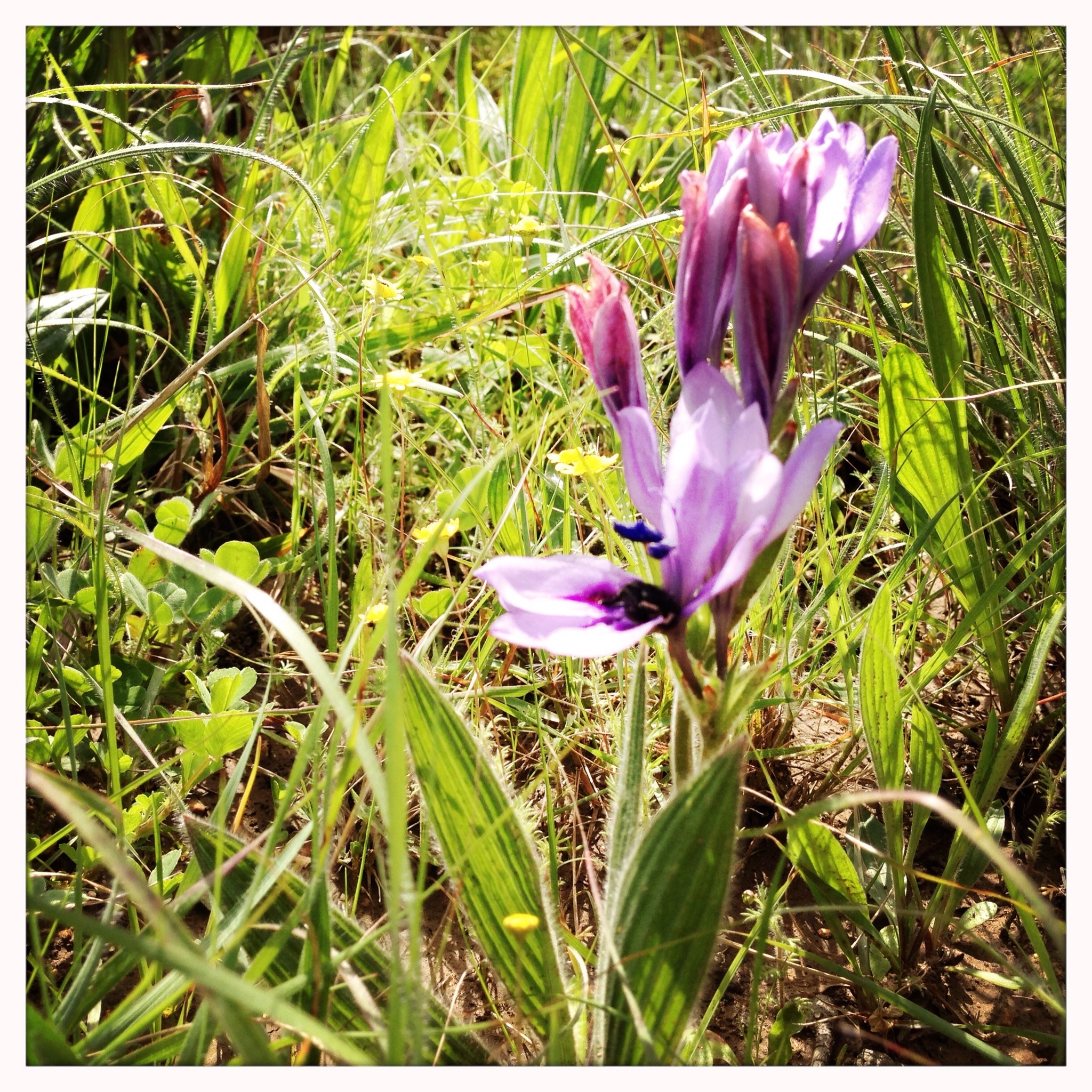
Before we left I did manage to go up to the top of the farm between the torrents of rain and of course were new and exciting flowers to photograph, even though we only had a few minutes.  The Babinia fragrens is everwhere, like all the bulbs it is loving this wet spring and the blue flashes are everywhere.
Babinia fragrens

Babinia fragrens

I haven’t been able to identify this rather tatty yellow flower – it may not be looking its best after the rain but the honeybee doesn’t seem to mind.  The leaf shape is very distinctive but I can’t make a certain identification in the books anything that looks similar seems to belong in sandy flats while we have sandstone and granite slopes so it is the wrong habitat.
Unidentified yellow flower

Unidentified yellow flower

Meanwhile this lovely white flower is scattered all over the lower lands.  This is a very common garden flower and I always thought it was Osteospermum but the book calls it Dimorphoteca nudicalus.
Dimorphoteca nudicalis

Dimorphoteca nudicalis

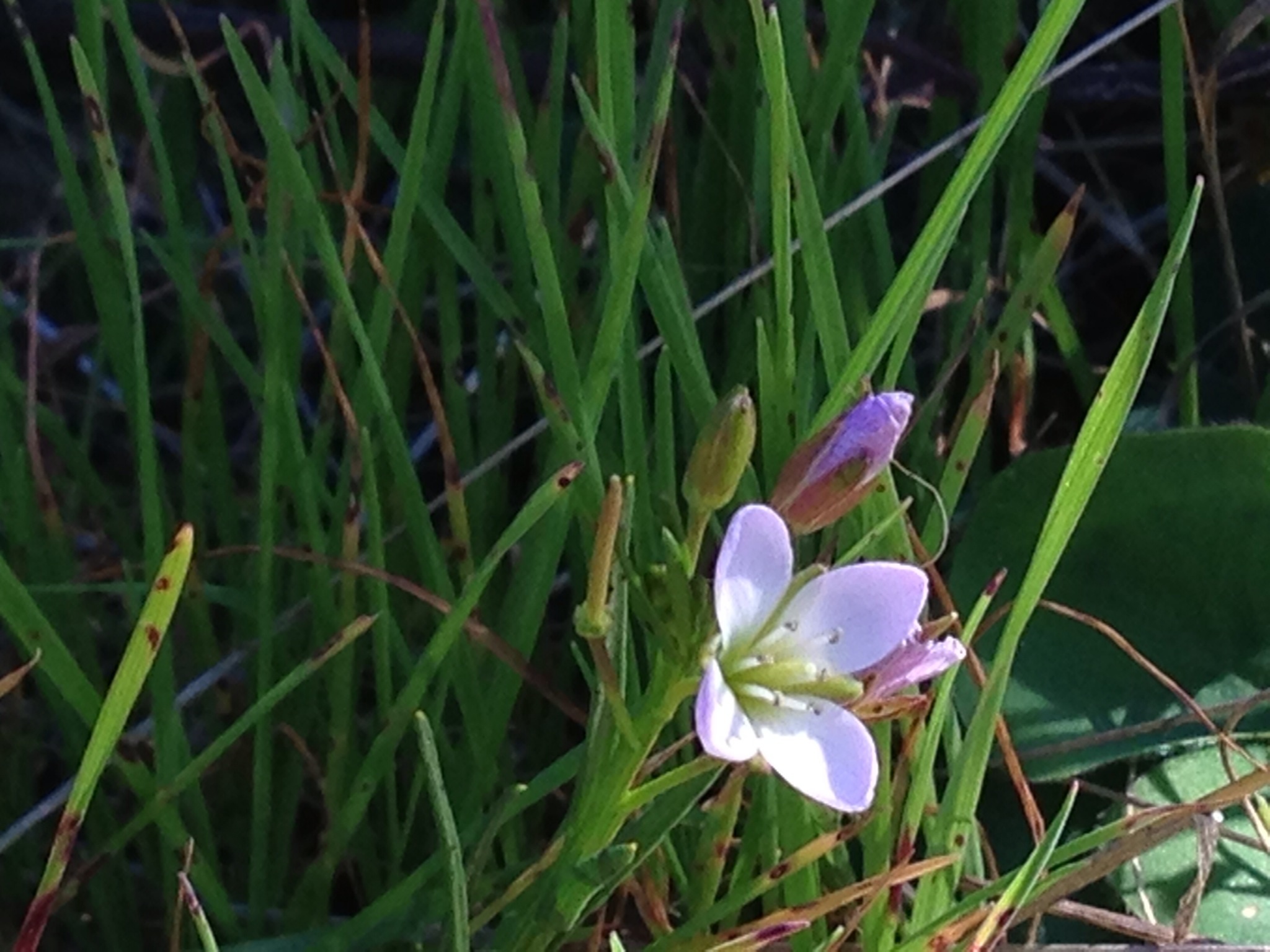
It’s exciting when we make a clear identification of an old and frequently seen friend and this one is Geissorhiza ovata – we see it all over the farm, it’s a stunning fynbos bulb that puts out this little white stars.  There are 80 fynbos subspecies of Geissorhize so I hope we find more of these charming flowers.
Geissorhiza ovata

Geissorhiza ovata

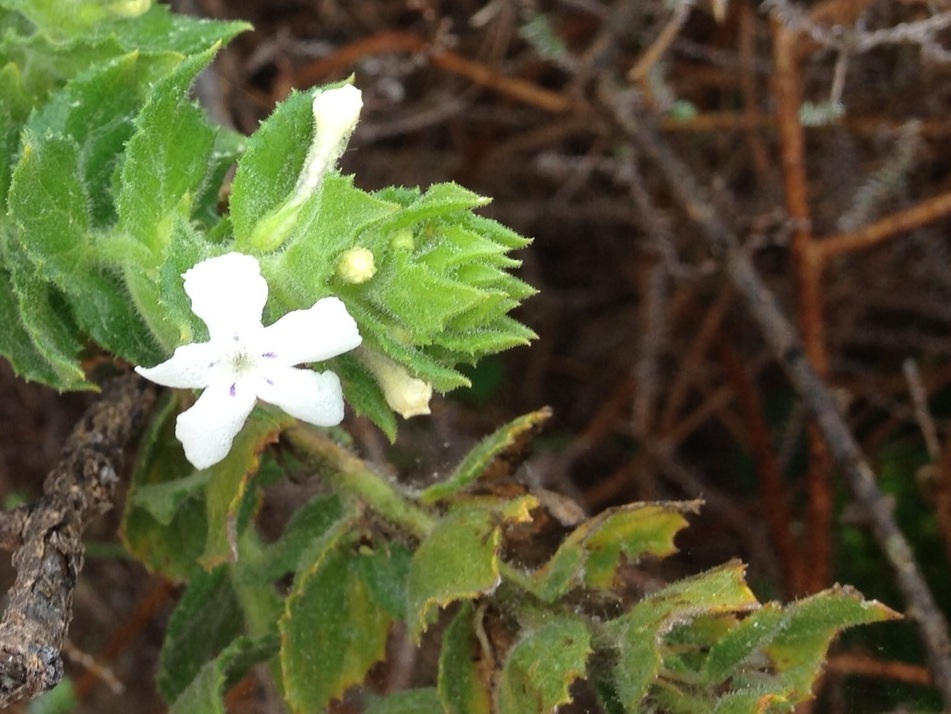
Another very summer flower is this Cyphia volubilis, a twining perennial creeper which is very common all over the farm.  The delicate pretty white flowers are everywhere at the moment, often woven in to the depths of shrubby fynbos, so although they are common, they are not so easy to photograph and this was a lucky shot in good light.  The flowers themselves are quite small, about the size of my thumbnail, or just a little bigger.
Cyphia volubilis

Cyphia volubilis

We ran out of time and had to get back to pack for Ireland.  The weather has been appalling since we left, so we wouldn’t have much to photograph and I’m hoping that some warmth and sunshine might arrive which will cause a profusion of flowering in perfect time for our return next week.  Meanwhile I am hoping to put up some new pages with collections of some of the larger groups of subspecies.

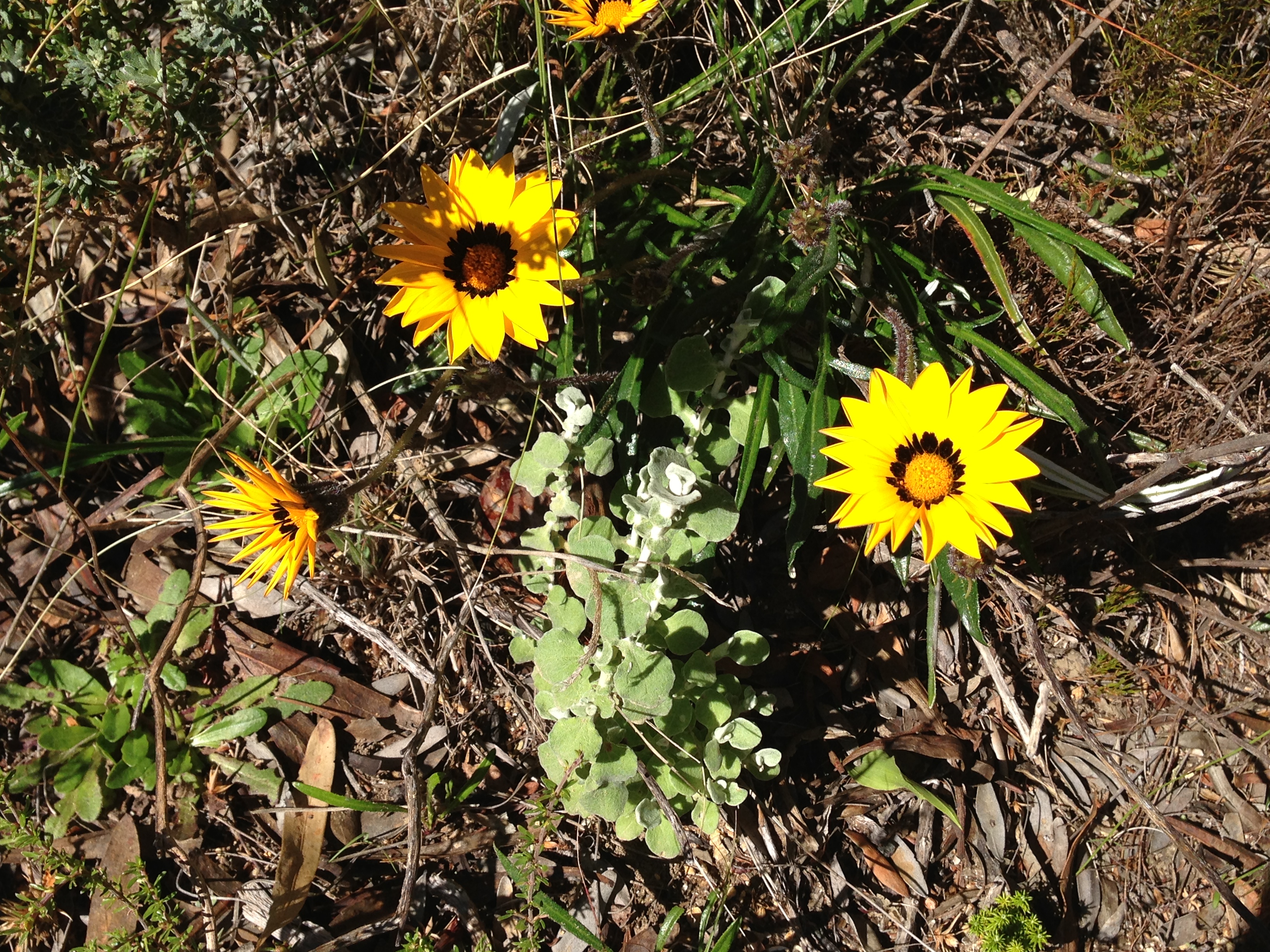
Flower of the Day: Gazania rigida

Gazania rigida, found growing along the road right at the top of the farm.  This is very easy to identify unlike so many yellow daisy-like flowers because of the black marks at the base of the petals and the distinctive leaves and petals.  Note the helichrysum growing with it – helichrysum is flourishing all over the place at the moment.  It flowers in summer and we’ll see lots of it then.

Thanks to everyone who viewed the blog as a result of hearing about the blog on 567 Cape Talk.  It was exciting to have such an huge reaction to a few seconds on air and wonderful to see so much interest in our fynbos heritage.  Very motivating to keep getting up that mountain and photographing these wonderful flowers.

Gazania rigida; with Helichrysum growing alongside

Gazania rigida; with Helichrysum growing alongside

Salvias, Gazanias and other interesting things

We had a fabulous weekend of running, the dogs and I.  First of all because as it was the weekend we could set off later in the day and have better light for photos.  All this running has helped with fitness so I’ve been bounding up the mountain and really enjoying running.  It’s a great feeling.  And then we STILL see something new every time. I can never believe that we will – especially if I’ve seen two or three really interesting new flowers the previous day.  Suddenly to see half a dozen more because we take a slightly different route, or I just open my eyes or look left rather than right and there it is, something completely new.

Like this Salvia africana-caerulea – I really love this photo, because it is a perfect record of the shrub which makes it very easy to identify correctly.  And then you can see Seamus in the distance, making his way up the mountain while I stop for yet another picture.

Salvia africana-caerulea

Salvia africana-caerulea

It was windy on Saturday and Seamus loves the wind – here he is standing in his very favourite spot on the farm, holding his face up to the wind blowing off the mountain.

Seamus enjoying the wind

Seamus enjoying the wind

Then we came across this which I think is a Gazania rigida – again the leaves are right and the description of the dark and hairy involucre fits.  That’s the dark splashes at the bottom of the petals in layman’s terms.  Stunning flowers.

Gazania rigida

Gazania rigida

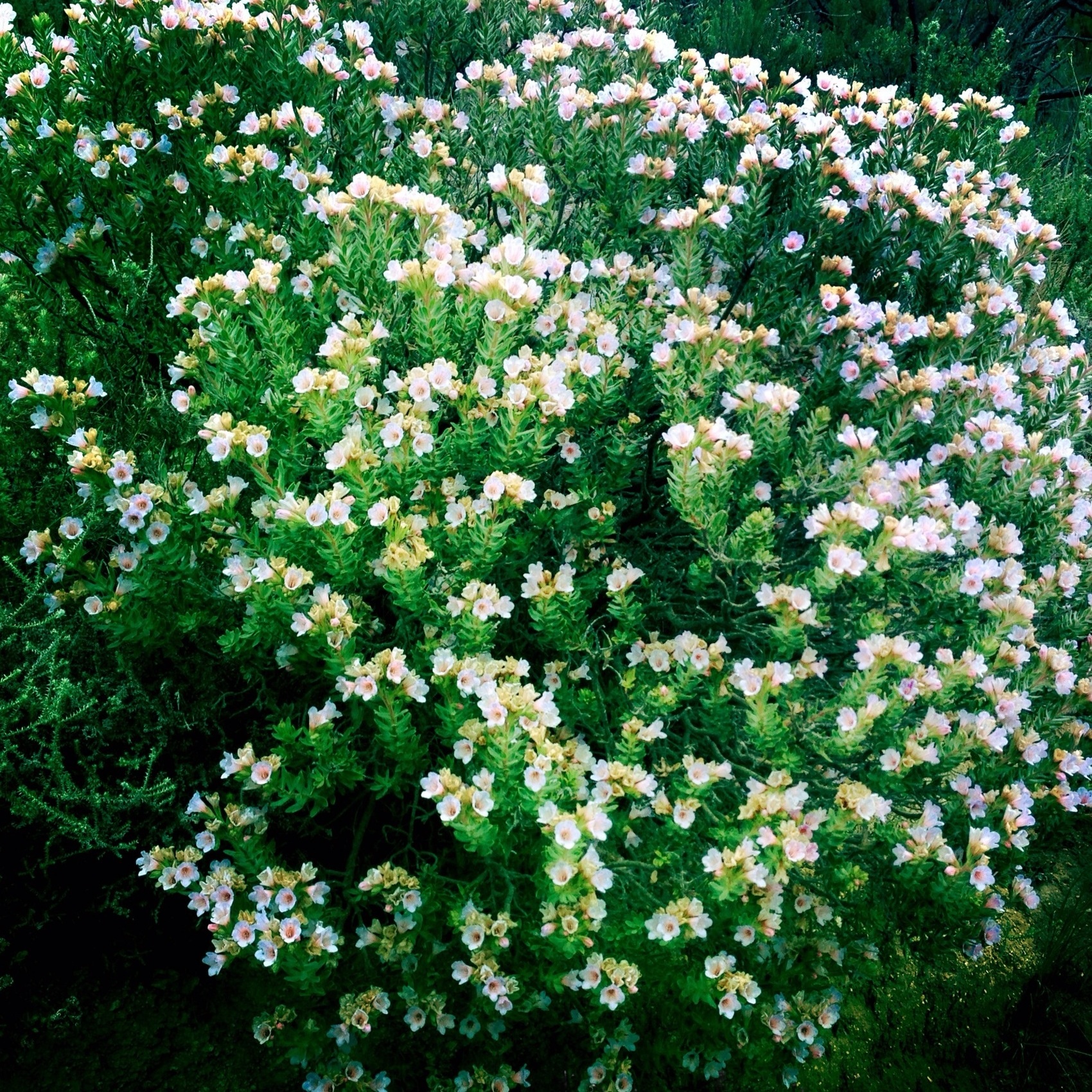
This little lilac and white flower isn’t a bulb but grows on a shrub, I haven’t found it at all in the books so it’s gone in the “unidentified folder” in the hopes that further research will reward us with some names.  Very pretty and the little shrub is covered in them, so I imagine it’s quite a common garden plant – if anyone knows it, please comment.

Unknown flowering shrub

Unknown flowering shrub

I thought the Oxalis had done their thing.  They are still with us – their flowering season is wonderfully long.  Then suddenly the whole farm is covered in these peach coloured Oxalis which are absolutely charming.  I think it might be Oxalis obtusa though it is hard to be certain.
Oxalis obtusa?

Oxalis obtusa?

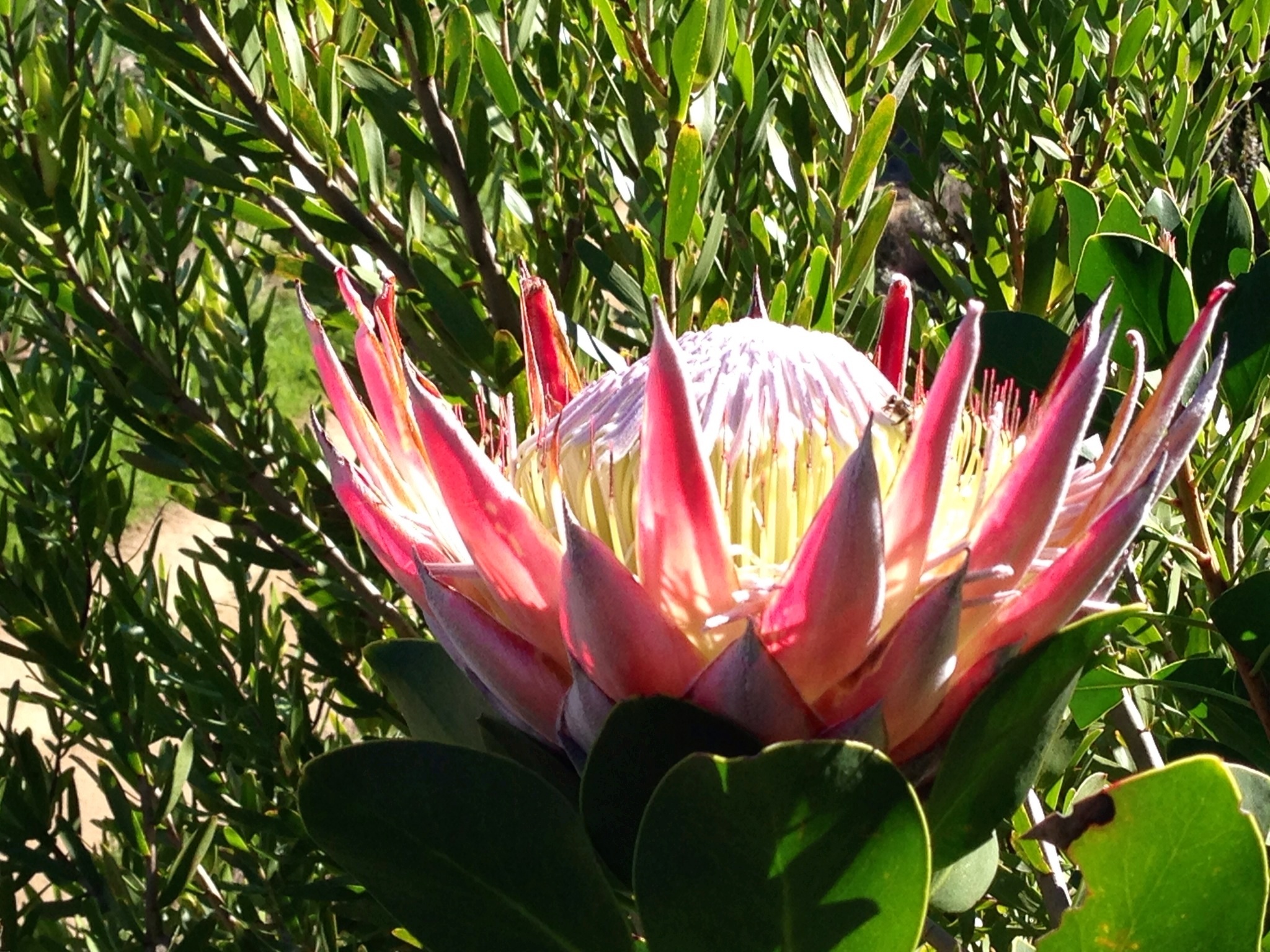
The magnificent King Protea is in flower and I’ve already posted it as “Flower of the Day”.  Here’s a different photo – note the bee – the absolutely love the proteas.  We have a wonderful relationship with a local beekeeper who puts hives on the farm and makes fynbos honey.  That’s what he pays us in and we have a constant supply of delicious honey from the farm.

Protea cynaroides - The Kind Protea

Protea cynaroides – The Kind Protea

When I saw this pink shrub I thought it was an Erica with particularly profuse flowers.  But it looks very like Muraltia scoparia, a purple gorse that grows on the West Coast.  That makes it very unlikely that it grows here.  When I get out next I shall investigate and verify.  It is amazing.

Muraltia scoparia

Muraltia scoparia

As I came back from looking at the pink shrub, I came across this pea-like flower with distinctive white tufts.  It’s quite low growing and discrete and grows in an area where Peter has cleared the alien trees from the riverbed above the waterfall.  I think it is probably a little Polygala though I’m not sure which one. It is very distinctive so when I do find it we’ll be able to identify it clearly.

Polygala?

Polygala?

A spell of good weather and a burst of new flowers

It has been a gorgeous week on the mountain, with new flowers popping up all over the place.  We had a damp start and one morning when it was too wet to run but the dogs and I have had several stunning runs all over the farm and this morning’s weather is glorious so as soon as this blog is finished we’ll be out there again.  Next week we are expecting a big storm and our running might be curtailed, so this weekend we are keen to do as much as possible.  Poor Jemima Chew is limping and on anti-inflammatories so she can’t come and howls in outrage when we leave.  They would go in any weather; for my part I don’t mind the damp mist at all but the pouring rain is not my thing.
Talking of being rained under I’m deluged with work at the moment so haven’t had much time for research.  Luckily some things just jump out of the book – instantly and clearly recognisable and this is one of them.   Oftia africana, widely dispersed throughout the Cape and apparently flowers all year round though seems to prefer the spring flowering here on the mountain.  it is coming out all over the place.
Oftia

Oftia

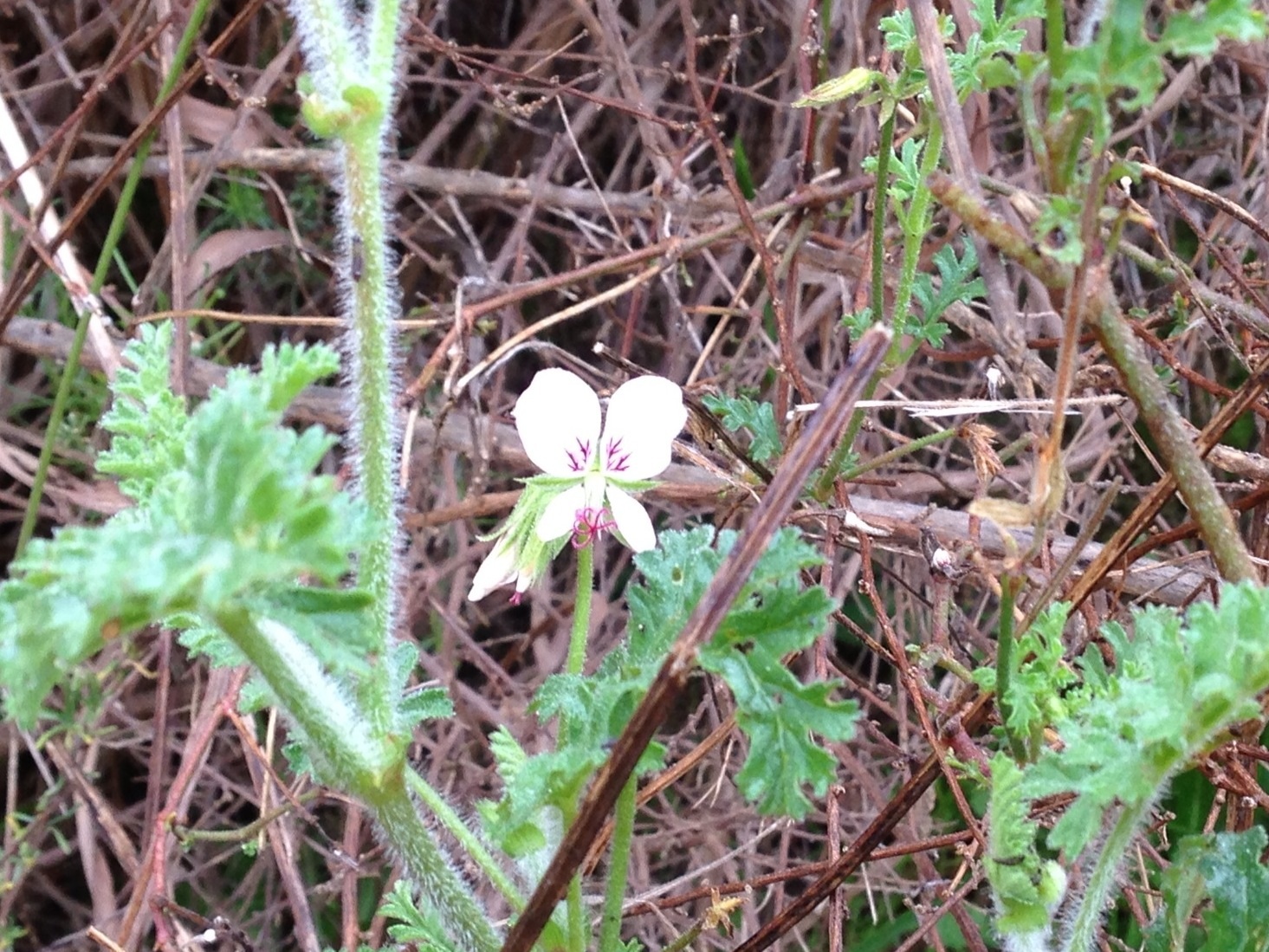
Pelargoniums and Babinias are also everywhere, the latter flowering decorously in groups under trees and the former peeping out from thick undergrowth along the roads.
 image
image
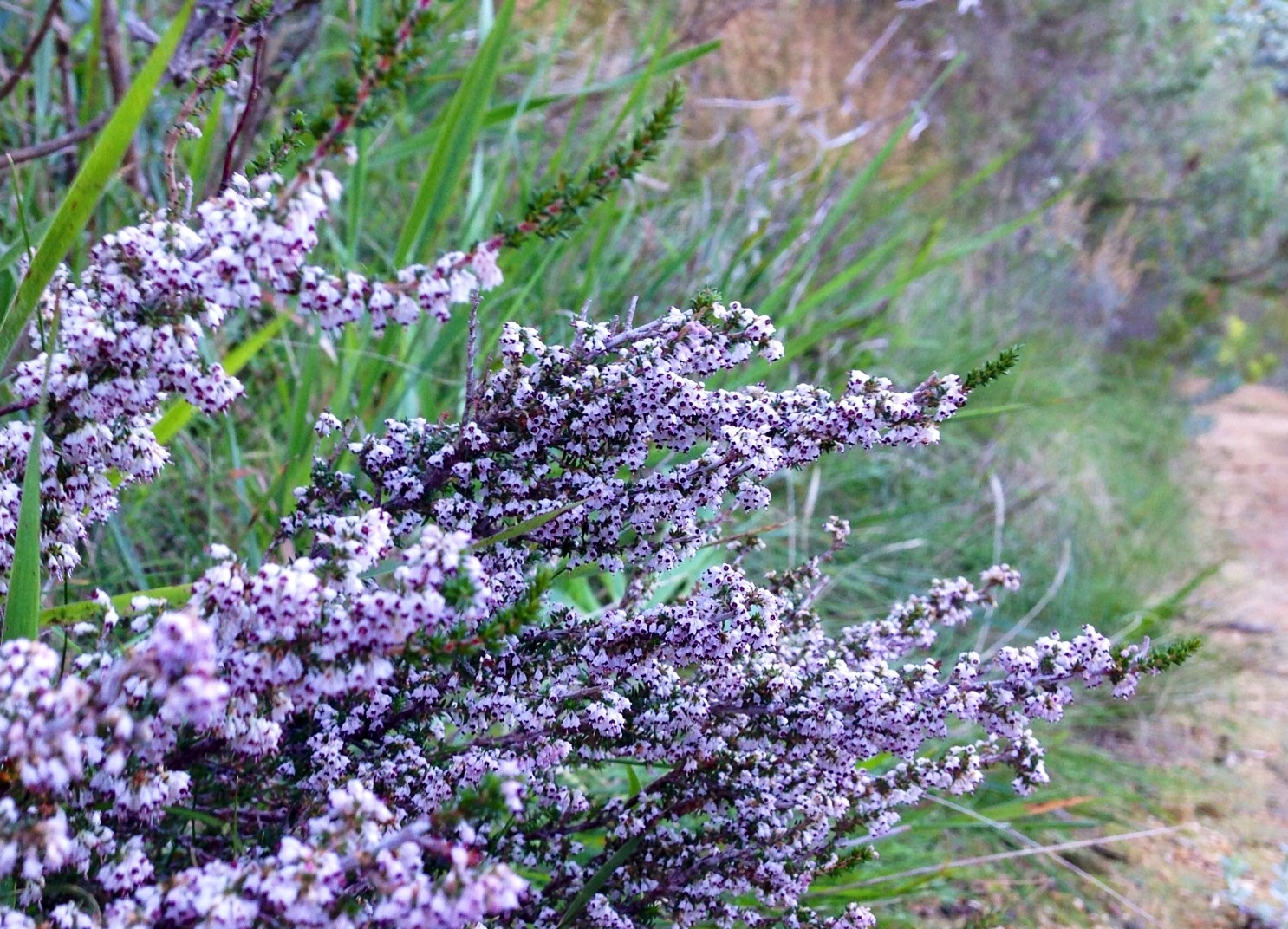
As we climbed up the mountain we saw this Erica with tiny white bells on it, despite my best efforts you can only just see them in this picture.  The same variety seems to come with pink bells as well and sometimes they grow side by side
Erica with tiny white bell-like flowers

Erica with tiny white bell-like flowers

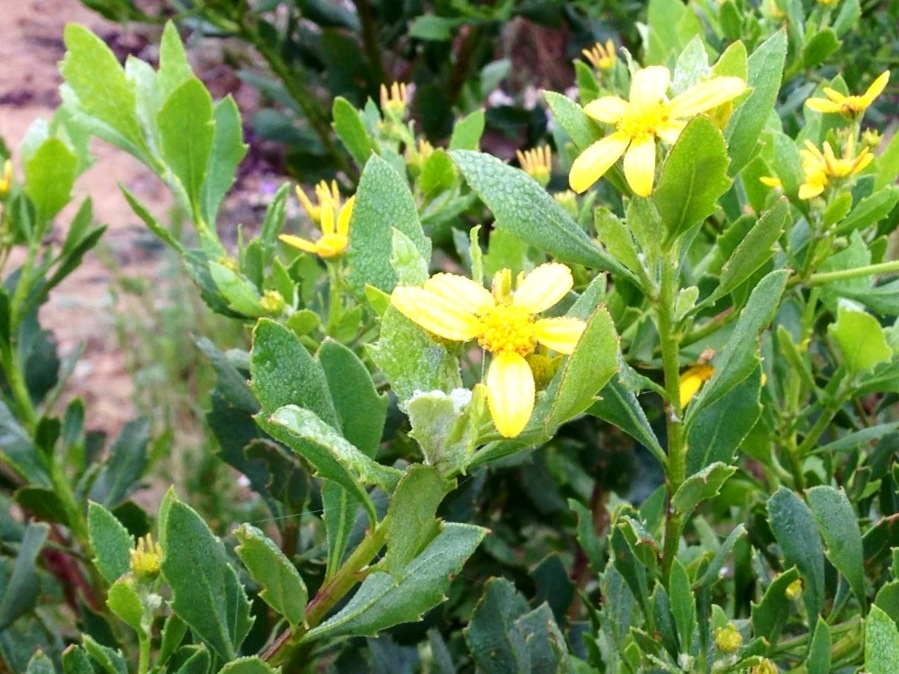
I can’t find this shrub with a yellow flower in the book so its gone to the unknown album and I’m hoping to get to Kirstenbosch Botannical Gardens this week or next to get some help with these and possibly some additional reference books in preparation for the continued spring explosion.
Unidentified yellow flowering fynbos shrub

Unidentified yellow flowering fynbos shrub

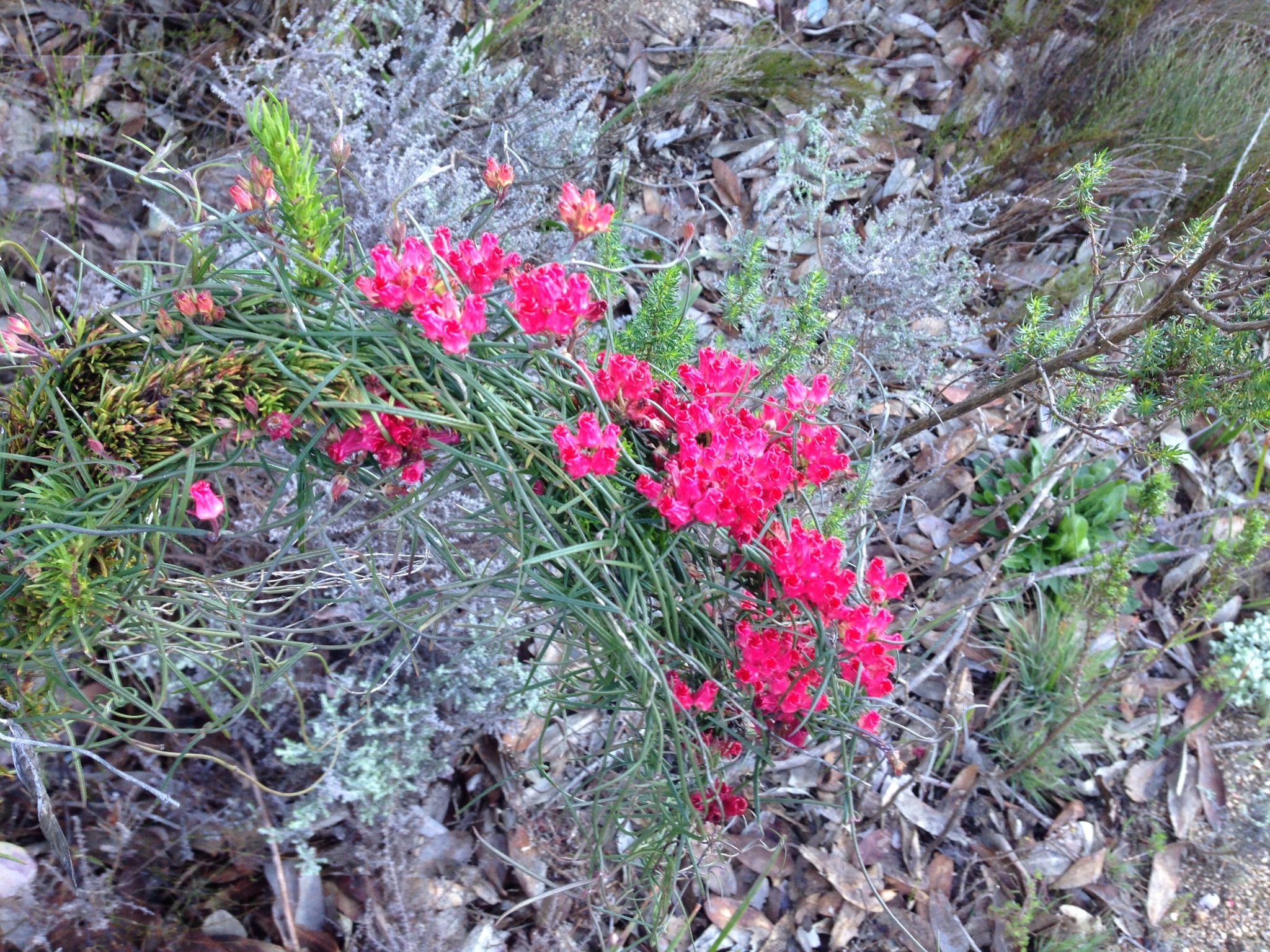
There is no difficulty recognising the Microloma tenuifolium, it’s tiny bright coral flowers jump out of the tangled thickets at you.  Normally you see them like this one curling and creeping around a wild helichrysum.
Microloma tenuifolia

Microloma tenuifolia

But yesterday we saw this unusual sight, the Microloma has gone and wound itself round and round this bit of bush and is flowering as a massive head of colour.  Amazing!
Microloma tenuiffolia

Microloma tenuiffolia

The Lobostemum continues to blossom all over the mountain, often they are pink, or pinky-blue.  In this particular area at the top of the farm they are all blue.
Lebostemum with blue flowers

Lebostemum with blue flowers

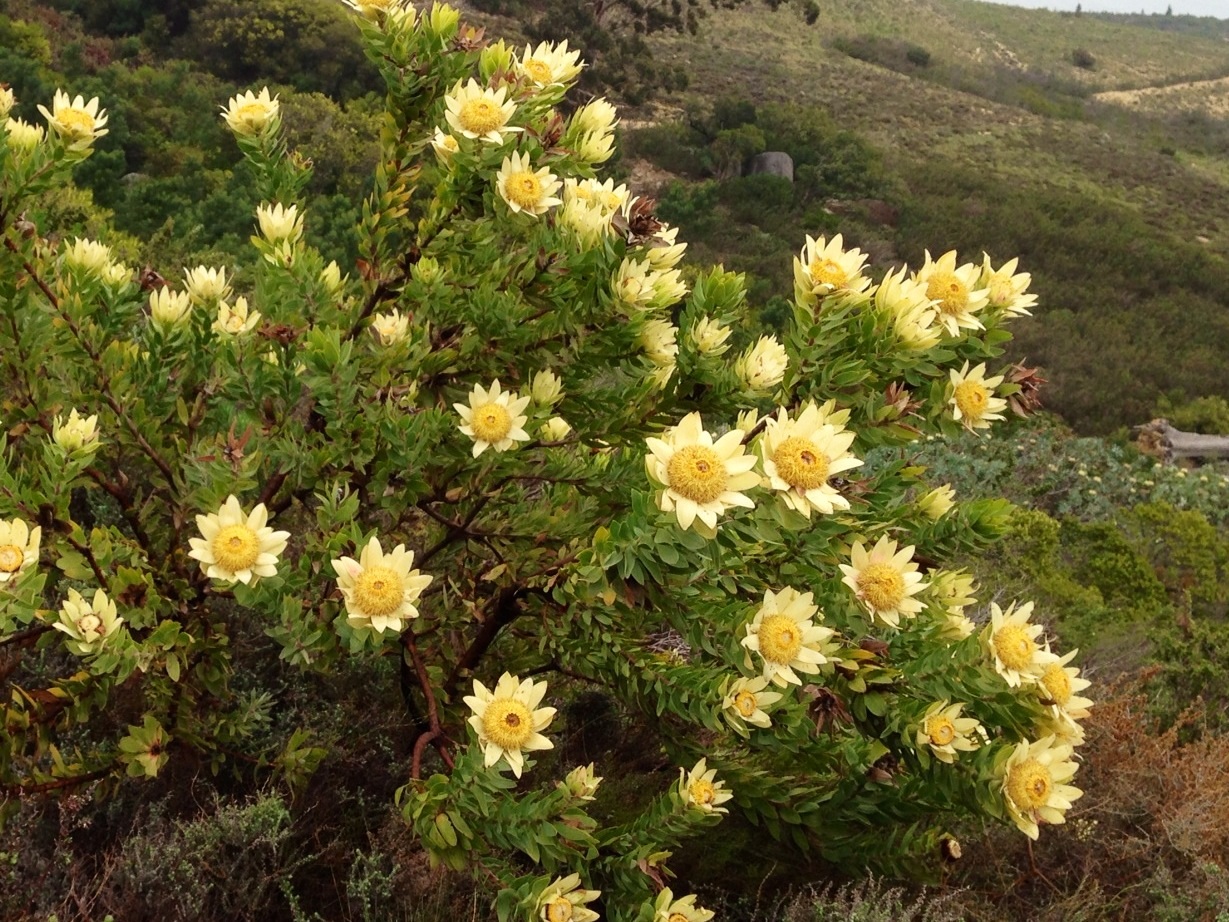
Finally as we ran down the mountain we came across this magnificent Lucodendrum.  Later in the spring these yellow flowers will turn the most beautiful shade of coral.  There are masses of them and we look forward to their arrival at the height of spring.
Leucodendrum

Leucodendrum

Recent Entries »