Tag Archives: Daisy

The colour of home


What a welcome home.  We arrived back from a 10 day trip from Europe and for once it was a holiday and not work, so instead of feeling shattered and grumpy we arrived to a perfectly glorious spring day, full of joy and looking forward to getting home to the farm and the dogs.  This evening, at sunset, I put on the running shoes and went out onto the mountain with the dogs.  Since we left it has poured with rain; it must have been one of the wettest August’s ever which might be a bit miserable but produces perfect conditions for the fynbos to flower.  The mountain has exploded into life since we left and we are in for a bonanza season.  Any reader of The Fynbos Blog who would like to visit the farm and do a ‘flower safari’ is welcome to contact us and we will welcome you.  We are in Paarl, the best time of day is sunset in good weather, though mornings are also good if we have time.   You must like dogs.

Tonight the sky was glorious with colour and for once I’ve posted a sunset shot as the headline picture.  All the photos on this blog are taken with my iPhone 5 and I’m so impressed with what it can do.  This shot is a view of the lights of Paarl, with Table Mountain 60 kilometres away dominating the skyline in the orange light.

Peter had been up to the weir earlier today and he took the new road by the waterfall.  As we set off he told me it was covered with tiny white flowers and we ran up that way to find the road, and indeed much of the farm covered with Hespertha and Geissorhiza ovate, they can look quite similar in a photo but are quite different in real life.  Another common flowering bulb in the lands at the moment is the Grass lily, Chlorophytum – I’m not quite sure which subspecies this one is.  When the plants are strong it looks like a tiny tree growing from the lily-like leaves.  

There are so many flowers at this time of year that it can be a struggle to comment on each of them.  Being on the mountain is amazing; it is covered in flowers; I post only the new things I see, or if I get a particularly lovely shot of an old friend.  I’ll group all the flowering bulbs together, they are always particularly lovely, and shrubs, daisies and so on separately.  

This is today’s collection – not all of which I have identified yet.


And some shrubs and daisies


A wet wet weekend

What better occupation on a rainy weekend than to go through all the flowers and spend some time researching those we haven’t yet identified. It’s been pouring with rain since yesterday morning, proper African rain causing floods and mayhem all over the province.  Minor mayhem here on the farm as Peter and I spent an hour trying to clear the weir, him in the river working on a valve that was stuck and me and the dogs providing moral support.  I can report that the new waterproofing that I applied to my raincoat works perfectly.  The dogs loved it, running in the rain, offering advice and admiration to Peter as dug and cleared the pipes and valves.

So it’s a good evening to catch up with some flowers that I haven’t identified or posted.

Like this Common Button Daisy or Cotula turbinata. It’s regarded as a weed in some places, but not on our mountain where it’s welcome to take all the space it needs.

Cotula turbinata

Cotula turbinata

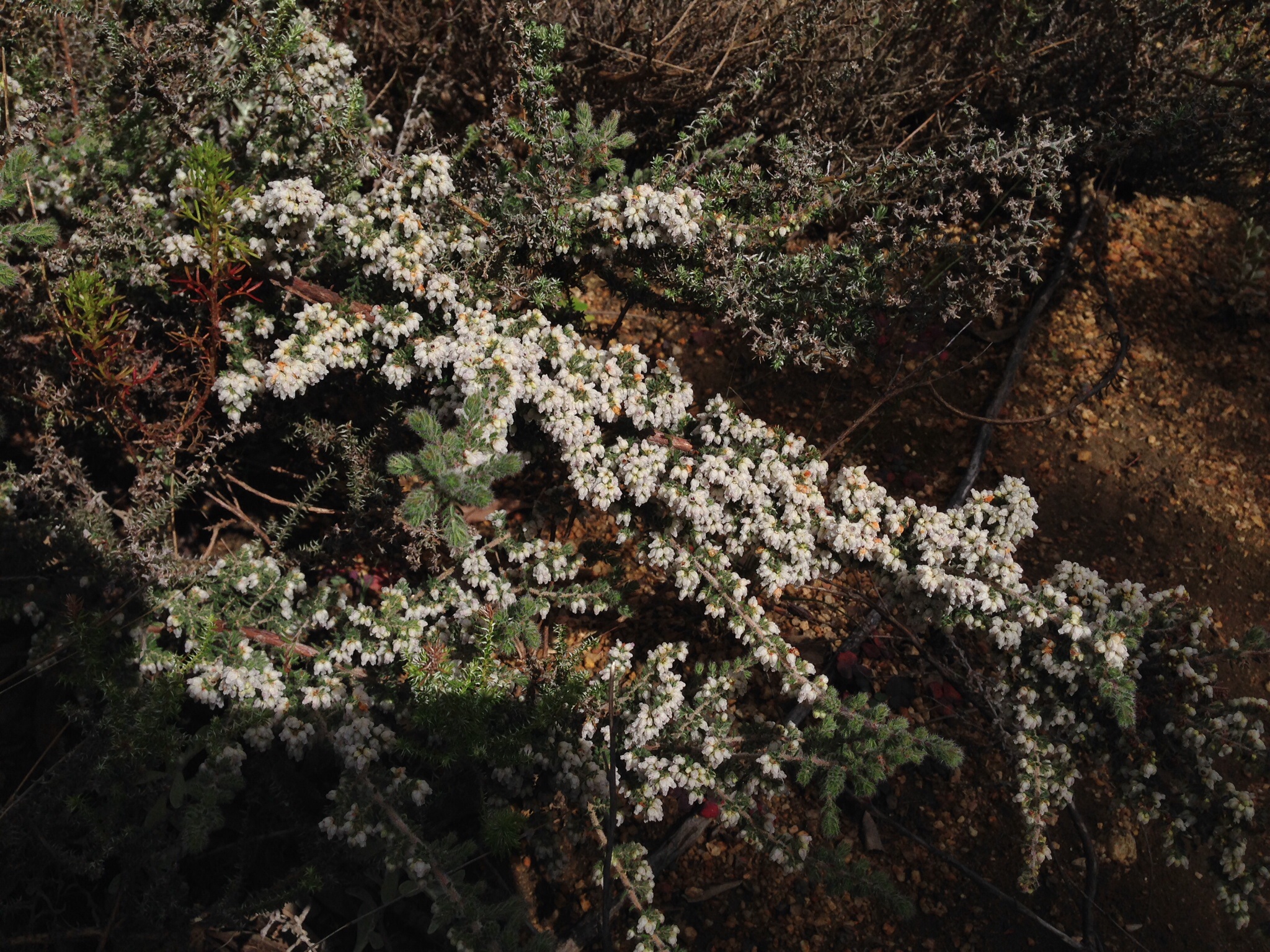
As is this spreading Erica. I have no idea which Erica it is, it rambles along the ground and can really take over in areas it likes.

Rambling white Erica

Rambling white Erica

Close up the little white flowers with their serrated edges are amazing.

Close up of the rambling white Erica

Close up of the rambling white Ericaa

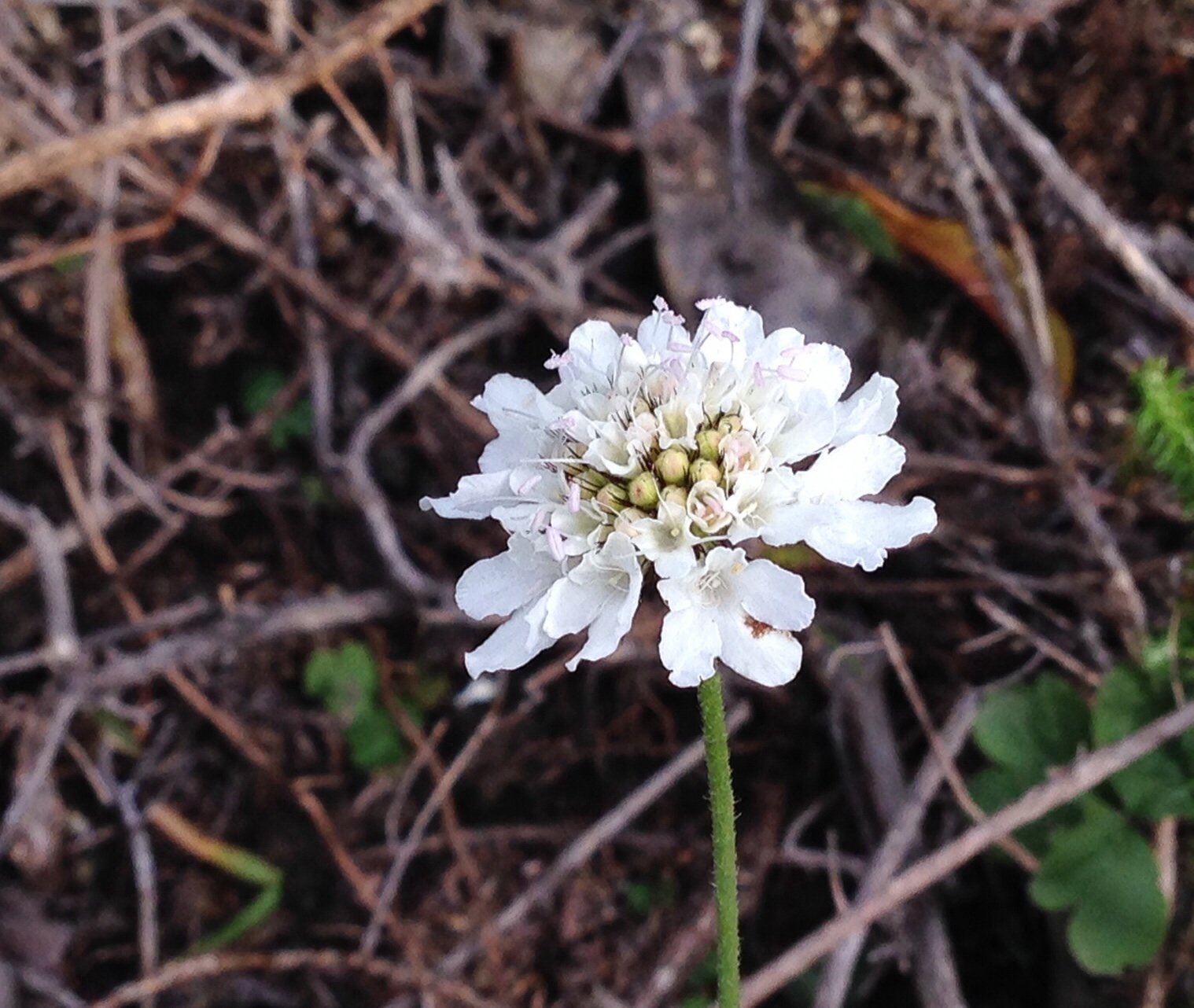
Somehow I don’t think I’ve posted this Scabious columbaria yet. They are very common all over the mountain and they make great garden flowers.

Scabious columbaria

Scabious columbaria

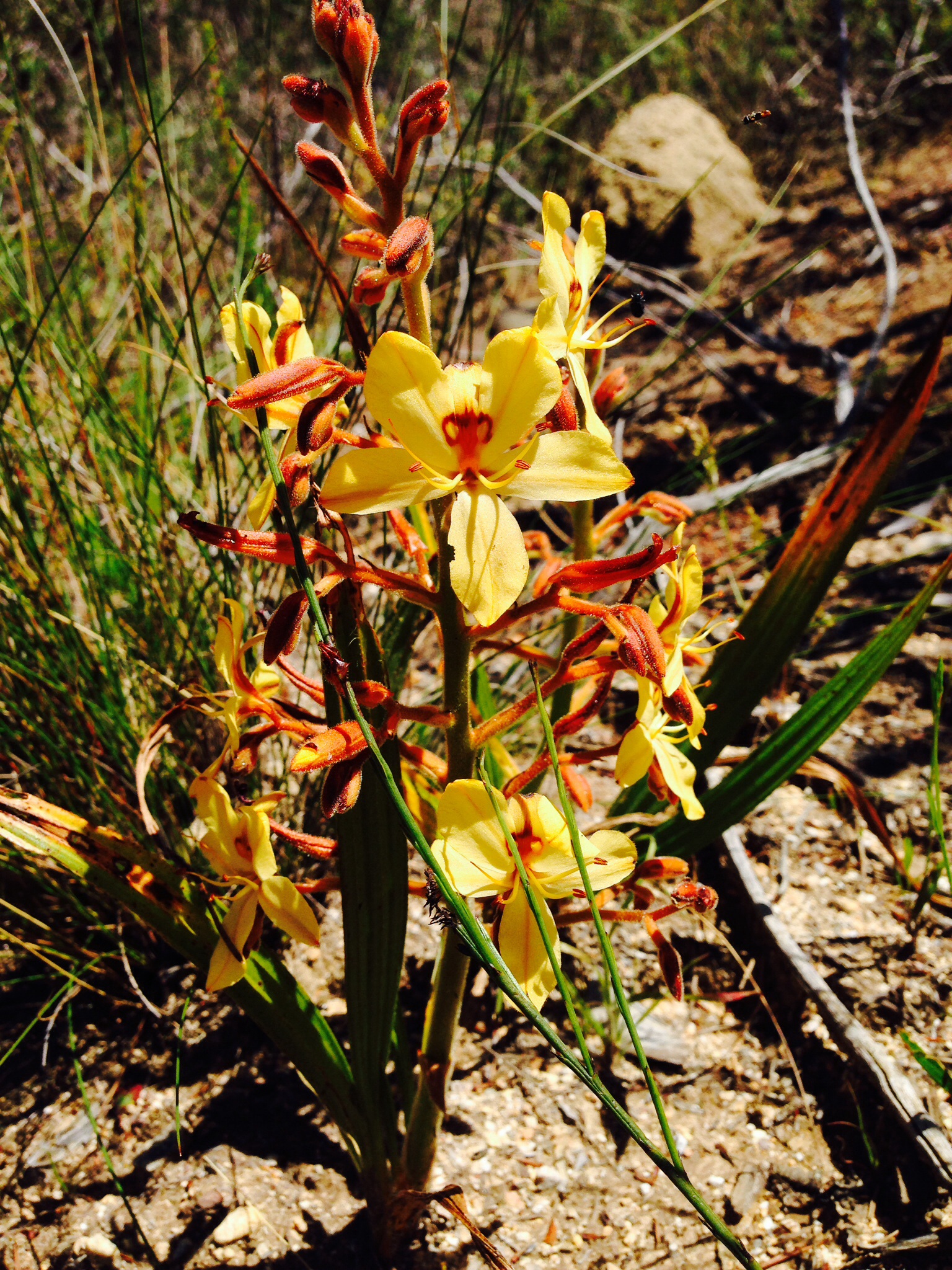
This Common Butterfly Lily has the rather grand Latin name of Wachendorfia paniculata. It’s quite common and pops up in all sorts of places.

Wachendorfia paniculata

Wachendorfia paniculata

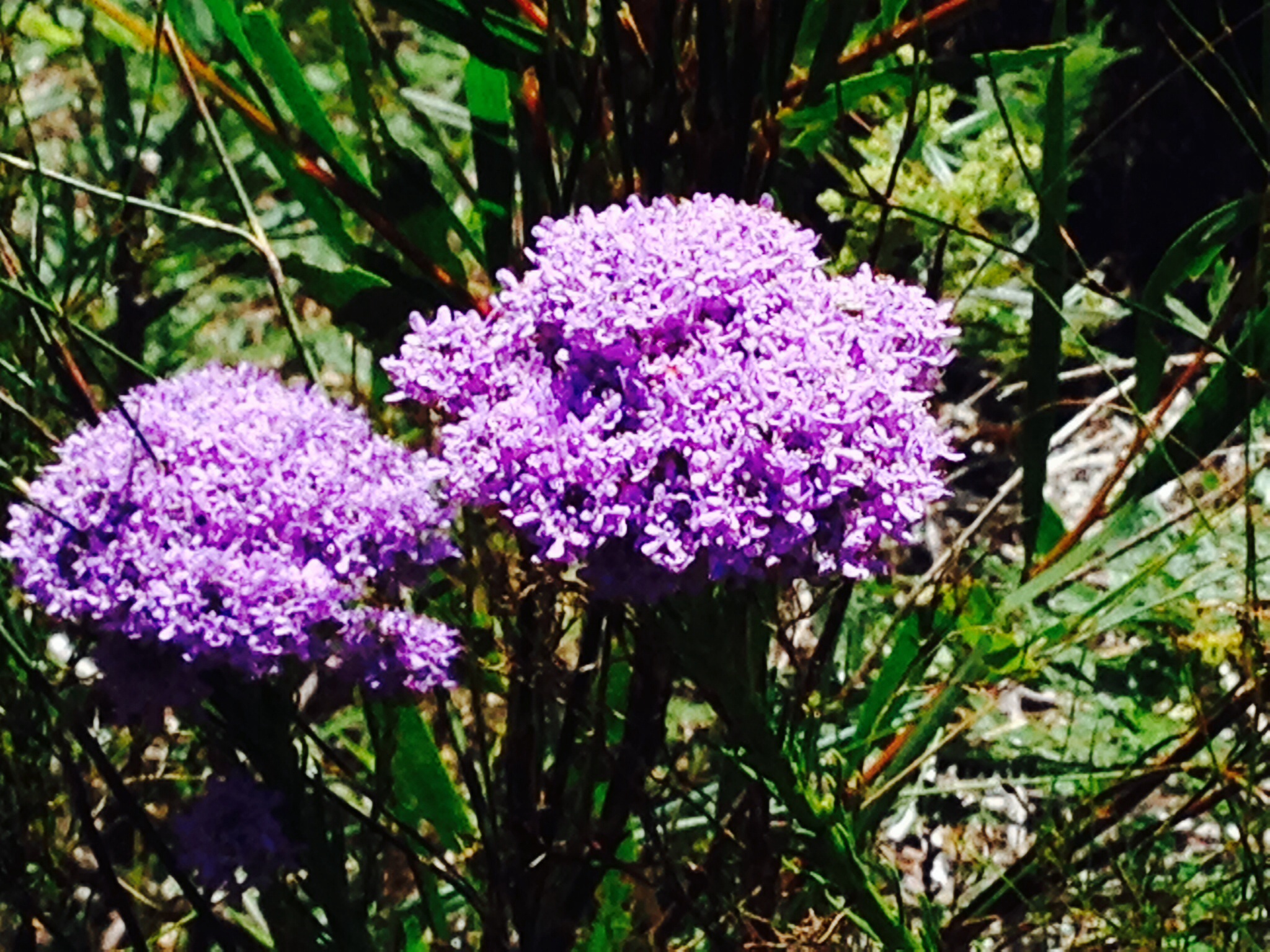
I always find blue flowers particularly attractive. So I was delighted to see these bright Purple Powerpuffs or Pseudoselago serrata close to the river.

Pseudoselago serrata

Pseudoselago serrata

I’m not sure I’ve correctly identified this. I think it is a Relhania as the leaves generally fit the description but this is not the subspecies that is photographed in my book.

Relhania

Relhania

This lovely blue flower is only about 10mm in size and it is another common, delicate flower found all over the farm. It is Lobelia pubescens.

Lobelia pubescens

Lobelia pubescens

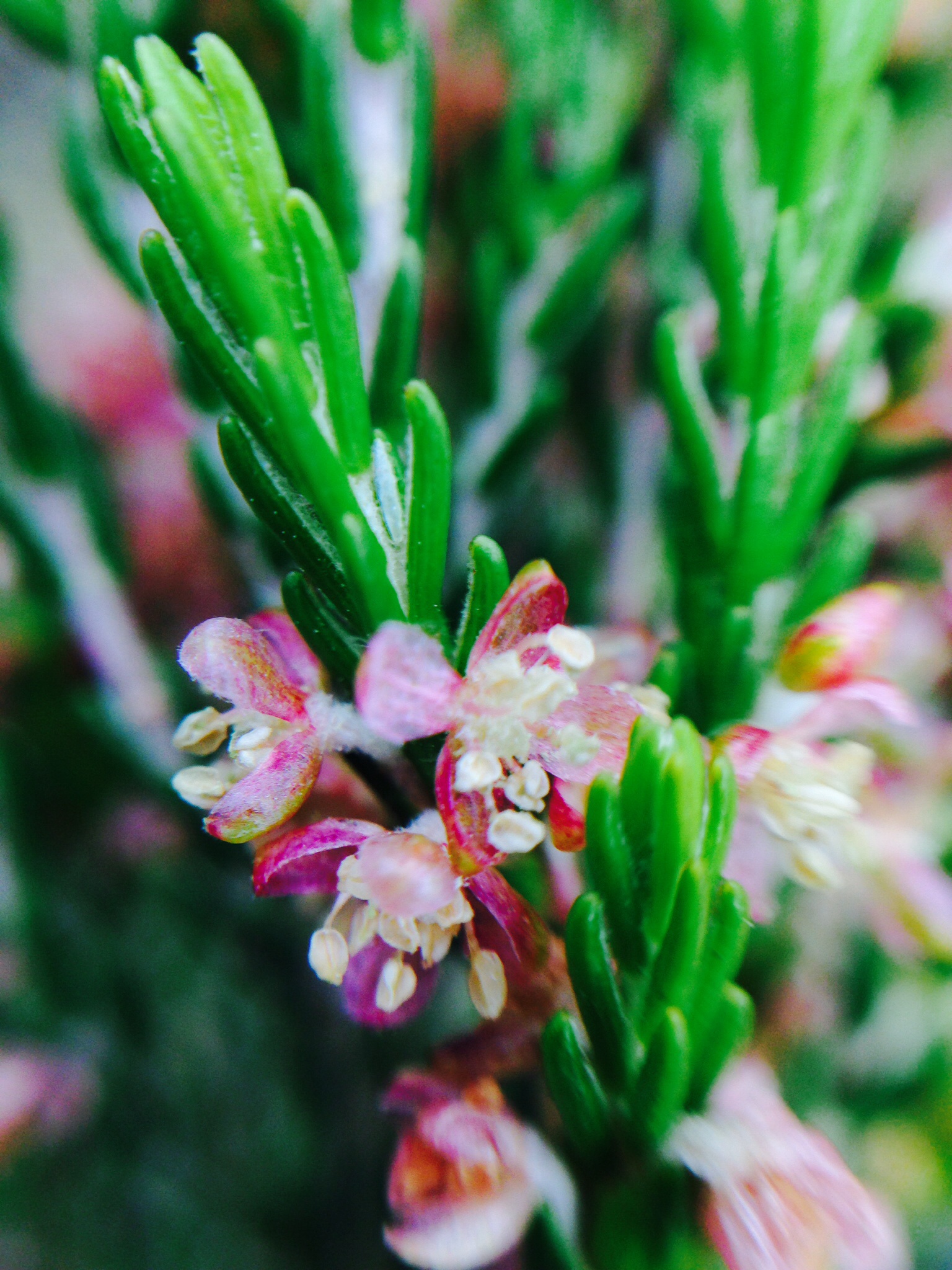
I posted this shrub in the last blog, promising to identify it in the next one. It is Passerina corymbosa. It grows on disturbed ground, such as roadsides right acoss the Western and Eastern Cape. A little scruffy in appearance, and with flowers that can be either red or white. They are exquisite when photographed in close up.

Passerina corymbosa

Passerina corymbosa

This is a Roepera though I’m not quite sure which one as it most resembles Roepera flexuosa which is costal. Either its lost, or its a subspecies not included in my books. No doubt about the species though, the curled back yellow petals with red-brown splashes at the base and the oval leaves are all quite distinctive.

Roepera subspecies uncertain

Roepera subspecies uncertain

These lovely little flowering bulbs are called Ornithogalum dubium and they have suddenly emerged on the road that leads to the waterfall. It’s particularly satisfying when we find new colonies of lovely flowers in areas where we have cleared alien vegetation, as is the case here.

Ornithogalum dubium

Ornithogalum dubiumm

This however  I can’t identify – it is tiny fragile and shortliived.

image

This is another flower I can’t identify, though I’m pretty sure it’s a Selago of which there are over 100 subspecies and they do grow at the top of stems covered in spiky leaves, sometimes with very pretty flowers, as here.

Selago?

Selago?

Finally I’ve posted this a couple of times, unidentified. But now I suspect it is Aspalathus cephalotes, or possibly Aspalathus nigra. More likely the former as we see them in pink as well as blue.

Aspalanthes cephalotes

Aspalanthes cephalotes