Tag Archives: Irish Wolfhound

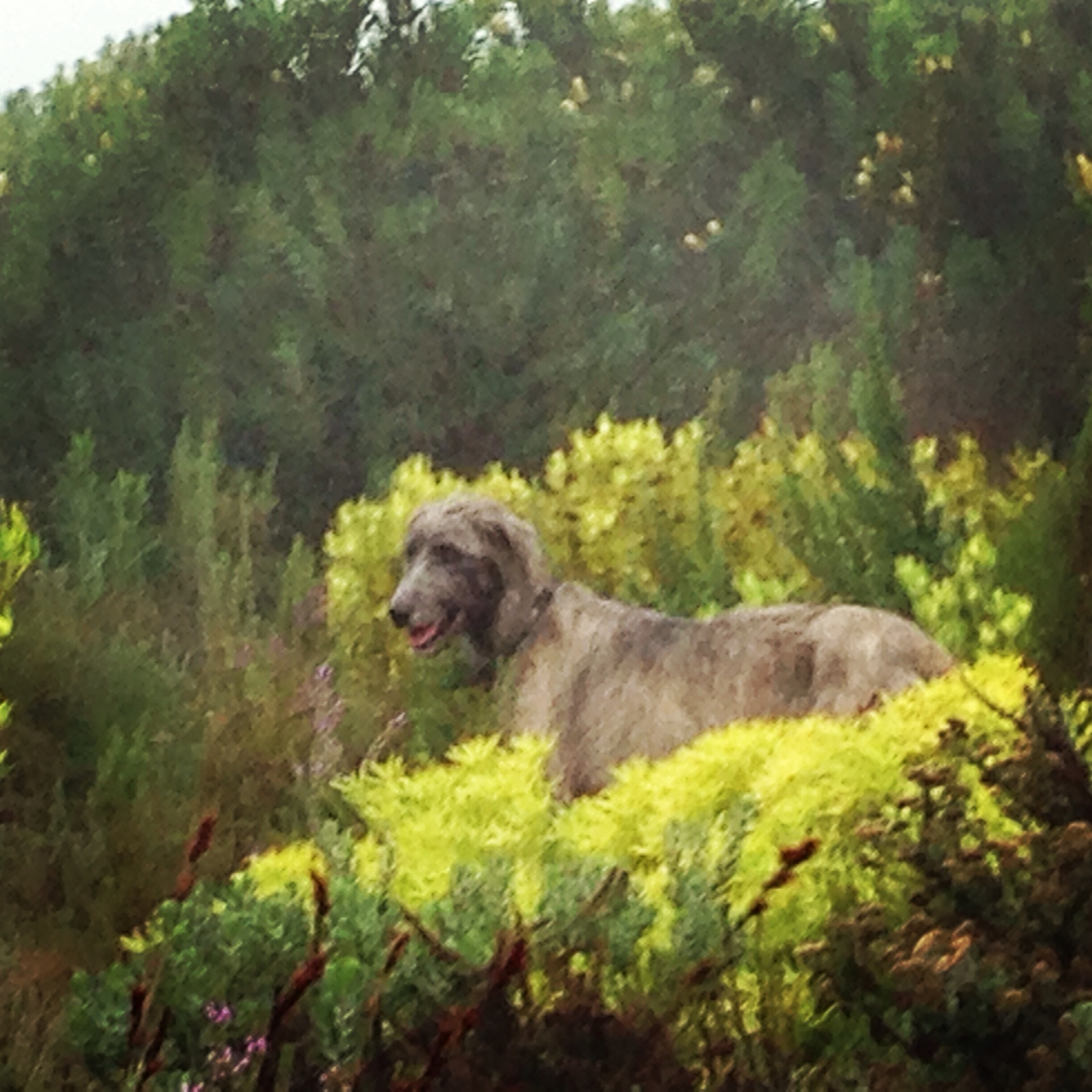
Wolfhounds slipstreaming in the wind and glorious early autumn sunsets

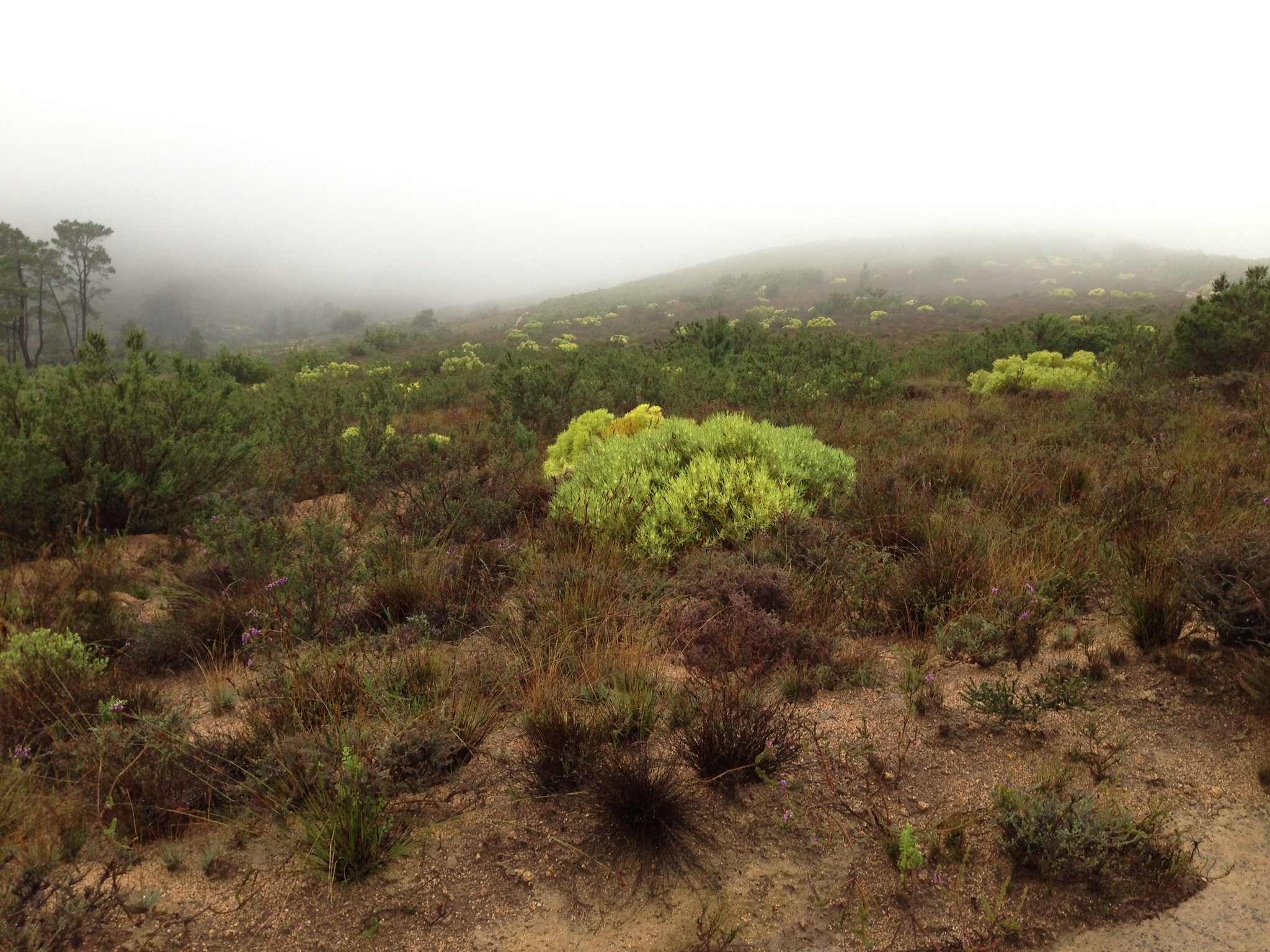
Two lovely runs this week.  One on a cool damp morning with the new growth of Leudadendron salignum glowing green in the grey light once again and bounding dogs enjoying the autumnal weather.  The house is full of guests and it’s lovely to get up early, go for a run and enjoy my own company and that of the dogs, returning to a social breakfast full of chat and laughter before we get on with the day.  Our guests are terrific, they know their way around the house and on Monday’s run I returned home to a delicious breakfast of poaches eggs with english muffins, avocado and olive oil, all prepared by Niall before he took himself off for a morning of work.

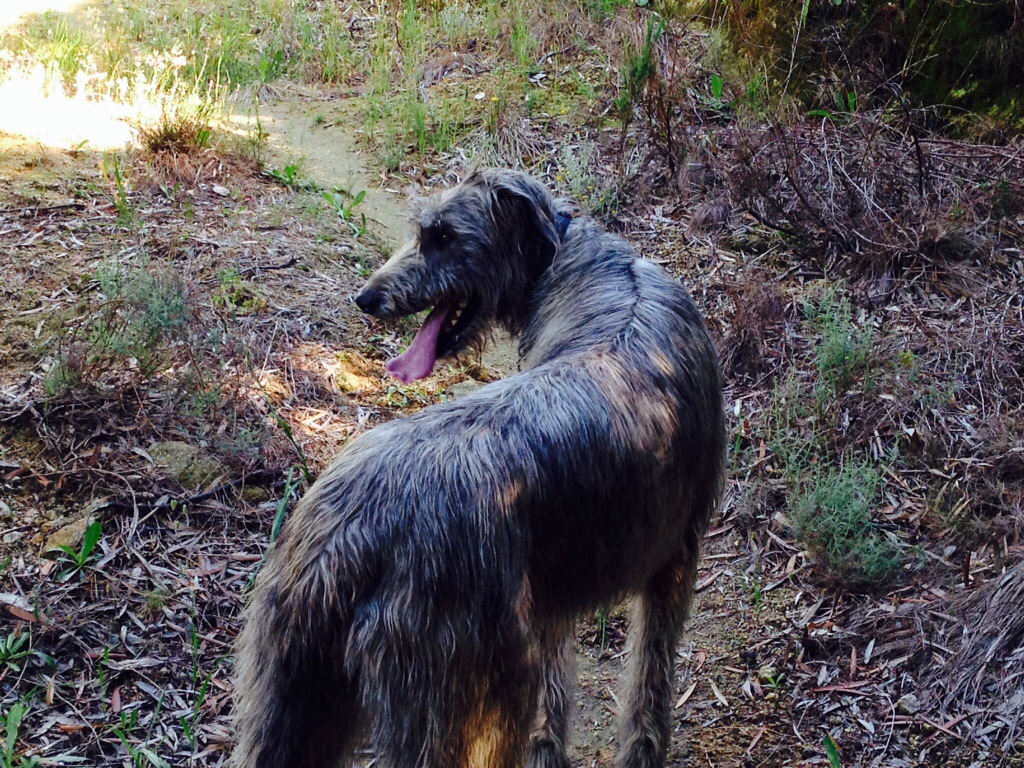
This morning was the perfect opposite in terms of weather, a typical hot dry windy morning with the heart monitor showing the heavy weather I was making of pushing up the mountain against the howling wind.  The wolfhounds love the wind and stand face on, enjoying the feel of it slipping through their shaggy coats.  As ever on a hot day, they enjoy a quick water break at Fox Pan as we run up the mountain and you can clearly see the wind ruffling their coats.

Seamus and Maebh enjoying water and wind

Seamus and Maebh enjoying water and wind

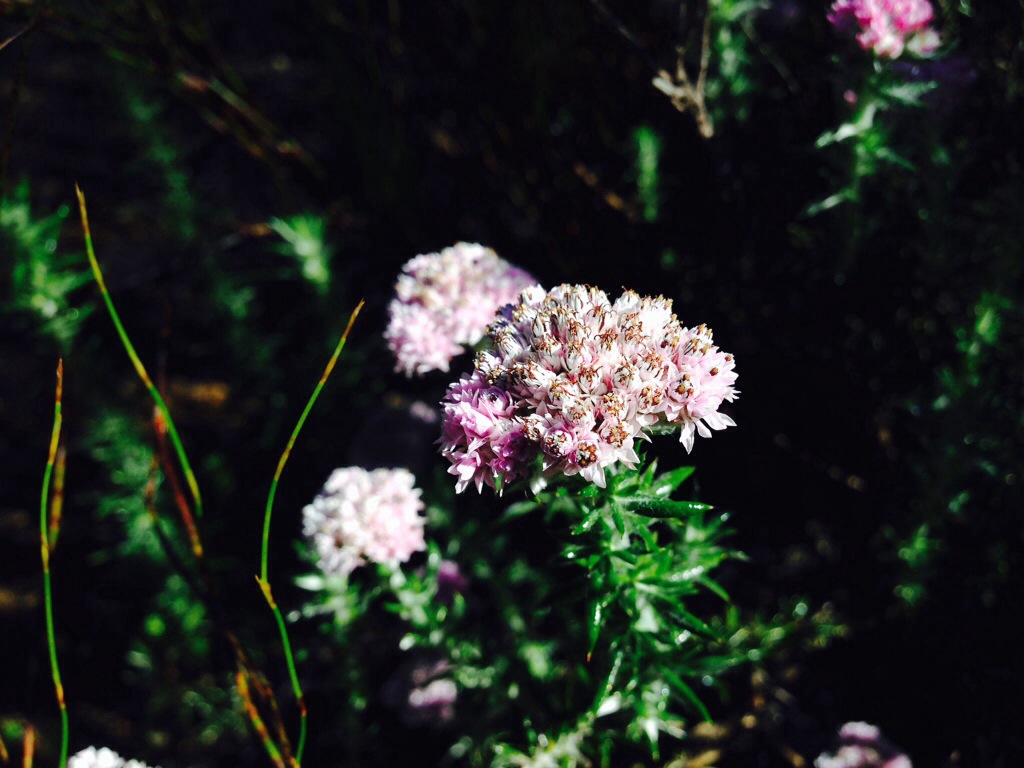
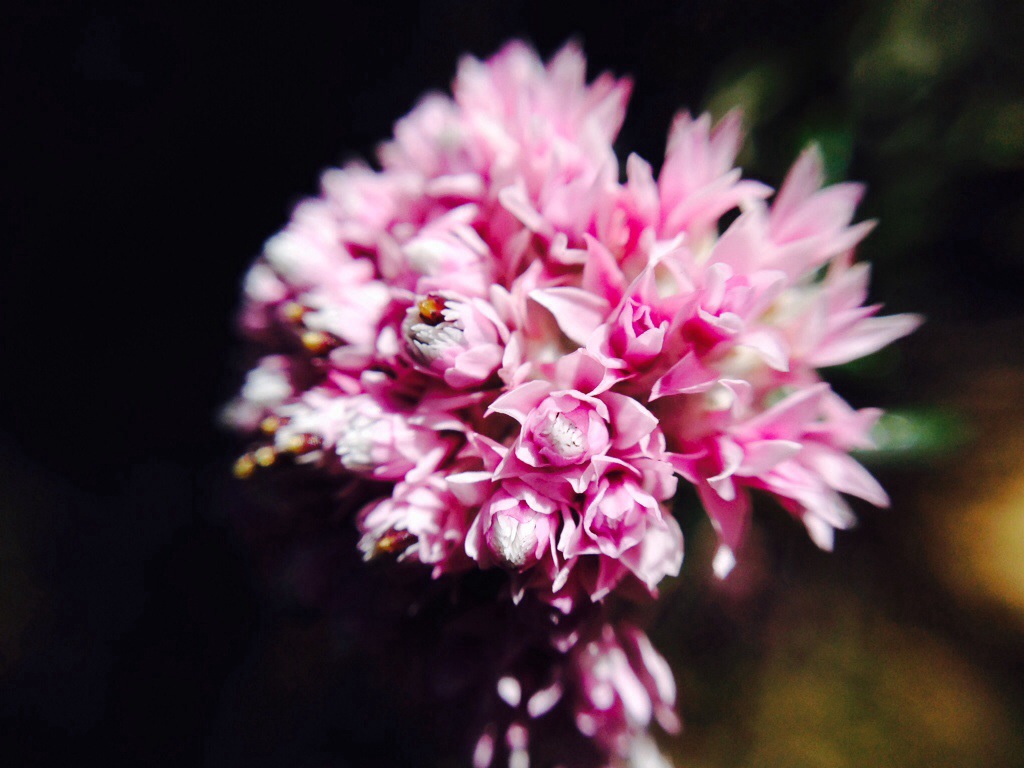
Although flowers are not prolific I can see the Cape cycle starting once again.  Having grown up in the Irish climate where winter is winter and spring gets off to a slow start, this Cape climate is always a little strange to me.  The slowest period is during the hot summer months of January and February.  As the weather cools and the rains arrive, the whole mountain bursts into life, the flowering season starts again, lasts all winter and reaches it’s apotheosis in the spring months of September, October and November.  Having been through the cycle once I am alert to the signs that the new flowering year is getting ready to launch.  Murlatia hysteria is a real stalwart, along with the Salvia africana it really does flower all year long without a break, but now in anticipation of the rains it seems to be showing more blooms than ever.  Here it is in the morning sunlight.

Muraltia heisteria

Muraltia heisteria

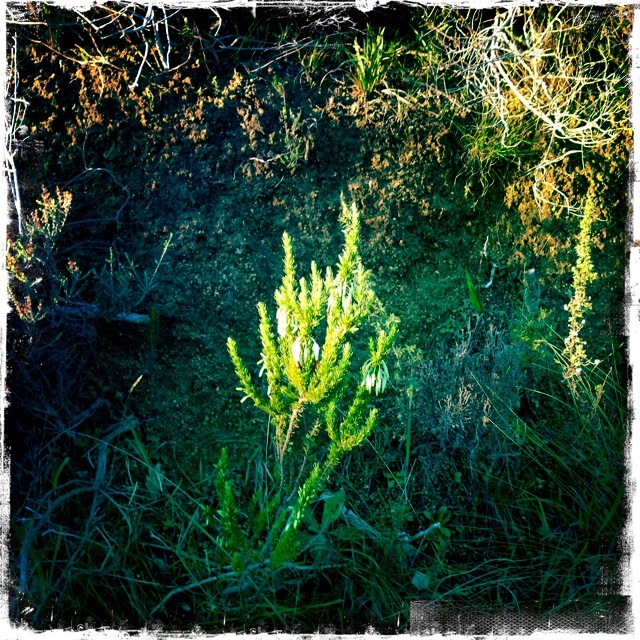
I cannot resist taking photos of the gorgeous Leucadendron salignum, particularly when it’s been raining which seems to set off the glowing green.  There will be many more photos of this gorgeous plant during the course of the winter.  It has begun its flowering season already.

Leucadendron salignum

Leucadendron salignum

One could do a whole blog just on grasses but as the are hard to photograph really well I tend to ignore most of them.  It’s a technical subject and I have a couple of books, but not the time to identify this one which has just come into flower all over the mountain, especially in high, rather damp places.

Grasses with yellow flower

Grasses with yellow flower

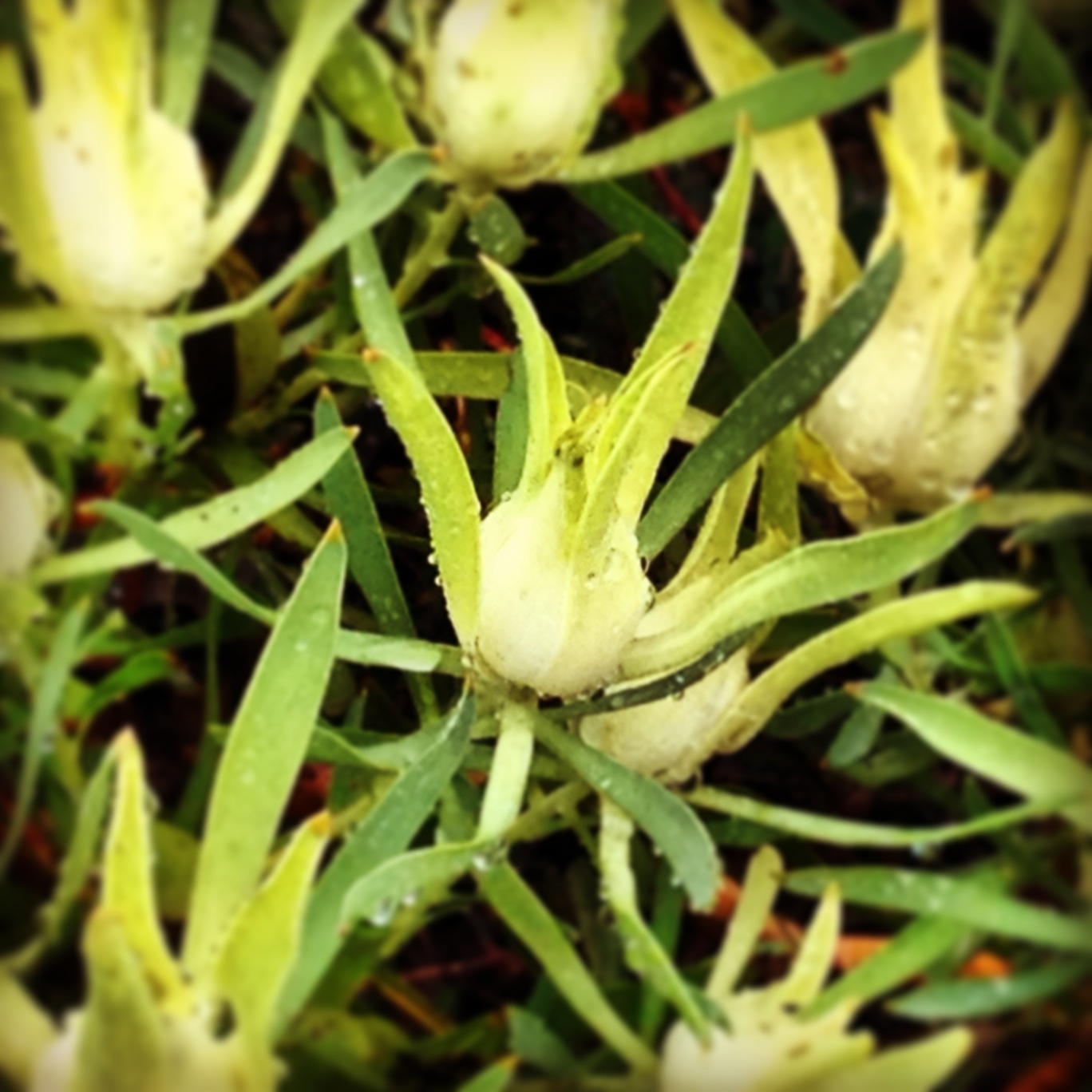
I’ve identified this as a member of the Helichrysum family.  I’m still not sure that’s right but I can’t find anything else that it resembles.  The flowers don’t seem very helichrysum-like to me, but I can’t find anything else that it resembles.  As I was taking this photo just above Fox Pan, I realised that the dogs were very interested in the plant and really getting in to have a good sniff around.  So I stopped and looked and you could clearly see that something had been lying up on top of it.  Makes perfect sense, this plant is growing in front of a large protea, so it’s protected from the back, sheltered overhead and looks over Fox Pan and the whole mountain so whatever lay up there obviously felt completely safe and its lucky I didn’t run past at the wrong moment with the dogs.  I presume it was a buck of some kind, we see lots of them and the dogs often put them up and give chase, but they are far far slower than any buck and don’t even try that hard.  It’s lovely to see evidence of the animals who share this farm with us, whether it’s picking up a porcupine quill on a road that I’d only run the day before and imagine him shuffling up there in the dark, or seeing a plant flattened by a buck contented after her drink at Fox Pan and enjoying a rest on the mountain.

Is it Helichrysum?

Is it Helichrysum?

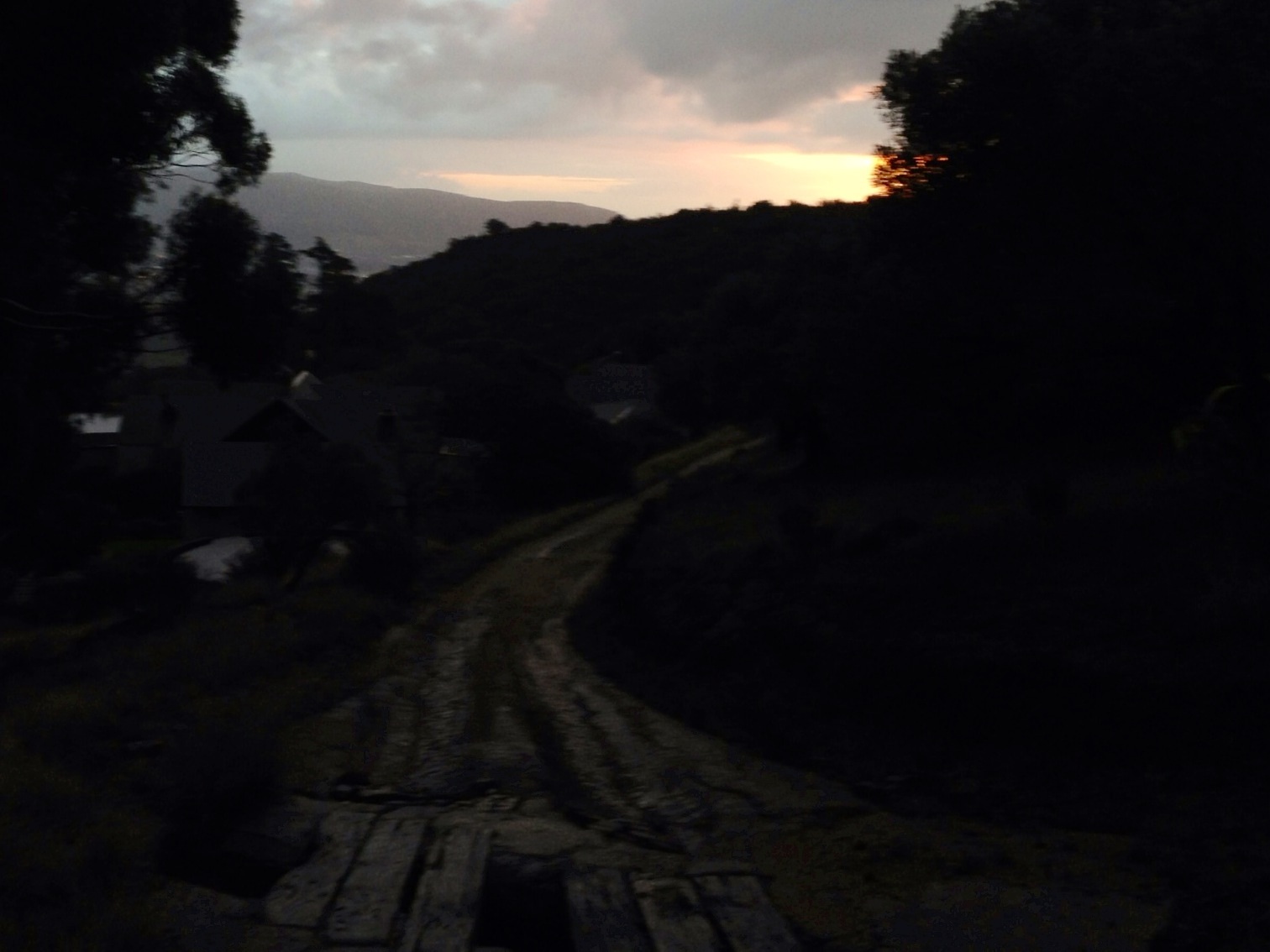
We get the best sunsets at this time of year and I always try to capture and share the good ones.  This was over the weekend as we sat on the balcony enjoying the house cocktail, gin and tonic with Campari.

Another perfect sunset

Another perfect sunset

The Morning Run

The unseasonal weather continued all last week with pours of rain thundering down for much of it.  Yesterday morning it was dry at last and we woke up early to go running.  At this time of year we are normally sweltering in the heat so it was a joy to be splashing through puddles and smelling the sweet damp morning air.  I was working in Johannesburg for much of the week, missing the rain, but also the dogs and the run, so they were full of joy as we bounded along.  Yes, I did say bounded.  Fewer flowers mean fewer photos so I’ve been running a bit harder and slowly getting fitter.  

I count my blessing every day that we spend on this farm.  We’ve been a bit slow about transforming the garden and today the fabulous Henk Scholz came to give us some advice.  He is incredible, one starts with an idea of course and he’s very kind so he takes it on board, but then comes up with his own idea that is so audacious and splendid it’s completely irresistible.  Peter then came up with a couple of stunning ideas which, if he really is prepared to do the work, will transform the place and make it even more beautiful.  I described the farm to someone the other day as the most beautiful farm in the Cape, which was stupid because there are many amazing farms here.  Ours is unusual and unexpected which gives it a special beauty.

Henk admired elements of the vegetable garden, principally the fact that I’ve managed to get anything to grow at all.  I may love plants and gardens but whatever shade my fingers are, it’s definitely not green.  He gently explained that the reason my plants are not fruiting is because they are completely smothered by weeds.  Oh I can make all the excuses I want, the rain, the fact that I fertilised everything before the rain, which of course the weeds love even more than the plants.  The time, or rather the lack of it that dominates my life.  In the end, after he left, with the earth still soft and yielding after all the rain I dug and weeded for hours and have cleared all those pesky monsters away.  Maebh loves it when I garden, she sniffs around and tries to help, then lies down and observes all the work with great interest.  Finally she curls up in the cool shadow of an orange tree and happily falls asleep. 

Back to the run.  As we bounded up the mountain I couldn’t believe my eyes when I saw this Protea repens.  What?  Now?  It’s far too early!  And indeed the season doesn’t really start until March.  This one clearly decided to get ahead.  It has just opened, perhaps the season starts much earlier than I’d realised and this is the first.  

An early flowering Protea repens

An early flowering Protea repens

One of the joys of the mountain is the magnificent Salvia africana-caerulea.  It flowers prolifically for eight months of the year and particularly seems to thrive at this time of year.  

Salvia africana-caerulea

Salvia africana-caerulea

Another flower that is glorious at this time of the year is this stunning Erica.  I’m pretty sure it’s Erica abietina, simply called Red heath which flowers all year round but seems to relish the dry most of all.  The coral flowers are stunning along the drive and although the strong midday sun was almost too much for this photo I couldn’t resist the way it reflects the flight and glows from within.

Erica abietina

Erica abietina

Despite the cooler weather Seamus still took a dip and a drink in Fox Pan as we climbed higher up the mountain.  Then, graciously deigning to wait for me, he stood and admired the view with the water cascading off his flanks and shining in the morning light.

Seamus after his dip admiring the view

Seamus after his dip admiring the view

I rushed to identify the last blog’s flowering bulb as Watsonia, possibly because it gave me a great title.  But I was a bit bothered by that and not entirely convinced.  The flowering season is wrong, and although that sometimes happens you have to be certain.  So back to the books I went and in fact it is Tritoniopsis, most likely triticea, although burchellii is almost identical and grows in the same places.  The brown leaves, which you can see in this photo, are distinctive and make me confident of this identification.

Tritoniopsis tritecea

Tritoniopsis tritecea

Christmas Fynbos

Travel at Christmas is always fraught with risk. We left for a short trip to Ireland to spend the weekend before Christmas with a very dear friend, celebrating his 50th birthday. Thereby infuriating a whole series of family members, who believed that if we were in Ireland that close to Christmas, we should see them, not friends. Sorry. We then braved a lot of stormy flooding roads and wild bouncing skies, along with a Heathrow made worse than ever by the despairing passengers whose flights were cancelled two days before Christmas. Our plane, thank goodness, slipped through the weather and flung itself southwards and even managed to land in Cape Town without crashing, unlike another flight at O R Tambo in Johannesburg which walloped its wing by crashing into a building on the ground causing a mighty row between air traffic control and the British Airways pilot. You can imagine. No-one got hurt.

We arrived home on the 24th, back to the farm, the dogs and our gorgeous friends who came for Christmas. The fabulous David in Paarl did all the catering for us, so we had a wonderful self-indulgent break. Hubert sat beside me at dinner and explained that he doesn’t really love this blog because it’s too academic for him. He’s one of the cleverest people I know, so I think that, as a friend who lives most of the year far away, he’d rather more gossip and fewer flowers. Those last two paragraphs were for you, Hubert.

Meanwhile out on the mountain the dogs and I have been running regularly and loving it. Summer runs take in lots of water breaks. You hear of big dogs dehydrating so I’m careful about that and make sure the dogs are always in sight so that I can spot if anyone gets distressed.

Seamus and Maebh enjoying the water at Fox Pan

Seamus and Maebh enjoying the water at Fox Pan on a very dry sunny windy morning

Lots of things enjoy the summer weather and the Christmas collection includes a snake nearly trodden on by Noella, who was remarkably calm about it. Also a red lipped tortoise, charming creatures and we see them quite often. This morning a scorpion ran across our path, minding his own business. I love seeing these things, but it’s another good reason to keep the dogs in sight, just in case they get too inquisitive about something nasty.

The flowers may not be profuse, but there are still plenty of things out there to interest us. Some choose to flower in the hottest driest of weather, like the helichrysum that covers the mountain.

Helichrysum

Helichrysum

There are plenty of Pelargoniums that don’t mind the heat and choose the hottest months for their flowering. I’ve taken a lesson from the mountain and planted lots more of these in the garden.

One of the many subspecies of wild Pelargonium that grows on the mountain

One of the many subspecies of wild Pelargonium that grows on the mountain

I have only seen these orange spikes in one particularly damp spot on the road that leads up to the pine forest. They are known as wild dagga and the dried leaves traditionally have been used medicinally but are not a narcotic or tobacco substitute, contrary to what some of the local residents have told me.

Wild dagga, Leonotus leonurus

Wild dagga, Leonotus leonurus

I love this Selago corymbosa which flowers only in the dry months on it’s long softly spiking stems.

Selago corymbosa

Selago corymbosa

There are 35 fynbos lobelias and they are really stunning, especially in close up. I’m going to suggest that this one is Lobelia pinifolia because many of them have hairless flowers while this one is quite clearly hairy.

Lobelia pinifolia

Lobelia pinifolia

This is known as the blue pea and is most likely Psoralea restioloides, choosing to flower late in its season near the stream that marks our boundary with the nature reserve at the top of the farm.

Psorolea restioloides, the blue pea

Psorolea restioloides, the blue pea

This, oddly, is known as the Christmasberry, although it flowers at Christmas and the spectacular red berries appear in the autumn. It is a common shrub, with a distribution along the coasts and a good way inland from Namaqualand on the West Coast of South Africa all the way to KwaZulu-Natal on the Eastern Coast. Perhaps among all those different habitats there is one in which the berries appear at Christmas.

Christmas berry, Chironia baccifera

Christmas berry, Chironia baccifera

I love these protea cones though I can’t remember which member of the protea family this shrub belongs to.

Protea cone

Protea cone

This time of year brings the most magnificent sunsets and with friends staying we often take a sunset walk with the dogs. We’ve had tremendous winds this spring and suddenly over Christmas they’ve dropped and the weather has been perfect, sunny but not too hot. The air is amazing, a light breeze, slight damp dew falling as the sun goes down. Fewer flowers perhaps but the valley below us is a theatre of glorious changing light.

The evening light in the olive groves above the house

The evening light in the olive groves above the house

Sunset on Christmas Day
Sunset on Christmas Day

Wild windy summer sunsets

I never get tired of looking at the view from the balcony and because we look west we have wonderful sunsets. Tonight’s was special by any standard. I took this photo just as the sun had gone down – no filter, just the last light of the setting sun reflected from the clouds onto the dam.

Sunset over the dam
Sunset over the dam

We had Christopher, the brother-in-law, to stay and before he left I offered to take him up the mountain and show him the flowers. All spring we’ve had a wonderful time showing our guests the wonders of the mountain fynbos flowers. That time has passed.  He loved being up on the mountain but the flowers have become sparse and less interesting to the casual visitor. A really passionate gardner might still enjoy it – for the less passionate there is merely fading and die back and the fucundity of the land has passed into dryness survival mode.

It doesn’t mean that there is nothing of interest out there, I’ve often mentioned that yellow daisy-like flowers are among the hardest to identify. This one could be the rock daisy, Heterolopis, or perhaps Leysera. If I see it again which is quite likely we’ll take a closer look.

Heterolopis or Rock Daisy?

Heterolopis or Rock Daisy?

The wind continues to blow – it has been more than a week now, which is quite unusual and not a let up in the forecast. The dogs love it particularly the wolfhounds and here is Maebh standing in the wind, allowing it to stream through her coat.

Maebh poses in the evening light, letting the wind slip through her coat

Maebh poses in the evening light, letting the wind slip through her coat

Jemima Chew on the other hand finds her solace in water and the permanent streams. She loves to wallow and lie the flow and then stands up, looking about her, thoroughly pleased with herself.

Jemima Chew - life is good

Jemima Chew – life is good

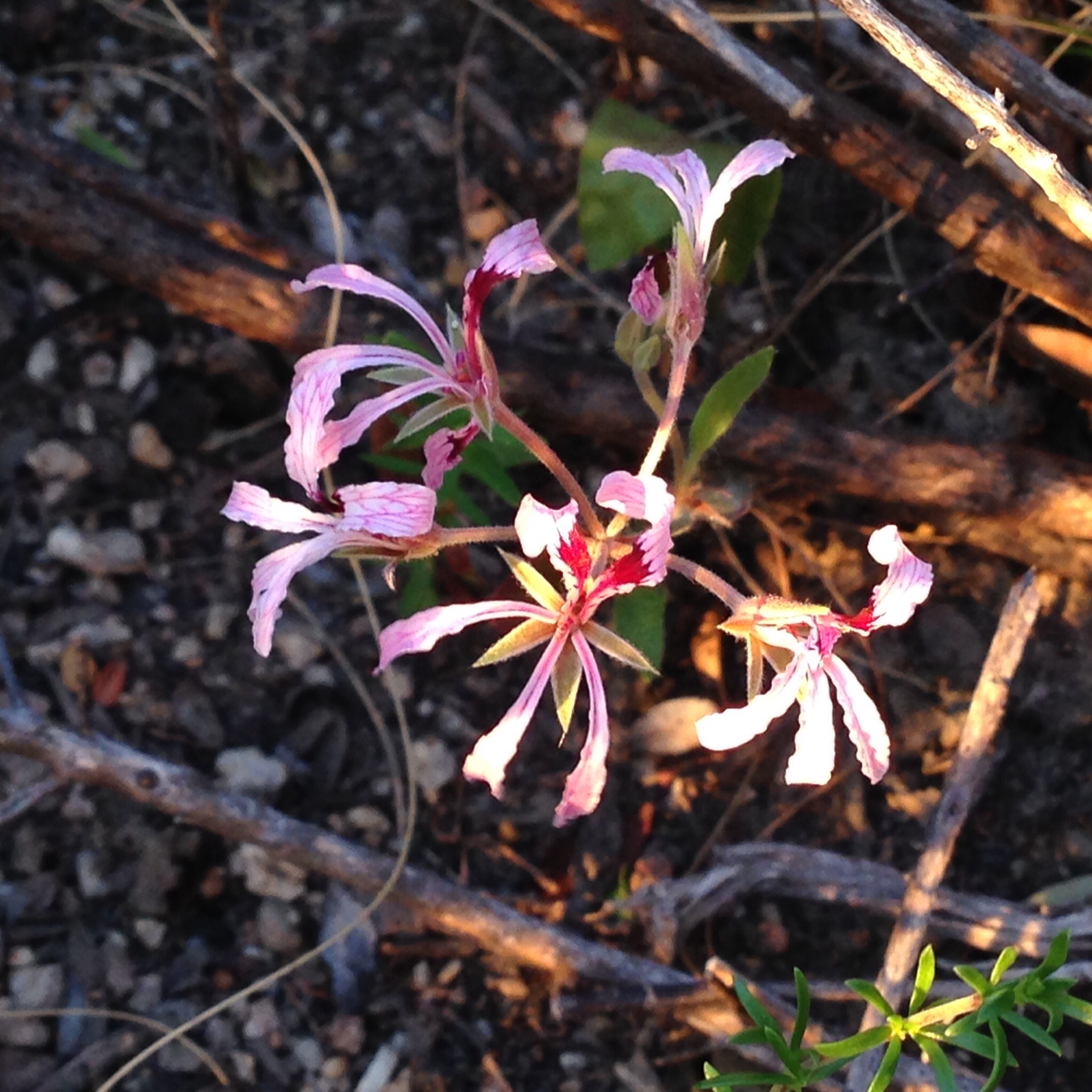
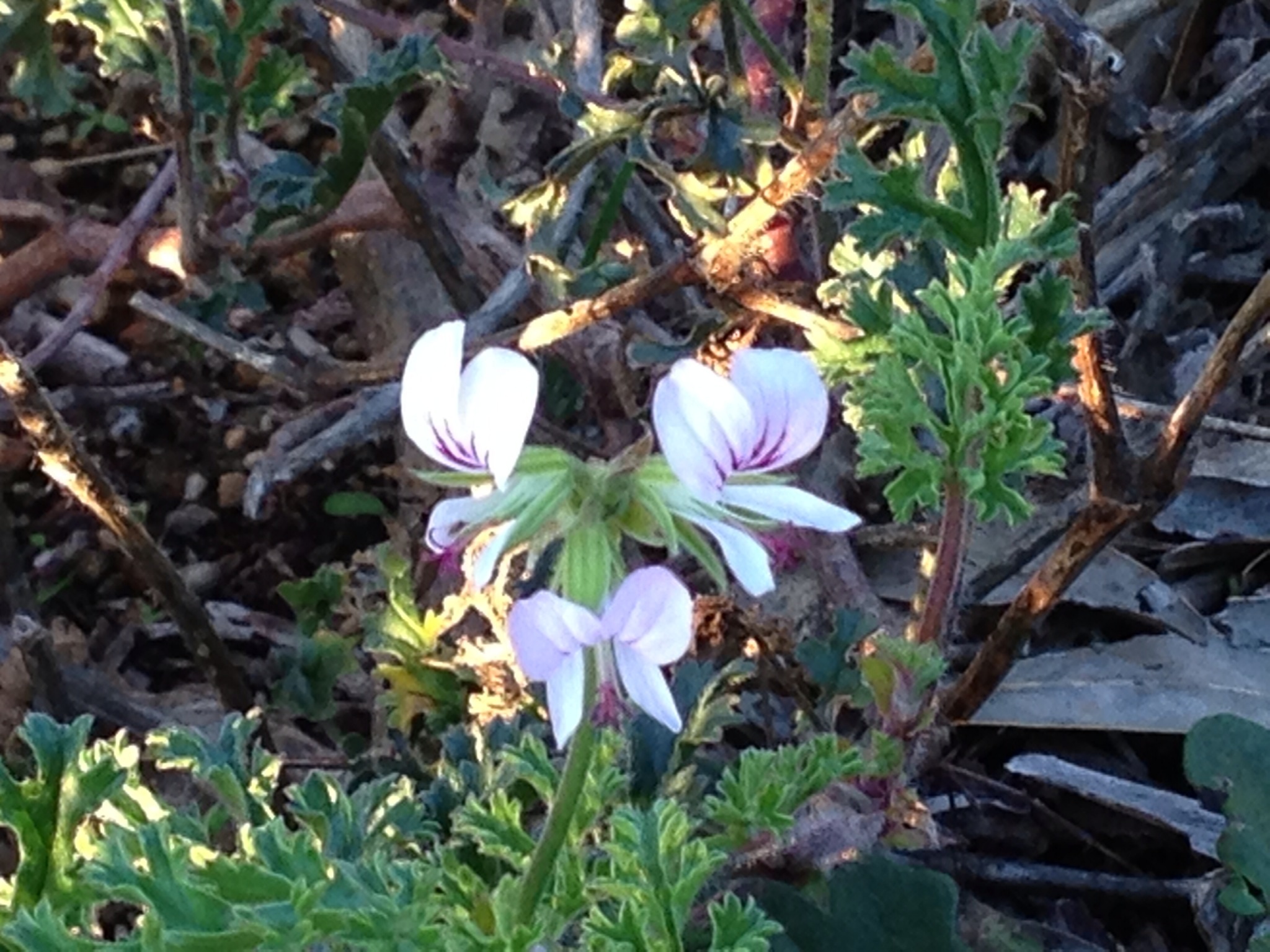
As Christopher and I chatted and walked I kept my eyes open for anything new and exciting, expectations low. And here we are, hidden beneath some fynbos scrub, this exquisite pelargonium. There are nearly 300 subspecies, 150 in the fynbos region of which only 20 or so are in the book. This one is so lovely, the colours, the delicate shape of the petals. I would be tempted to move it to the garden but my fingers are not the greenest and what if it’s the only one? I only ever transplant the very common flowers, anything that might be rare, special or precious belongs on the mountain.

A Pelargonium we have not seen before

A Pelargonium we have not seen before

Gloomy northern skies and dreams of fynbos flowers

Sitting in an office in Stockholm on a gloomy day it is hard to imagine the glories of Saturday morning’s run.  The light, the warmth, the howling wind.  Seamus and Meabh stand face on, heads up, loving the feel of the wind ruffling their coats.  As ever there is something new to see – this gorgeous Tritonia undulata which has emerged in quite a few places.  It’s very distinctive and very lovely, what a treasure to find on a Sunday morning.

Tritonia undulata

Tritonia undulata

I stopped to try and capture a good picture of it of course, and as I trotted on up the hill I reflected on how much less fit I am than I was when I started this blog.  You would think that blogging what I see when I’m out on a run would get me out running more.  But the problem is that my runs are longer – I can never resist a new flower, especially as anything that is a bulb may be gone by tomorrow, and each picture takes a few minutes as I try to find the best angle and the best light.  Sometimes, perversely, that even puts me off from going out at all because I don’t have the time I need to do a proper run and photograph the flowers as well.  It will be an ongoing dilema and really, as with so many problems in one’s life could probably be solved if I got up earlier…

One of the flowers that inspired me to start the blog has suddenly emerged.  It’s known as the comb flower, Micranthus junceus, and is one of the first that I identified because of its distinctive shape and pretty blue flowers.

Micranthus junceus, the Combflower

Micranthus junceus, the Combflower

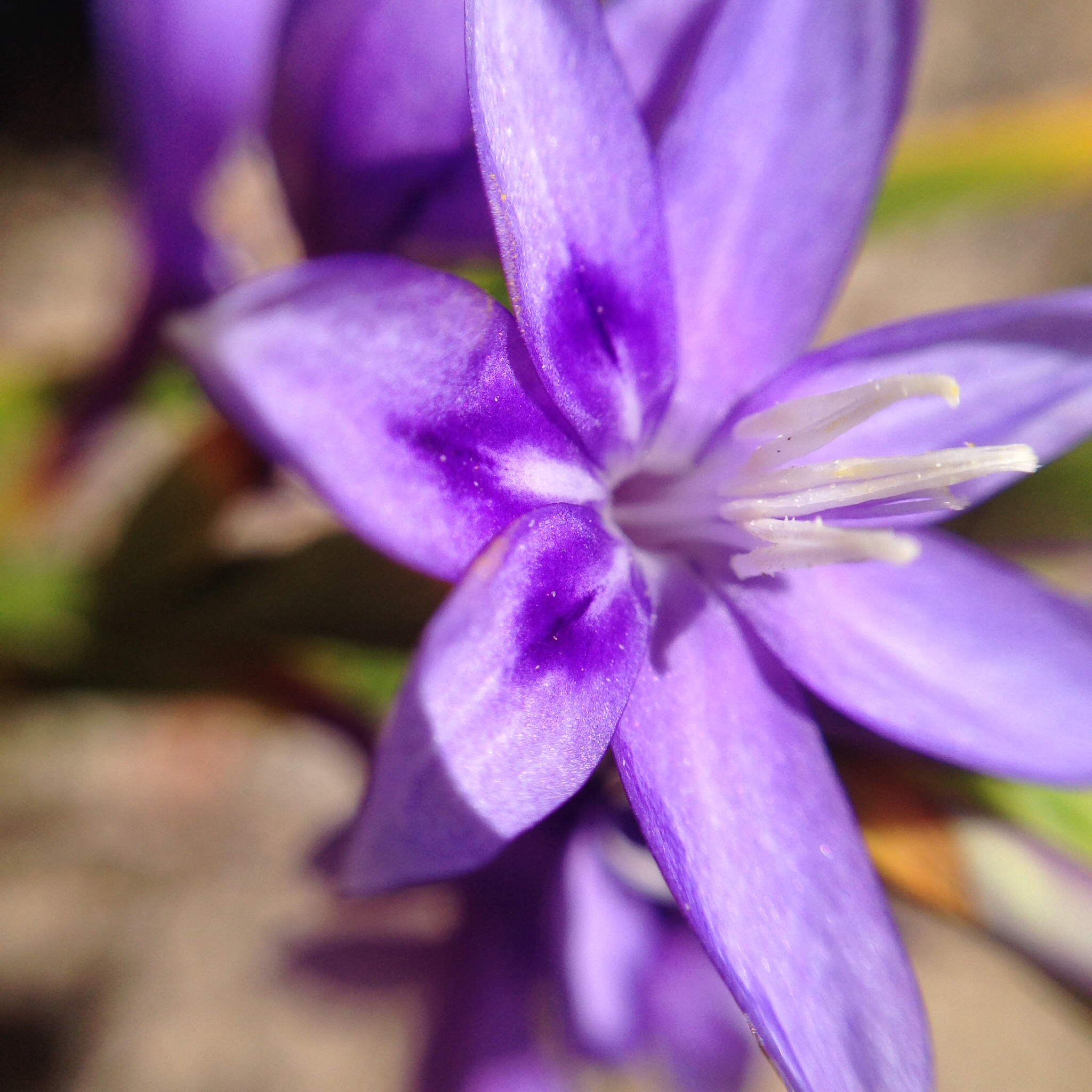
As I do the research and leaf through the books hunting for flowers, inevitably one passes stunning flowers in the book and thinks – “never seen that one, I wonder if it grows on this mountain.”  This Roella ciliata is such a flower with its gorgeous lilac-blue and inky collar.  I spotted it out of the corner of my eye as we ran down one of the paths in the forest and felt like an excited hunter who has finally found a screcretive and exclusive quarry.

Roella ciliata

Roella ciliata

Much more common is this butterfly lily, the splendidly named Wachendorphia paniculata I posted it not long ago, but can’t resist posting this lovely example which is growing along the drive and which looked particularly fine against the sandstone wall.

Wachendorfia paniculata

Wachendorfia paniculata

Finally a couple of flowering bulbs that I haven’t identified, one blue, one yellow.   The blue one has a twisting spike out of which the flowers grow and the yellow one grows tightly out of its stalk like a delphinium.  I haven’t been able to identify them in the general fynbos books and I really need a night in with the encyclopaedia of fynbos bulbs to see if I can identify these and a couple of others that we still have not named.  Sometimes it’s just a matter of a better photograph and all is revealed.  A good project for hot summer nights when the pressure of new flowers has eased and we will start a job of identifying and cataloging what we’ve found.

Unidentified blue flowering bulb which has a distinctive twisting flowerhead

Unidentified blue flowering bulb which has a distinctive twisting flowerhead

Unidentified yellow flowering bulb that is suddenly flowering all over the farm, particularly on damp roads

Unidentified yellow flowering bulb that is suddenly flowering all over the farm, particularly on damp roads

Summer

As spring turns into summer the intense proliferation of new flowers on the mountain is dying back and I don’t really expect to see new things as frequently. So far there has been something new on each of the 50 runs that I’ve done since I started the blog. That won’t continue when the summer sun sucks every last bit of moisture out of the ground, leaving it rock hard, dry and dusty.

Summer running has quite a different feel to winter running. The wind for a start; when it’s hot and dry the famous Cape Doctor, the southeaster, howls over the mountain, shredding all but the hardiest plants in the garden. Suddenly it is clear why so many fynbos plants have tough spikey or needlelike leaves. They need them to survive the wind and the summer drought.

We did some quick runs with no photo stops last week on a route that we run quite frequently and then on Friday morning the dogs and I decided to go for a proper blogging run to the highest point of the farm where there a shady damp road that always has something interesting to look at. When it gets hot like this we seek out the few shady groves, damp areas and streams to get a break from the relentless morning sun. Maebh as she often does, posed for the camera. Perhaps not the best ever photo of her but the colour of her coat is gorgeous in the dappled light.

20131126-084429.jpg

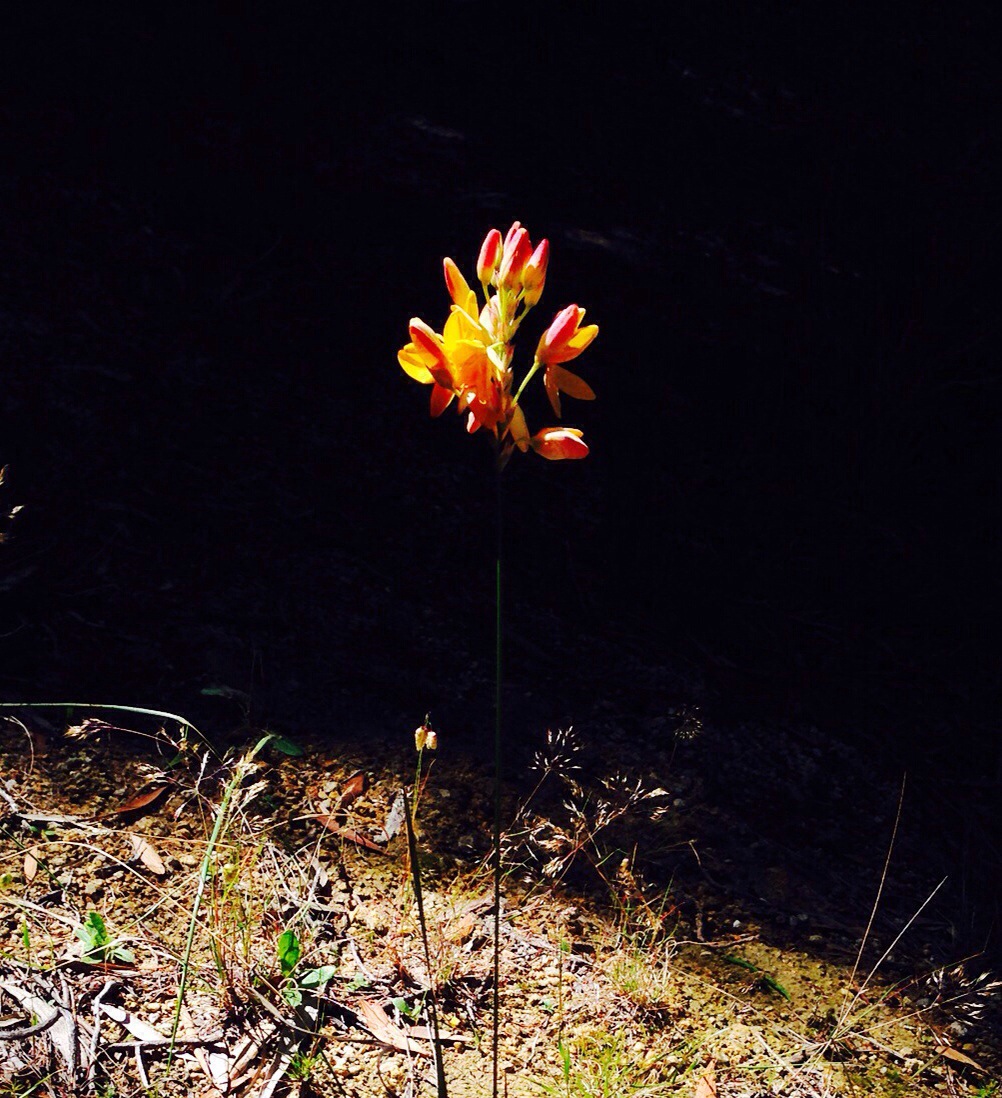
Just a little further on, caught in a pool of sunlight, stood this amazing flower. Although I can’t find it in the books, the slightly twisted sword like leaves tell me it is a kind of Gladioli and if I have some time I’ll hunt through the Fynbos Bulb Encyclopedia to see if any of the descriptions match this. I love this photo, the flowerhead in a pool of light against the dark shadow of the trees.

20131126-084910.jpg

I’m never 100% sure that I have identified this flower correctly – there are 52 fynbos subspecies in the Metalasia family and the photos in the books are not great. I’ve published photos of them before and I couldn’t resist this one with its spectacular pink flower. I believe it’s Metalasia divergens.

20131126-085104.jpg

20131126-085113.jpg

Salvias, Gazanias and other interesting things

We had a fabulous weekend of running, the dogs and I.  First of all because as it was the weekend we could set off later in the day and have better light for photos.  All this running has helped with fitness so I’ve been bounding up the mountain and really enjoying running.  It’s a great feeling.  And then we STILL see something new every time. I can never believe that we will – especially if I’ve seen two or three really interesting new flowers the previous day.  Suddenly to see half a dozen more because we take a slightly different route, or I just open my eyes or look left rather than right and there it is, something completely new.

Like this Salvia africana-caerulea – I really love this photo, because it is a perfect record of the shrub which makes it very easy to identify correctly.  And then you can see Seamus in the distance, making his way up the mountain while I stop for yet another picture.

Salvia africana-caerulea

Salvia africana-caerulea

It was windy on Saturday and Seamus loves the wind – here he is standing in his very favourite spot on the farm, holding his face up to the wind blowing off the mountain.

Seamus enjoying the wind

Seamus enjoying the wind

Then we came across this which I think is a Gazania rigida – again the leaves are right and the description of the dark and hairy involucre fits.  That’s the dark splashes at the bottom of the petals in layman’s terms.  Stunning flowers.

Gazania rigida

Gazania rigida

This little lilac and white flower isn’t a bulb but grows on a shrub, I haven’t found it at all in the books so it’s gone in the “unidentified folder” in the hopes that further research will reward us with some names.  Very pretty and the little shrub is covered in them, so I imagine it’s quite a common garden plant – if anyone knows it, please comment.

Unknown flowering shrub

Unknown flowering shrub

I thought the Oxalis had done their thing.  They are still with us – their flowering season is wonderfully long.  Then suddenly the whole farm is covered in these peach coloured Oxalis which are absolutely charming.  I think it might be Oxalis obtusa though it is hard to be certain.

Oxalis obtusa?

Oxalis obtusa?

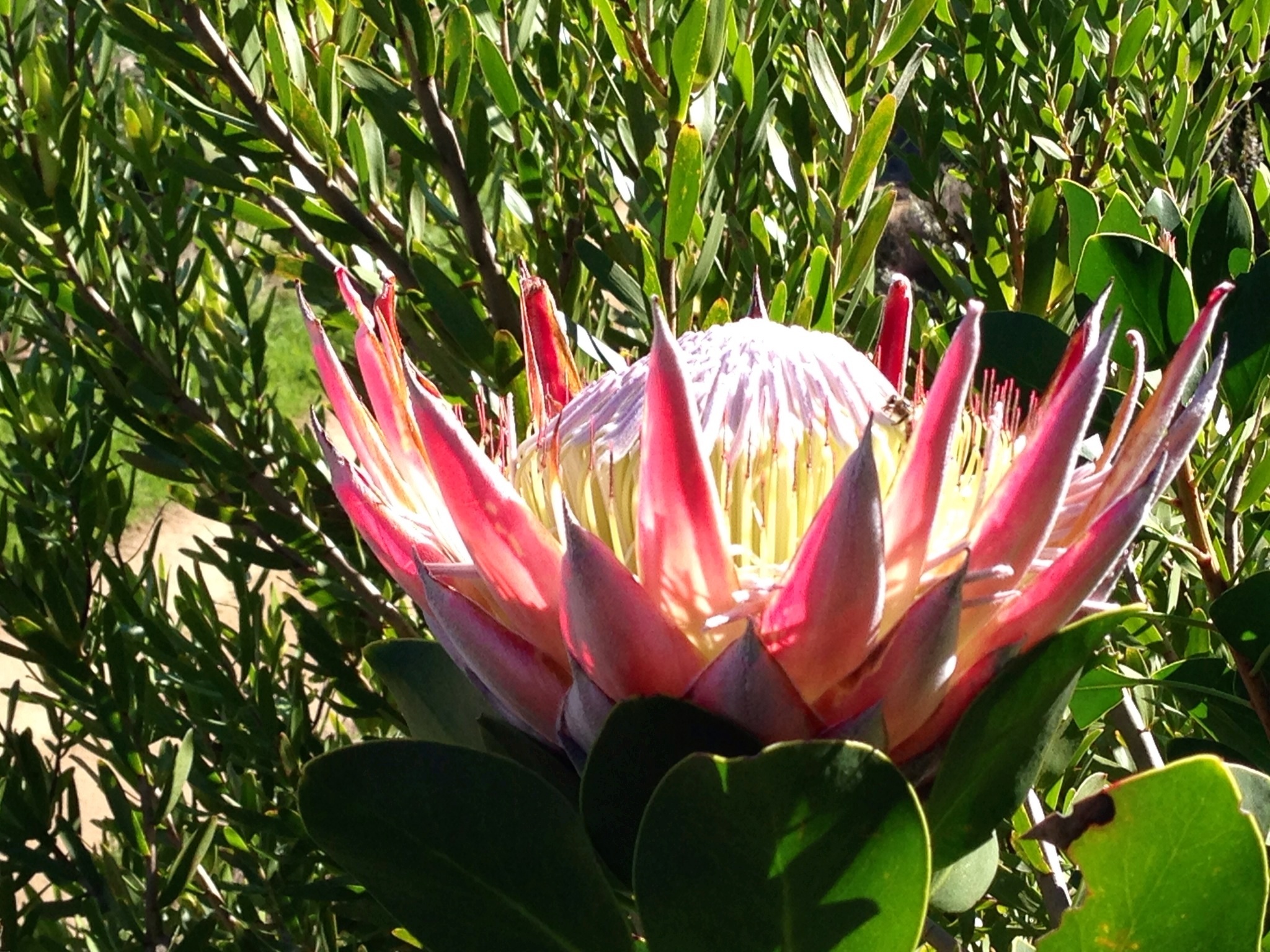
The magnificent King Protea is in flower and I’ve already posted it as “Flower of the Day”.  Here’s a different photo – note the bee – the absolutely love the proteas.  We have a wonderful relationship with a local beekeeper who puts hives on the farm and makes fynbos honey.  That’s what he pays us in and we have a constant supply of delicious honey from the farm.

Protea cynaroides - The Kind Protea

Protea cynaroides – The Kind Protea

When I saw this pink shrub I thought it was an Erica with particularly profuse flowers.  But it looks very like Muraltia scoparia, a purple gorse that grows on the West Coast.  That makes it very unlikely that it grows here.  When I get out next I shall investigate and verify.  It is amazing.

Muraltia scoparia

Muraltia scoparia

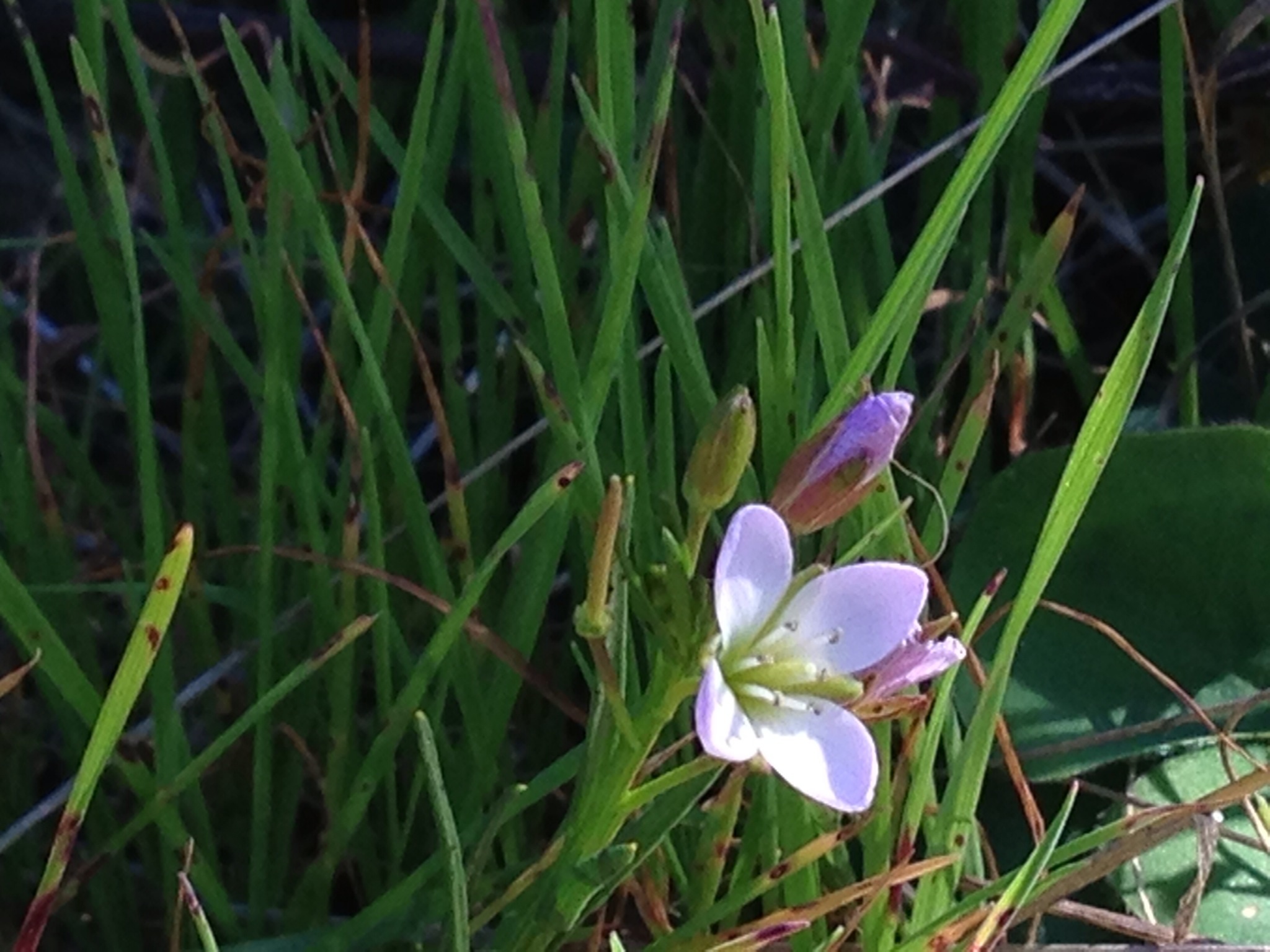
As I came back from looking at the pink shrub, I came across this pea-like flower with distinctive white tufts.  It’s quite low growing and discrete and grows in an area where Peter has cleared the alien trees from the riverbed above the waterfall.  I think it is probably a little Polygala though I’m not sure which one. It is very distinctive so when I do find it we’ll be able to identify it clearly.

Polygala?

Polygala?

Flowing Water and Fowers – 28 June 2013

Home.  The desert sands of Qatar behind me at last.  It was a shock to return to glorious green after the thick humid sandy air of Doha.  It seems it’s done nothing but rain since we left home three weeks ago and the farm has a rich sodden feel to it, with water roaring through the river and tumbling down the waterfall.  The roads are in need of maintenance, full of rivulets and potholes but the seeds I planted in the garden before we left have all sprouted into healthy young plants and the fynbos is settling into a winter burst of life.   Seamus, the senior wolfhound, is joyous at my return and cannot bear to leave my side.
The dogs and I went for an evening walk, inspecting some of our usual routes, the dogs looking for new smells, and me looking for new flowers.  We started down in the stream below the house that leads to the damn.  The banks are lined with Arum Lilies at this time of year.  Just as the luminous grasses have disappeared the lilies flower along the rivers and roads all winter and their beauty speaks for itself.  We have a few months of them ahead, and there will be a lot more pictures to come.
Image
Arum Lilies
The great thing about this blog is that it focuses the mind on home, on the magnificence of this land and the plants that grow here.  I’ve seen Chasmathe all over the Cape, they remind me of the Montbretia that grown wild in Ireland, another South African wild flower that grows all over Ireland’s verges and banks in the summer.  At first I thought it was the same flower but Montbretia doesn’t grow in this part of the world, it belongs further north in a summer rainfall area.  This Chasmanthe is lovely, another of the anchors of a certain time of year, this winter time, when growth is rich and lush and yet only a herald of things to come.
 
image
Chasmanthe, most likely floribunda, but to be verified

When we moved to the farm eight years ago this little red creeper was one of the first flowers to awake my interest in fynbos. The flowers are tiny, smaller than my little fingernail and they appear suddenly in midwinter, winding around the stems of thicker fynbos. Despite their tiny size the jewel-like coral jumps out of the greenery and draws the eye. We will have them until mid-spring or later, all over the farm.

Microloma tenuifolium

Microloma tenuifolium

We could hear the waterfall long before we saw it – with the rainfall we’ve had in June the rivers on the farm are roaring and the land feels replenished.

The Waterfall

As we walked along the new road that leads to the waterfall this enchanting sight greeted us.  I don’t know what to say or even think about the
pelargoniums; though are stunning, charming, and endlessly delightful the sub-species seem impossible to identify.  Our new road is a pelargonium nursery and they thrive here all year round.  At least this one allowed me to take a good picture – gracefully gleaming in the evening light.
Pelargonium - subspecies unknown

Pelargonium – subspecies unknown

Pelargonium

Pelargonium


The books have a few pelargoniums but they don’t seem to flower at the right time of the year.  We have dozens and the best I can do is document them and find a real expert.  Some of those that I’ve transplanted to the garden are doing really well, perhaps that will help.  They are endlessly endearing.  My grandmother grew them, pelargoniums and geraniums, nursing them through the Irish winters.  She would have loved this place; not lush like Ireland with it’s dense choking green; more selective; intense; dramatic – she would most definitely have appreciated the drama.  It was her birthday on 22nd June, just after midsummer.   I was in Doha, so missed the shortest day of the year on the farm.  Today is the shortest day we will see this year, and this is the most north-westerly sunset, far over the Paarderberg.
Sunset over the Paaderberg  28 June 2013

By mid-summer this sun will set far to the South of Table Mountain.

My love of botany is definitely inspired by her, and by my stepgrandmother, both of whom were dedicated and knowledgable horticulturalists.  I thought of them both this evening as we descended in the gloom.  Two women, one Irish, one English, both Catholic, both of whom were born in one world war and raised their children through the next.   Gracious women, much loved, characters, who instilled in us both values and manners. They loved their gardens and gardening brought them together, unexpectedly and into a lifelong friendship.  They admired one another and both of them would like to know they are remembered and that they continue to inspire us.  

The Ericas are coming out all over the farm and I have not yet identified this one – a detailed book on Ericas as we as Pelargoniums is most definitely called for. The Erica family runs to 660 subspecies in the fynbos region, so we can’t expect to identify them all, but it will be fun to see how many we have on the farm and I will start a library page on them soon.

image

Stormy Weather 4 June 2013

We have been having the most dreadful weather.  Day after day with torrents of rain and low cloud on the mountain, we can barely see a flower, never mind try to photograph one in the gloom.  This morning when I woke up there was silence.  No rain drumming on the zinc roof.  If I don’t run for a few days I feel horrible and miss it and worse, I know it will be harder when I do get out there.  It’s cold, there is probably snow on the mountain above us but the thought of fresh air and happy dogs was enough to get me up and into running things.  I took the precaution of wearing a rain jacket on top, in case the deluge came.  

In the gloom and the early light I didn’t expect to see much and it’s true that there is nothing new.  I suspect we need sunshine and a little warmth to encourage flowering.  One plant that has come out in profusion is the wild rosemary.  The tiny white flower is too delicate and subtle to capture in the half light of the early morning but they are everywhere and will be the subject of a future blog.  

Jumping out of the gloom are the lime green leucadendrons and Maebh the wolfhoud (pronounced “mave” as in “wave”) chose to position herself photogenically behind them.  I think she may be taking lessons in modeling, she’s certainly getting better at posing fetchingly for the camera.

image

The leucadendron was particularly stunning in the morning light – a photo of the mountain shows the green shrubs glowing in the gloomy morning.

image

Close ups give you an idea of this lovely wild, winter flowering shrub.

image

image

The proteas start flowering even before the rains come, typically in late March and continue for months. They love the rain and the flowers gleam white while the buds can be bright pink.

image

image
Protea Repens

Another pink protea is the nerifolia which flowers prolifically at this time of year. I went up this evening to see if the evening light would let me capture the waterfall and chanced on this one as the first rays of sunlight we’ve seen in days caught it.

image
Protea Nerifolia

Peter told me that with all the rain the waterfall would be looking spectacular. There is a story to this – when we bought the farm this entire area was covered in alien vegetation. We started a programme of clearing those trees, hundreds of them, and revealed an old road, which must have lead up to the pass over the mountains, and this beautiful fall of water from a permanent stream. We’ve planted some indigenous trees, continue to do the clearing and we’ve seen the most amazing resurgence of fynbos in this area. The fall is hard to photograph as it sits in a crevasse that blocks the light, you can see the shadow – at this time of year the late flash of sunlight sneaks into the crevasse and nearly catches the water, so at leasst you can get a sense of it. There must be a moment when the light is at just the right angle and I’ll endeavour to be there when it does.

image

It’s raining again now, but as I walked home in the last of the light the sky seemed to hold a promise of better things to come. After 10 days of almost constant rain and increasing cold we’ll welcome a little sunshine. This photo of the road that leads from the main farm down to the farmhouse wouldn’t win any prizes, but I like the gleam of wet on the road and the glimpse of blue in the sky. We need this rain in the winter, it keeps this land fertile and the more rain now, the better the spring flowers will be. The dogs and I hope for better things and brighter runs for the rest of this week.

image

image

15 May 2013 Misty morning run, sunlit evening departure

Here I am, sitting in a hotel room in London, going through the photos and evoking the memory of my morning run the day we left.  I can smell the wild rosemary and the cool misty air and imagine the rush of happy hounds as they head off to inspect all their favourite places.

The night before I left I had a meeting in Cape Town and driving up the drive at about 11.30 at night a huge presence emerged out ofthe night.  It was such a surprise that it took a second for recognition to kick in .  A porcupine, a large, ungainly porcupine with his quills fanned in outrage as he bumbled off the road and into the night.  What a lovely sighting.  We’ve always known they are on the farm because we see their quills, but our first ever sighting was only a month ago on the same road, so he must have changed his routine and perhaps we’ll see more off him. I didn’t have the presence of mind to photograph him; maybe next time I’ll be quicker.
I went early for my run the day I left and it was too dark to see much or to take good photos.  There are mornings when the valley is covered with fog, lapping at the foothills like waves on the beach. The world below us disappears and we float on the white sea clothed in clear morning light.
 Image
Not such a good day for flowers but I did capture one photo of Seamus looking particularly like himself, standing in his favourite spot.  It’s a little dark, but you get an idea of him.
 Image
Some plants seem to capture the light and glow in the gloom.  One of the is the Leucodendron, a close relation of the protea.  I’ll write more about these when I get home, the farm is covered in them and they are the most elegant of plants.
« Older Entries Recent Entries »