Category Archives: Uncategorized

Summer

As spring turns into summer the intense proliferation of new flowers on the mountain is dying back and I don’t really expect to see new things as frequently. So far there has been something new on each of the 50 runs that I’ve done since I started the blog. That won’t continue when the summer sun sucks every last bit of moisture out of the ground, leaving it rock hard, dry and dusty.

Summer running has quite a different feel to winter running. The wind for a start; when it’s hot and dry the famous Cape Doctor, the southeaster, howls over the mountain, shredding all but the hardiest plants in the garden. Suddenly it is clear why so many fynbos plants have tough spikey or needlelike leaves. They need them to survive the wind and the summer drought.

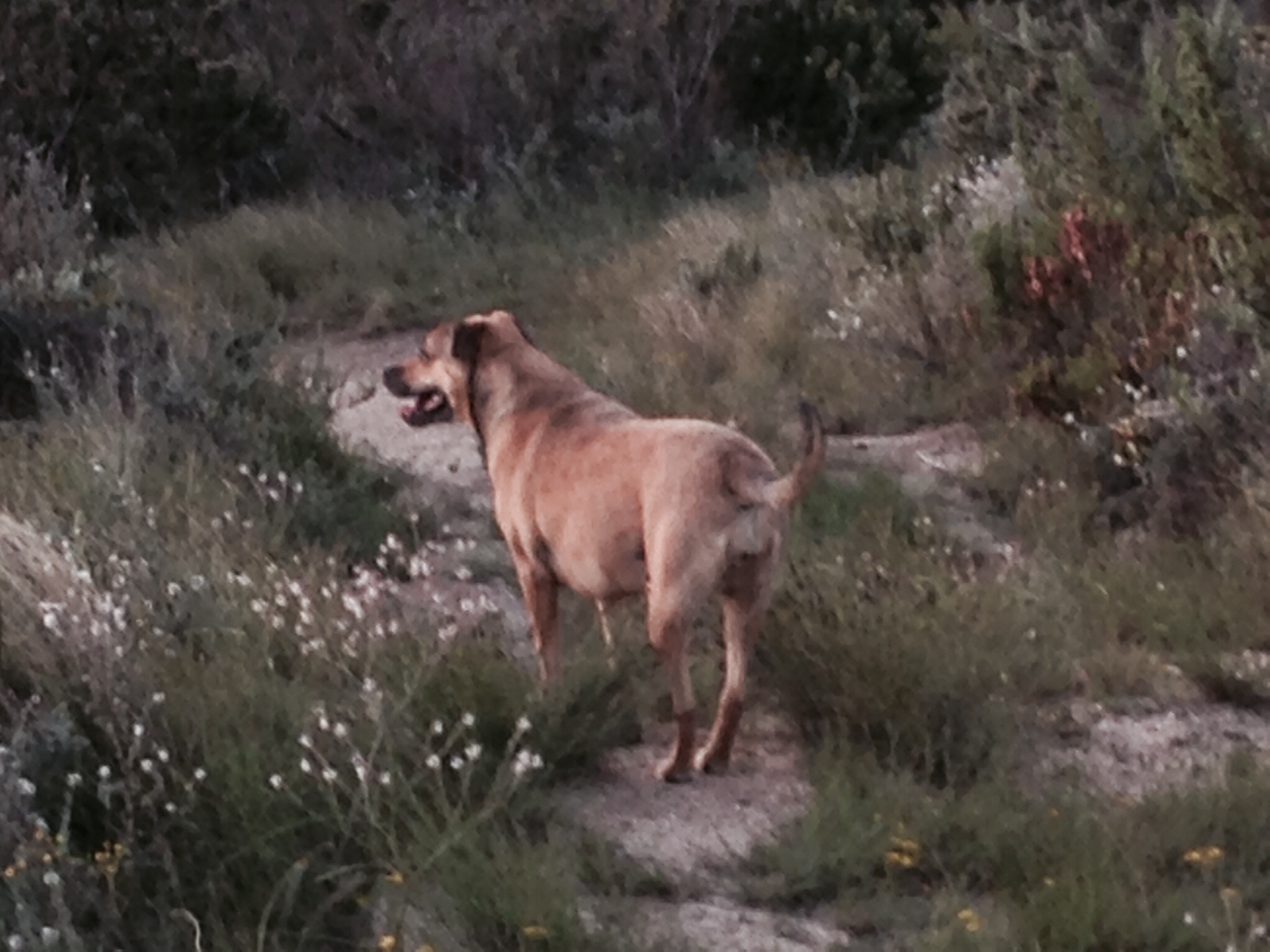
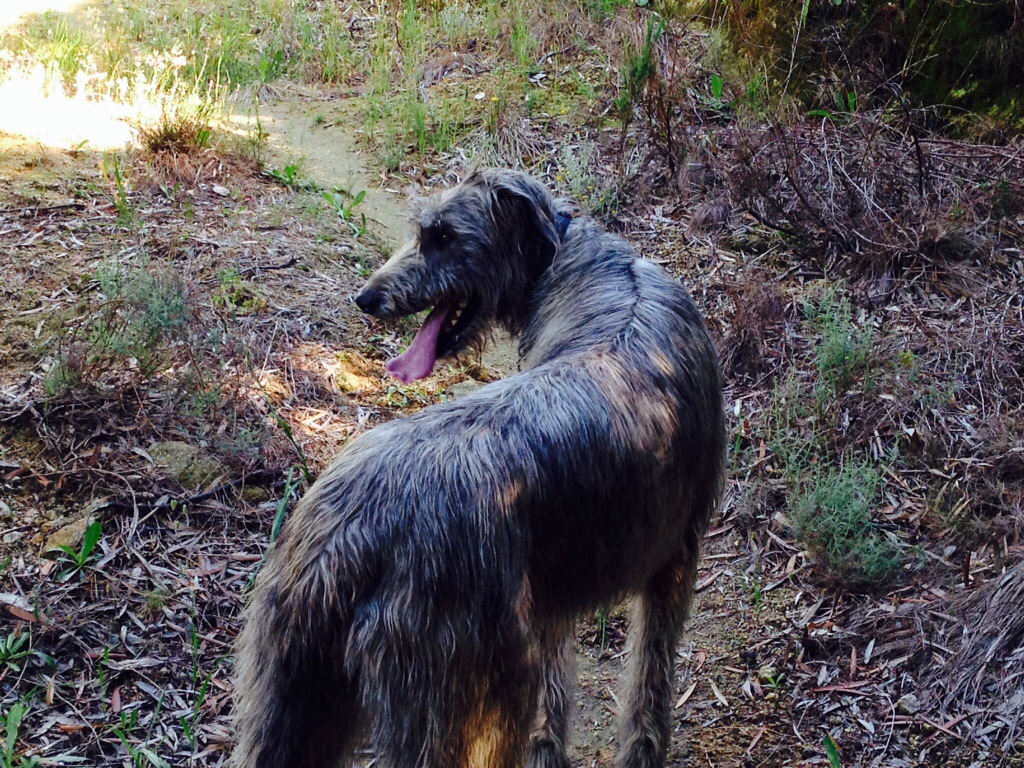
We did some quick runs with no photo stops last week on a route that we run quite frequently and then on Friday morning the dogs and I decided to go for a proper blogging run to the highest point of the farm where there a shady damp road that always has something interesting to look at. When it gets hot like this we seek out the few shady groves, damp areas and streams to get a break from the relentless morning sun. Maebh as she often does, posed for the camera. Perhaps not the best ever photo of her but the colour of her coat is gorgeous in the dappled light.
20131126-084429.jpg

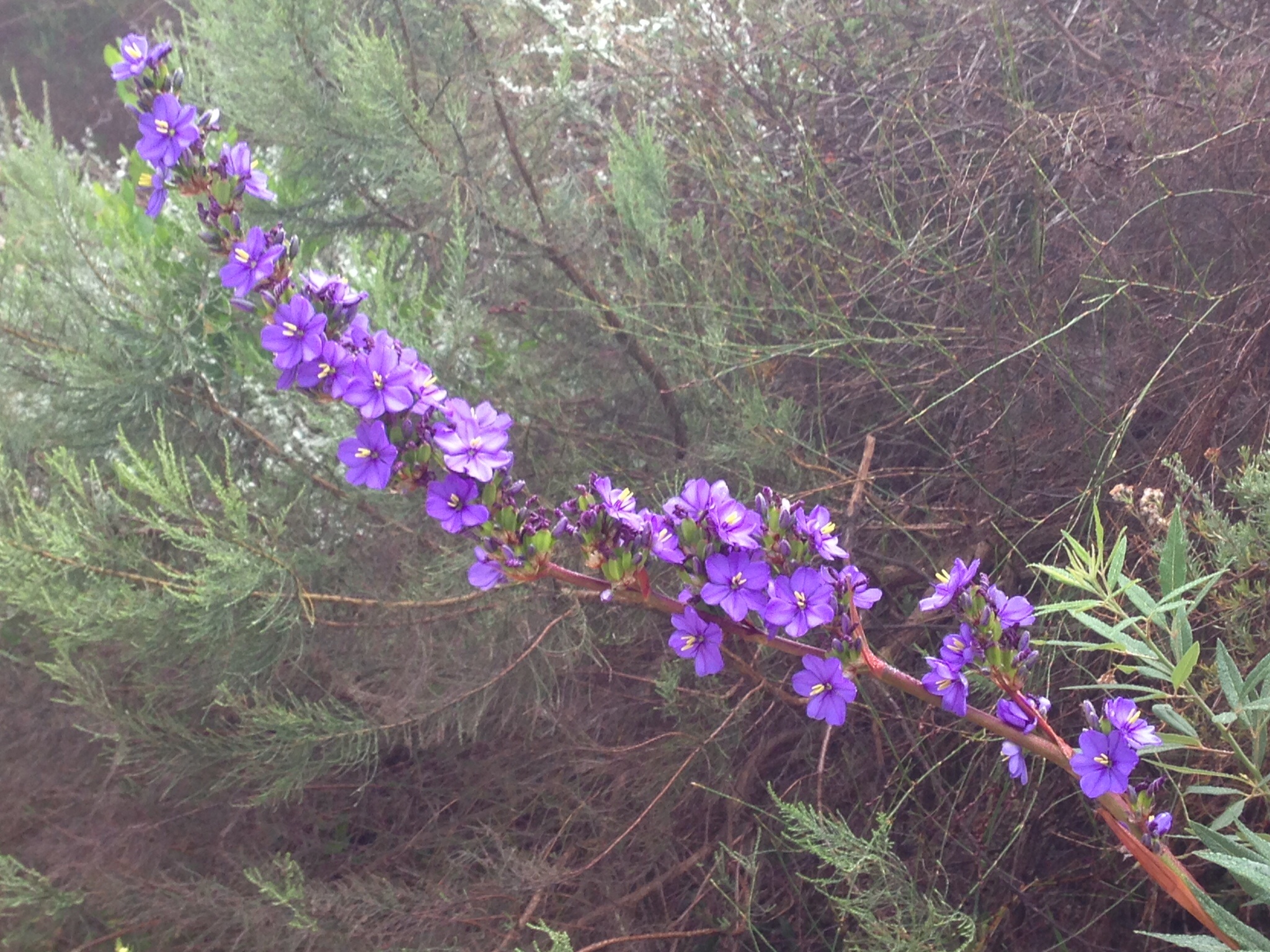
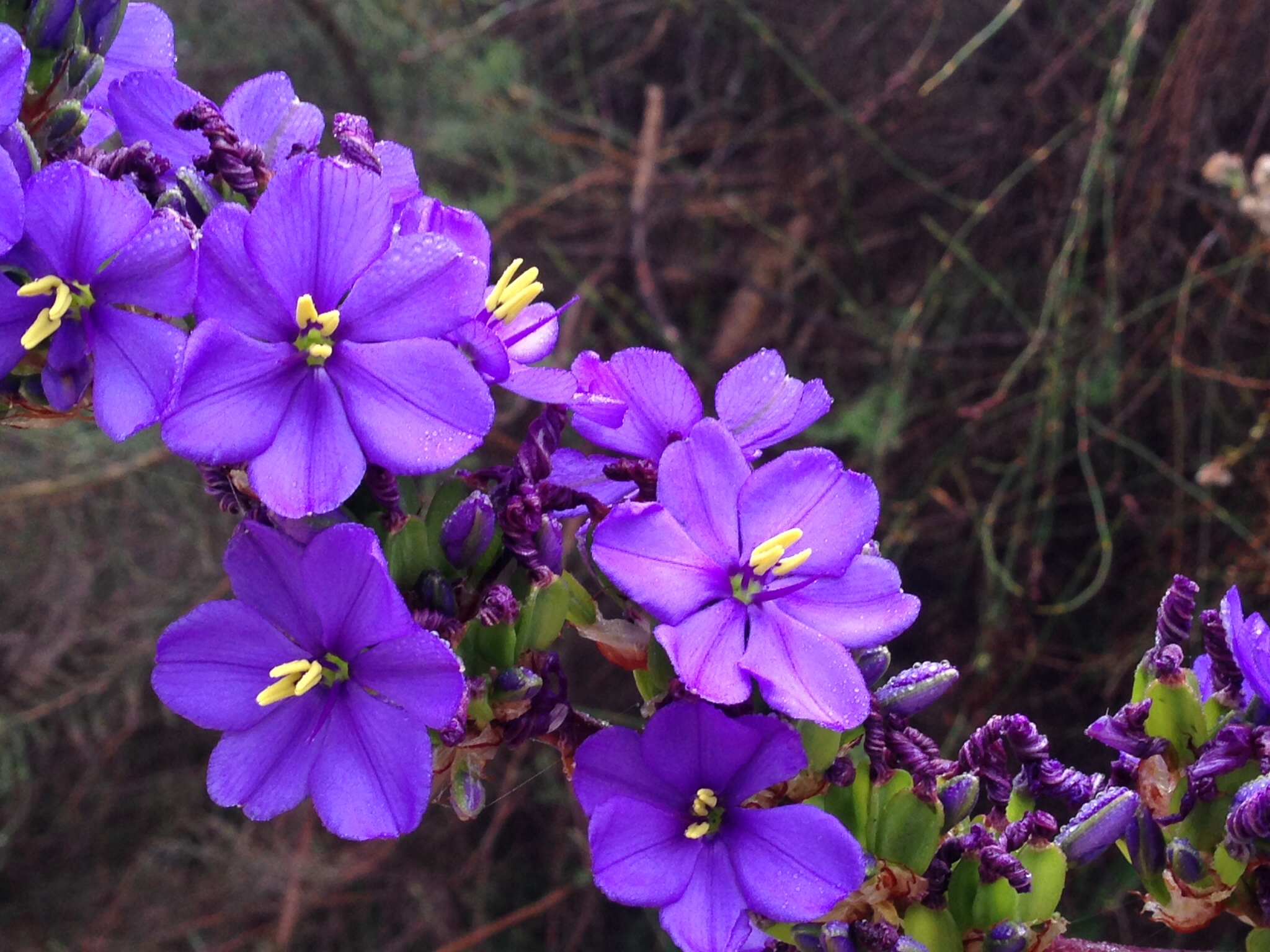
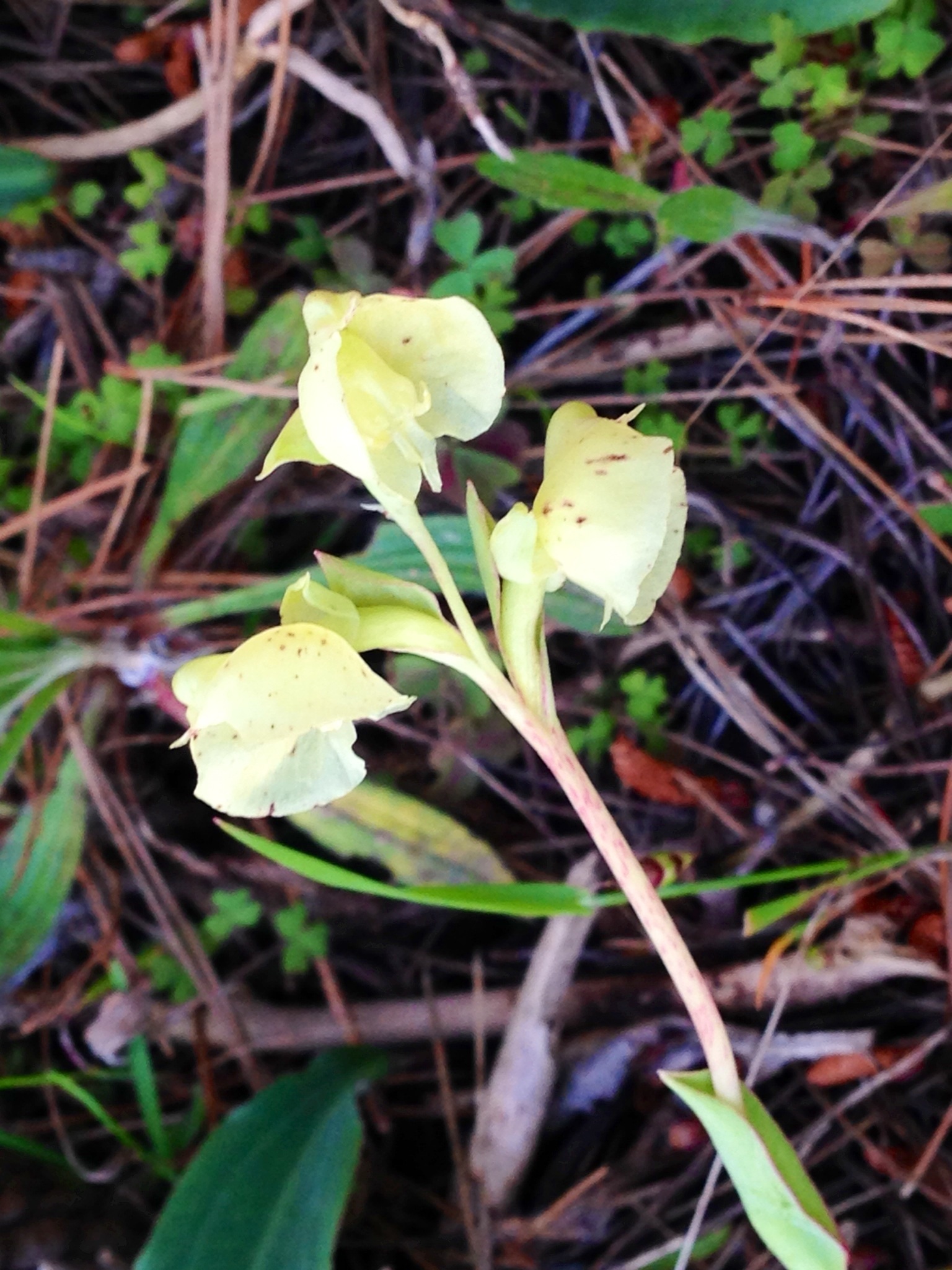
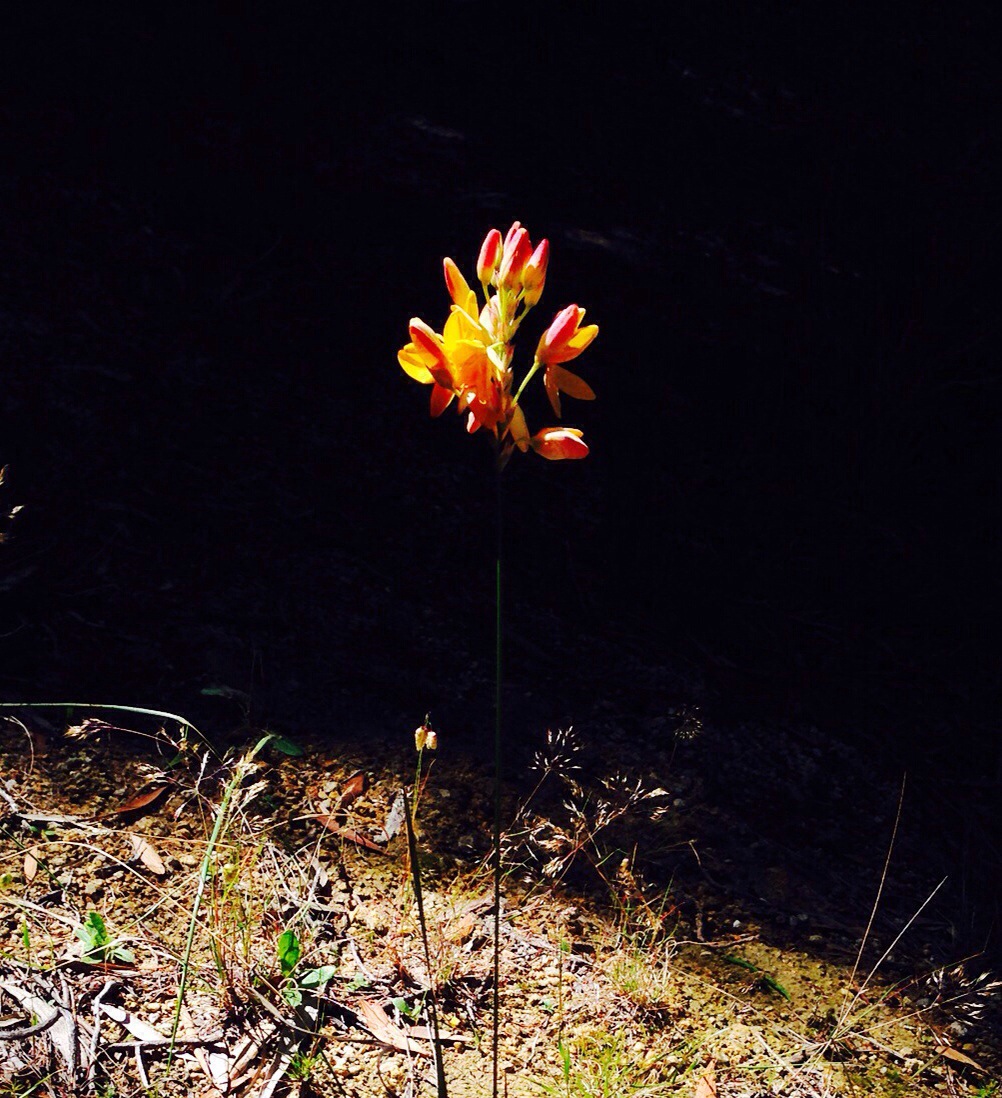
Just a little further on, caught in a pool of sunlight, stood this amazing flower. Although I can’t find it in the books, the slightly twisted sword like leaves tell me it is a kind of Gladioli and if I have some time I’ll hunt through the Fynbos Bulb Encyclopedia to see if any of the descriptions match this. I love this photo, the flowerhead in a pool of light against the dark shadow of the trees.
20131126-084910.jpg

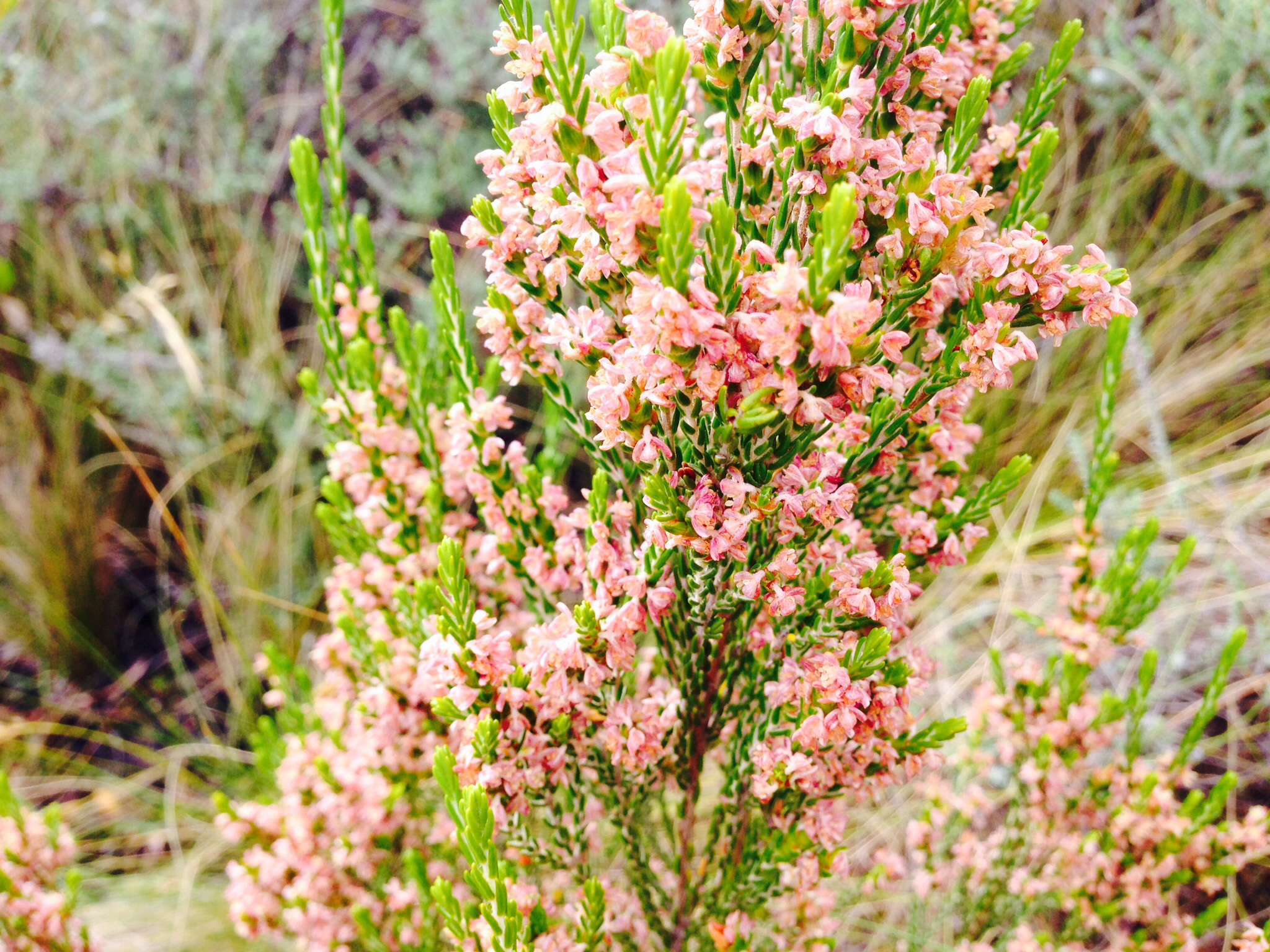
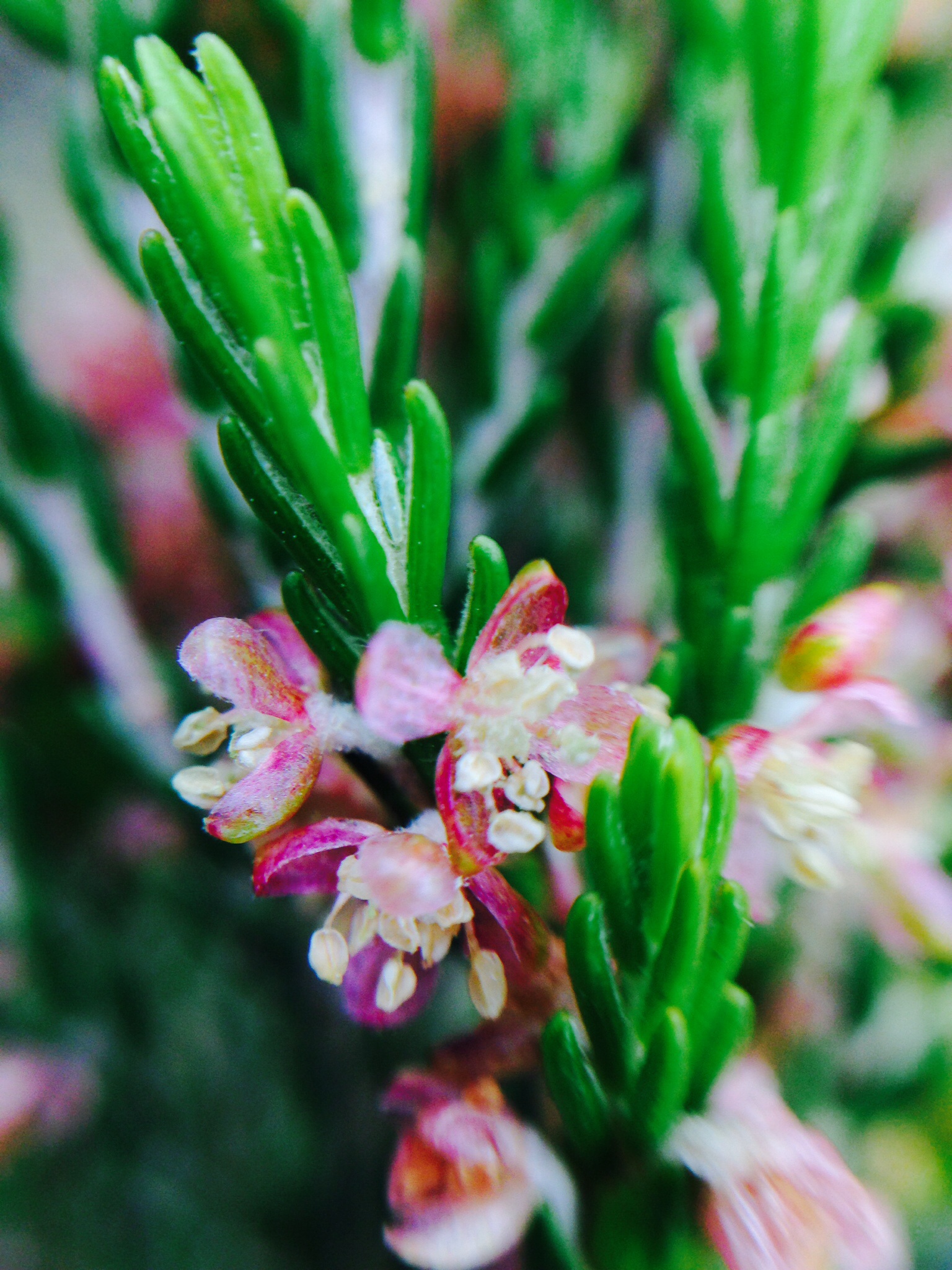
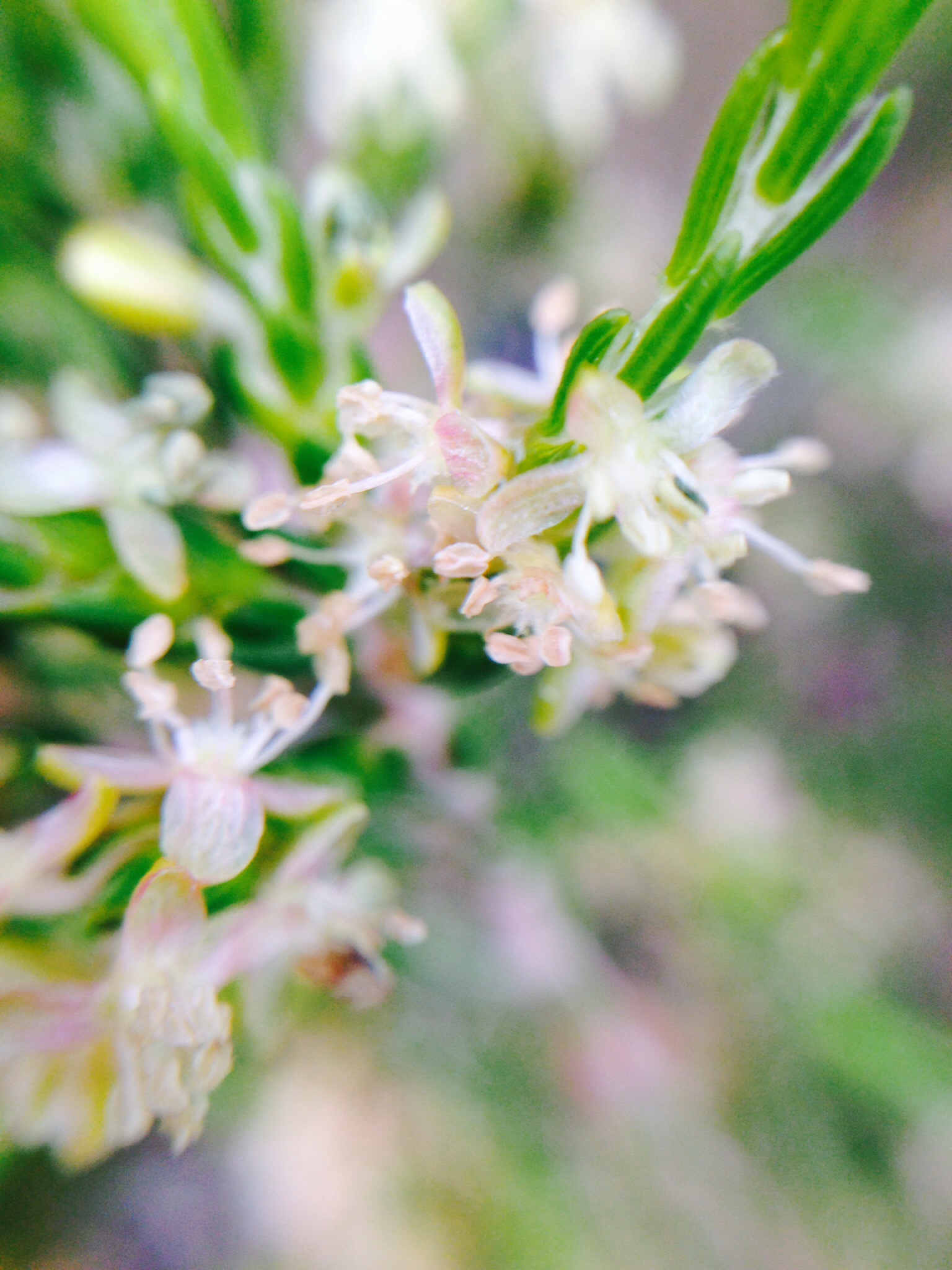
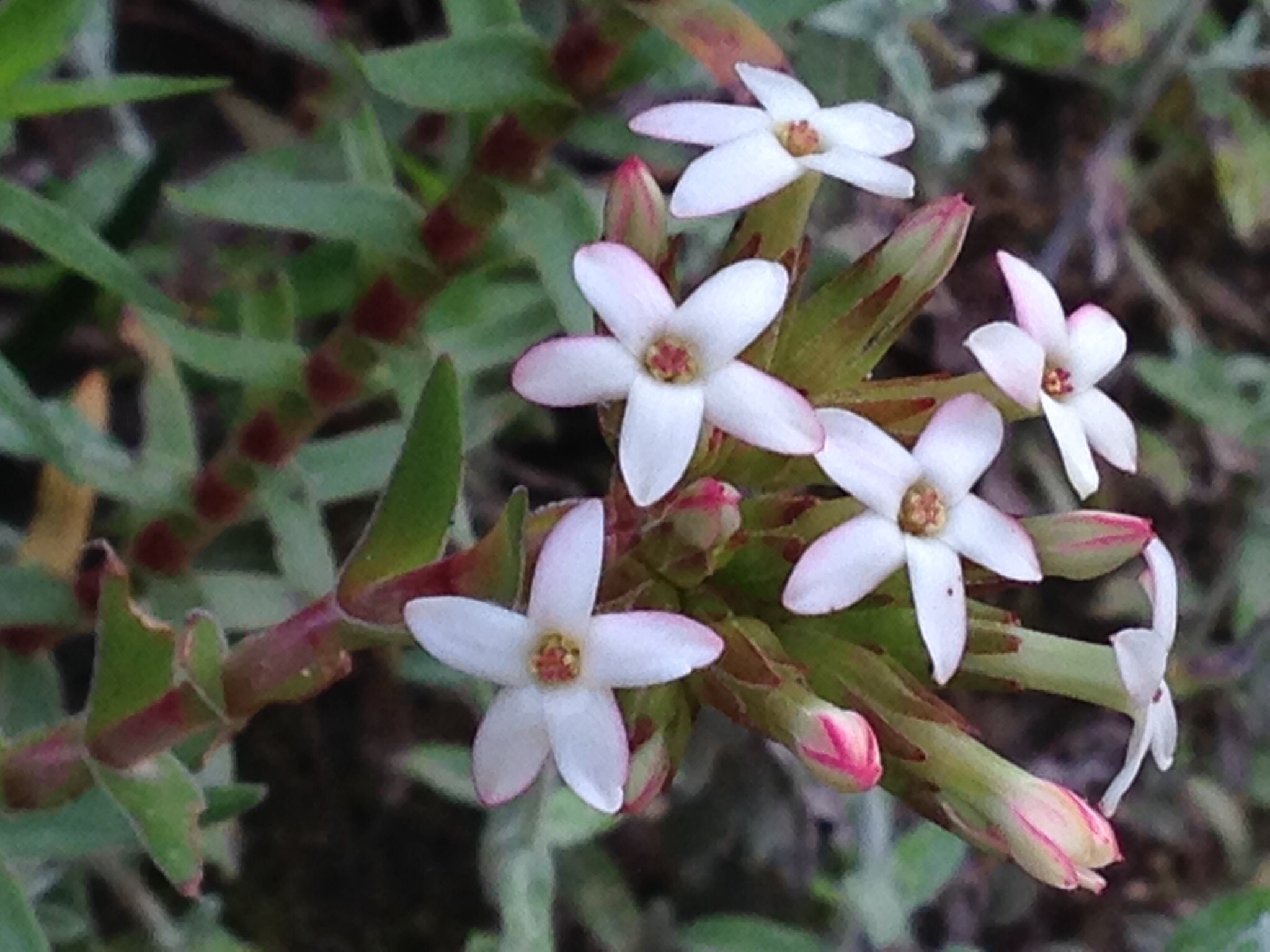
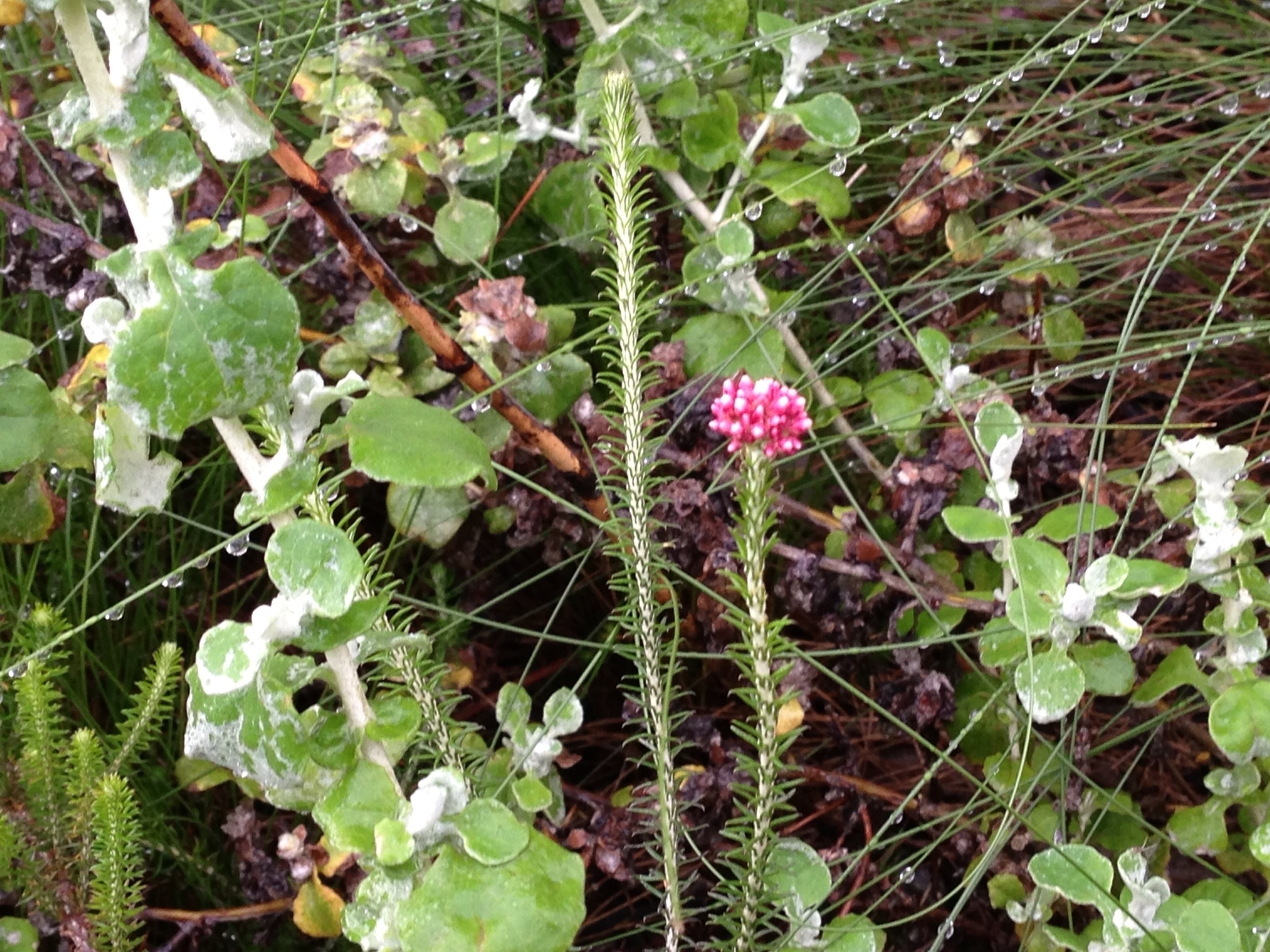
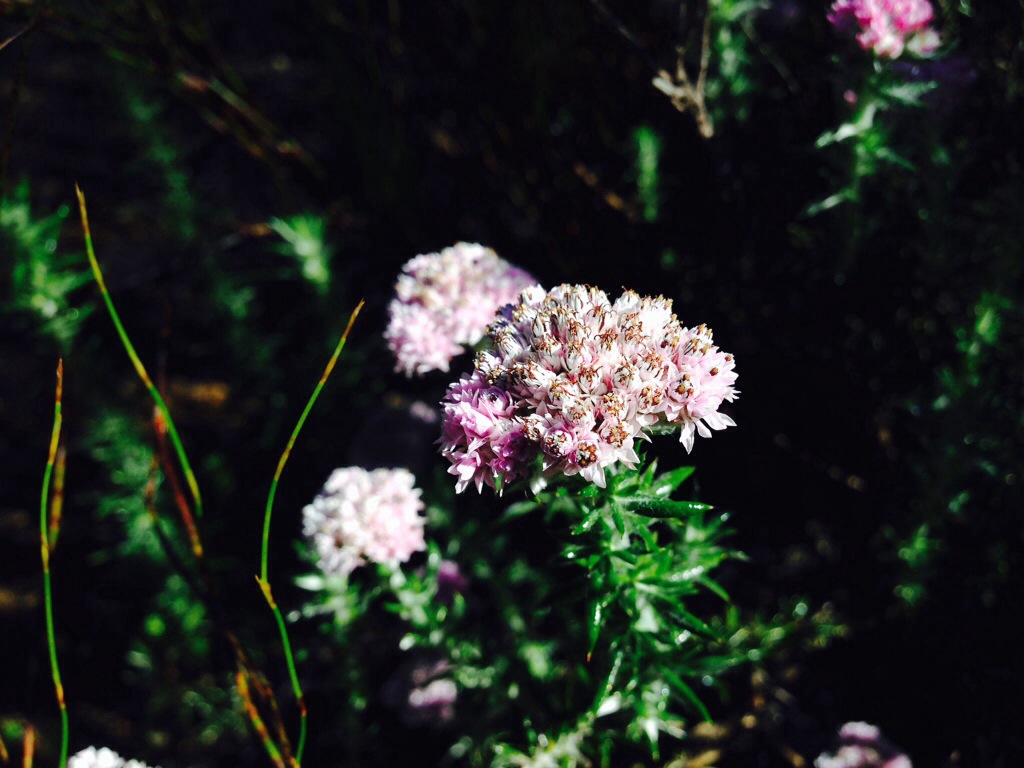
I’m never 100% sure that I have identified this flower correctly – there are 52 fynbos subspecies in the Metalasia family and the photos in the books are not great. I’ve published photos of them before and I couldn’t resist this one with its spectacular pink flower. I believe it’s Metalasia divergens.
20131126-085104.jpg

20131126-085113.jpg

Too many flowers

This is what happened.  An explosion of new flowers arrived during a particularly busy time when I was doing a lot of travel.  It is still the case that every single time I go out on the mountain I see something new.  Which can get quite intimidating as it builds up.

It’s Thursday morning.  I have my Pilates class one hour from now.  I have uploaded all the photos and am going to post them all, with as many identified as possible and in no particular order.

As spring has arrived on the mountain we get huge changes in weather.  One day over 30 degrees and a howling South Easter doing its best to kill off the newly planted Salvias in the garden, the next 15 degrees, pouring with rain and we reach for a warm sweater and a fire in the evenings.  The moment the sun comes out it and the wind suck every little bit of moisture from the ground which becomes unrelentingly hard.  When we run the dogs charge off to the water points and woe betide Peter if he has forgotten to fill the puddle at Fox Pan on the South side of the farm.

Meanwhile I keep hoping for a quieter life, but have a call tonight to discuss a client who would like us in Stockholm before the end of the year.  That’ll be a break from the summer heat in Paarl!

Great spikes of Microdon dubius emerge in areas of heavy vegetation.  One thing I note as I record the flowers is that some plants seem to like a bit of space around them, others prefer to grow with their friends in close proximity.

Microdon dubius

Microdon dubius

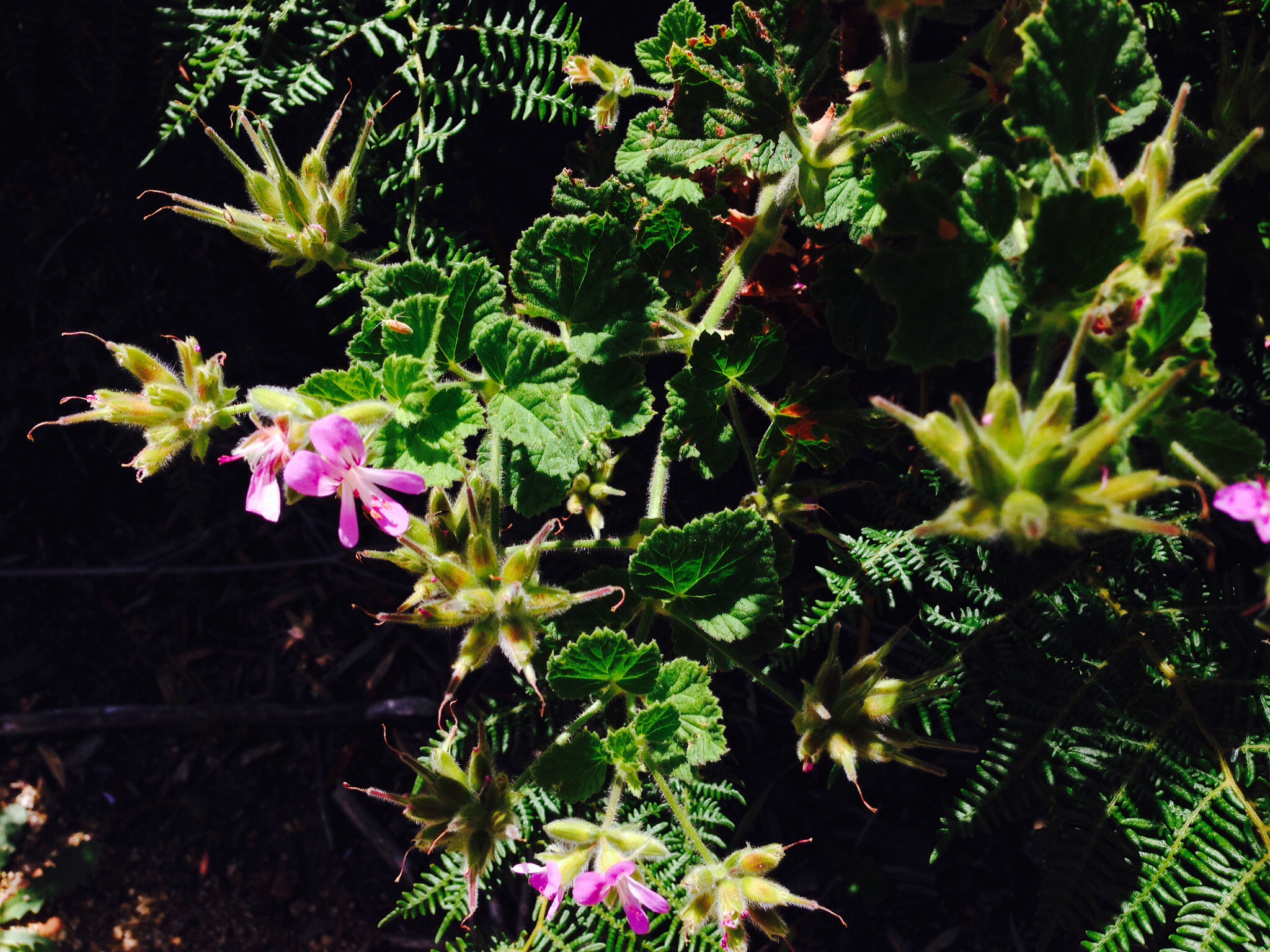
One that likes a bit of space is the Pelargonium.  I always struggle with identifying these but I believe this one is probably Pelargonium capitatum.  This is one of the few plants that has survived my not very green fingers and grown from cuttings to thrive in the garden.

Pelargonium capitatum

Pelargonium capitatum

I can never resist a good picture of Seamus looking his best on his morning run.

Seamus - king of the mountain

Seamus – king of the mountain

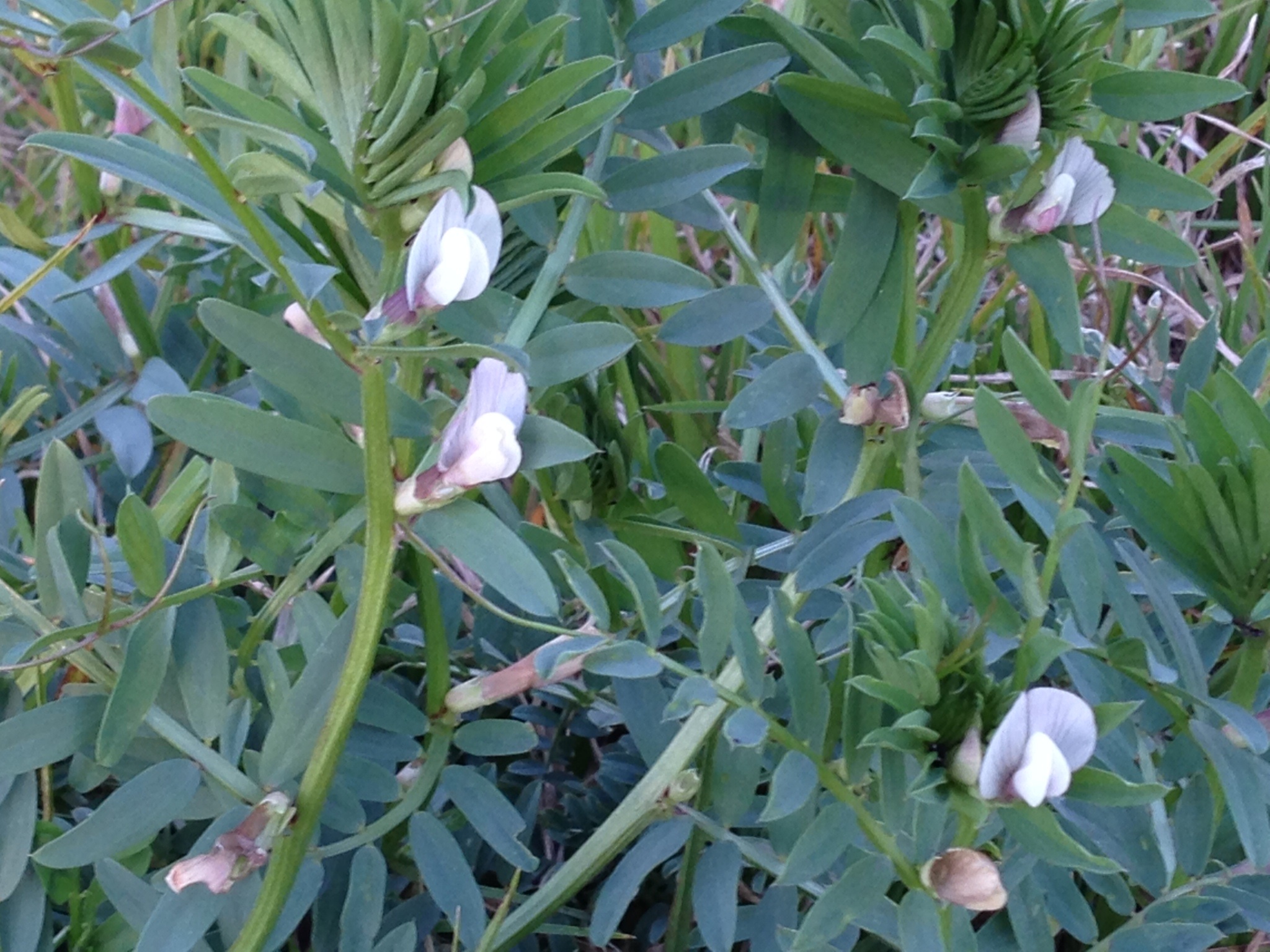
I’ve looked in all the books and still haven’t been able to identify this blue flowering probably member of the pea family.

Unidentified pea-ish blue flowers

Unidentified pea-ish blue flowers

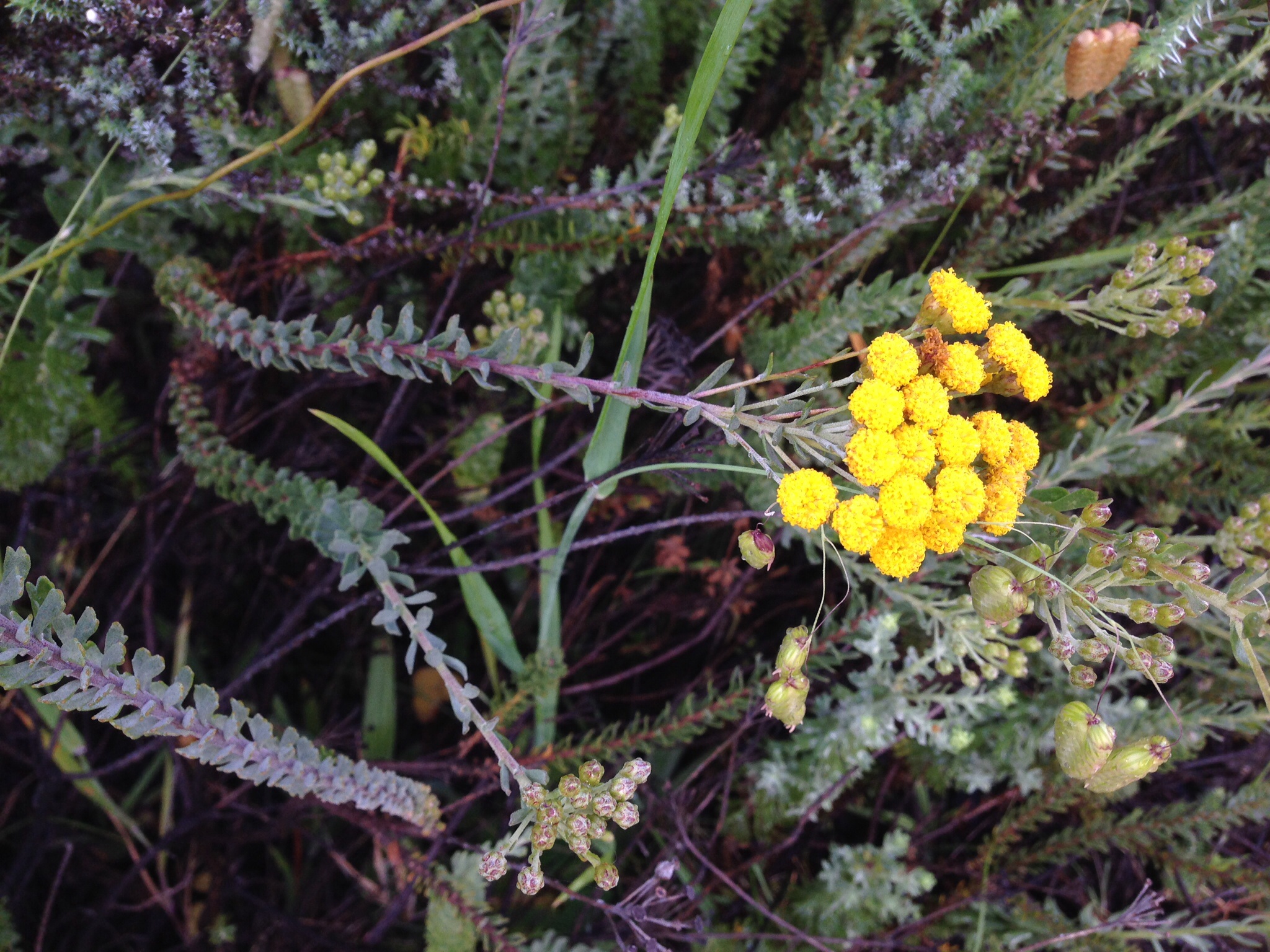
Helichrysum cymosum must be one of the commonest fynbos flowers of all and not less lovely for that.  The farm is covered with these yellow flowers that sit on soft grey foliage.

Helichrysum cymosum

Helichrysum cymosum

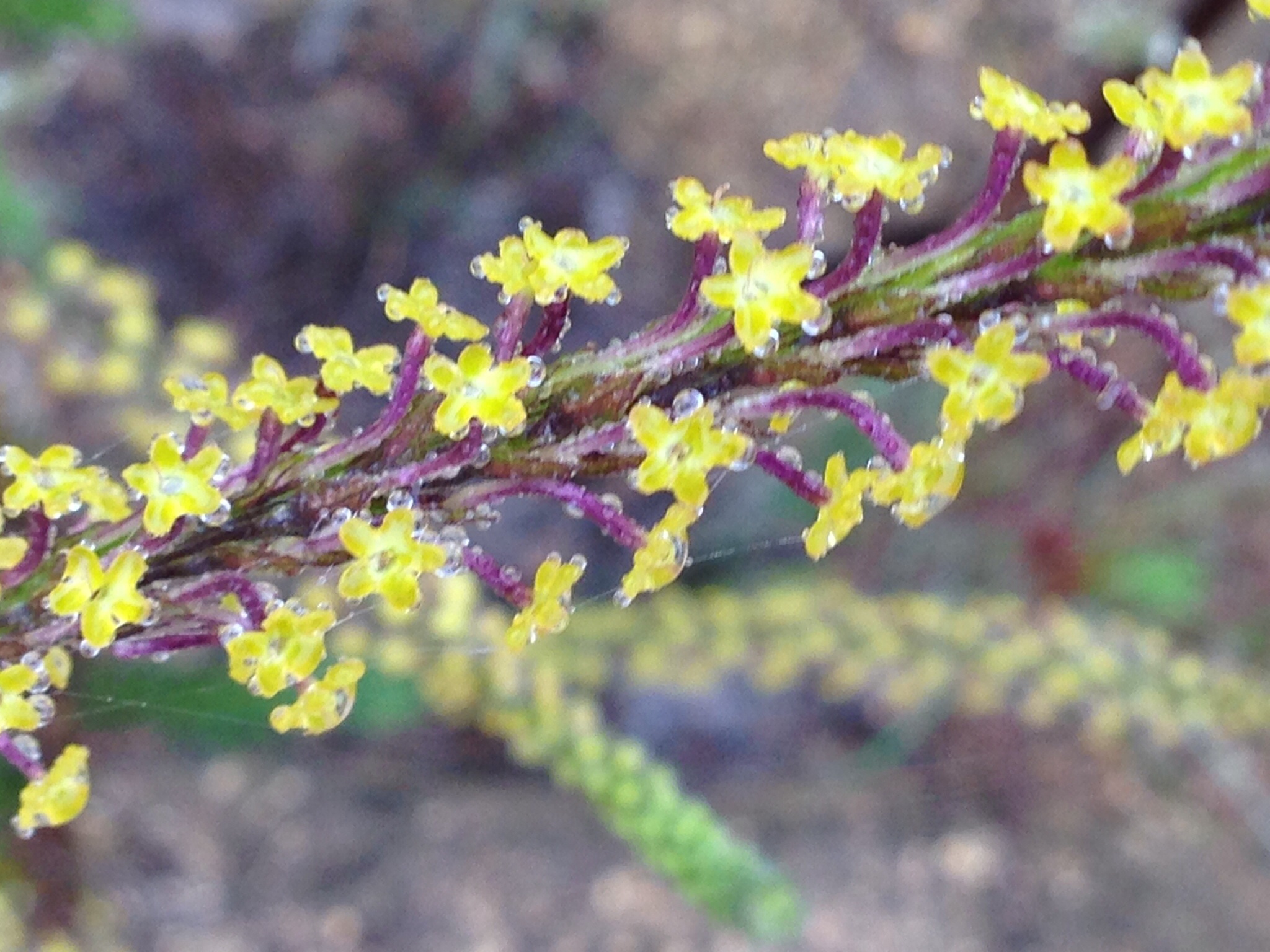
Another yellow flower, this one perched, in typical fynbos fashionb on a long spike.  Should not be too hard to identify but that will wait for another day.

For the record, to be identified

For the record, to be identified

This charming blue flower is common on the farm and goes by the name of Lady’s Hand because of the way the petals stand up like the fingers of a delicate hand waving.

Cyanella hyacinthoides - Lady's hand

Cyanella hyacinthoides – Lady’s hand

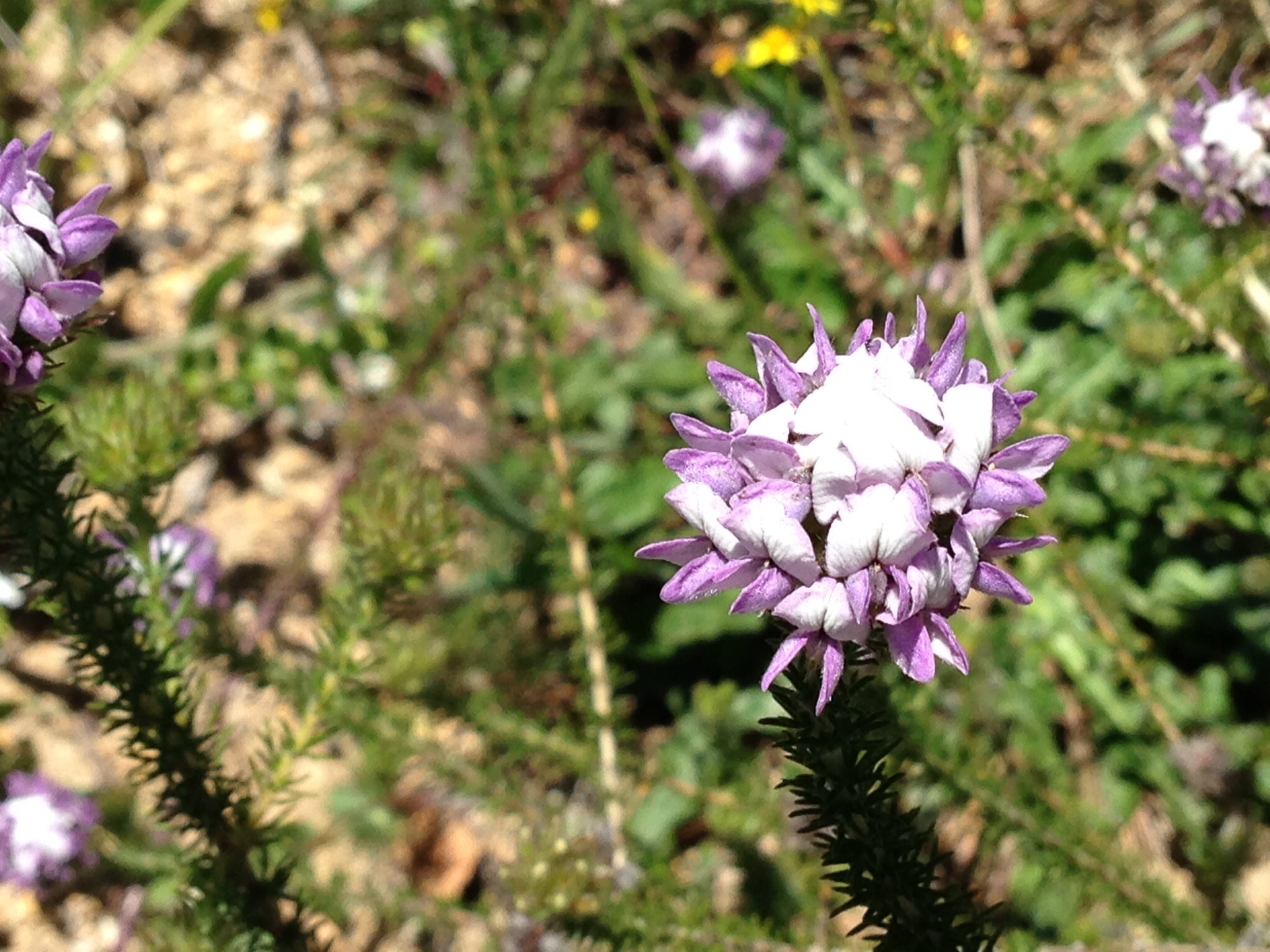
I know I’ve seen this one in the book, but will have to come back to give it a name. These rather scruffy shrubs thrive in a particularly dry, north facing area which here in the Southern Hemisphere eans they get the full blast of the sun.  They have suddenly burst into flower.  They come in pink and in white and in close up the flowers are delightful.

Name to be confirmed

Name to be confirmed

imageimage

There are a few more flowers to go but no time left.

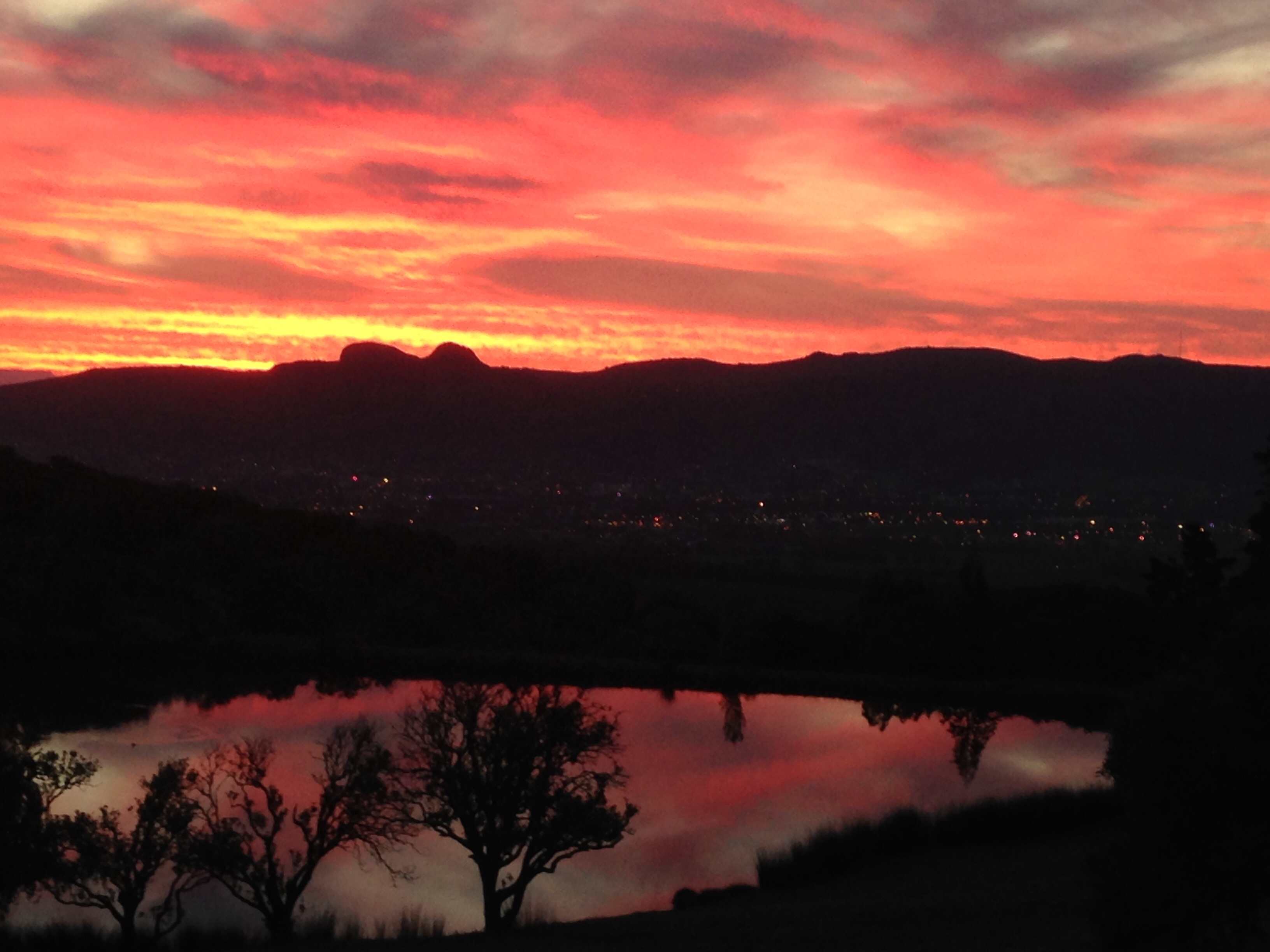
To finish, last week we went for an evening run on a grey cloudy evening and no glorious sunset emerged – until, well after we were back, the hall was suddenly lit up by the most amazing pink light.  I went onto the balcony and took this photo, no filters, just this amazing sunset which lasted no more than five minutes.

image


Flower of the Day: Gladiolus Angustus

The last week has been a busy one and there are quite a few new flowers to identify and post on the blog so a longer posting is overdue.  This morning’s run was quite rushed and quite hot and as the dogs and I panted over the top of the hill my eye was caught by this gorgeous gladiolus – one I’ve never spotted before.  The red arrows on the lower petals make identification easy, our flower of the day: Gladiolus angustus

Gladiolus angustus

Gladiolus angustus

Two new flowers in the morning light

On Wednesday I got up early, determined to run up the mountain properly and not stop for flower photos.  The weather was strangely warm and humid and as I ran down the road I couldn’t, of course, resist stopping to take a photo of this Crassula that has just emerged.  Crassula’s are wonderful things, there are over a hundred fynbos subspecies and I think this one is probably Crassula fascicularis and one of the best ways to check is to wander down the drive where it grows one evening at sunset and see if it is fragrant in the evening.

Crassula fascicularis

Crassula fascicularis

The other thing I couldn’t resist capturing in case it has faded before I get a shot in better light is the Painted Yellowwort or Sebaea exacoides.  Lots of it has suddenly emerged and it is much loved by insects, the red lines are sweet ridges.  It likes the damp so this very wet winter has probably led to this year’s prolific flowering.  If it doesn’t fade we’ll post a better picture.

Sebea exacoides

Sebea exacoides


An evening walk in the fynbos

No sooner does the weather improve when I slip in the gym, pull a muscle quite badly and can’t run. Which is not good for the purposes of identifying and recording all our flowers. This evening I really had to get up onto the mountain so I took the car and followed by the loyal hounds went up the mountain to see what’s happening. As always it’s stunning up there – we never get bored the dogs and I. They rush around investigating old smells and new, putting up the odd gerbil or francolin. I am endlessly fascinated by the changes I see, no sooner has something disappeared than something new takes its place.

I stopped on the way up to take a better picture of the Pterygodium catholicum, the little orchid known as the cowled monk. The summer southeaster that howls over us in dry clear weather has begun and it makes it hard to capture flowers close up as they quiver in the wind. So we may get a better picture on a still day, but on the other hand, they fade quickly and by then they may be gone.

Pterygodium catholicum

Pterygodium catholicum

All over the mountain the Felicia is out. I’m not quite certain of the identification but it’s most likely Felicia aethiopica.

Felicia aethiopica

Felicia aethiopica

Felicia aethiopica in close up

Felicia aethiopica in close up

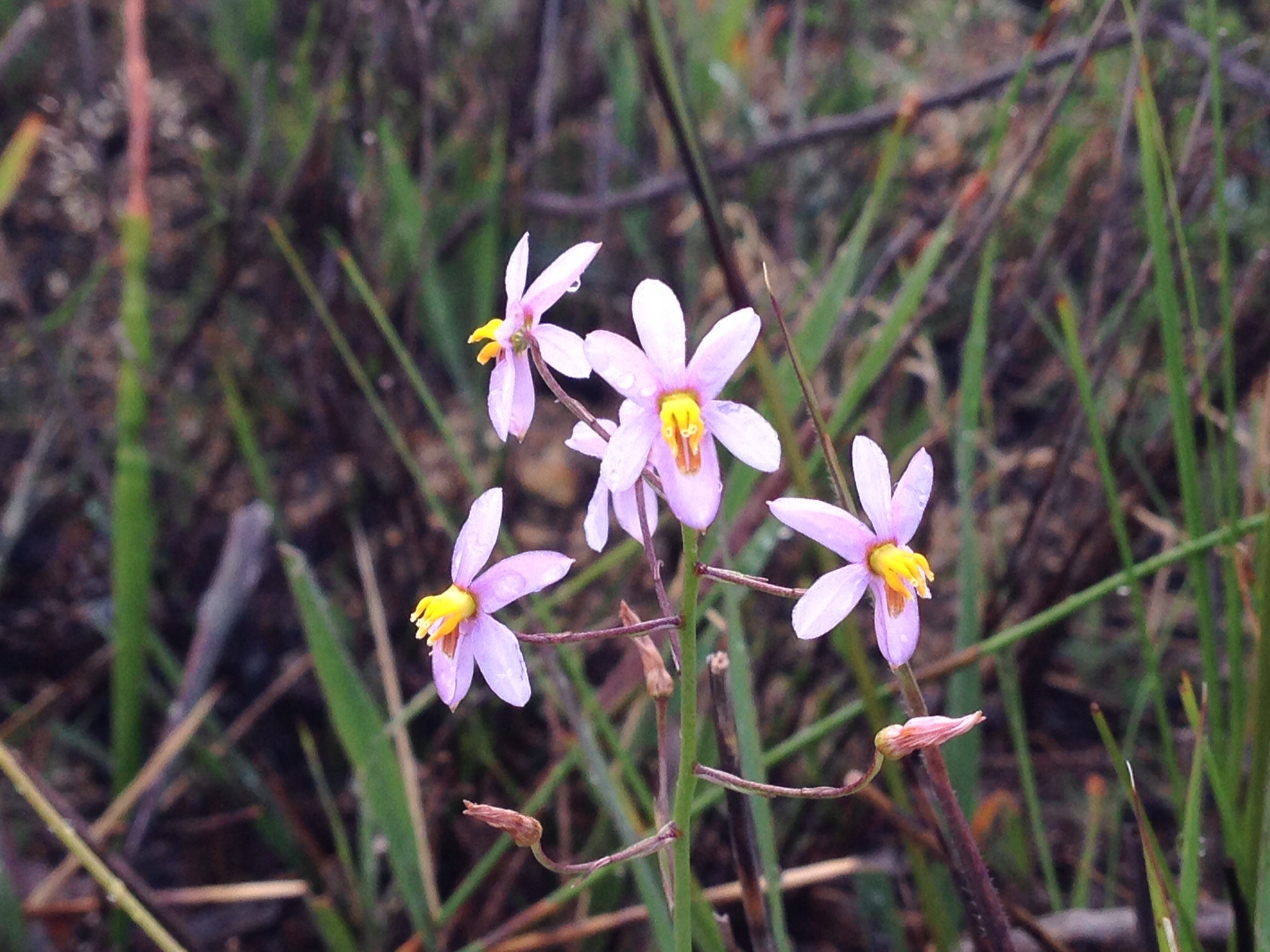
This starry flower, which I once confidently identified as Geissorhiza ovata is perhaps Hesperantha cucullata. It could be.It seems more likely when I look in detail at the flowers and leaves. Frustrating when they are so prolific, identification should be easy but it is not.

Hesperantha cucullata?

Hesperantha cucullata?

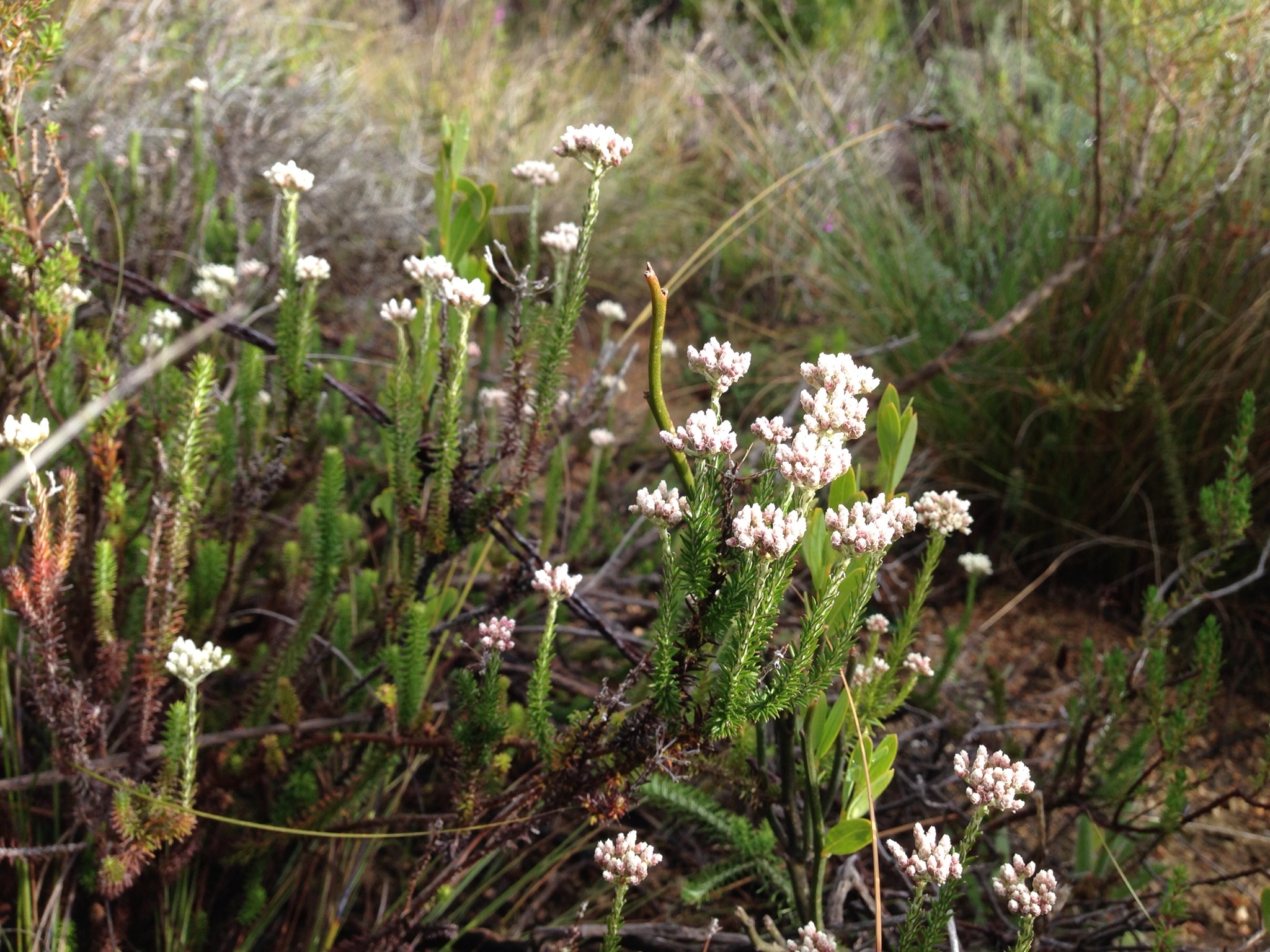
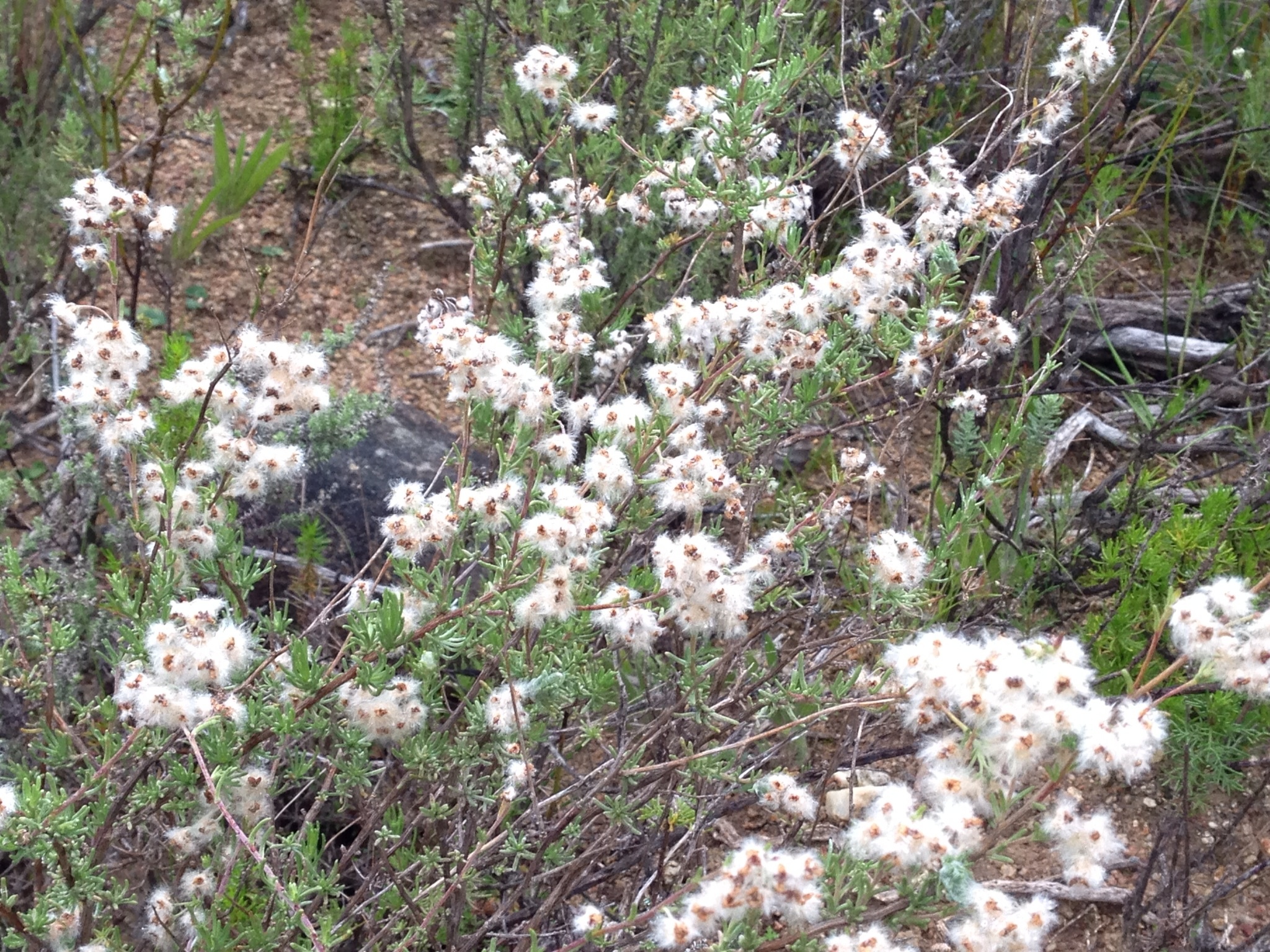
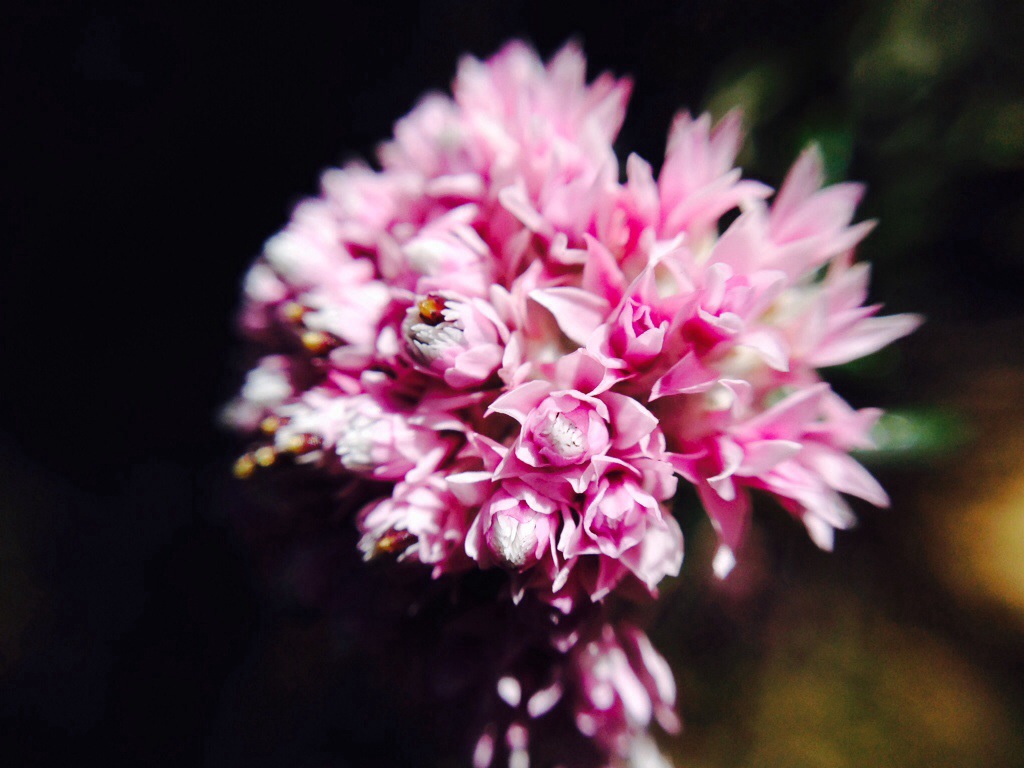
Another flower that’s hard to identify is this little thing. Quite small, it grows all over the place in little clumps of spikes with these fuzzy white or pinkish white flowers on the tips. When you photograph the flowers in close up they are amazing, like bunches of roses. This is quite high magnifications, so the pictures are not crystal clear but it gives you a sense of the extraordinary precision of nature. The detail is amazing. It is quite prolific but though I’ve looked and looked I cannot find it in the books.

Unidentified pinkish white flowers

Unidentified pinkish white flowers

The flower head

The flower head


Seen at even more of a close up - you can see that each tiny bud is like a miniature rose

Seen at even more of a close up – you can see that each tiny bud is like a miniature rose

I love this Erica. I can’t identify it, but these coral flowers will last all summer – Erica’s flower for months on end, it’s part of their charm. When I get a specialist book on Ericas I will identify it more correctly.

Coral flowered Erica

Coral flowered Erica

As we stood at the top of the farm in the fading light Jemina Chew stood on the path among the flowers, looking around, enjoying the evening.

Jemima Chew pauses to enjoy the evening

Jemima Chew pauses to enjoy the evening

And as the sun slipped behind Paarl mountain, it still lit the shimmering misty space between us and Table Mountain and Table Mountain glowed pinkly 60 kilometres away through the evening air.

image

An orchid known as the Cowled Friar

I’m sitting in the back of a 737 as I write this. I should be writing reports for work but my flight was delayed and I’ve been shunted onto a different, very full plane. My work is rather confidential and there’s no room, so I might as well write about flowers as we fly over snow-tipped mountains towards hot Johannesburg.

With the bad weather behind us the mountain is finally reveling in a blast of spring weather. Birds everywhere hopefully breeding like mad, bees humming and fynbos plants doing what they do best, covering themselves in stunning flowers.

Everytime we set off in a new direction we find new things. Peter and I went for an evening walk with the dogs a couple of days ago and we took a steep path that goes up the bank behind the house. These yellow orchids were all over that piece of land, though I haven’t yet seen them anywhere else. It is Pterygodium catholicum, and its common name, very charmingly, is the Cowled friar. I particularly love the red splashes on the petals. Although these are not uncommon, to the best of my knowledge, there is always something very special about orchids and it is lovely to see them growing so close to the house.

Pterygodium catholicum

Pterygodium catholicum

There are clumps of this very pretty white shrub all over the place. I will pick some when I get home and do a more thorough analysis but it looks very much like Agthomsa capensis, a member of the buchu famlily that is quite common all over the Cape. The good thing about these plants is that the leaves have quite a distinctive smell – the book says that these are “sweet smelling”, which certainly is not the case with the pungent leaves of Agthomsa betulina and crenulata that we grow commercially on the farm. That should make identification quite easy to confirm.

Agthomsa capensis

Agthomsa capensis

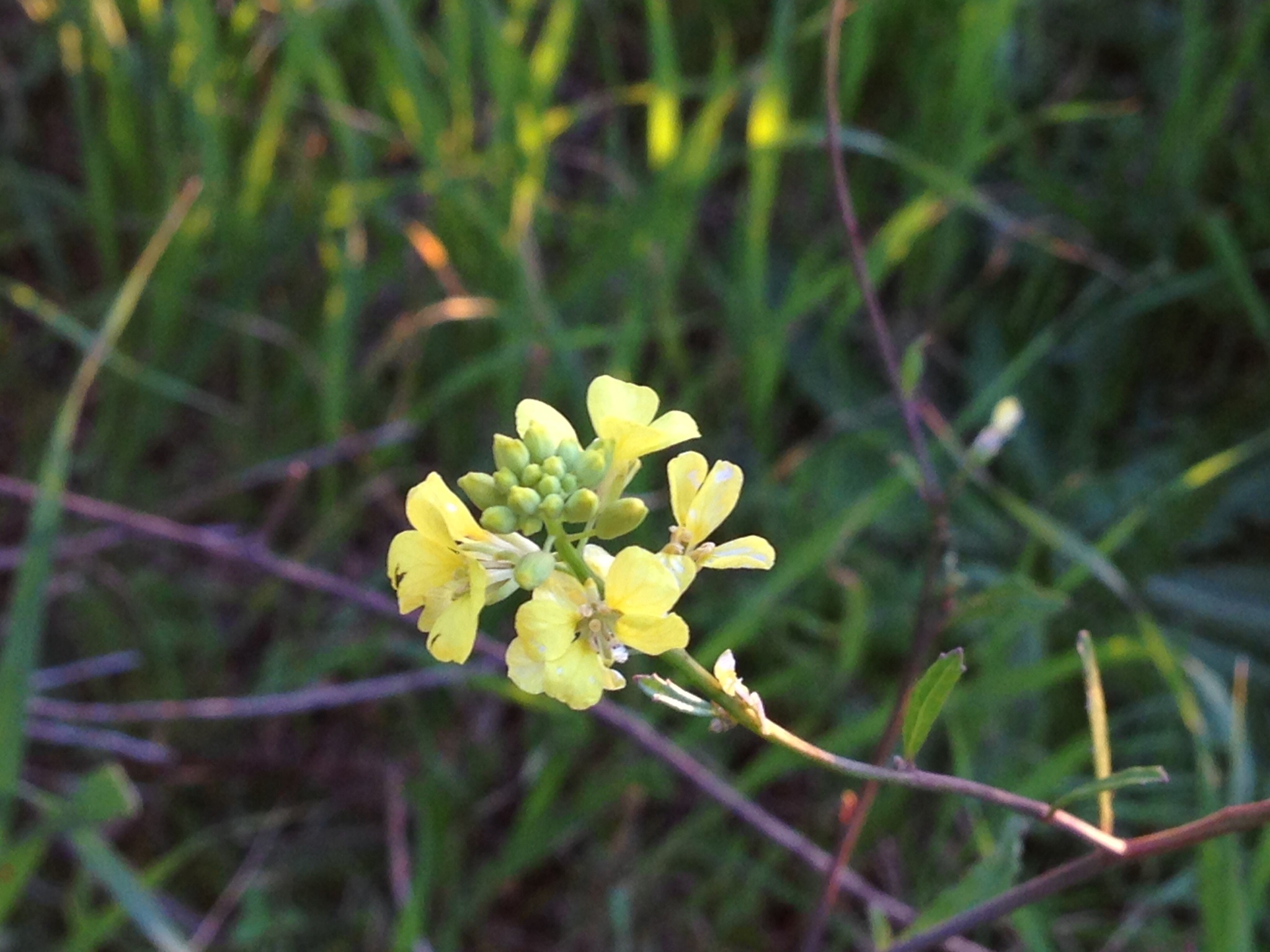
This rambling and rather strange flower is not in my fynbos books – is it a weed?

imageimage

Here it is again, rambling in a cultivated part of the farm among the lupins, again raising suspicions about its authentic fynbos origins.

Another pea-like flower grows in wilder parts but I can’t identify it.

image

Somebody please put me out of my misery and tell me what this yellow shrub is? It sprawls untidily by the woodpile at the edge of the olives. There are several of them there although I haven’t seen them anywhere else. It has been in flower for quite a few weeks but I’ve struggled to take a good photo of it – the flowers are at the tip of a long stem and it waves in the slightest breeze. That evening it was dead calm and these pale flowers are easier to capture as the light fades so I got a good shot of it.
image

As the light failed we walked into an area where I rarely go, it’s off the beaten track for running and we don’t visit it enough. There is an amazing view through the trees down towards the dams of Nederburg with the Paarderberg mountain in the background.

image

When we crossed over the dam wall to the house I stopped and captured the Carpobrotus edulis that sprawls there. A succulent that loves these conditions and is common all over the Cape, these yellow flowers fade to pink as they age and I will try to capture that.

image

Yesterday morning I got up early to run with the dogs. It was a busy day and I promised myself I would concentrate on running, not flowers. As we ran down the drive the first rays of sun caught the Simonsberg and the light was magical, so we stopped to capture that moment.

image

Weather and spring flowers

When you live in the Western Cape and you want to live an outdoor life, you need a certain amount of faith in the weather forecasters. My preferred forecaster is http://www.yr.no, the Norwegian weather service. Don’t ask me why they should be so good, but they are, and at a very local level. Yesterday they said that although it would rain most of the morning here on the mountain in Paarl, in Stellenbosch it would be clear from 9 am to midday. So although the rain was pounding down on the farm roof when I woke up at six am, I confidently went with my horses to a show and didn’t get wet at all. This morning on the other hand, the forecast predicted torrential rain all morning, clearing later in the day. I took myself off to the office and knocked off some overdue work until about 4pm, and as the rain dried up, went out for a run with the dogs. Perfect.

image

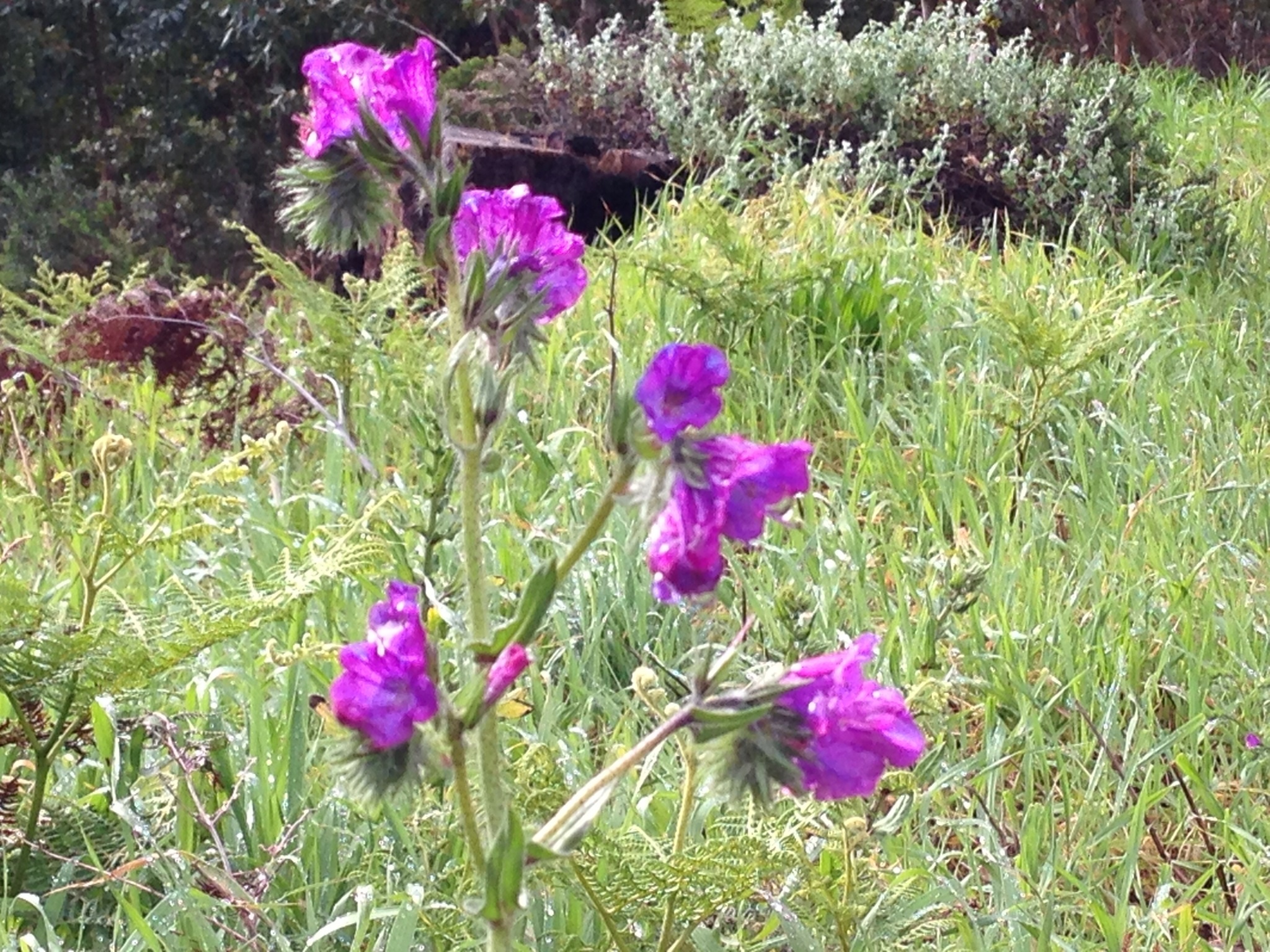
I can never really believe that we’ll find still more new things when we go out, even when I haven’t been out for a while. But now I know that, at this time of year at least I am missing things by not getting out more often. The farm was glowing in the grey, transparent, late afternoon light. We first came across some weeds in the cultivated land. I don’t know the name of this purple weed but you see it everywhere at this time of year in cultivated parts of the Cape. I’ve read a great saying that a weed is any plant growing where you don’t want it to grow and it is certainly true of this quite pretty, but unloved flower.

image

The other weed that is not a fynbos flower yet I still enjoy is this simple Lupin. I believe it may be South American in origan, though I might be quite wrong about that. It grows in and around the olives and doesn’t seem to invade the fynbos, so we forgive it and allow it to flourish where it pleases.

image

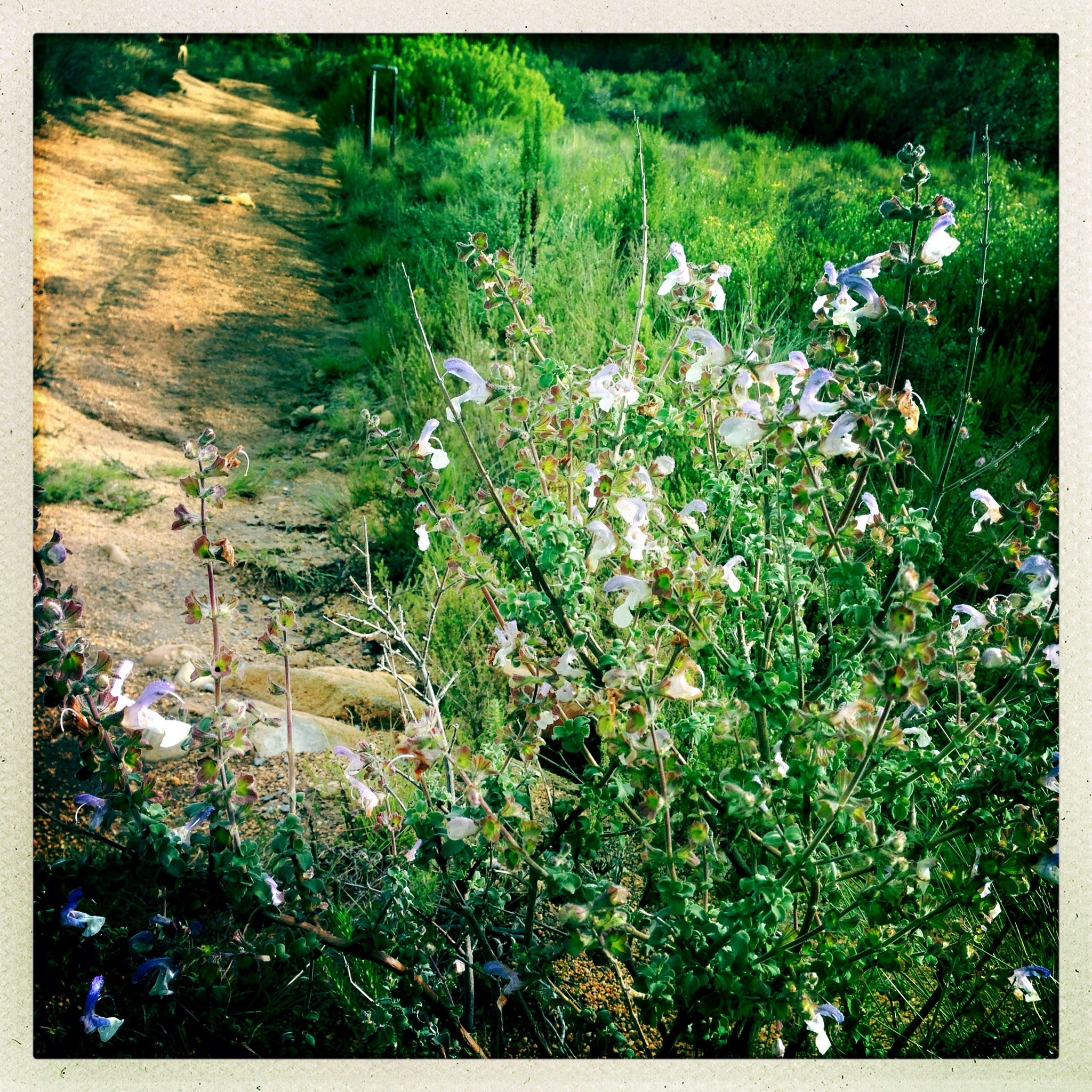
There are so many new fynbos flowers to record and not easily identifible. I have some work to do here and will post a few with detail to come later. But first here is Salvia africana-caerulea which grows enthusiastically all over the farm. I very nearly had a row with a far more knowledgeable gardner and botanist, garden designer, and above all a great friend, who brought us to see his wonderful new garden in Stellenbosch this week. He told me that one particular Salvia he’d planted was Salvia africana. It can’t be, blurted I, because it has brown flowers. Salvia african has blue flowers. I can assure you, he replied, that Salvia africana has brown flowers. Well, thank goodness for the reference books. There are TWO Salvia africanas, one, Salvia africana-lutea has brown flowers. Salvia african-caerulea which grows wild on the sandstone slopes of the Western Cape has indeed got blue flowers. Phew.

Salvia african-caerulea

Salvia african-caerulea

There are moments of beauty that stay in ones mind forever and one special view in this marvellous Stellenbosch garden was such a moment. You look down through some magnificent old and new planting to a road far below and that road which leads off into the unknowable distance is lined with magnificent borders of indigenous planting, and on the dirt road, scattered randomly yet forming a path that draws you onward, are hundreds of yellowy-orange Namaqualand daisies, sown by Henk. A moment of absolute magic, one of the loveliest sights I have ever seen.

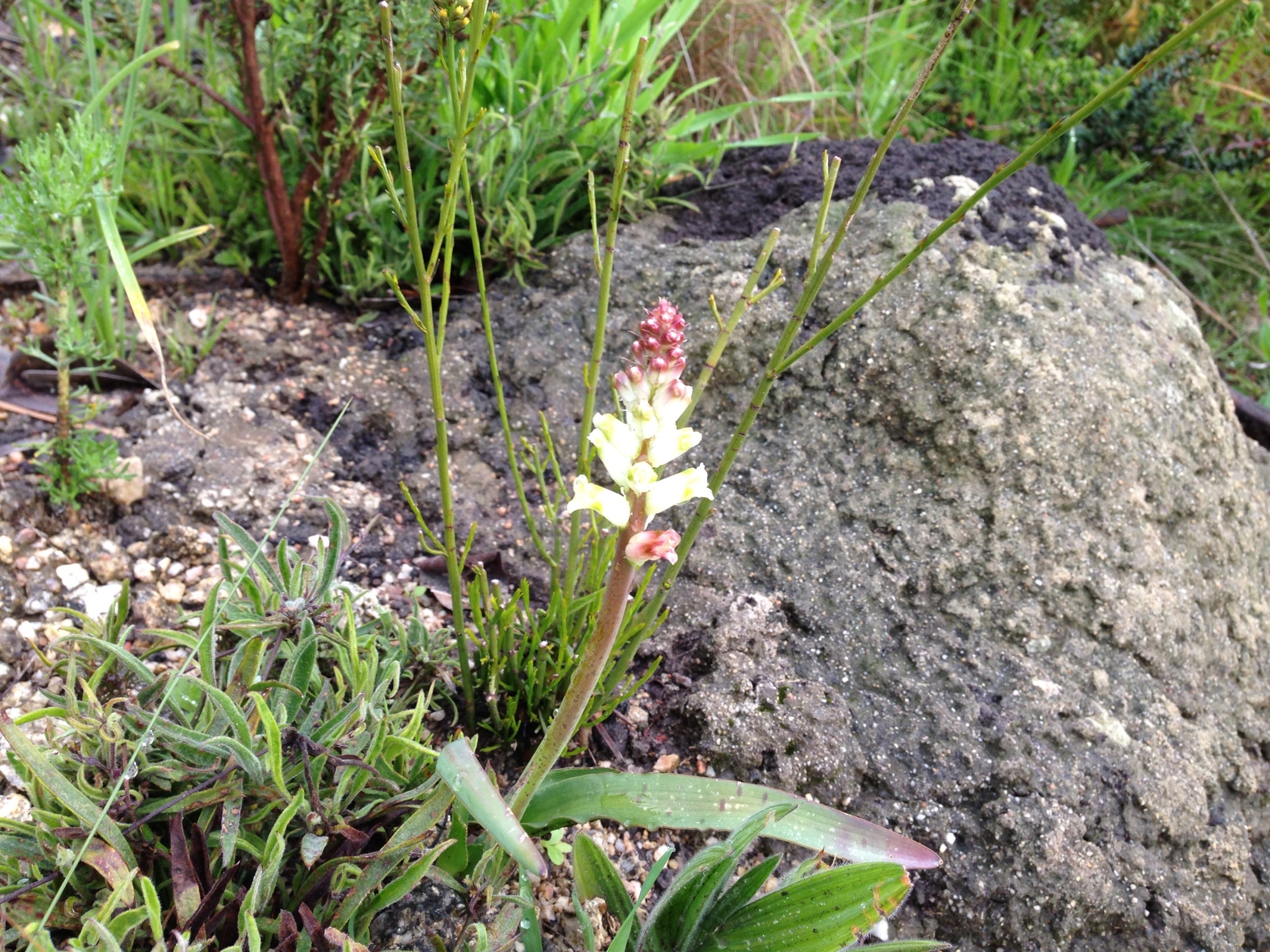
Back on the farm, more prosaically I was hoping the Lachenalia would still be around and found plenty growing on the roads at the top of the farm. I cannot exactly identify them, these dont fit the descriptions in my book so I have to take it to the encyclopedia, along with a number of today’s collection.

Lachenalia - subspecies to be confirm

Lachenalia – subspecies to be confirmed

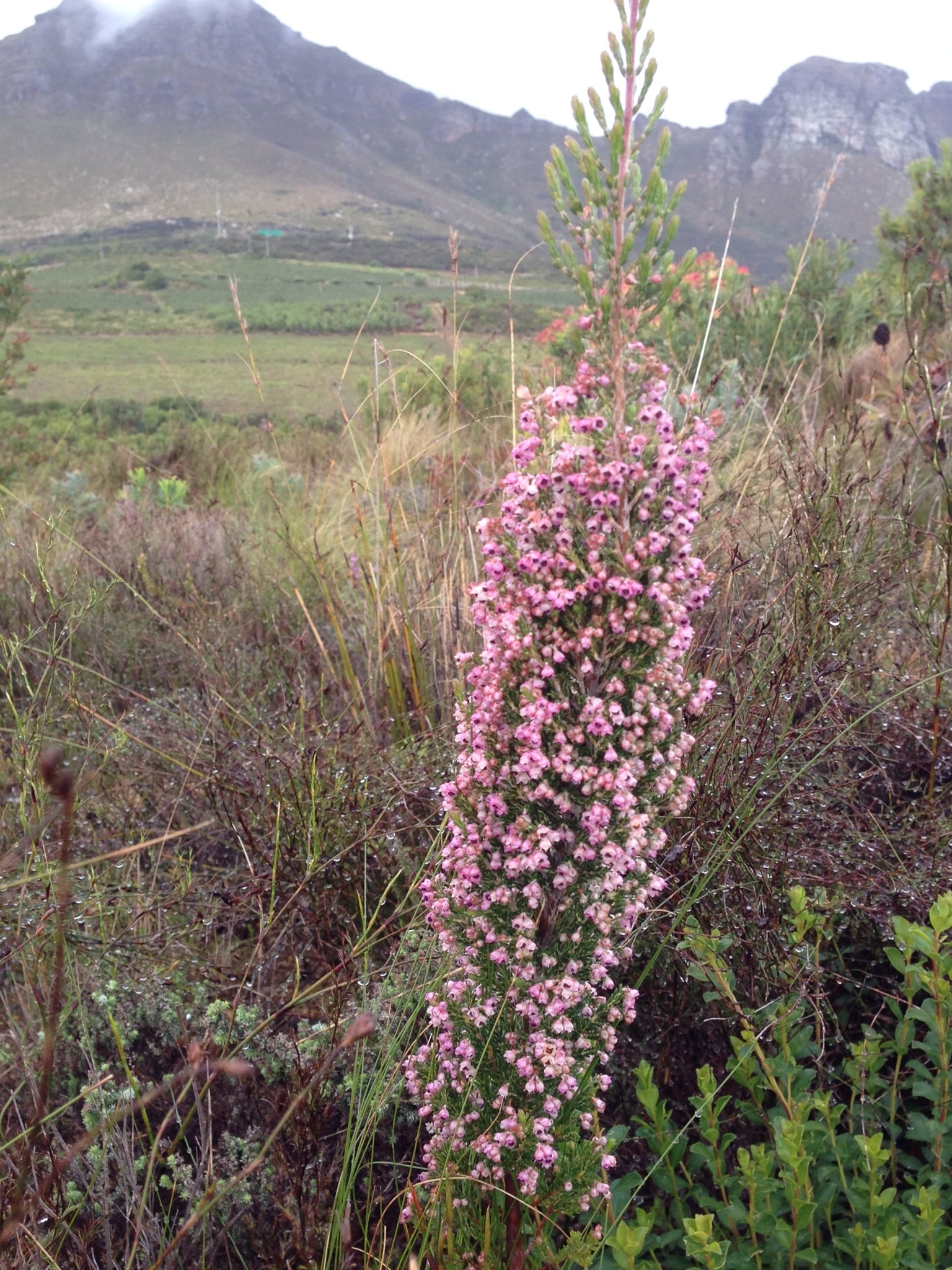
This magnificent spike of pink Erica was worth recording, if only for its unusual shape.

Erica

Erica

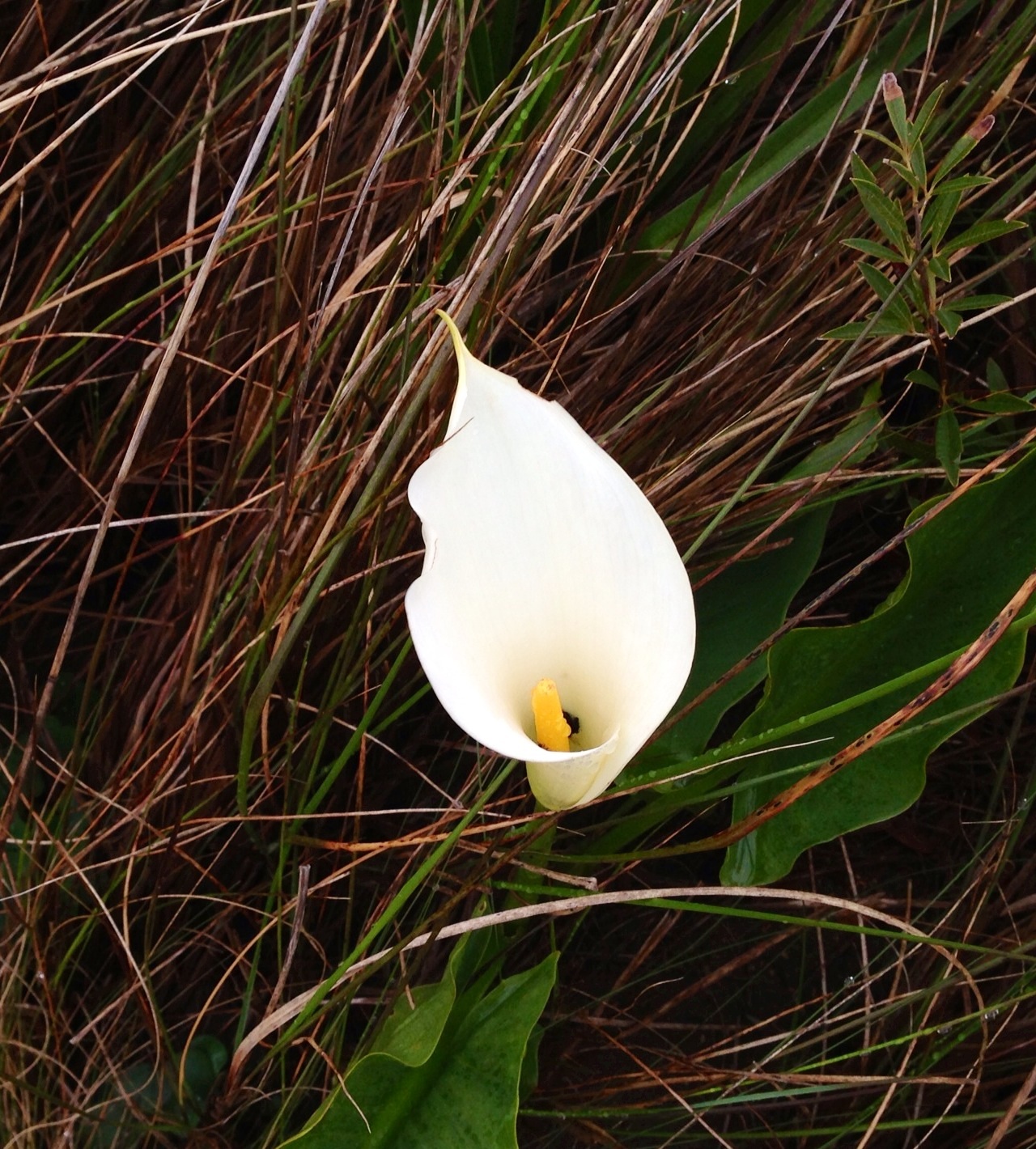
All over the Cape the Arum lilies are flourishing and we see them in unusual places here on the farm as well.  They love these ultra damp conditions.  I photographed this one right at the top of the farm near a spot we call the lookout – a place where I have never before seen Arum lilies grow.

Arum Lily

Arum Lily

Quite a few flowers I saw today are difficult to identify and need more work. So I am posting them for the record We will find names for them another day


image


image


image

The light was amazing while we were out today, glowing towards the rest and shining off the overloaded dams in the valley at Buffet Olives and Nederburg.


image

Glorious Sunday Fynbos Flowers

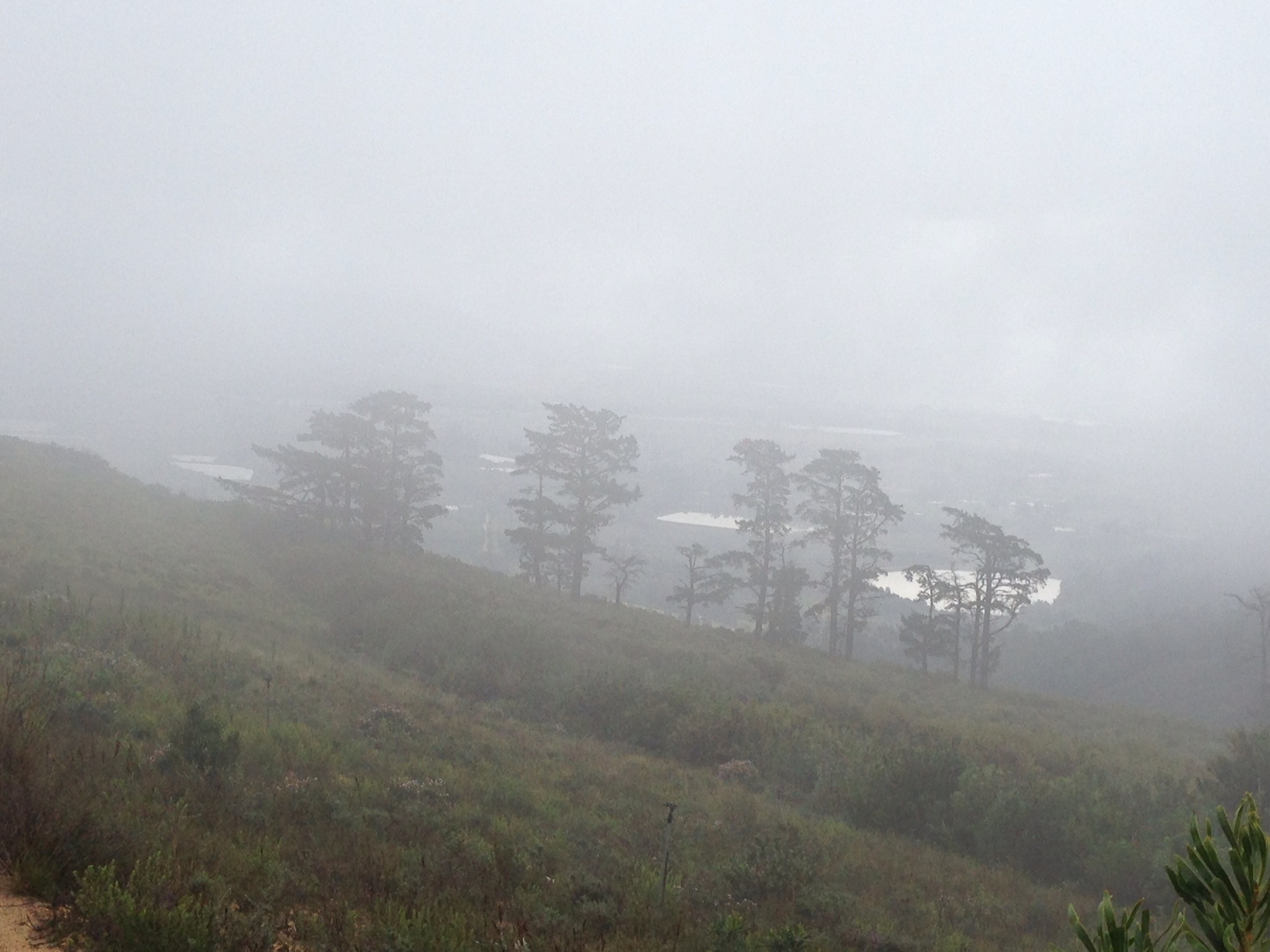
After a golden day on Saturday when we were out all day with no time to run on the farm, we finally set off late on Sunday morning, the dogs and I.  Just as we left the house a light drizzle began to fall and I went back, wisely as it turned out, for a rain jacket.  It was only drizzling as we ran down the drive and then started to climb, but by the time we got high on the farm the weather had closed in.  Somehow this line of pines with the dams below always seems a little Japanese to me – is that an odd thought here in the uplands of Paarl?  Perhaps it is.

The landscape Japaned by the mist and the light

The landscape Japaned by the mist and the light

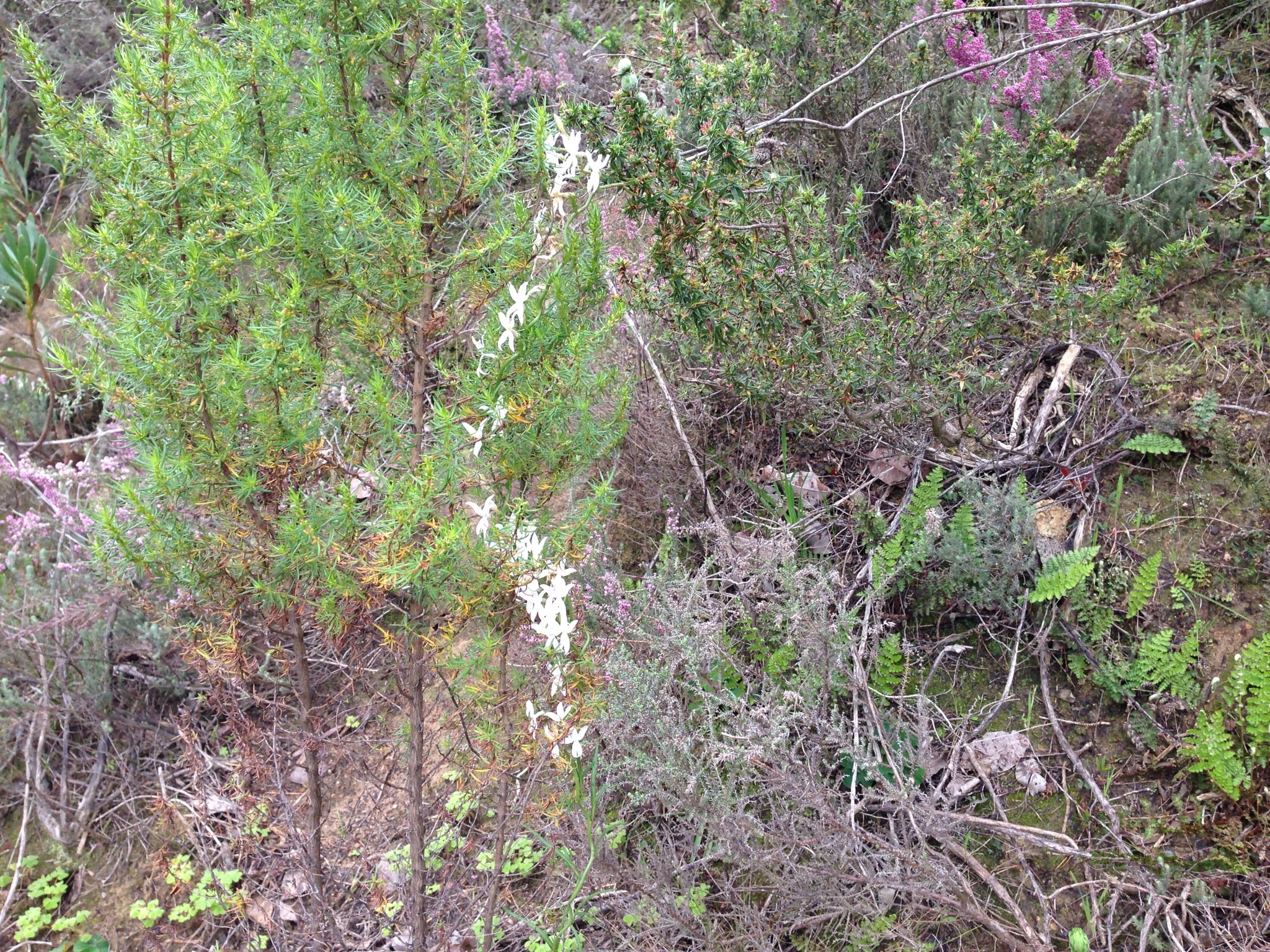
Luckily the weather hadn’t deterred us and some flowers glow and seem to photograph even better in the rain.  Take this Cyphia volubilis, the delicate white creeper.  There is one on the drive that is climbing all the way up this unidentified and rather plain shrub.

Cyphia volubis

Cyphia volubis

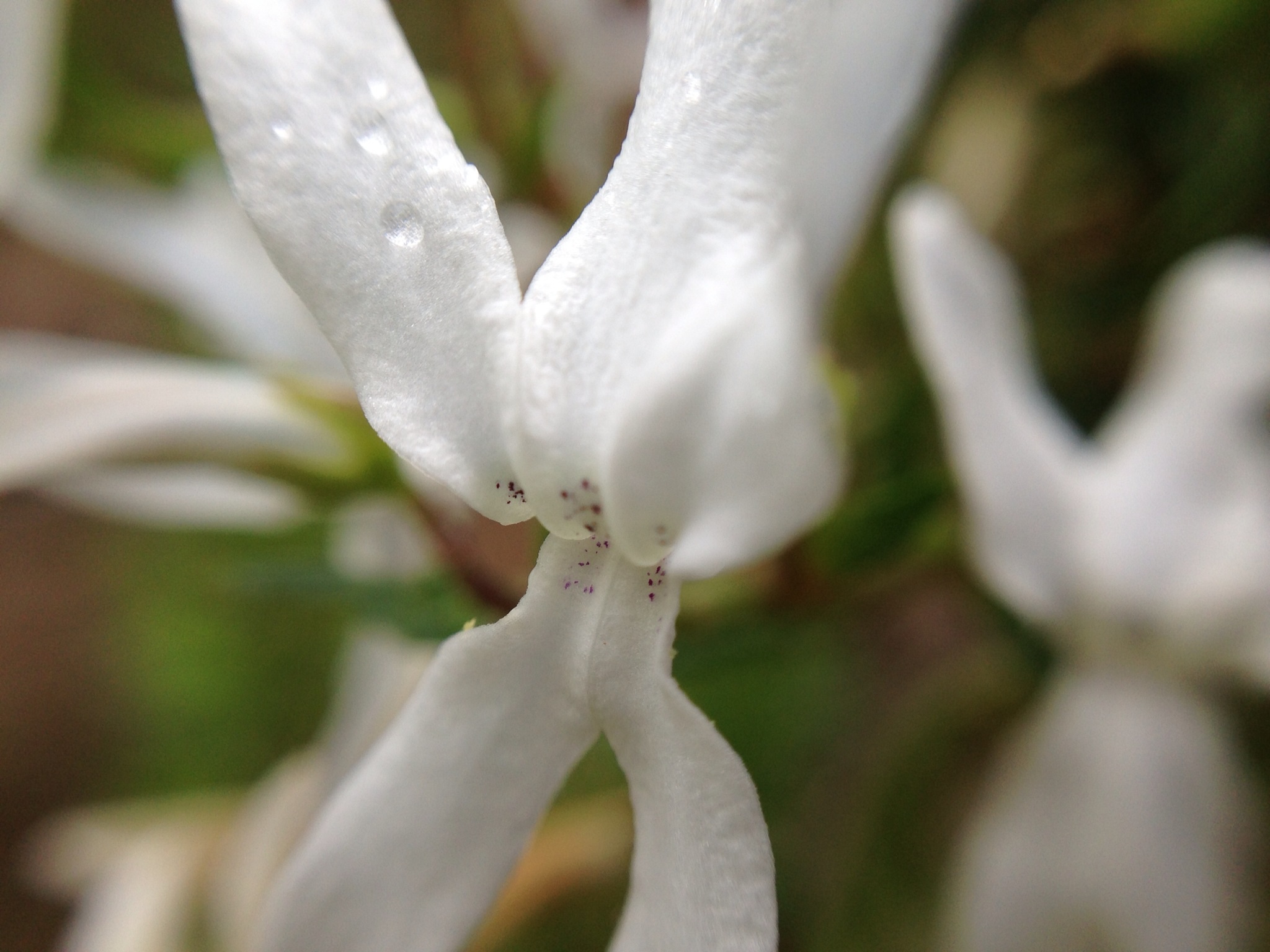
A close up reveals the charm and beauty of this delicate flower, notice the tiny pink spots at the centre, and of course the drops of rain, proof of our damp run.

Cyphia volubilis - detail

Cyphia volubilis – detail

All over the farm these yellow shrubs are flowering profusely, it is Hermannia grossularifolia I believe; there are as many as 60 fynbos subspecies but this one looks right, it belongs on these sandstone slopes and is flowering at exactly the right time of year.

Hermannia grossularifolia

Hermannia grossularifolia

Another flowering shrub is this one that I’ve posted before, unidentified until a friend pointed out that it is the common Tickberry (thank you Gilly), which used to be called Chrysanthemoides monilifera but is now correctly identified as Osteospermum moniliferum.  This shrub, although included as fynbos, is not unique to the fynbos region but grows happily, wild and in gardens, all the way up to tropical Africa.

Osteospermum moniliferum

Osteospermum moniliferum

An oft-posted winter flower was the wild rosemary, Eriocephalus africanus and I though it would be interesting to post it now that it has gone to seed.  With so many seedheads one can understand why it is so prolific on the mountain.

Eriocephalus africana - gone to seed

Eriocephalus africana – gone to seed

The light lent itself perfectly to capturing the magnificent white Erica which I believe to be the plukenetii.  It could be the coccinea, but the book says that particular subspecies does not exist in white and this is most definitely white.  Magnificent with its protruding anthers.  This is a common Erica and occurs all over the farm in many colours.

Erica plukenetii (?)

Erica plukenetii (?)

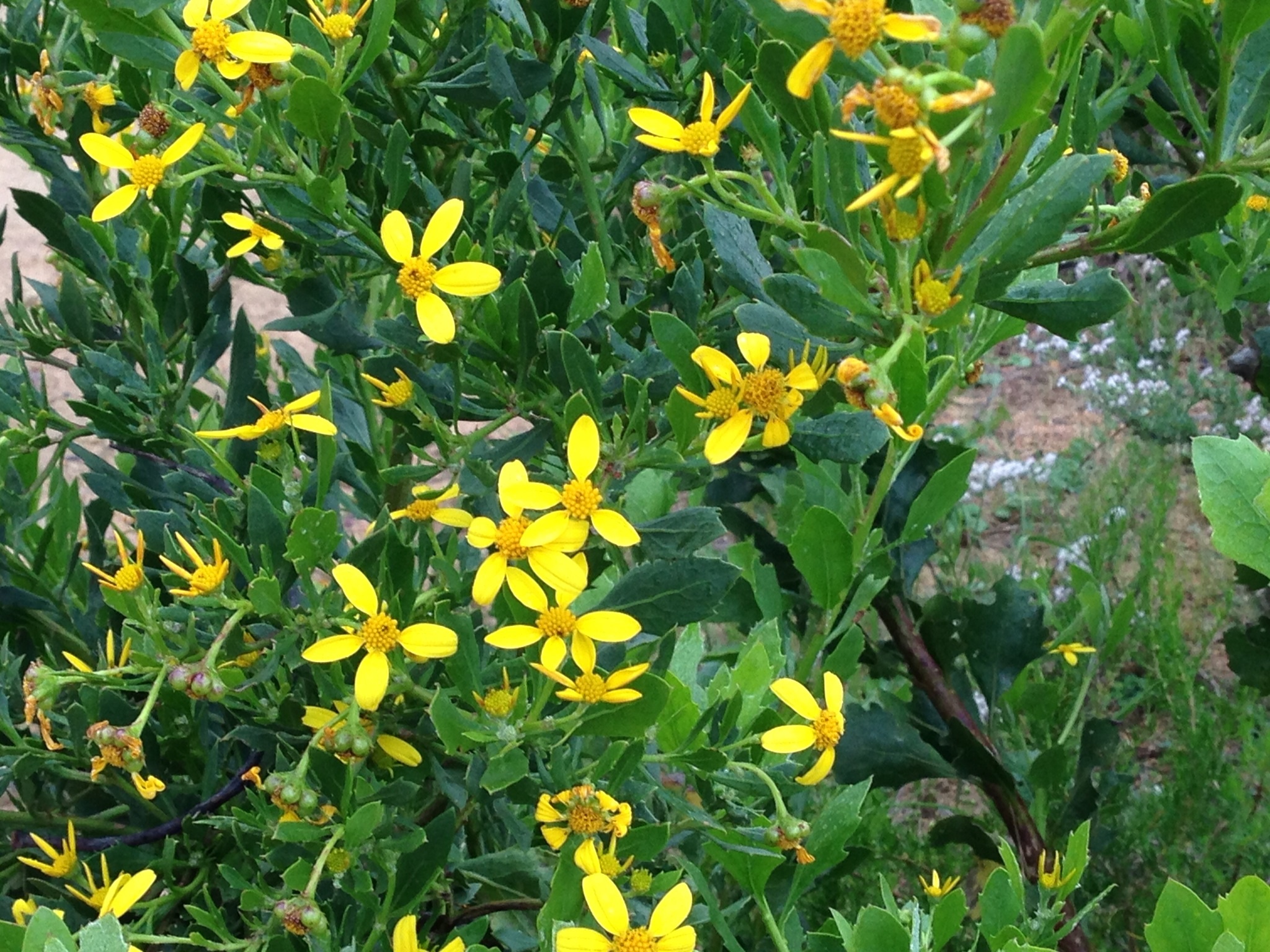
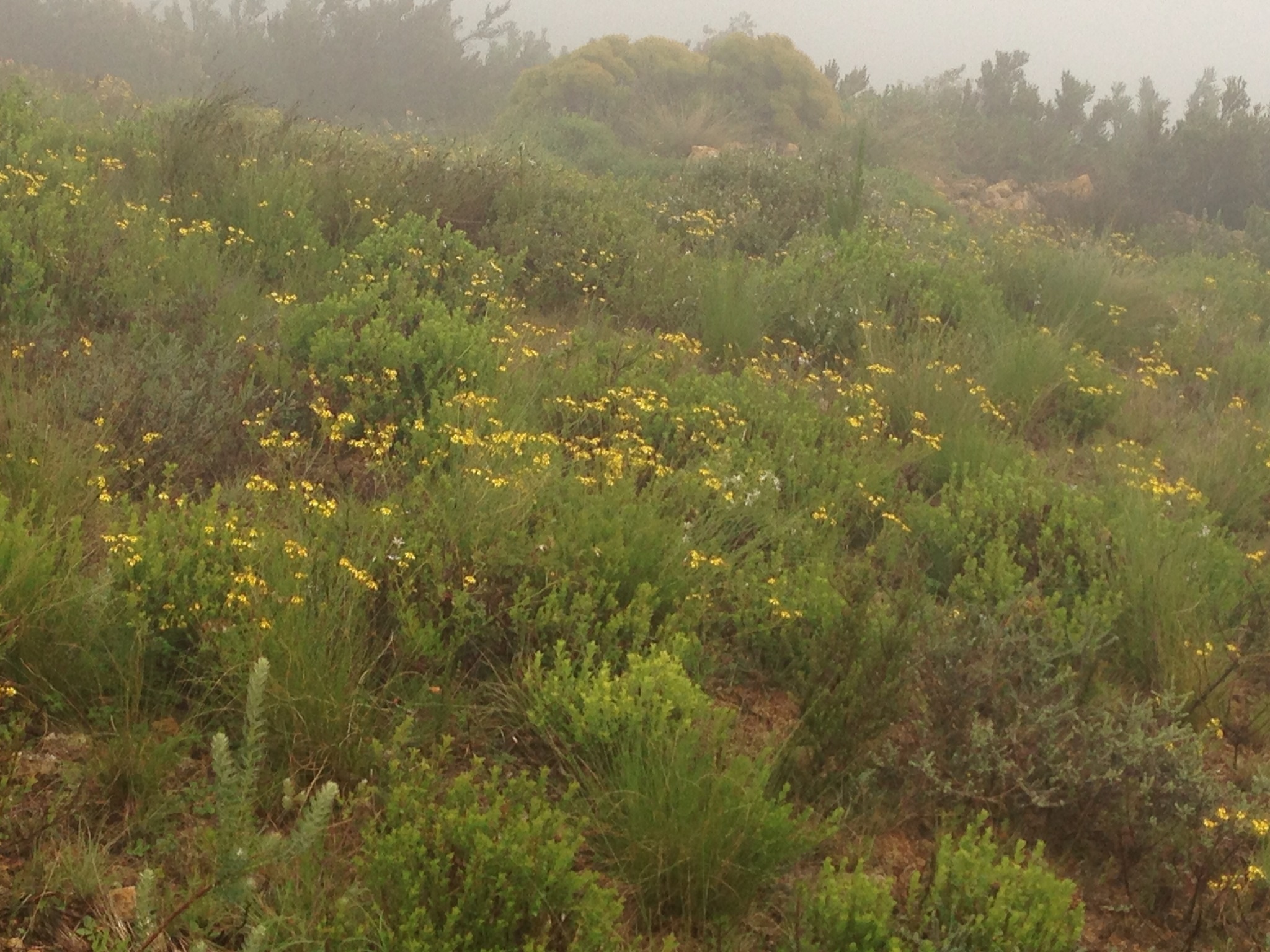
At this time of year the lands are full of flowers among the buchu.  The overall effect can be hard to photograph although this field of senecio high up in the lands gives a good sense of the colour and effect even on a dark day.

The lands full of flowers, primarily Senecio

The lands full of flowers, primarily Senecio

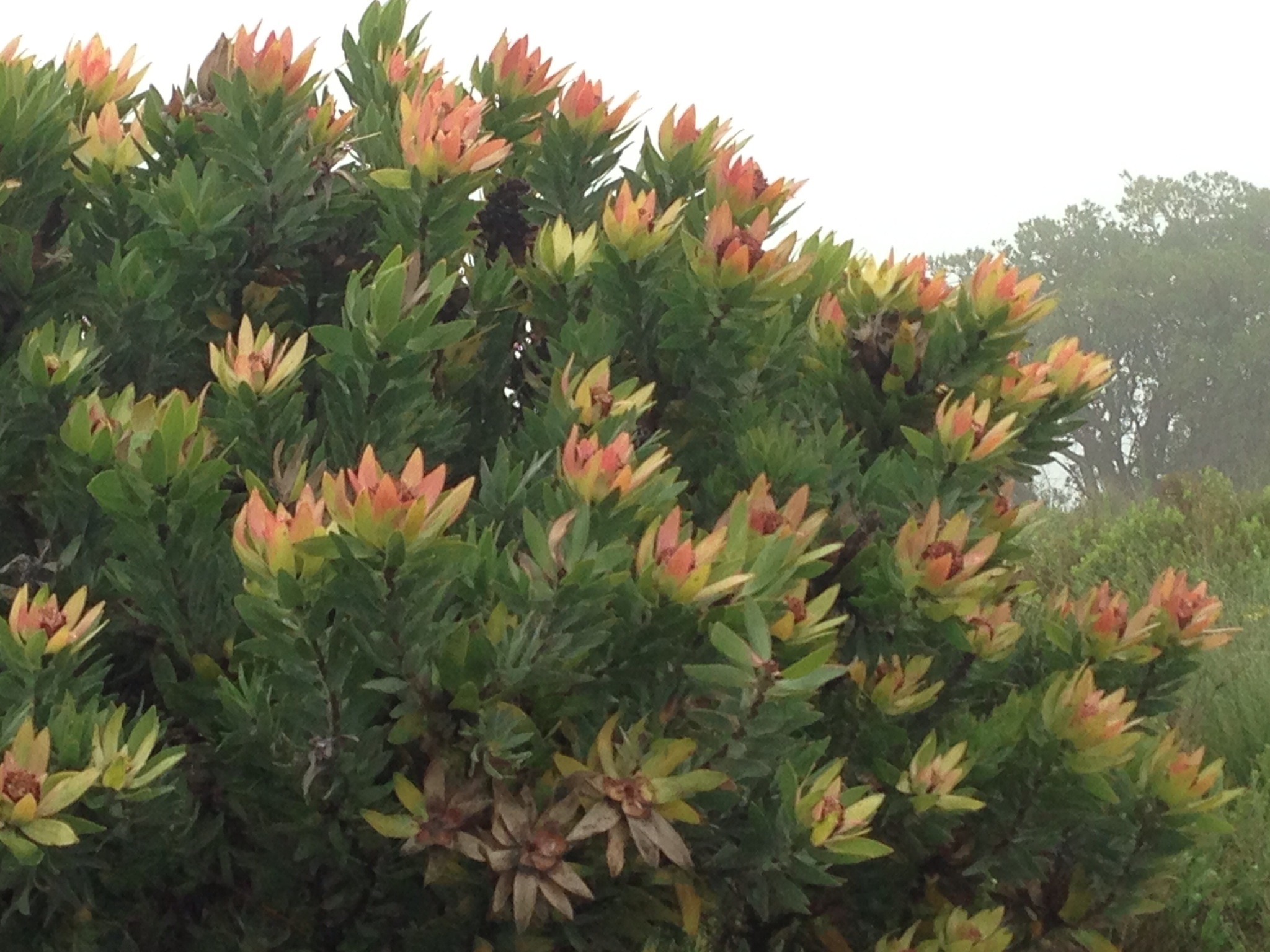
Saving the best for last.  One of the loveliest sights on the farm occurs at this time of year when this particular Leucadendron turns coral coloured. One of the interesting things about the Leucadendron family is that although less flashy than the protea to which it is related, it tends to be highly localised, fussy and choosy about where any particular subspecies will grow.  This appears to be Leucadendron tinctum, the name giving away the remarkable change in colour at this time of year.  The shrubs are everywhere in the higher parts of the farm and the effect is magnificent, one of our all time favourites.

The magnificent Leucadendron tinctum

The magnificent Leucadendron tinctum


I hsd planned a long run covering most of the farm, but by the time we reached what we call the look out it was raining heavily, I was tired slow and a bit sore after a lot of travel and show jumping on Saturday. The dogs were soaked and had been very patient as I took photos on the way up, not that they care, they happily sniff and hunt although Seamus, who misses us when we are gone, never left my side. So we put away thoughts of fynbos and plodded a little wearily down the hill to lunch, a fire and an afternoon in front of the TV.

« Older Entries Recent Entries »