Holiday – 10 June 2013
Holidays – 10 June 2013
We have been having the most dreadful weather. Day after day with torrents of rain and low cloud on the mountain, we can barely see a flower, never mind try to photograph one in the gloom. This morning when I woke up there was silence. No rain drumming on the zinc roof. If I don’t run for a few days I feel horrible and miss it and worse, I know it will be harder when I do get out there. It’s cold, there is probably snow on the mountain above us but the thought of fresh air and happy dogs was enough to get me up and into running things. I took the precaution of wearing a rain jacket on top, in case the deluge came.
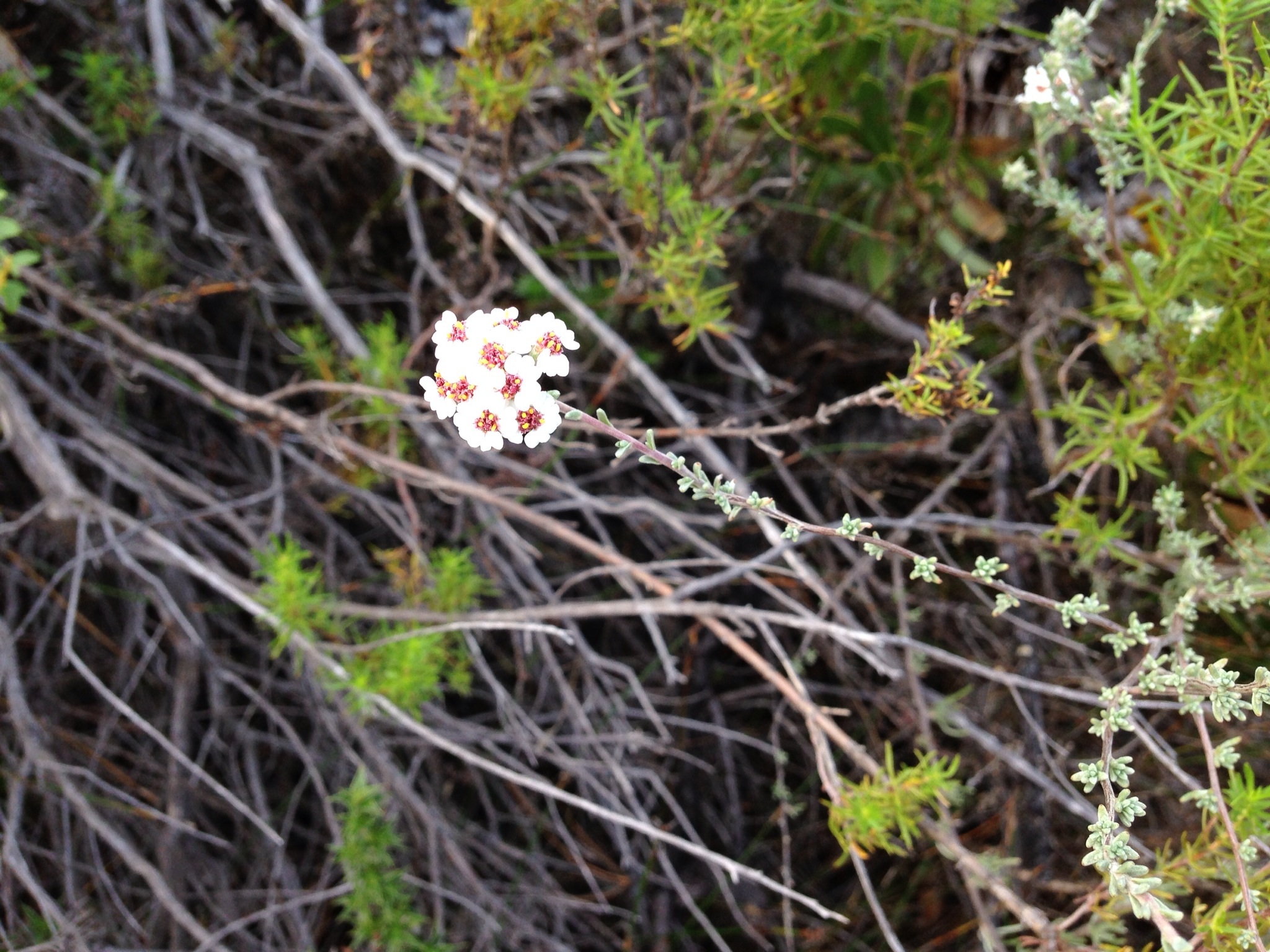
In the gloom and the early light I didn’t expect to see much and it’s true that there is nothing new. I suspect we need sunshine and a little warmth to encourage flowering. One plant that has come out in profusion is the wild rosemary. The tiny white flower is too delicate and subtle to capture in the half light of the early morning but they are everywhere and will be the subject of a future blog.
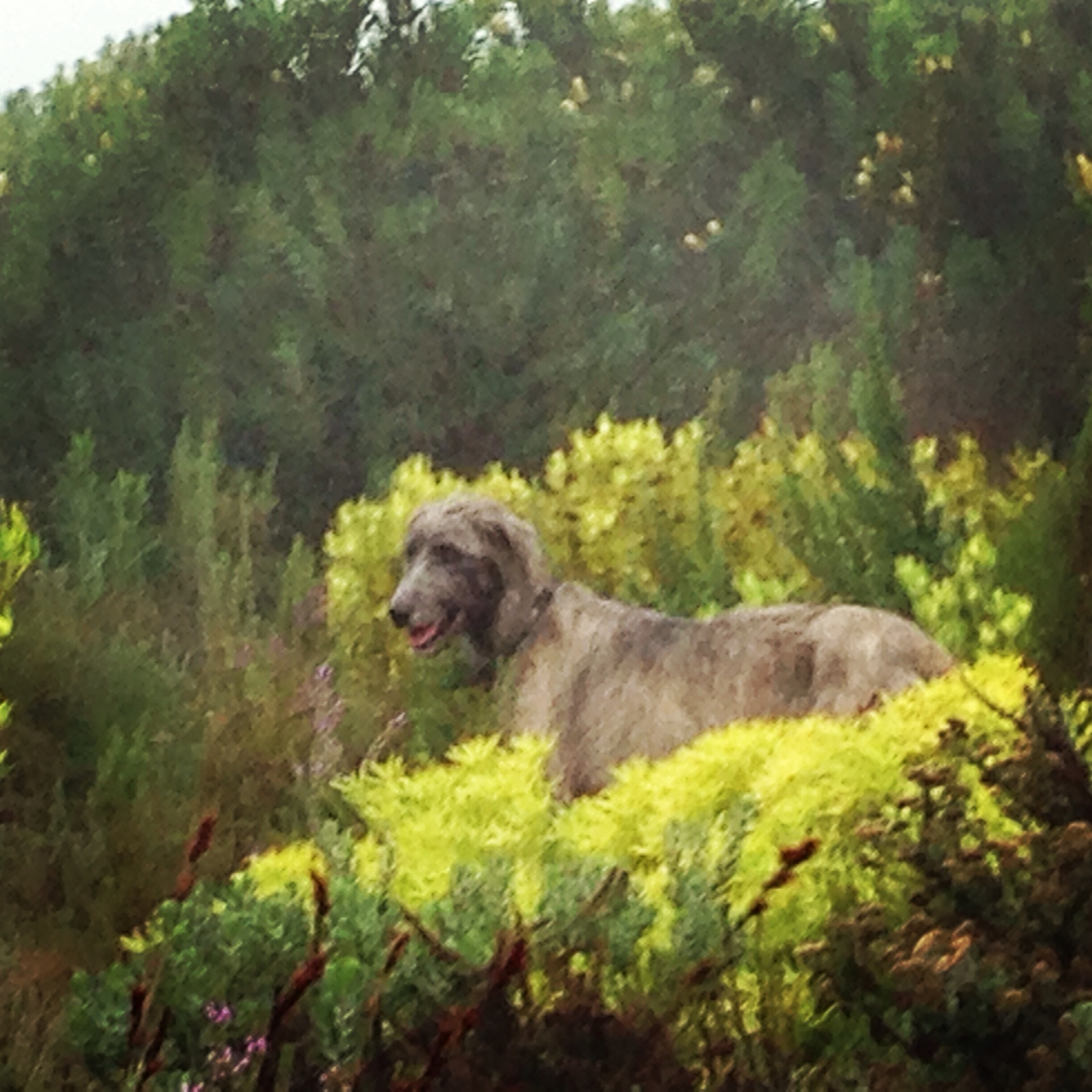
Jumping out of the gloom are the lime green leucadendrons and Maebh the wolfhoud (pronounced “mave” as in “wave”) chose to position herself photogenically behind them. I think she may be taking lessons in modeling, she’s certainly getting better at posing fetchingly for the camera.
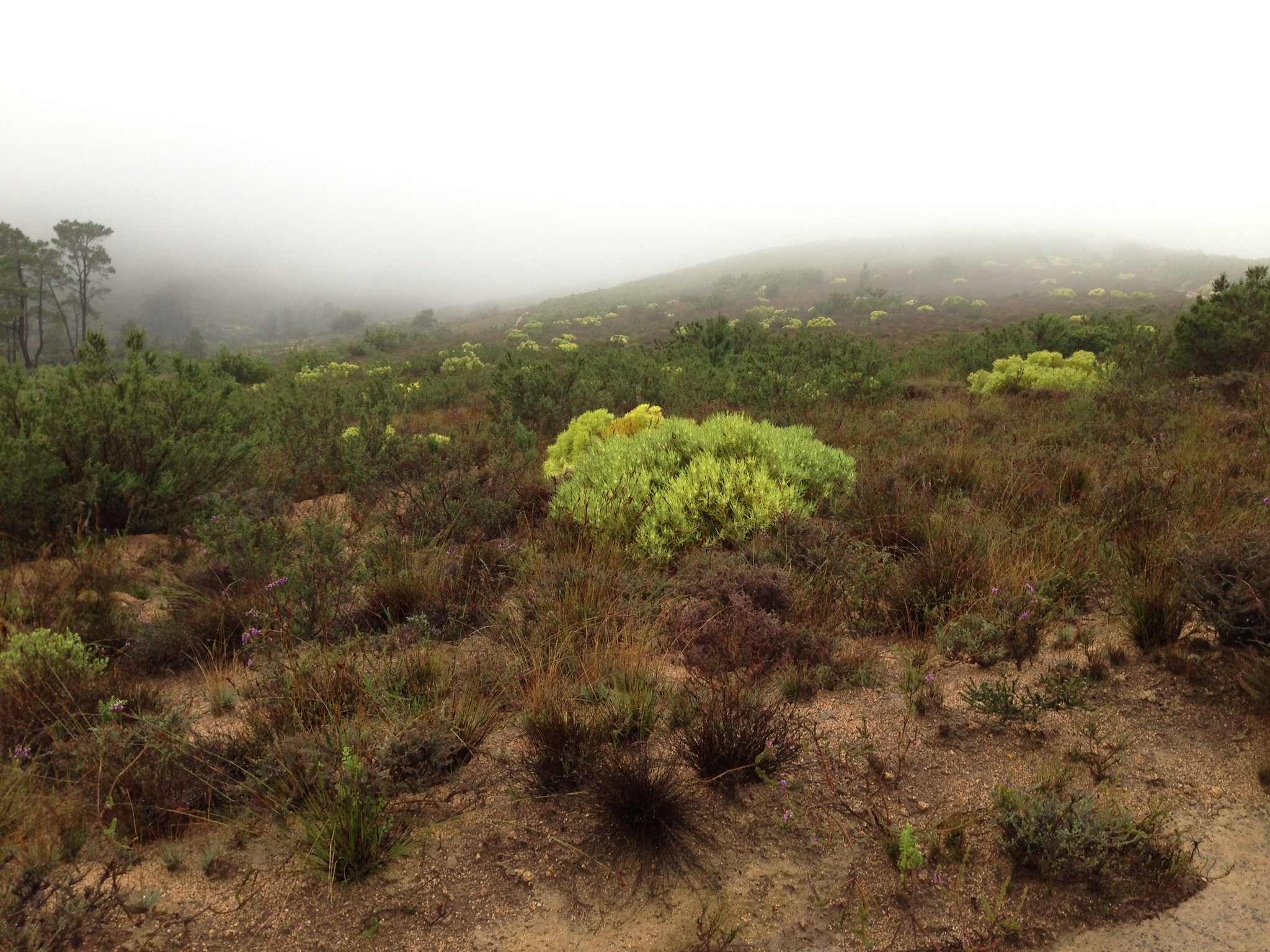
The leucadendron was particularly stunning in the morning light – a photo of the mountain shows the green shrubs glowing in the gloomy morning.
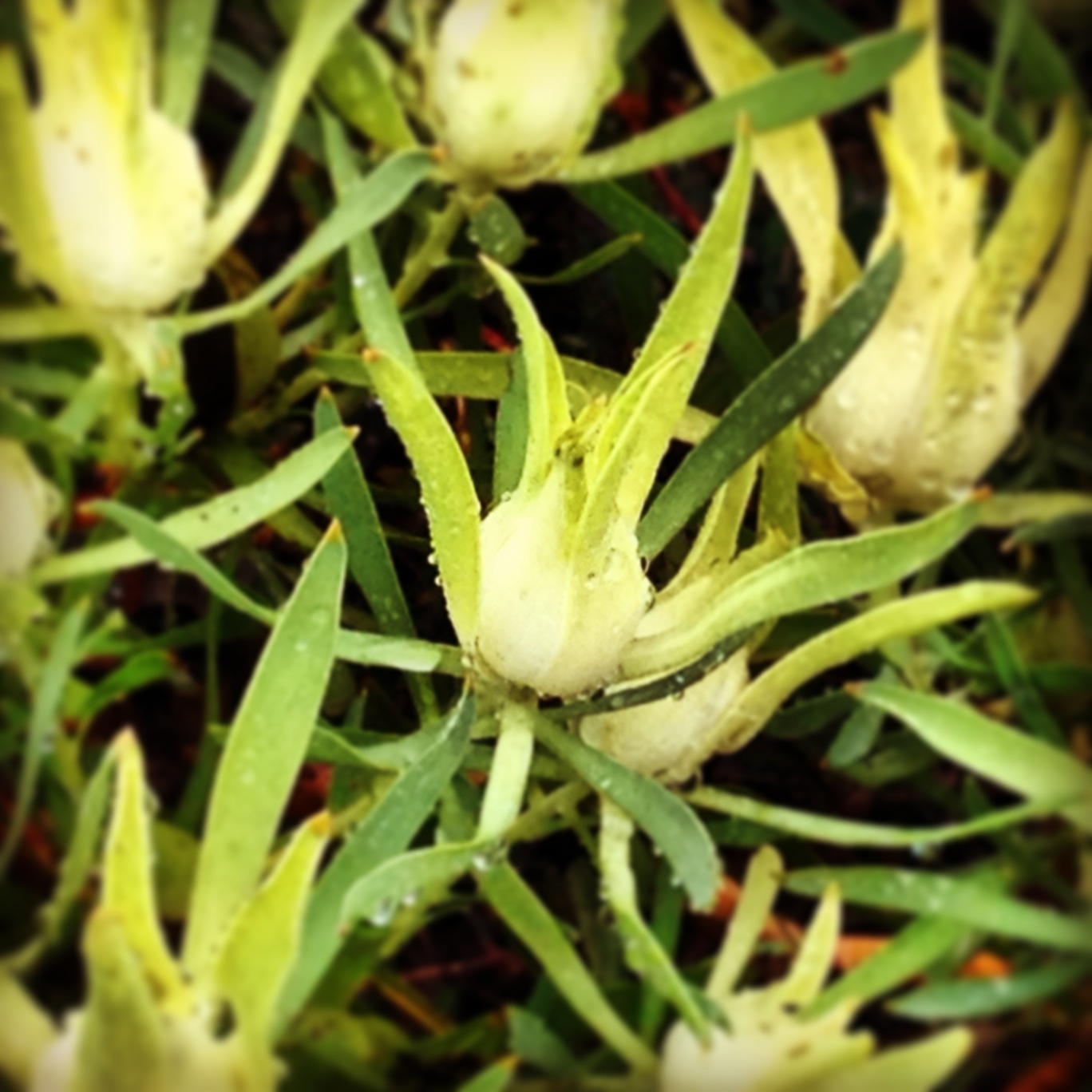
Close ups give you an idea of this lovely wild, winter flowering shrub.
The proteas start flowering even before the rains come, typically in late March and continue for months. They love the rain and the flowers gleam white while the buds can be bright pink.
Another pink protea is the nerifolia which flowers prolifically at this time of year. I went up this evening to see if the evening light would let me capture the waterfall and chanced on this one as the first rays of sunlight we’ve seen in days caught it.
Peter told me that with all the rain the waterfall would be looking spectacular. There is a story to this – when we bought the farm this entire area was covered in alien vegetation. We started a programme of clearing those trees, hundreds of them, and revealed an old road, which must have lead up to the pass over the mountains, and this beautiful fall of water from a permanent stream. We’ve planted some indigenous trees, continue to do the clearing and we’ve seen the most amazing resurgence of fynbos in this area. The fall is hard to photograph as it sits in a crevasse that blocks the light, you can see the shadow – at this time of year the late flash of sunlight sneaks into the crevasse and nearly catches the water, so at leasst you can get a sense of it. There must be a moment when the light is at just the right angle and I’ll endeavour to be there when it does.
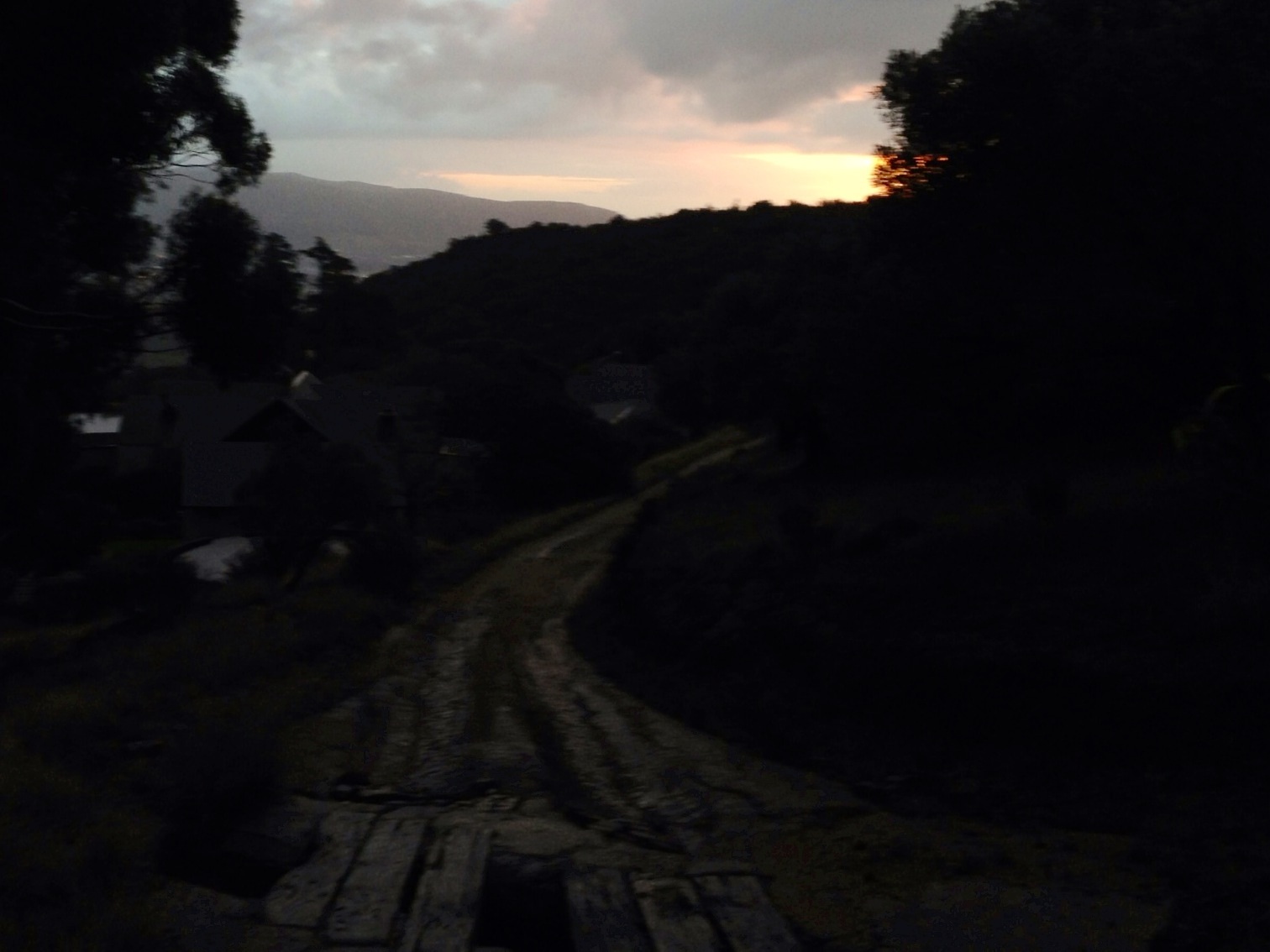
It’s raining again now, but as I walked home in the last of the light the sky seemed to hold a promise of better things to come. After 10 days of almost constant rain and increasing cold we’ll welcome a little sunshine. This photo of the road that leads from the main farm down to the farmhouse wouldn’t win any prizes, but I like the gleam of wet on the road and the glimpse of blue in the sky. We need this rain in the winter, it keeps this land fertile and the more rain now, the better the spring flowers will be. The dogs and I hope for better things and brighter runs for the rest of this week.
Writing this blog involves a lot of leafing through books trying to identify the flowers. My favourite and the best that I’ve found so far is called Field Guide to Fynbos by John Manning. It seems remarkably comprehensive, very detailed and I’m very grateful for it.
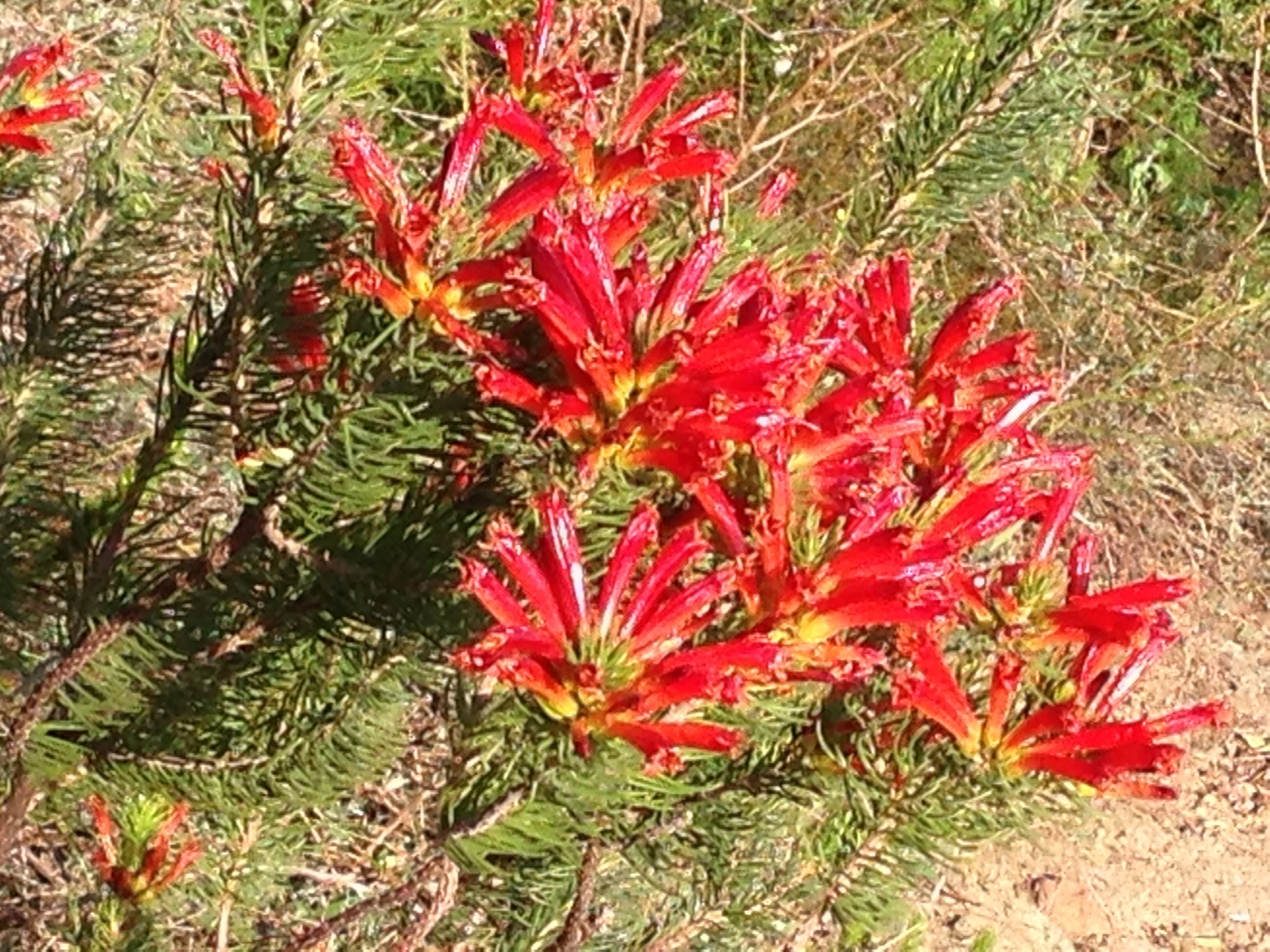
The day after I saw the Brown Afrikaner I saw another gorgeous bulb. When it comes to bulbs there are two exceptionally prolific areas (that I’ve identified) on the farm and luckily one of them is the bank along the drive. Running down the drive the other morning I caught a flash of red and stopped to see this; high on the bank above us. It’s a south facing bank which doesn’t get much sunlight at this time of year. I stopped several times as I drove up and down the drive and managed to catch one shot late in the day with the sun behind it. I’ll go and have a look this week if the weather improves but I don’t know if I’ll find more of these so although the photo isn’t great, I decided to publish it in any case. I couldn’t get close enough to identify it with pinpoint accuracy – I can’t believe I’m going to have to bring field glasses with me to identify flowers. I’m pretty sure it’s a Nerine though. It is a lovely thing.
Nerine Sarniensis or Guernsey Lily
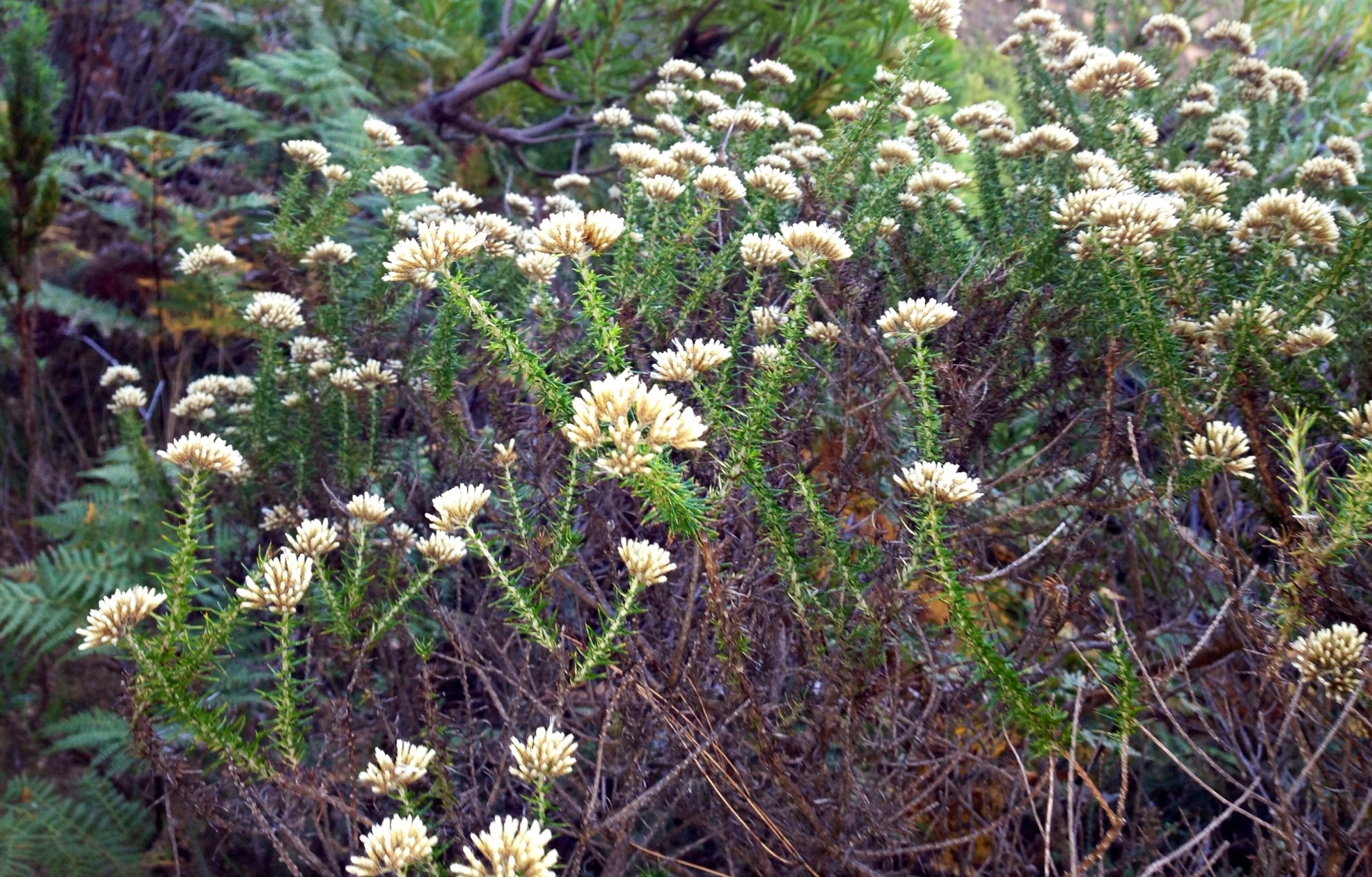
There is a multitude of shrubs on the farm with shapes that are unique and rather strange; not familiar to anyone who grew up in the herbaceous gardens of Europe, even those filled with exotic flora. A feature of these, and we’ll have lots of examples over the coming months, is that the leaves grow close to the stem, all the way up a long stalk, with the flower heads clustered at the top. One of these is Metalasia Densa, coming into flower now, – a prolific flowering which will last for the next six months. There are hundreds, if not thousands, of these shrubs on the farm.
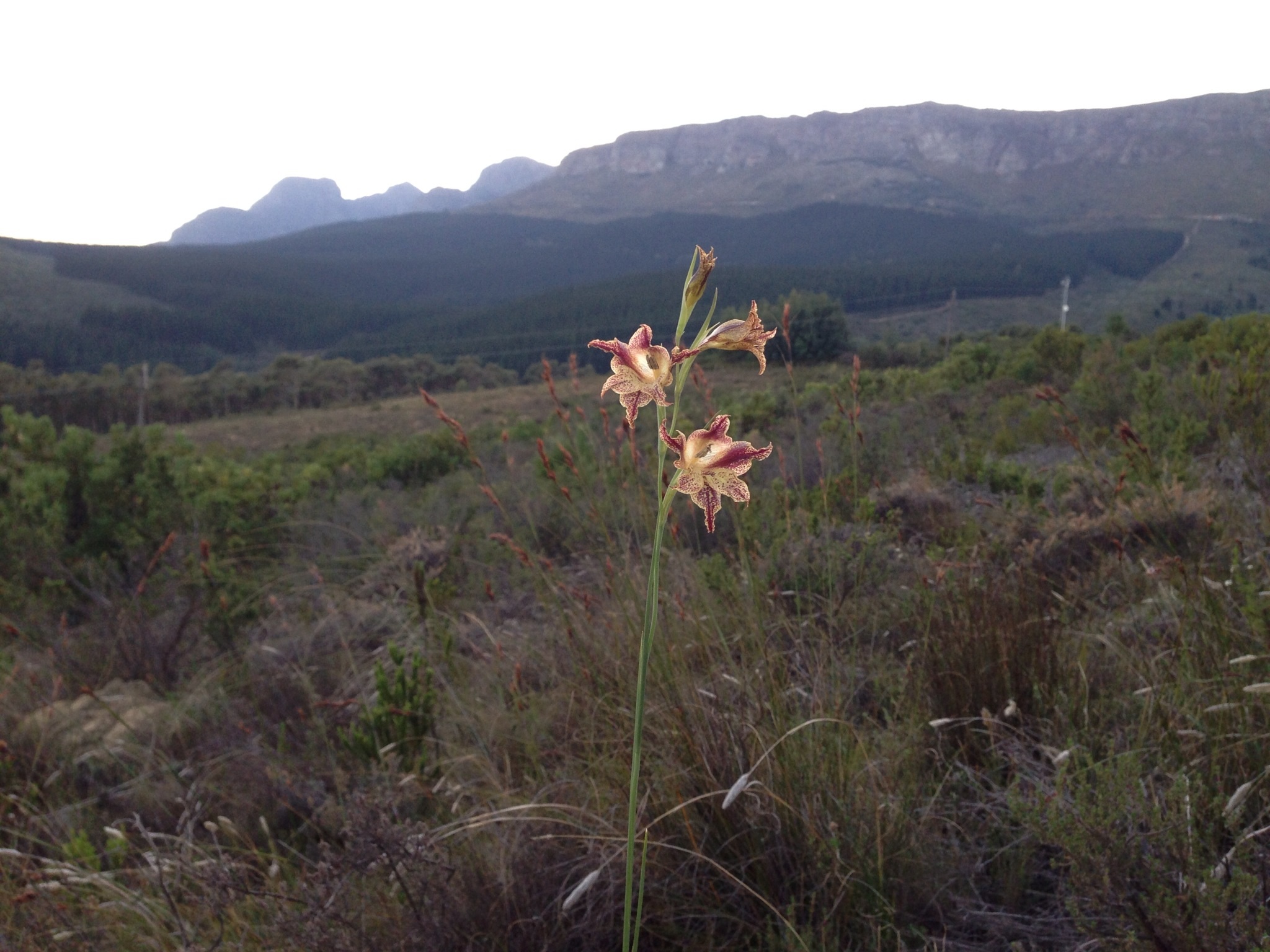
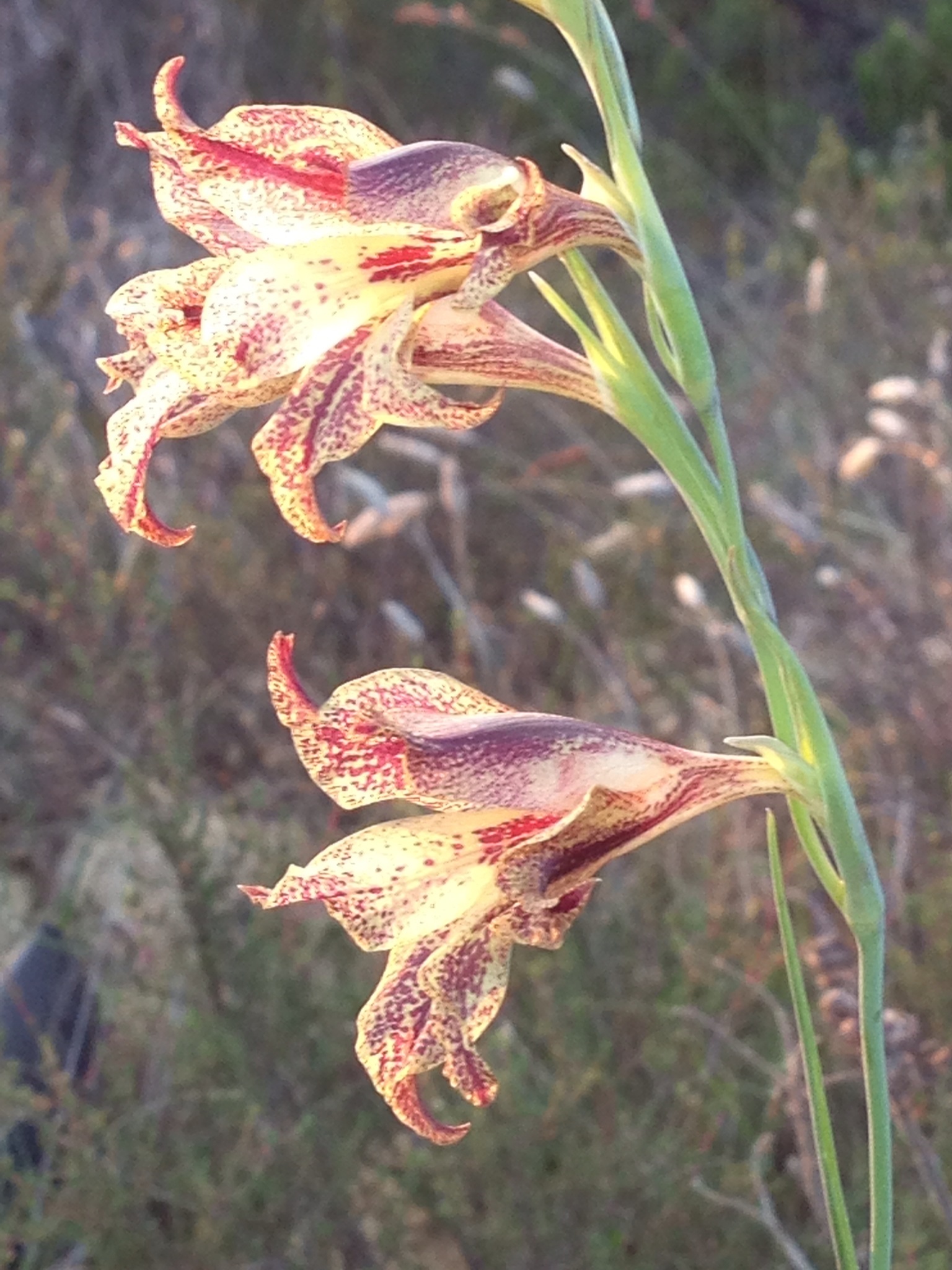
Today’s blog is devoted to a single flower. Trotting wearily up the hill this morning, not expecting or needing to see anything new. We still have unposted species from Sunday’s collection, so I was not desperate for revelations of glory. Looking into the lands I suddenly saw this single, ultra elegant stem with a graceful flower greeting the morning. This is a gladiolus.
We have quite a few of different sub-species on the farm, of the 105+ that are found in the fynbos region. Most flower in spring so I’m going to be brave and identify this one as Gladiolus Maculatus or The Brown Afrikaner.
The Brown Afrikaner flowers precisely at this time of year and the only problem is it likes mainly clay slopes in renosterveld. Most of our fynbos likes granite and sandstone slopes for that is our main habitat. Still, looks just like the photo, has a delicious, spicy fragrance and flowers at the right time of year. And who can resist the name? There are also Large Brown Afrikaners and Small Brown Afrikaners, the latter flower in the spring and we definitely have them here on the farm.
Yesterday I took the dogs for a walk in the evening and as we crossed the dam wall I saw the first Arum Lily of the year. I’ve seen them on the roadside already; all winter the roadsides and fields are covered in them – amazing that something so rare and precious in Europe should be a common winter wildflower here. They thrive in watery places and the streams and banks on the farm are covered in them, hence this first sighting. Before our run this morning I took this photograph – the flower shimmered against the brown dam water – its perfection needs no embelishment.
Here I am, sitting in a hotel room in London, going through the photos and evoking the memory of my morning run the day we left. I can smell the wild rosemary and the cool misty air and imagine the rush of happy hounds as they head off to inspect all their favourite places.
There are days when I bound up the mountain followed by happy dogs, fully of the joys of, not spring as it’s autumn here, but certainly the joys of life and the beauty of this place in the morning light. And there are other days, probably far more frequent, when the run is more of a plod, as the busy life we lead catches up, sleep is never enough and despite the glories to be found on the mountain it’s an effort to drag myself out there. Yesterday was one of those other days.
Luckily there was lots to photograph so I had plenty of excuses to stop and to take my time and the usual morning run took much longer than it should have.
The first excitement is that the wild rosemary is in flower. Like the buchu that we farm it is cultivated for the perfume industry. The shrub is a little nondescript thing, a few grey tendrils coming out of the ground, until it flowers and then these exquisite flowers emerge at the top of each branch. Very common, they are all over the place at the moment.

Eriocephalus africanus or Wild Rosemary
Many of the flowering fynbos have a long season – one of them is the fynbos version of salvia. It starts to flower in late November or early December and it’s still flowering prolifically now. There are several of these bordering the roads where we run and they are like friends we great every day for half the year. Coming towards the end of their season now and flowering as vigorously as ever.
As we run, or should I say plod, up the path that goes through the olive groves to the top of the farm, we pass this fearsome, stunning shrub. I showed this photo to Peter, my husband and he wryly acknowledged that he knows it all too well. Like many South African farmers he likes to wear shorts and sometimes comes home with his legs ripped to shreds. This chap is one of the culprits. But look at what a stunning chap he is. I actually managed to get a shot of the small thorn-head in focus, grey with tiny spikes of gold set in little balls. A bigger version could be a medieval weapon of war. I don’t know what this is, there’s lots of it about and it must be pretty common and I will identify it sooner or later and post the name.
One of the most varied and most prolific fynbos varieties we have are the Ericas. You know this species as heather. The amazing thing about Ericas is that they grow all over Africa and Europe but 80% of the species grow in Southern Africa and there are 660 fynbos sub-species. Quite a few of these grow on this farm, so there will be plenty of Ericas in the blog. Here’s the first one, another long standing friend who flowers throughout the hot months, giving us lovely purple-mauve flashes on the mountain when all else is hiding deep underground away from the relentless sun. I don’t know which of the 660 this one is. Will have to get a book or two on Ericas – there are plenty more to come.
One of the 660 subspecies of Erica resident in the region
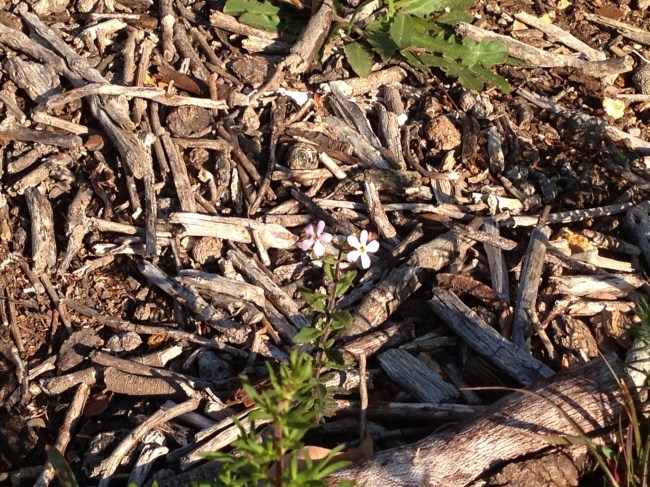
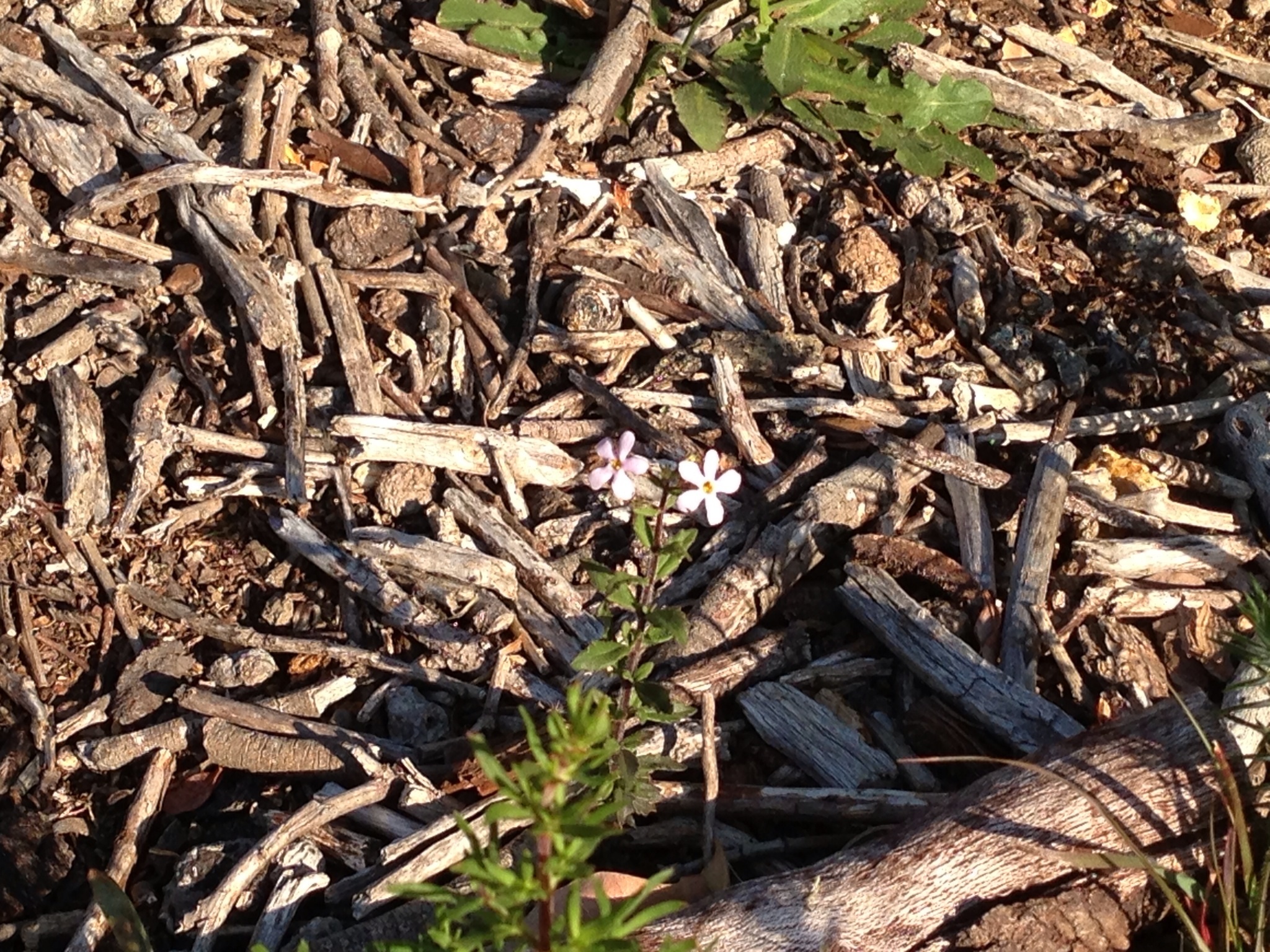
Finally, there I was, puffing along, when I saw a little group of tiny pink whorls. Pulled up and investigated. A little flower head with flowers tightly furled waiting for more daylight. I drove up later to catch them open. I haven’t identified it but it looks and behaves like Oxalis so that’s what we’ll call it. Completely different to the Oxalis I photographed a few days ago with their clover-like leaves, and that is the enduring joy of fynbos.
Oxalis?
Some flowers are at their best in the subtle light of dawn and dusk while others curl up and go to sleep, only showing off their brilliance in the full light of day. I was driving home yesterday afternoon, wondering if I really was going to find enough flowers on this farm to justify a whole year of blogging, when I noticed the bank was studded with pink and white flowers. When I’m out running early in the morning they are all but invisible but during the day they are everywhere, on the banks, on the roads and all over the lands.
Oxalis Purpurea
These come in a multitude of colours and at least a couple of varieties that I’ve noted here on the farm. What I love about them is that they seem to be the first bulbs to flower each year, showing almost immediately after the first rains. Of all the fynbos bulbs are among the most delightful, highly localised in terms of where they grow, often so fragile that one wonders they can survive at all, hugely varied and the first sighting of a favourite flower each year is always a moment of private joy, very Wordsworth, somewhat hackneyed yet so true. We’ll be having some surprised by joy moments I’m afraid.
Oxalis Purpurea
While photographing the Oxalyis I saw a different flash of white, something I hadn’t noticed before. It’s one of those I’m not certain of, yet so distinctive that I think it must be Stachys Aethiopica. It was quite hard to capture and if I see more out there I’ll try and get a better shot. A very distinctive white flower and the leaves were used medicinally in the past; the common English name is woundwort.
Stachys Aetheopica
Part of the fun is identifying the plants as it lends a component of detection to my day. Sometimes I’ll get it wrong. When the yellow lobelia I thought I’d identified last week started to show tiny little fluffy seedheads I thought “that can’t be right” and went back to the book. Indeed I should have known better as I grew up with a garden that had lots of senecio in it and this turns out to be Senecio pubigerus.
Senecio Pubigerus
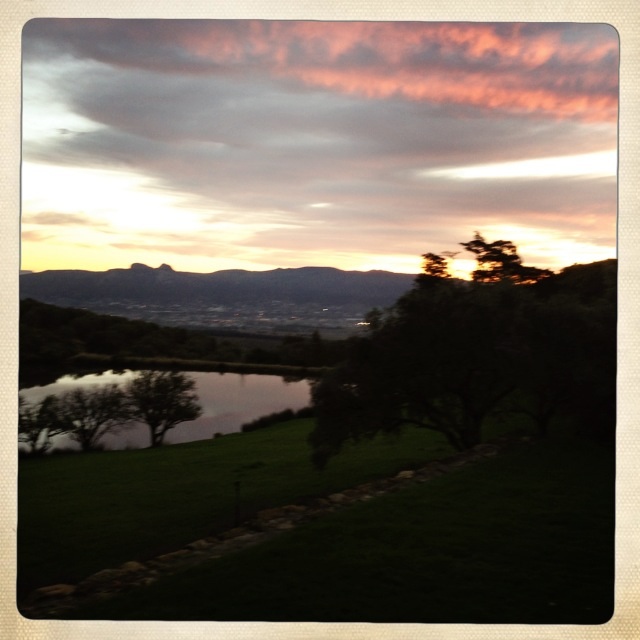
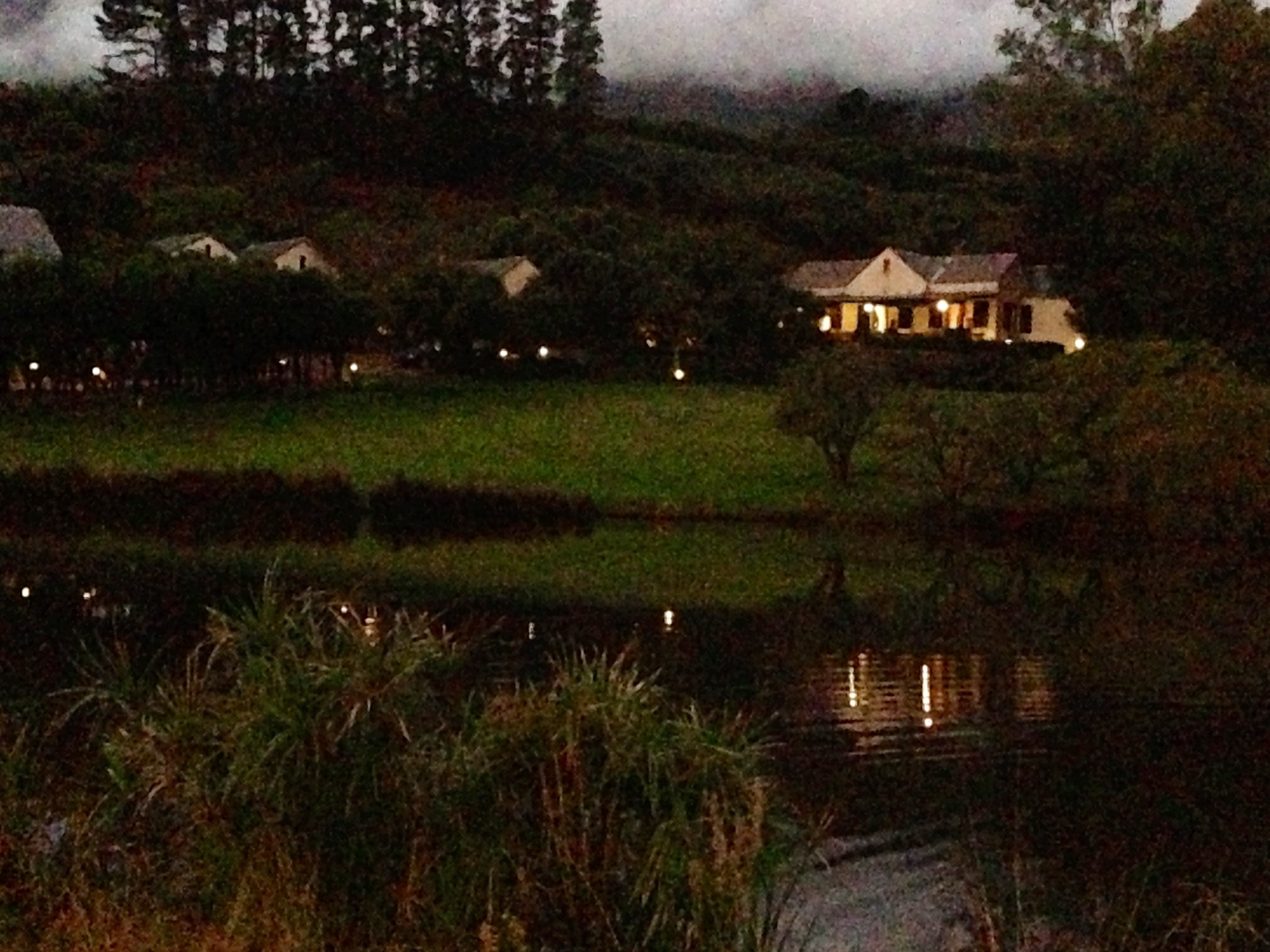
I have been trying to get a bit fitter this week as I’m riding in a show at the weekend, so for a couple of days I’ve been running twice a day. One evening the light was exceptional, it was too dark to take flower photos but I could not resist a couple of sunset shots and a rare picture of Maebh the Irish Wolfhound standing still. And a picture of the farmhouse as we crossed over the dam wall when it was very nearly dark.