Tag Archives: fynbos bulbs

Flower of the Day: Moraea tripetala

The Moraea tripetala is probably the first fynbos bulb to captivate me all those years ago.  I was running down the drive and couldn’t believe this tiny Iris-like flower growing prolifically along the bank.  The larger petals are smaller than my thumbnail and the colours are exquisite.  Of course I wanted to know what it was, I started noticing other flowers and out of that has come this passion for fynbos.

Moraea tripetala

Moraea tripetala


A spell of good weather and a burst of new flowers

It has been a gorgeous week on the mountain, with new flowers popping up all over the place.  We had a damp start and one morning when it was too wet to run but the dogs and I have had several stunning runs all over the farm and this morning’s weather is glorious so as soon as this blog is finished we’ll be out there again.  Next week we are expecting a big storm and our running might be curtailed, so this weekend we are keen to do as much as possible.  Poor Jemima Chew is limping and on anti-inflammatories so she can’t come and howls in outrage when we leave.  They would go in any weather; for my part I don’t mind the damp mist at all but the pouring rain is not my thing.
Talking of being rained under I’m deluged with work at the moment so haven’t had much time for research.  Luckily some things just jump out of the book – instantly and clearly recognisable and this is one of them.   Oftia africana, widely dispersed throughout the Cape and apparently flowers all year round though seems to prefer the spring flowering here on the mountain.  it is coming out all over the place.
Oftia

Oftia

Pelargoniums and Babinias are also everywhere, the latter flowering decorously in groups under trees and the former peeping out from thick undergrowth along the roads.
 image
image
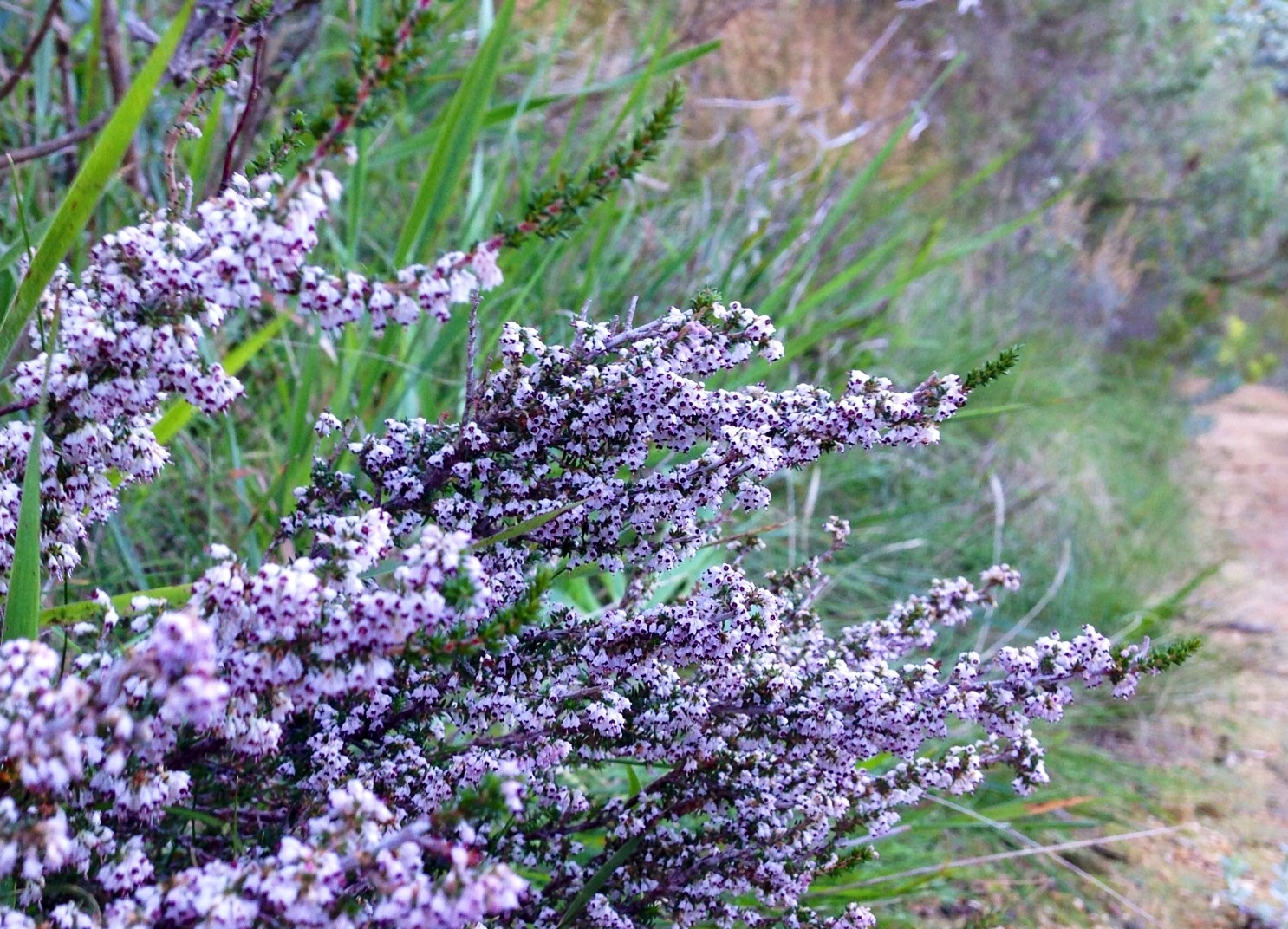
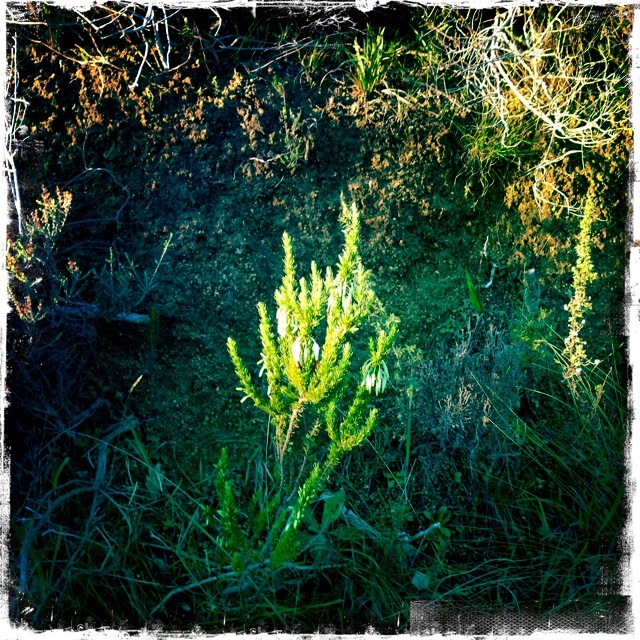
As we climbed up the mountain we saw this Erica with tiny white bells on it, despite my best efforts you can only just see them in this picture.  The same variety seems to come with pink bells as well and sometimes they grow side by side
Erica with tiny white bell-like flowers

Erica with tiny white bell-like flowers

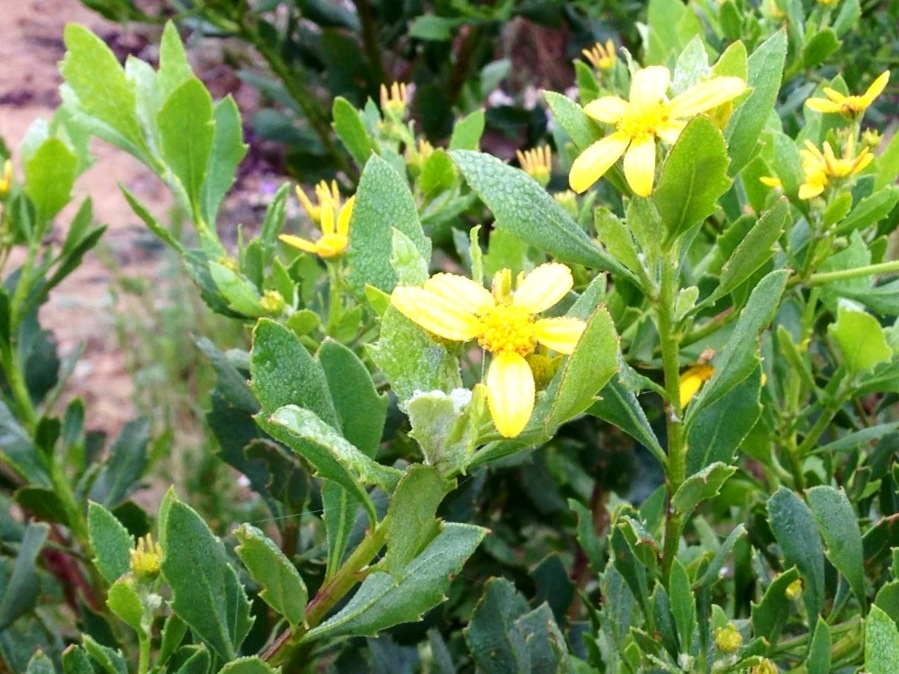
I can’t find this shrub with a yellow flower in the book so its gone to the unknown album and I’m hoping to get to Kirstenbosch Botannical Gardens this week or next to get some help with these and possibly some additional reference books in preparation for the continued spring explosion.
Unidentified yellow flowering fynbos shrub

Unidentified yellow flowering fynbos shrub

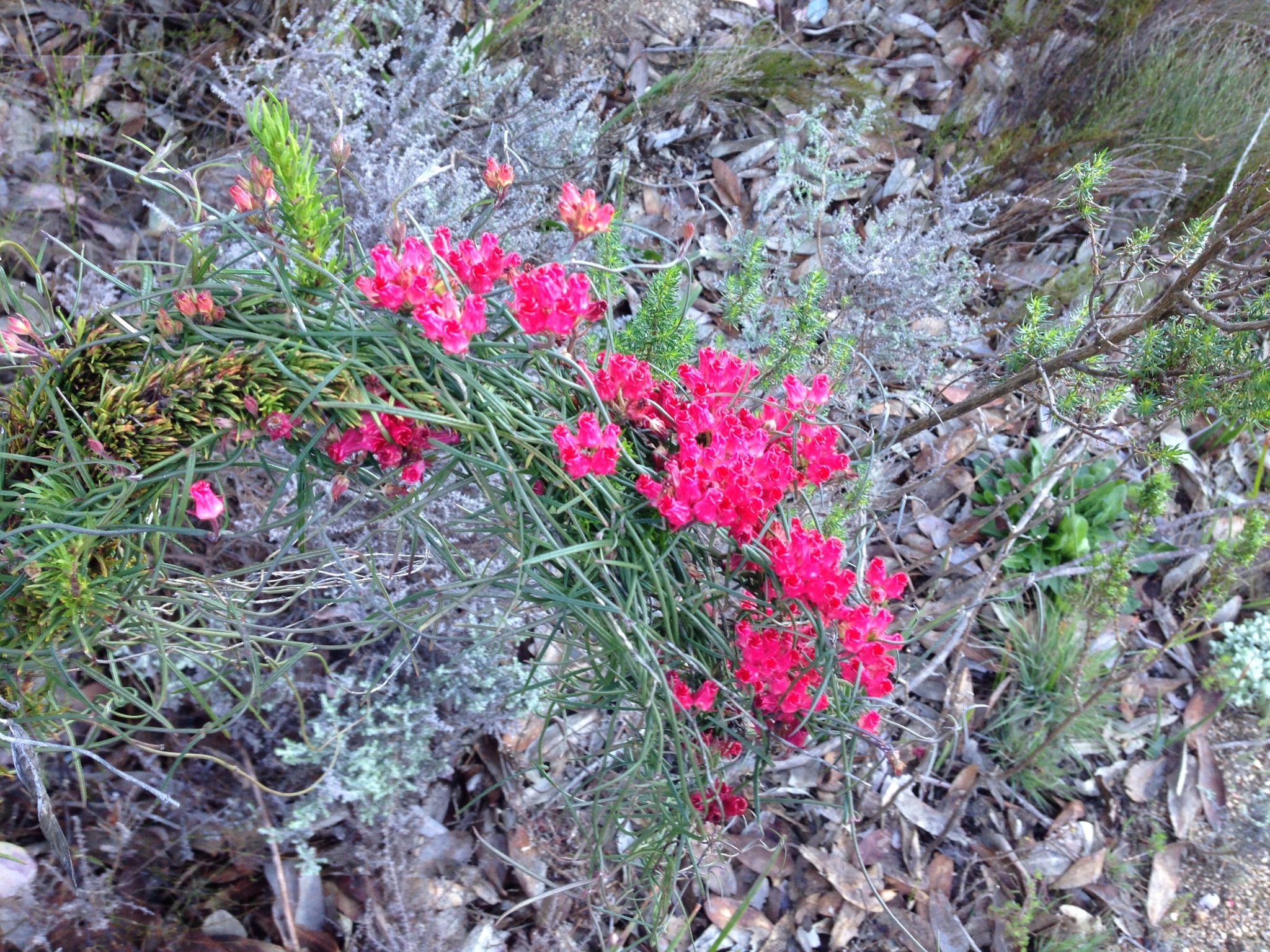
There is no difficulty recognising the Microloma tenuifolium, it’s tiny bright coral flowers jump out of the tangled thickets at you.  Normally you see them like this one curling and creeping around a wild helichrysum.
Microloma tenuifolia

Microloma tenuifolia

But yesterday we saw this unusual sight, the Microloma has gone and wound itself round and round this bit of bush and is flowering as a massive head of colour.  Amazing!
Microloma tenuiffolia

Microloma tenuiffolia

The Lobostemum continues to blossom all over the mountain, often they are pink, or pinky-blue.  In this particular area at the top of the farm they are all blue.
Lebostemum with blue flowers

Lebostemum with blue flowers

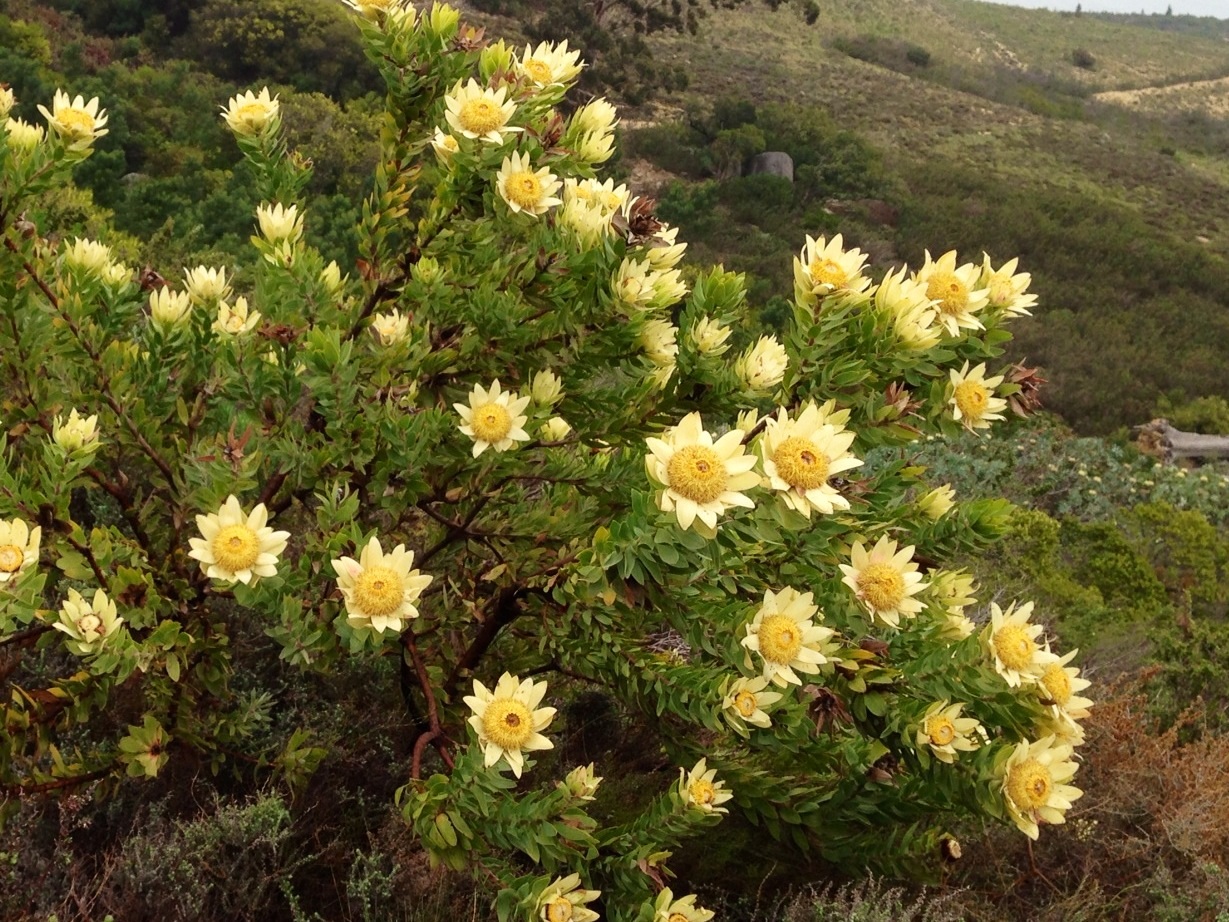
Finally as we ran down the mountain we came across this magnificent Lucodendrum.  Later in the spring these yellow flowers will turn the most beautiful shade of coral.  There are masses of them and we look forward to their arrival at the height of spring.
Leucodendrum

Leucodendrum

A spring weekend

I have been away too much over the past few weeks and am overjoyed to be back on the farm for a few weeks before I have to do any serious travel again. The last post talked about the Bulbinia fragens, the harbinger of spring. Spring here does not arrive over many weeks as it does in Europe. Within one unseasonably warm week I have returned to find the farm full of new flowers. This is building up to the height of the flowering season for Fynbos and the next few months are going to see an explosion of life. I’m already struggling to keep up – this blog will be quite long and I’ll be trying to keep regular posts so that we capture as much as possible of what’s happening on the mountain.

I’ve been looking out for this flower – it’s a dear friend, one of the first that made me realise the special nature of our fynbos bulbs. This photo is quite deceptive as this is a tiny iris-like flower – each petal not much bigger than my fingernail. This is Moraea tripelata and it has started to flower all over the farm. I spotted it first thing when I went running with the dogs on Saturday morning.

Moraea tripetala

Moraea tripetala

Peter then took us up to see the work he’s been doing clearing alien vegetation, especially the Port Jackson trees that choke the river. Every winter when the planting on the farm is done he attached this for a few weeks. Two winters ago we cleared around the waterfall and what was a chocked up watercourse that you couldn’t see is now full of vibrant fynbos life. He has just opened up this area, so dense with trees that you couldn’t get into it and has found the spot where the two rivers that run through the farm meet, before tumbling down the mountain to add their waters to the mighty Berg River that runs through the Paarl valley below us.

Clearing alien trees along the river
Clearing alien trees along the river

The place where the two rivers meet

The place where the two rivers meet

In the late afternoon I took some guests on our first “Flower safari” of the year. All we did was walk down the front drive and we were enchanted with the profusion of flowers we came across, many old friends that we have posted before, and quite a few new ones.

First of all we came across this tiny white gladiolus. I first saw it at the top of the bank, which gives an idea of scale.

Unknown gladiolus

Unknown gladiolus

Then I realised they are growing along the side of the road. I cannot find this one in my book at all – not even in the bulb encyclopedia. I’ve done this before, failed to identify a flower and then realised I’m not looking properly at the description, so if I do realise what it is, I’ll post it. It is quite enchanting, with a delicate fragrance, like so many of the gladioli.

Gladiolus unidentified

Gladiolus unidentified

Then we came across another example of the bell like pink Erica that I posted last week, this time a lot closer to home.

Erica with pink bells

Erica with pink bells

There are masses of these on the drive, and masses of what I guess to be Erica daphniflora, in colours of green, white, red and a particularly vibrant pink.

Erica, probably daphniflora

Erica, probably daphniflora

Erica, probably daphniflora

Erica, probably daphniflora

The Oxalis are still flowering away, these ones in white and pink profuse along the bank and the lands still covered in the yellow ones.

Oxalis

Oxalis

The next new find was this Erica – you can see it’s quite distinctive in the way it grow and flowers and the little white bells have the brown anthers exposed at the end. This was very attractive in the late evening light.

Erica, unidentified

Erica, unidentified

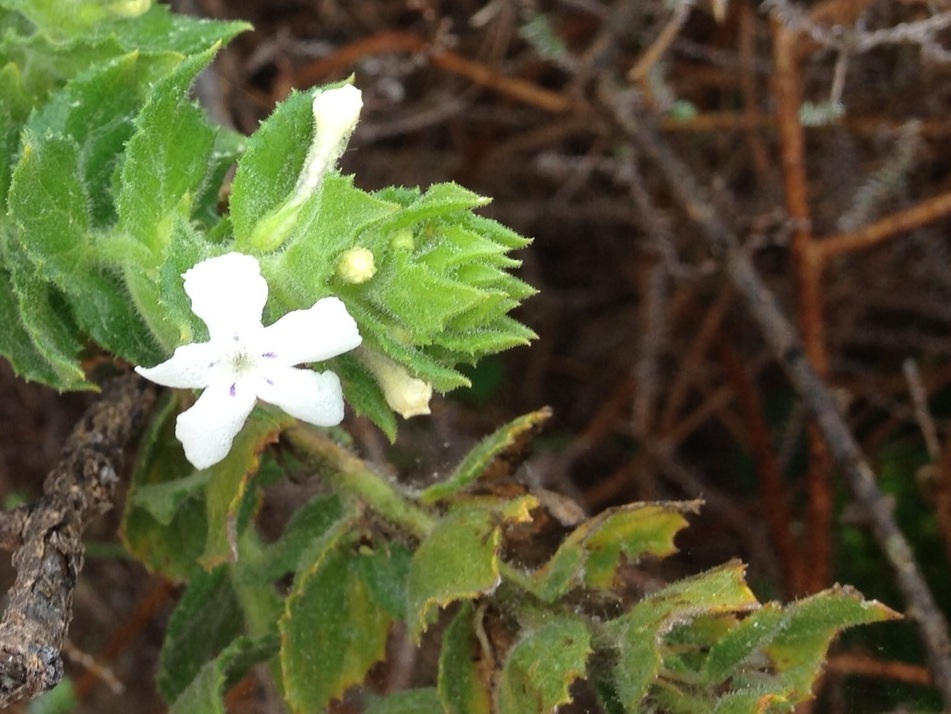
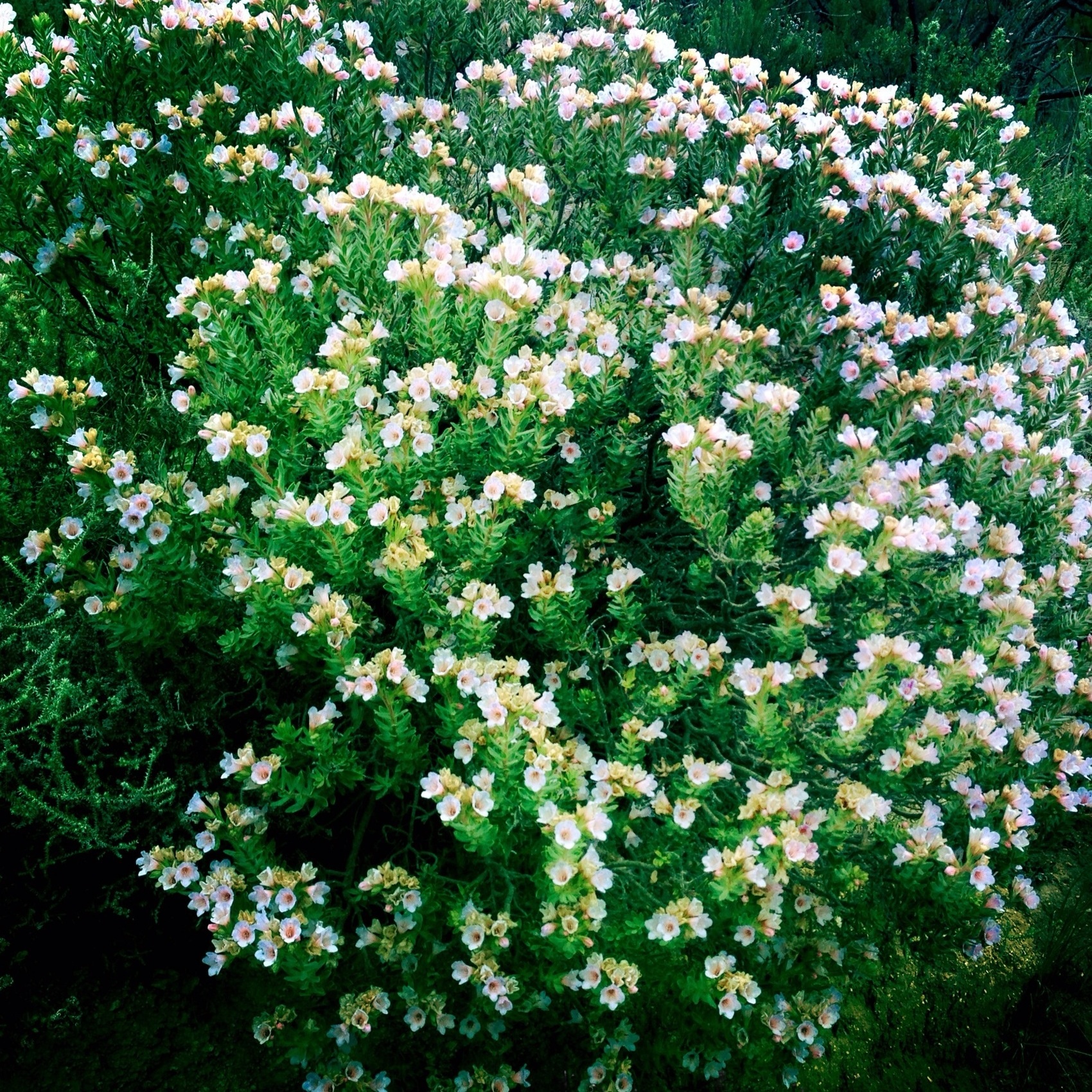
Another new find is this flowering shrub which is common all over the farm. I have always assumed it to be Cape Confetti, but with my evolving botannical eye I think it is more likely to be Adenandra villas, possily . I’m sure I will have many more occassions to photograph this stunning shrub.

Cape confetti - coleonem album or adenandra villas?

Cape confetti – coleonem album or adenandra villas?

As I was showing our guests one of the Protea nerifolias along the road we saw this little bud. We were delighted as it means these glorious proteas are going to continue to flower for some time.

The bud of a Protea nerifolia

The bud of a Protea nerifolia

The Felicia is such a wonderful flower. This is the first one I have seen this year and it will flower from now until the summer, along with the Lobostemum it is one of our commonest shrubs. That makes the first sighting of these pretty lilac flowers with their yellow centres no less exciting, both for their own sake and the promise of more spring flowers to come.
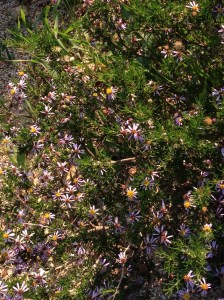
Felicia filifolia

Felicia filifolia

This warm weather won’t be with us for long, with temperatures expected to plummet during the week. Luckily up here on the mountain we almost never go below 5 degrees, so the flowers will be safe. In the valley below it can freeze, but the moutain seems to hold the heat of summer and protects us from the coldest weather.

We are coming into the best season for sunsets. Yet another amazing sunset this evening as I was finishing some more traditional gardening and the mountains behind turned a glorious orangey-pink.

image


imagein

Babinia Fragrens, the Harbinger of Spring

I got home on Tuesday morning and of course my first thought was to get up on the mountain and see new flowers though I didn’t achieve it until late in the day.

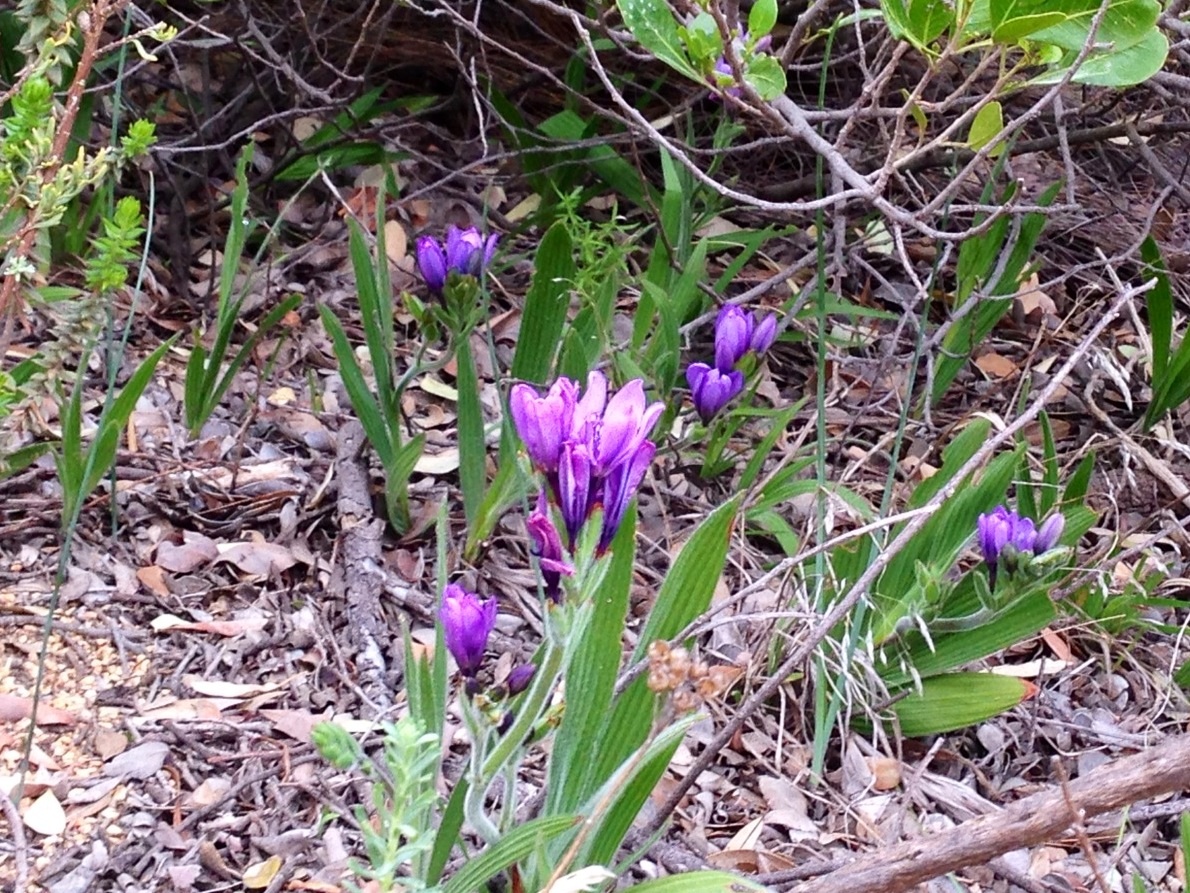
Every year as we reach the end of July, the coldest and wettest six weeks of the Cape year, a flower emerges that is for me the harbinger of spring.  Like hearing the first cuckoo, I always note where and when I see the first Babinia fragrens.  These crocus-like flowers cover the farm, they are everywhere – and the bulbs are particularly loved by porcupines.  Last year I was running up a steep hill on the farm when I came across a 300 metre stretch of road where a happy porcupine had wandered up and dug up every single plant to munch on the bulbs.  There are plenty to share and it was fun to think of him happily crunching not far from the house in the night as we slept.

Babinia Fragens, the first of the year

Babinia Fragens, the first of the year

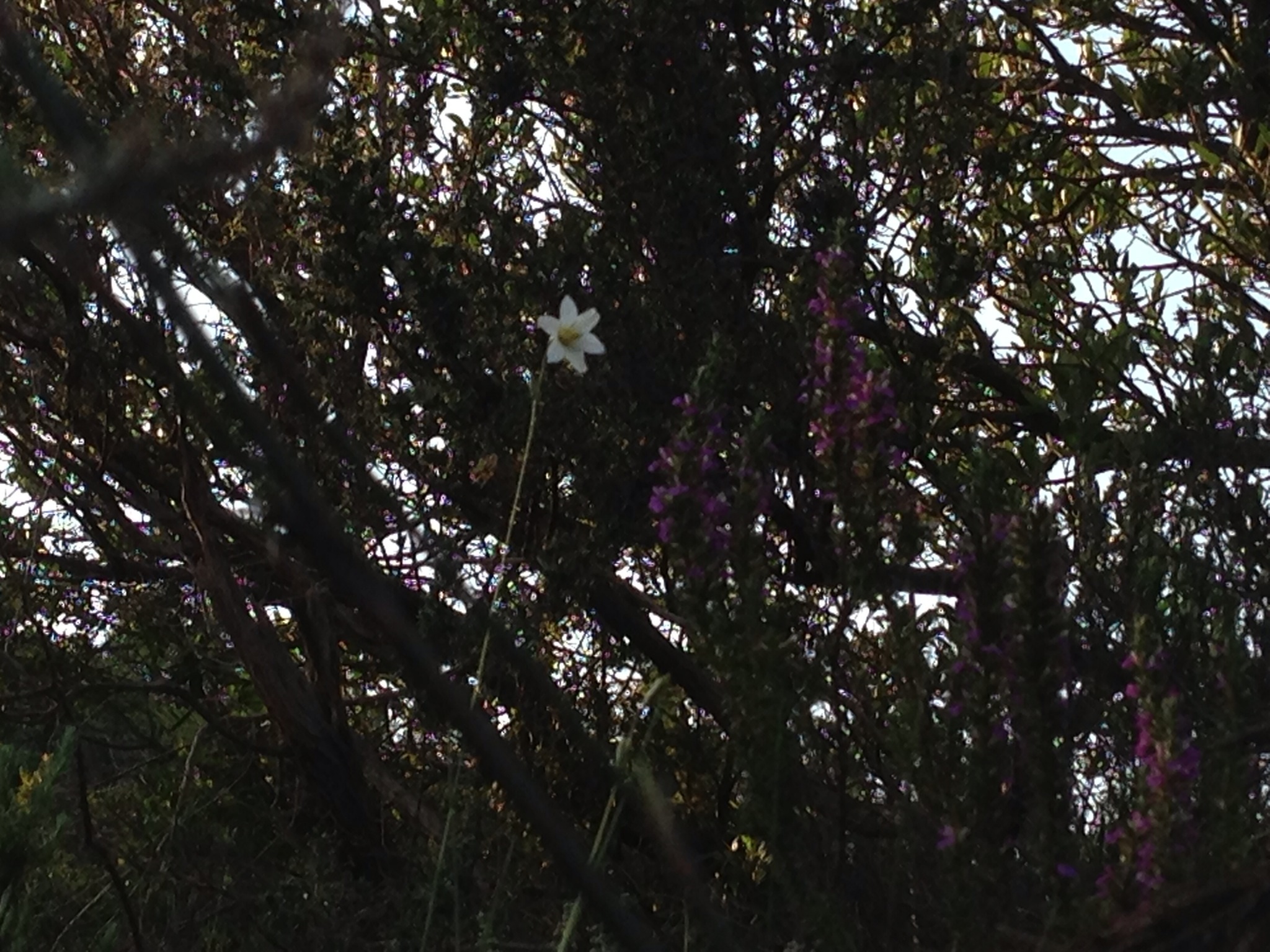
Next up was this delicate white flower.  I didn’t get a great picture of it – I think it’s a Cape Snowflake, to give it it’s common name, but will pop it into the research folder and see if we can get a better shot.  These are quite common so I’m sure we’ll see more.

Image

Opposite the Cape Snowflake, the water was tumbling in huge volumes down the waterfall in the evening sunlight – there’s been a lot of rain while I’ve been away.

Image

One of the other wonderful sights of late winter and early spring is the Lebostemum.  Another very common flowering shrub which flowers now and for several months.  I have tried several times to transplant these to the garden, but they have a long fragile tap root and even very young ones invariably die.  They are magnificent shrubs and flower in blue, pink or anything inbetween.

Lobostemon fructicosus

Lobostemon fructicosus

We wanted a good view of the sunset and went to the highest point of the farm on a road we don’t often run.  This wonderful combination of Protea nerifolia and Protea nitida blocked our route at one point and forced a detour.

Protea nerifolia and Protea nitida in the evening light

Protea nerifolia and Protea nitida in the evening light

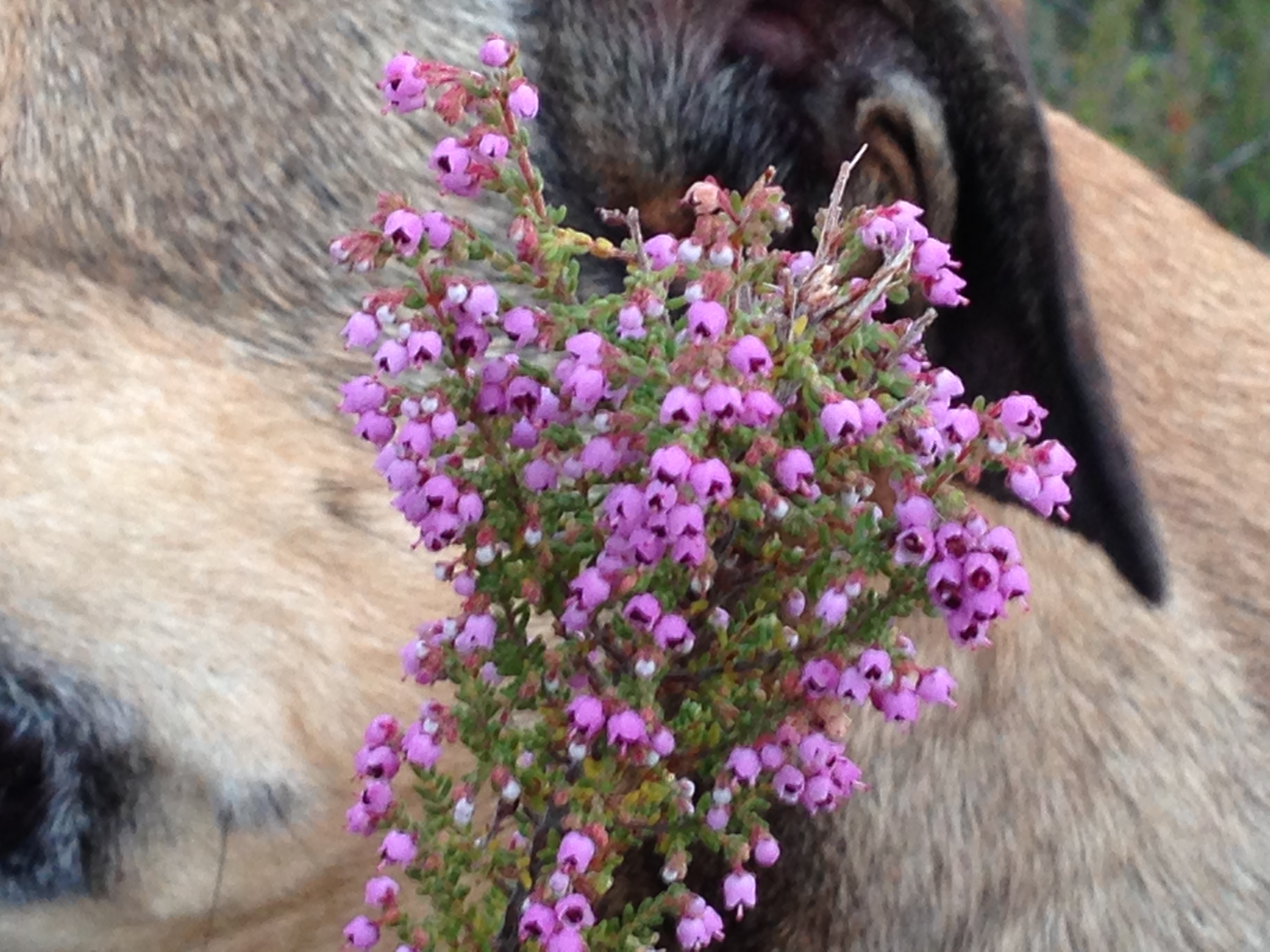
On the detour we came across this stunning Erica with little pink bell-like flowers in full bloom.  Pink ericas with bell-like or urn-like flowers are like yellow daisies, there are an aweful lot of them and they are hard to tell apart.  Thanks due to Jemima Chew who stood behind them, making them much easier to photograph!

One of the many ericas that flowers with a tiny pink bell-like flower

One of the many ericas that flowers with a tiny pink bell-like flower

The Cape Sugarbirds are in full mating feathers at the moment and they are having a lovely time in areas where the proteas are thickest.  Their tails are so long they can hardly fly – that’s the males of course, the females look drab and take their pick.  I haven’t yet managed to get a really good shot of one but hopefully it’s a matter of time.

I don’t believe we have posted and recorded this protea which is now in full flower.

Protea - indentification will be confirmed in a further posting

Protea – indentification will be confirmed in a further posting

Finally – another sunset.  As dusk gathers and the sun sets you can see the mist from the Berg River gathering on the valley floor.  No wind, the light is stunning and in the far distance table mountain and the whole of Cape Town is covered by a dark wall of cloud.  The rain is coming.

2013-07-24 17.59.37

The Rooi Afrikaner or Gladiolus watsonius – a technical blog

For at least four weeks I’ve been frustrated by this glorious red gladiolus.

Gladiolus watsonius

Gladiolus watsonius

The species is easy to identify, the subspecies has been confusing; our first sighting was at the end of May and the book says it doesn’t flower until August.  Even the more detailed encyclopedia says that it flowers from July to September. Furthermore it grows in clay and granite slopes in renosterveld. We have granite and sandstone slopes which is a subtle but important difference when it comes to fynbos. Over the weekend I got more serious and looked more closely – the only possible suspect was Gladiolus priorii. But Gladiolus priorii has a yellow throat and although I didn’t have a photo of the throat, I was pretty sure it’s not yellow. I couldn’t really bring myself to believe that we have a previously unidentified Gladiolus on the far, tempting though it might be.

Today I picked one.

It had fallen over a bit on the bank above the drive, it’s a bit tatty and it was time to take this whole process of identification a bit more seriously. And I can reveal that Gladiolus watsonius has one particular distinction. The lowermost leaf is narrow and H shaped in cross-section. No I didn’t get the scalpel out – I’m not that much of a geek yet. It’s pretty obvious just looking at it.

The lowermost leaf of Gladiolus watsonius

The lowermost leaf of Gladiolus watsonius

We have a positive identification – it may be the wrong time of year, it may not be quite the right soil-type but there is no doubt: Gladiolus watsonius likes Du Toitskloof and it likes our farm. It flowers when it chooses to and it’s not going to change, so the sages who write the books may need to change a word or two.

Gladiolus watsonius

Gladiolus watsonius

Magnificent Proteas, more water and some new finds

There is a lot to share so today’s blog is all flowers and less about the run.
Up until now I’ve been going by the flowering dates shown in my reference book but I’m now not so sure.  I know from the records I’ve kept over the years that the different weather can mean flowering even in the garden here can vary by a month or six weeks from year to year, so why not the fynbos.
Stachys aethiopica, for instance, is supposed to flower in August and September, in the early spring.  But we saw one in May and there are small groups of them in different areas at the moment.  They are unmistakeable with their flower reminiscent of a pelargonium and distinctive mint-like leaves.  Indeed they are a member of lamiaceae, the mint family
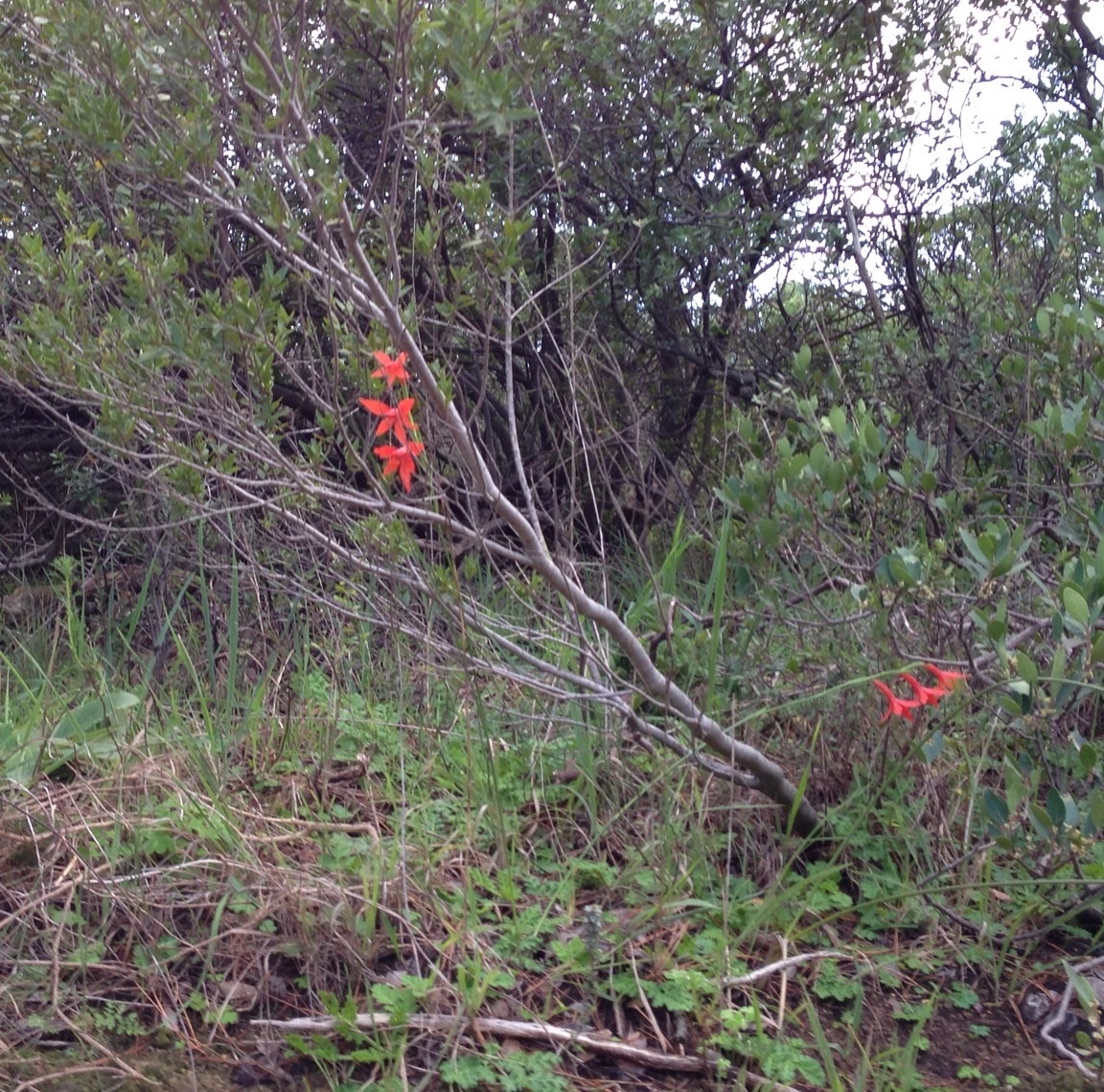
Stachys aethiopica

Stachys aethiopica

The red gladiolus has cropped up in a few places.  There was one by the road when I left in early May that was easily photographed.  The latest two are high on the bank above the drive, but worth sharing even if the photo isn’t great.  The nearest possibility is gladiolus priorii, though in that case the flowers should be dull red and these are a vibrant scarlet.  It should also have a distinctive and easily visible yellow throat and I can see no evidence of that in our flower. I will look again as the size, shape and flowering season fit.  I need to look a little closer if one appears in a more accessible area.  If not, we’ll have to wait until next year to be sure.
Gladiolus - unamed

Gladiolus – unamed

The dogs and I had a wonderful run today and we visited the weir to see how much water is flowing.  This is always a lovely place; the whitish trunks of the Ilex Mitis or Cape Holly, are magnificent and the permanent water flow makes it a favourite of the dogs.
An ancient Ilex Mitis with its feet in a permanent stream

An ancient Ilex Mitis with its feet in a permanent stream

Jemima Chew enjoying the water in the weir

Jemima Chew enjoying the water in the weir

While I’ve been away the magnificent protea trees have come into flower.  They are tall and have spikey white flowers and silver leaves.  I believe they are Protea nitida.
Protea - probably nitida

Protea – probably nitida

Near them stands this delicate pink protea.  It is probably a nerifolia, though the flowers are barely bearded and a paler pink than most of the nerifolio on this farm.
Protea nerifolia - a very pale pink specimen

Protea nerifolia – a very pale pink specimen

Flowers found in the forest that abutts the farm are included in our blogs as they are on our regular running route.  We’ve seen Ursinia paelacea before and there is lots of it along the forest roads.
Urisinia palaecea

Urisinia palaecea

Not everything is easily identified. This little clump of yellow daisy-like flowers is lovely and quite distinctive but I can find no record of them. Suggestions welcome.

A mystery flower - yellow daisy-like flowers are the hardest to identify

A mystery flower – yellow daisy-like flowers are the hardest to identify


As we ran into the forest the path is lined with Leucadendron salignum.  There are hundreds of these all over the farm.  At this time of year they glow in the dark, another plant that seems to absorb the sunlight and render it back to us on the darker days.  Today was bright and they gleam in the early winter sun.


Leudadendron gleaming in the winter sunlight

Leudadendron gleaming in the winter sunlight

Flowing Water and Fowers – 28 June 2013

Home.  The desert sands of Qatar behind me at last.  It was a shock to return to glorious green after the thick humid sandy air of Doha.  It seems it’s done nothing but rain since we left home three weeks ago and the farm has a rich sodden feel to it, with water roaring through the river and tumbling down the waterfall.  The roads are in need of maintenance, full of rivulets and potholes but the seeds I planted in the garden before we left have all sprouted into healthy young plants and the fynbos is settling into a winter burst of life.   Seamus, the senior wolfhound, is joyous at my return and cannot bear to leave my side.
The dogs and I went for an evening walk, inspecting some of our usual routes, the dogs looking for new smells, and me looking for new flowers.  We started down in the stream below the house that leads to the damn.  The banks are lined with Arum Lilies at this time of year.  Just as the luminous grasses have disappeared the lilies flower along the rivers and roads all winter and their beauty speaks for itself.  We have a few months of them ahead, and there will be a lot more pictures to come.
Image
Arum Lilies
The great thing about this blog is that it focuses the mind on home, on the magnificence of this land and the plants that grow here.  I’ve seen Chasmathe all over the Cape, they remind me of the Montbretia that grown wild in Ireland, another South African wild flower that grows all over Ireland’s verges and banks in the summer.  At first I thought it was the same flower but Montbretia doesn’t grow in this part of the world, it belongs further north in a summer rainfall area.  This Chasmanthe is lovely, another of the anchors of a certain time of year, this winter time, when growth is rich and lush and yet only a herald of things to come.
 
image
Chasmanthe, most likely floribunda, but to be verified

When we moved to the farm eight years ago this little red creeper was one of the first flowers to awake my interest in fynbos. The flowers are tiny, smaller than my little fingernail and they appear suddenly in midwinter, winding around the stems of thicker fynbos. Despite their tiny size the jewel-like coral jumps out of the greenery and draws the eye. We will have them until mid-spring or later, all over the farm.

Microloma tenuifolium

Microloma tenuifolium

We could hear the waterfall long before we saw it – with the rainfall we’ve had in June the rivers on the farm are roaring and the land feels replenished.

The Waterfall

As we walked along the new road that leads to the waterfall this enchanting sight greeted us.  I don’t know what to say or even think about the
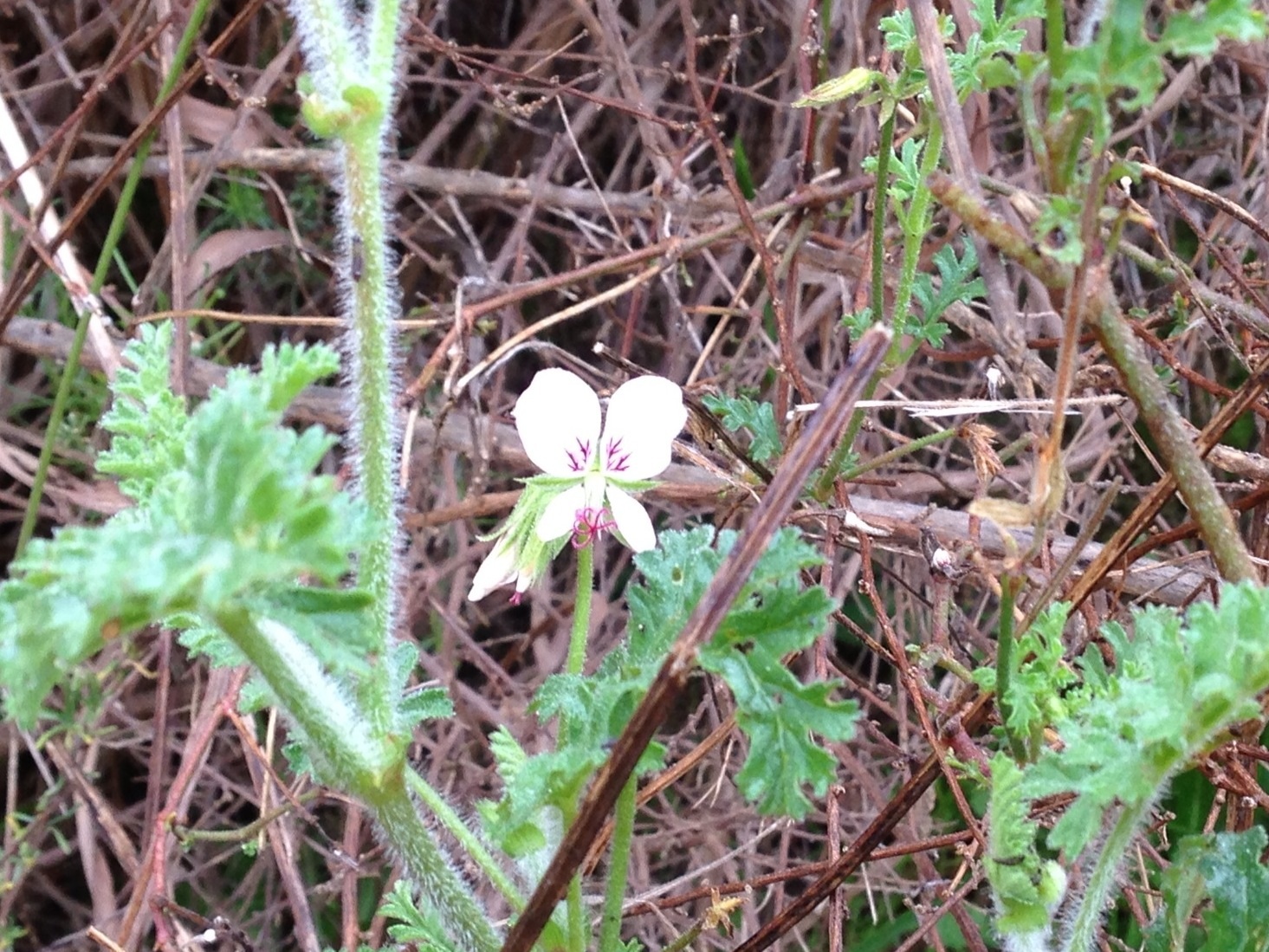
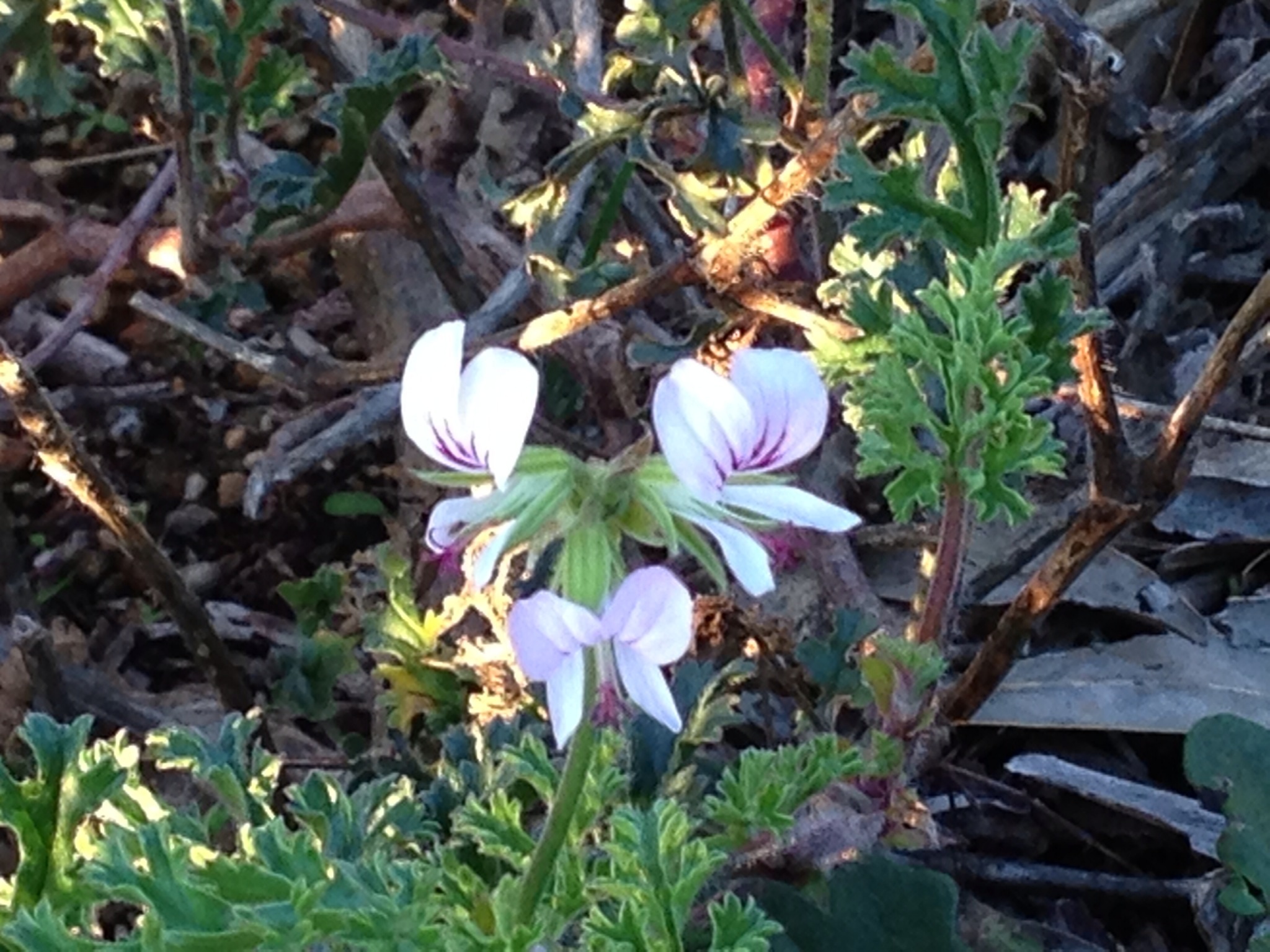
pelargoniums; though are stunning, charming, and endlessly delightful the sub-species seem impossible to identify.  Our new road is a pelargonium nursery and they thrive here all year round.  At least this one allowed me to take a good picture – gracefully gleaming in the evening light.
Pelargonium - subspecies unknown

Pelargonium – subspecies unknown

Pelargonium

Pelargonium


The books have a few pelargoniums but they don’t seem to flower at the right time of the year.  We have dozens and the best I can do is document them and find a real expert.  Some of those that I’ve transplanted to the garden are doing really well, perhaps that will help.  They are endlessly endearing.  My grandmother grew them, pelargoniums and geraniums, nursing them through the Irish winters.  She would have loved this place; not lush like Ireland with it’s dense choking green; more selective; intense; dramatic – she would most definitely have appreciated the drama.  It was her birthday on 22nd June, just after midsummer.   I was in Doha, so missed the shortest day of the year on the farm.  Today is the shortest day we will see this year, and this is the most north-westerly sunset, far over the Paarderberg.
Sunset over the Paaderberg  28 June 2013

By mid-summer this sun will set far to the South of Table Mountain.

My love of botany is definitely inspired by her, and by my stepgrandmother, both of whom were dedicated and knowledgable horticulturalists.  I thought of them both this evening as we descended in the gloom.  Two women, one Irish, one English, both Catholic, both of whom were born in one world war and raised their children through the next.   Gracious women, much loved, characters, who instilled in us both values and manners. They loved their gardens and gardening brought them together, unexpectedly and into a lifelong friendship.  They admired one another and both of them would like to know they are remembered and that they continue to inspire us.  

The Ericas are coming out all over the farm and I have not yet identified this one – a detailed book on Ericas as we as Pelargoniums is most definitely called for. The Erica family runs to 660 subspecies in the fynbos region, so we can’t expect to identify them all, but it will be fun to see how many we have on the farm and I will start a library page on them soon.

image

The Guernsey Lily and other stories –

Writing this blog involves a lot of leafing through books trying to identify the flowers.  My favourite and the best that I’ve found so far is called Field Guide to Fynbos by John Manning.  It seems remarkably comprehensive, very detailed and I’m very grateful for it.

One thing I have learned is that small, daisy like purple and yellow flowers are quite hard to identify with pinpoint accuracy.  The devil, as always, is in the detail.  One has to note leaves, shape, colour, and plenty of tiny details involving the language of the botanist.  The purpose of this blog is not to bore a reader with the science; at the same time reasonably accurate identification of the plants means I must learn something of it myself.  As time goes on I should get better at it.
This has been a busy week and included some travel which means I’ve been out on the farm less than I like.  Luckily here were a few flowers I found last Sunday that I hadn’t taken the time to identify and it’s a rainy Sunday today, the mountain unphotogenically covered in dense cloud, so it’s a good day to spend leafing through the reference books.
This stunning purple daisy-like flower looks like a Felicia, of which we have lots on the farm, though they are not quite in flower yet.  Closer study reveals a white circle at the base of the petals which, combined with the shape of the petals (I really must take care not to become too much of a geek about this) makes me think it must be a subspecies of Senecio.  It looks quite like Senecio Sophioides which is not due to flower until July but it could be a close relation.  There are 80 fynbos subspecies of Senecio and not all are in the book.
 Image
I am a little more confident with the next identification despite the fact that the yellow daisy-like flower is the commonest of all, seen on lots of different shrubs.  Still, this one is quite distinct so I’m going to identify it as Ursinia.  Again it’s not flowering at quite the same time of year as the sub-species in the books, but it is quite distinctive for a yellow daisy-ish thing.
 Image

The day after I saw the Brown Afrikaner I saw another gorgeous bulb.  When it comes to bulbs there are two exceptionally prolific areas (that I’ve identified) on the farm and luckily one of them is the bank along the drive.  Running down the drive the other morning I caught a flash of red and stopped to see this; high on the bank above us.  It’s a south facing bank which doesn’t get much sunlight at this time of year.  I stopped several times as I drove up and down the drive and managed to catch one shot late in the day with the sun behind it.   I’ll go and have a look this week if the weather improves but I don’t know if I’ll find more of these so although the photo isn’t great, I decided to publish it in any case. I couldn’t get close enough to identify it with pinpoint accuracy – I can’t believe I’m going to have to bring field glasses with me to identify flowers. I’m pretty sure it’s a Nerine though. It is a lovely thing.

image

 
Nerine Sarniensis or Guernsey Lily
 

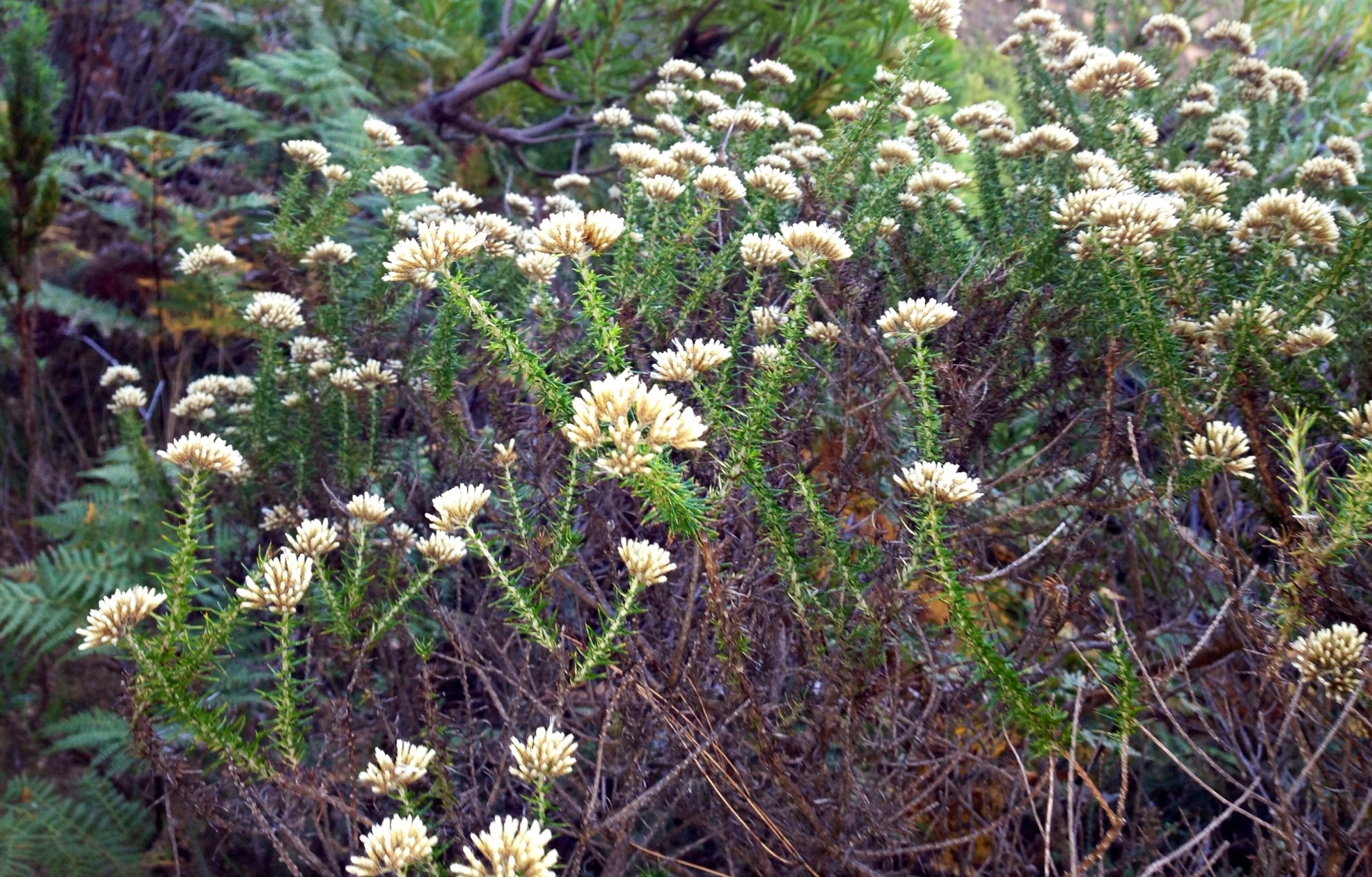
There is a multitude of shrubs on the farm with shapes that are unique and rather strange; not familiar to anyone who grew up in the herbaceous gardens of Europe, even those filled with exotic flora.  A feature of these, and we’ll have lots of examples over the coming months, is that the leaves grow close to the stem, all the way up a long stalk, with the flower heads clustered at the top.  One of these is Metalasia Densa, coming into flower now, – a prolific flowering which will last for the next six months.  There are hundreds, if not thousands, of these shrubs on the farm.

Image

10 May 2013

Some flowers are at their best in the subtle light of dawn and dusk while others curl up and go to sleep, only showing off their brilliance in the full light of day. I was driving home yesterday afternoon, wondering if I really was going to find enough flowers on this farm to justify a whole year of blogging, when I noticed the bank was studded with pink and white flowers. When I’m out running early in the morning they are all but invisible but during the day they are everywhere, on the banks, on the roads and all over the lands.

image


Oxalis Purpurea

These come in a multitude of colours and at least a couple of varieties that I’ve noted here on the farm. What I love about them is that they seem to be the first bulbs to flower each year, showing almost immediately after the first rains. Of all the fynbos bulbs are among the most delightful, highly localised in terms of where they grow, often so fragile that one wonders they can survive at all, hugely varied and the first sighting of a favourite flower each year is always a moment of private joy, very Wordsworth, somewhat hackneyed yet so true. We’ll be having some surprised by joy moments I’m afraid.

image

image

Oxalis Purpurea

While photographing the Oxalyis I saw a different flash of white, something I hadn’t noticed before. It’s one of those I’m not certain of, yet so distinctive that I think it must be Stachys Aethiopica. It was quite hard to capture and if I see more out there I’ll try and get a better shot. A very distinctive white flower and the leaves were used medicinally in the past; the common English name is woundwort.

image

Stachys Aetheopica

Part of the fun is identifying the plants as it lends a component of detection to my day. Sometimes I’ll get it wrong. When the yellow lobelia I thought I’d identified last week started to show tiny little fluffy seedheads I thought “that can’t be right” and went back to the book. Indeed I should have known better as I grew up with a garden that had lots of senecio in it and this turns out to be Senecio pubigerus.

Protea nerifolia 4/5/2013

Senecio Pubigerus

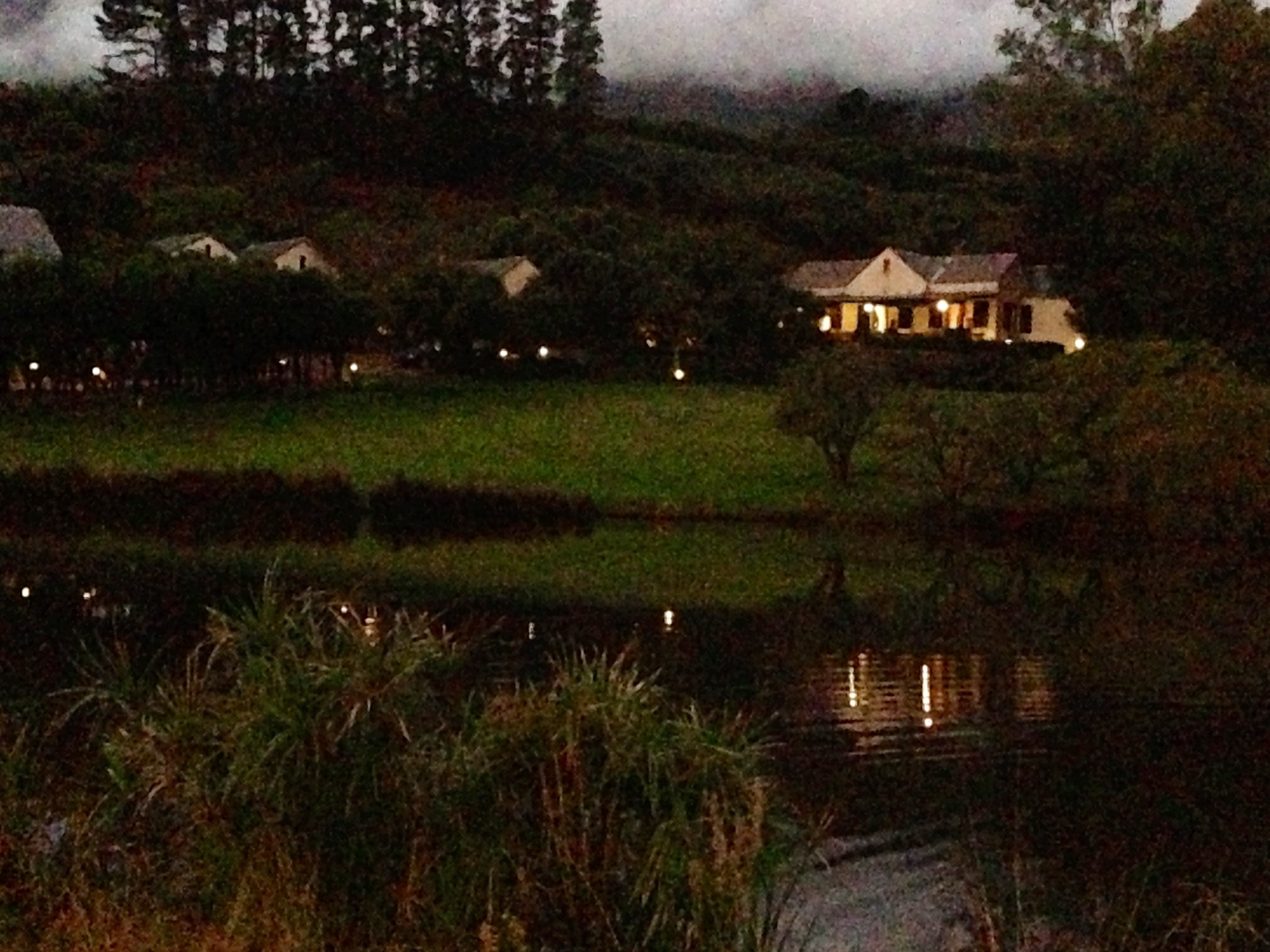
I have been trying to get a bit fitter this week as I’m riding in a show at the weekend, so for a couple of days I’ve been running twice a day. One evening the light was exceptional, it was too dark to take flower photos but I could not resist a couple of sunset shots and a rare picture of Maebh the Irish Wolfhound standing still. And a picture of the farmhouse as we crossed over the dam wall when it was very nearly dark.

image

image

image

image

Recent Entries »