Category Archives: Botany

Wolfhounds slipstreaming in the wind and glorious early autumn sunsets

Two lovely runs this week.  One on a cool damp morning with the new growth of Leudadendron salignum glowing green in the grey light once again and bounding dogs enjoying the autumnal weather.  The house is full of guests and it’s lovely to get up early, go for a run and enjoy my own company and that of the dogs, returning to a social breakfast full of chat and laughter before we get on with the day.  Our guests are terrific, they know their way around the house and on Monday’s run I returned home to a delicious breakfast of poaches eggs with english muffins, avocado and olive oil, all prepared by Niall before he took himself off for a morning of work.

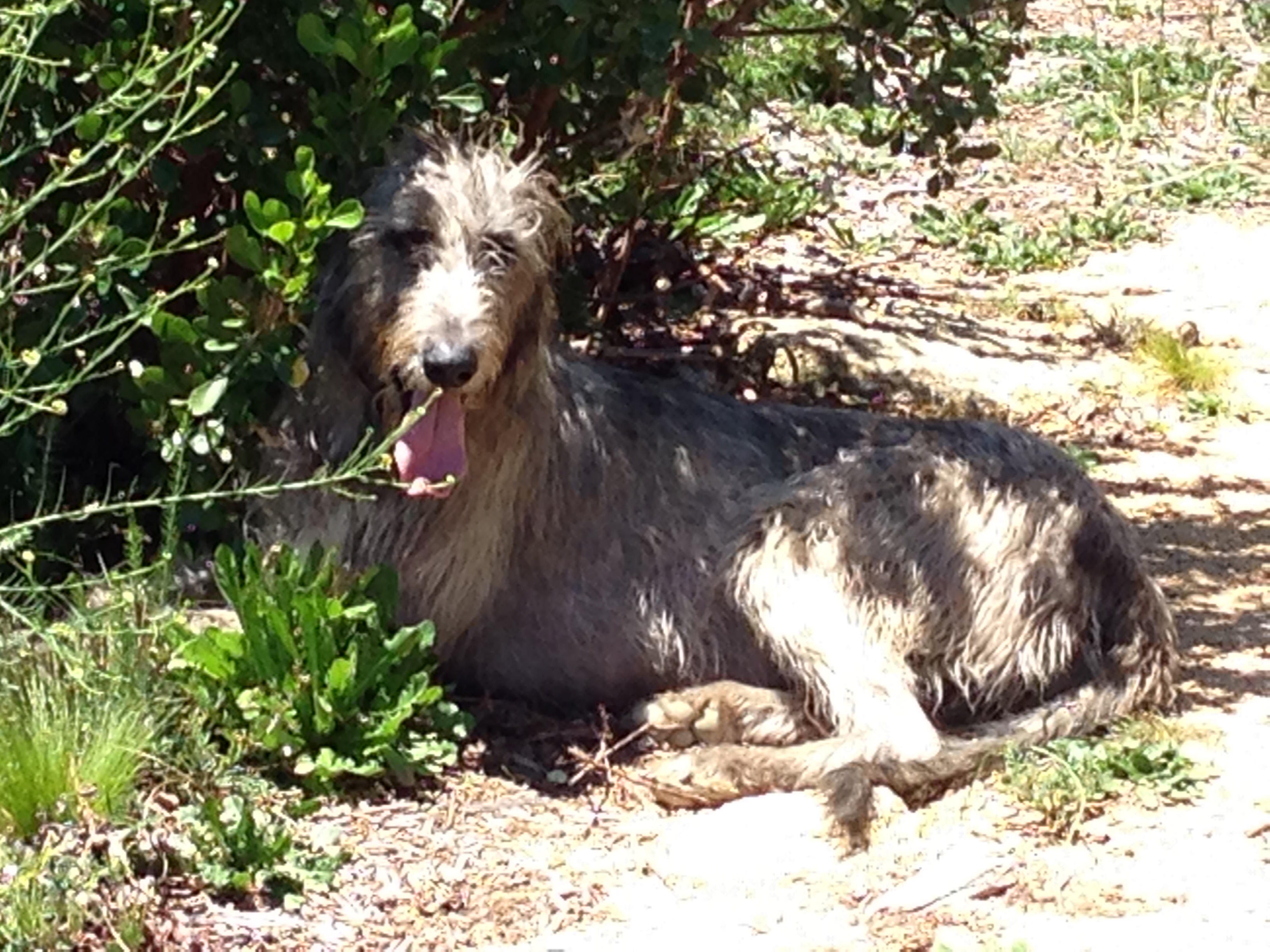
This morning was the perfect opposite in terms of weather, a typical hot dry windy morning with the heart monitor showing the heavy weather I was making of pushing up the mountain against the howling wind.  The wolfhounds love the wind and stand face on, enjoying the feel of it slipping through their shaggy coats.  As ever on a hot day, they enjoy a quick water break at Fox Pan as we run up the mountain and you can clearly see the wind ruffling their coats.

Seamus and Maebh enjoying water and wind

Seamus and Maebh enjoying water and wind

Although flowers are not prolific I can see the Cape cycle starting once again.  Having grown up in the Irish climate where winter is winter and spring gets off to a slow start, this Cape climate is always a little strange to me.  The slowest period is during the hot summer months of January and February.  As the weather cools and the rains arrive, the whole mountain bursts into life, the flowering season starts again, lasts all winter and reaches it’s apotheosis in the spring months of September, October and November.  Having been through the cycle once I am alert to the signs that the new flowering year is getting ready to launch.  Murlatia hysteria is a real stalwart, along with the Salvia africana it really does flower all year long without a break, but now in anticipation of the rains it seems to be showing more blooms than ever.  Here it is in the morning sunlight.

Muraltia heisteria

Muraltia heisteria

I cannot resist taking photos of the gorgeous Leucadendron salignum, particularly when it’s been raining which seems to set off the glowing green.  There will be many more photos of this gorgeous plant during the course of the winter.  It has begun its flowering season already.

Leucadendron salignum

Leucadendron salignum

One could do a whole blog just on grasses but as the are hard to photograph really well I tend to ignore most of them.  It’s a technical subject and I have a couple of books, but not the time to identify this one which has just come into flower all over the mountain, especially in high, rather damp places.

Grasses with yellow flower

Grasses with yellow flower

I’ve identified this as a member of the Helichrysum family.  I’m still not sure that’s right but I can’t find anything else that it resembles.  The flowers don’t seem very helichrysum-like to me, but I can’t find anything else that it resembles.  As I was taking this photo just above Fox Pan, I realised that the dogs were very interested in the plant and really getting in to have a good sniff around.  So I stopped and looked and you could clearly see that something had been lying up on top of it.  Makes perfect sense, this plant is growing in front of a large protea, so it’s protected from the back, sheltered overhead and looks over Fox Pan and the whole mountain so whatever lay up there obviously felt completely safe and its lucky I didn’t run past at the wrong moment with the dogs.  I presume it was a buck of some kind, we see lots of them and the dogs often put them up and give chase, but they are far far slower than any buck and don’t even try that hard.  It’s lovely to see evidence of the animals who share this farm with us, whether it’s picking up a porcupine quill on a road that I’d only run the day before and imagine him shuffling up there in the dark, or seeing a plant flattened by a buck contented after her drink at Fox Pan and enjoying a rest on the mountain.

Is it Helichrysum?

Is it Helichrysum?

We get the best sunsets at this time of year and I always try to capture and share the good ones.  This was over the weekend as we sat on the balcony enjoying the house cocktail, gin and tonic with Campari.

Another perfect sunset

Another perfect sunset

Helichrysum Days

I try to write this blog at least once a week, sometimes more, with the aim of staying  current with  the flowering cycle on the mountain.  For some reason the past 10 days have been particularly busy.  We had a series of guests, family and friends, which is wonderful although it puts paid to quiet nights when we can watch TV and write blogs.  Then horses and dogs have needed trips to the vet.  The magnificent Seamus has had a bad time.  He got a tummy bug, received treatment and then had a frightening adverse reaction to the treatment.  It is a well documented allergy, but so rare that our vet had never seen it.  Two days of worry later he is much better although his back legs are not working perfectly and we don’t know if he hurt himself, or if it’s a consequence of the neurological reaction he suffered from.  He’s not in pain; he would tell us if he was, but it will be at least a few more days before he’s allowed running on the mountain again.

The horses were just getting all their routine annual innoculations, check-ups, dentistry and so on. All of which needs doing but is rather time consuming along with work and the guests.  I must remember next year how busy this time of year can be and plan a little bit better.

Peter’s business has picked up and while we wouldn’t say orders are flooding in, the painful trickle has certainly become a steady trickle.  Which should be wonderful except that labour protests are growing in South Africa and he had a sit in strike at the factory today.  Fortunately it was resolved quite quickly.  How frustrating finally to have some business, so that we can potentially pay more and afford bigger bonuses and instead be dealing with strikes and knowing our overseas customers are watching this and wondering whether SA is the right place to do business.  That’s not to be negative, just realistic.  Peter is brilliant at managing these situations and he will sort it out.

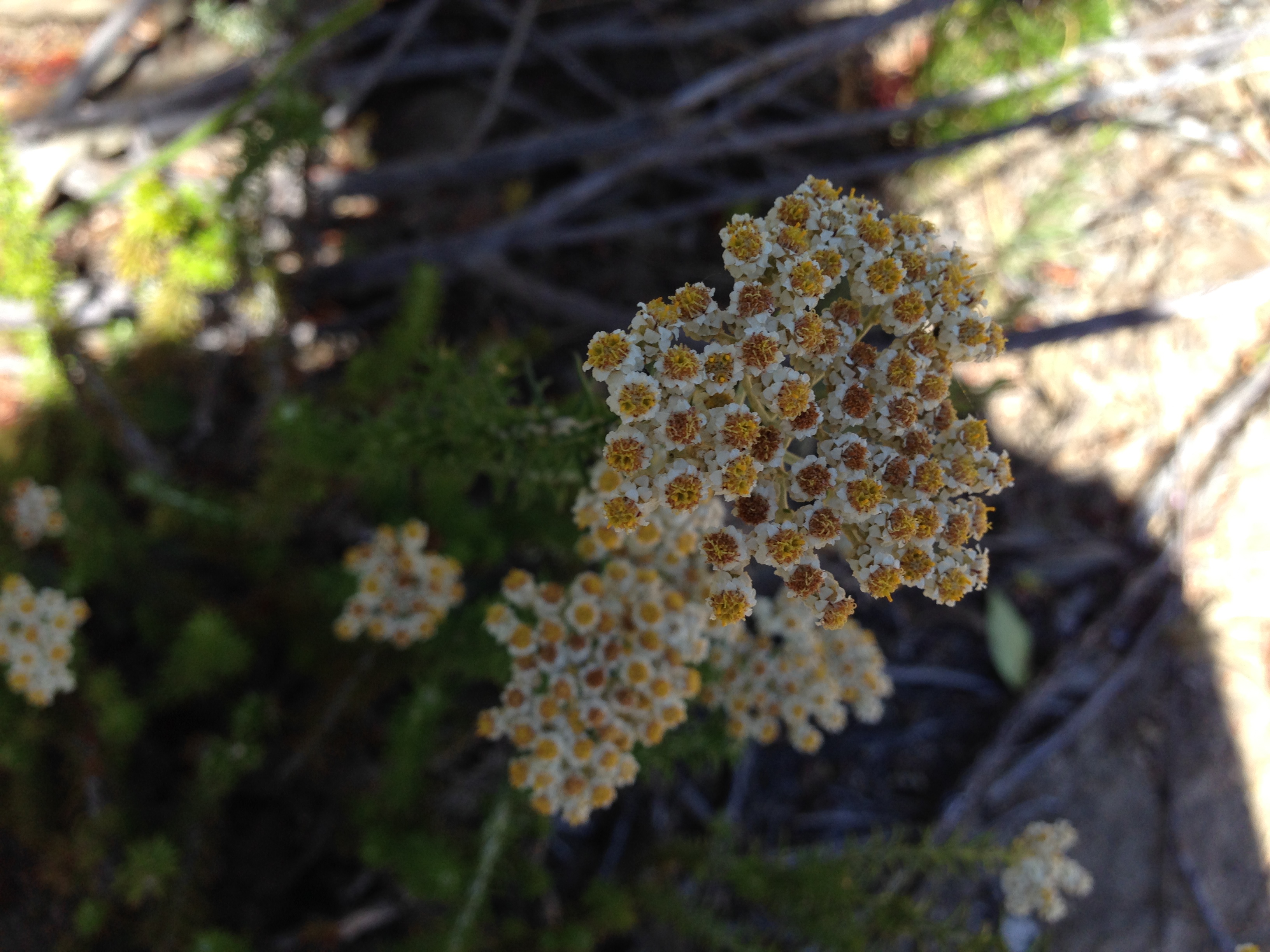
To my delight there are all sorts of happenings on the mountain which make running a pleasure.  In particular several different Helicrysums are in flower.  Plants that flower at this time of year tend to have dry looking or tiny flowers that can cope with the potential heatwave as you can see from these pictures.

Helichrysum Flowers

Helichrysum Flowers

Helichrysum flowers - a different sub-species

Helichrysum flowers – a different sub-species


Yet another variety to be found here on the mountain: Helichrysum flowers

Yet another variety to be found here on the mountain: Helichrysum flowers

A cloud of Helichrysum in the morning light, this one situated in the heart of the olive groves; they grow all over the farm

A cloud of Helichrysum in the morning light, this one situated in the heart of the olive groves; they grow all over the farm

I started this blog last year in March when the first of the proteas came into bloom.  So it is exciting to witness the burgeoning of protea life as the shrubs of Protea repens are covered in buds and will flower in the next few weeks.  That, for me, is the start of our flowering year and I cannot wait.

The Protea repens is budding, a harbinger of summer's end.  The first flowers will emerge well before the autumn rains

The Protea repens is budding and heralds the end of summer. The first flowers will emerge well before the autumn rains


We have exceptional sunsets at this time of year.  Almost every night and it is a lovely time to walk around the farm.  With Seamus on the sick list we haven’t gone far and last night I took this picture of the farmhouse with the pink mountains behind us.


Pink sunset on the mountains

Pink sunset on the mountains

Sometimes we can get strange effects of the light as the sun goes down, like this photo of the sun just dropping behind Paarl mountain.  Taken a moment later than the one above there is a circular glow around the setting sun that was  distinctive and I was surprised it was captured so easily by the iPhone camera.   

Sunset over Paarl rock

Sunset over Paarl rock

The Bartinney Angel

This blog is all about the wildflowers that I come across when I’m out running on the farm, and in almost a year of blogging I have never felt the need to deviate from that.  Even as the profusion of flowering dies back there is so much to describe on a run, the air, the light, the dogs, the water, the weather, and always a flower or two to talk about.  Indeed I have a new blog almost written and ready to publish.

Yet I am going deviate.   Because on Saturday I saw the most extraordinary sight, too ephemeral and too gorgeous not to share.  We were at a party in the Kylemore valley, about 30 KM from here, along the Helshoogte Pass.  It was a perfect day, pure blue sky, not a cloud and for once not too hot.   We were enjoying cold wine and delicious braai in a friend’s garden. Liz, another friend who lives in this lovely Kylemore valley, came over to me and said “there’s something I want to show you.” We went around to the back of the house and she pointed up into the mountain.  There, carved out in a meadow full of shining grasses, is an angel, the Bartinney Angel.

Bartinney wines have an angel on the label, based on a sculpture by Dylan Lewis.  Now they have carved their angel into a meadow of the lovely shining grasses.  Breathtaking.

The Bartinney Angel

The Bartinney Angel

An evening run

Our friends and family who follow this blog or drop in from time to time know that I spend far too much of my time on planes and away from our farm.  My work as a management consultant is part time, but sometimes very intense.  This has been an busy couple of weeks, working on a project that distracts me from the normal concerns of life and pulls my focus to what matters, in other words, the work that earns the money, in part at least, to pay for it all.

The project is winding up, although it took most of the weekend to finish the work for a demanding client.  The last report went through to Johannesburg as the sun started to set and on went the running shoes, up went the dogs tails and off we ran.

Mostly I like to run in the mornings; it gets exercise out of the way and is such a satisfying way to start the day.  Yet there is something extraordinary about the evening run.  Especially on an evening like this.  The sky was perfectly clear, the light diffused with damp.  For January it is not hot, warm, certainly but not hot.  The wind has dropped and the stillness on the mountain is like a deep breath taken, not yet released.  The intensity of the light comes across in this picture taken above an alley of hakias and pines that serve as a windbreak with the setting sun behind them.
image

We have magnificent buzzards, Forest Buzzards we think, nesting in the trees along the drive.  They are migratory and territorial and return year after year.  The two of them perch on trees either side of the dam and screech gleefully, joyfully at one another.   There is nothing quite like the call of an African raptor.  We think one of them has a sense of humour.  He perches on a tree at the top of the drive, and dives off as we pass, flying along the valley.  Maebh chases him, imagining he might come into reach.   At the bottom of the valley he turns, and flies back up again, close to the road, where Maebh joyfully pounds along beside him.  Its so funny to watch and begs the question, do birds have a sense of humour?  Probably not; but sometimes you wonder.

The Christmas berry or Chironia baccifera is in full flower now.  I’ll post it later in the year, covered in glorious red berries.  It’s a lovely shrub, I wonder if I could take cuttings and grow it in the garden?  unlikely given my ungreen fingers.

Chironia baccifera

Chironia baccifera

I can’t believe how stunning the red heath, or Erica abietina is looking all over the farm.  Where other flowers retreat in the hot weather, and the fecundity seems beaten down by the harsh light of the summer months, this plant defiantly produces it’s best flowers and looks magnificent.

Erica abietina, Red Heath is magnificent in the summer months

Erica abietina, Red Heath is magnificent in the summer months

As we ran down the mountain I was conscious that it was hot and stopped to wait for the wolfhounds.  I keep a close eye on them in the summer heat.  I don’t want to lose one to a snake, or sudden dehydration, which happens in this part of the world.  Here is Seamus catching up with us while Maebh keeps an anxious eye.

Maebh waits for Seamus in the hot evening light

Maebh waits for Seamus in the hot evening light

Meanwhile this slightly bedraggled daisy-like thing seems to like the hot weather.  On the north side of the farm there are quite a few of them, though they have proven strangely difficult to photograph in focus.  This is about the best we can do.  I think it’s Felicia aetheophica, which grows all year round.

Felicia aetheopica

Felicia aetheopica

As we ran down the mountain the sun set directly behind Table Mountain.  If there are moments when I count my blessings, this definitely was one of the them.  The light was amazing, the dogs had gone for a welcome break in Fox Pan and all was well with our world.

The sun sets behind Table Mountain, 60 km to the west of us.

The sun sets behind Table Mountain, 60 km to the west of us

Two Irish Wolfhounds and Jemima Chew enjoy the cool water in Fox Pan

Two Irish Wolfhounds and Jemima Chew enjoy the cool water in Fox Pan

Just as I stopped to take this photo these little pea like flowers grabbed my attention.  I think it’s a type of honeybush or Cyclopia, but I’m not sure which one.  This is new and to my amazement means that we have still found a new flower on every single run.

Cyclopia or Honeybush

Cyclopia or Honeybush

Watsonia, weather and a resolution

After one of the wettest winters in memory we’ve been expecting a hot, windy dry summer. So far it hasn’t materialised. There was a lot of wind before Christmas, which is typical of the Cape, but over the Christmas period itself we had perfect weather, still days with little or no wind and temperatures that didn’t rise above 32 or 33. After New Year we expect all that to change – the Christmas guests leave and the oven goes on. Typically in the second week of January the thermometer soars to 40, sometimes more in the valley below and the dogs and I gratefully retreat to my air conditioned office.

Not this year. As I write this on 6th January 2014 it is pouring with rain outside and the temperature is a cool 24 degrees. The rain is set to continue for the next few days and for once I’m actually grateful to be catching an early flight to Johannesburg on Wednesday and hoping to miss the worst of this most unseasonal summer stormy weather. I expect we’ll get the heat soon enough. My mother is staying with us and we went to Cape Town this morning to purchase some new outdoor furniture for her sunbathing – not much chance of that in the next few days so she’s off to Simonstown for a few days of less rural life.

Our fynbos runs continue to surprise me. Running down the drive late last week a flash of coral caught my eye and I stopped to admire a little group of Watsonia that is flowering on the bank. This bank along the drive really is fynbos heaven, it seems to capture water and most of the interesting things that grow elsewhere on the farm thrive here. This one looks most like Watsonia coccinea although it might easily be another of the many fynbos subspecies.

Watsonia coccinea

Watsonia coccinea

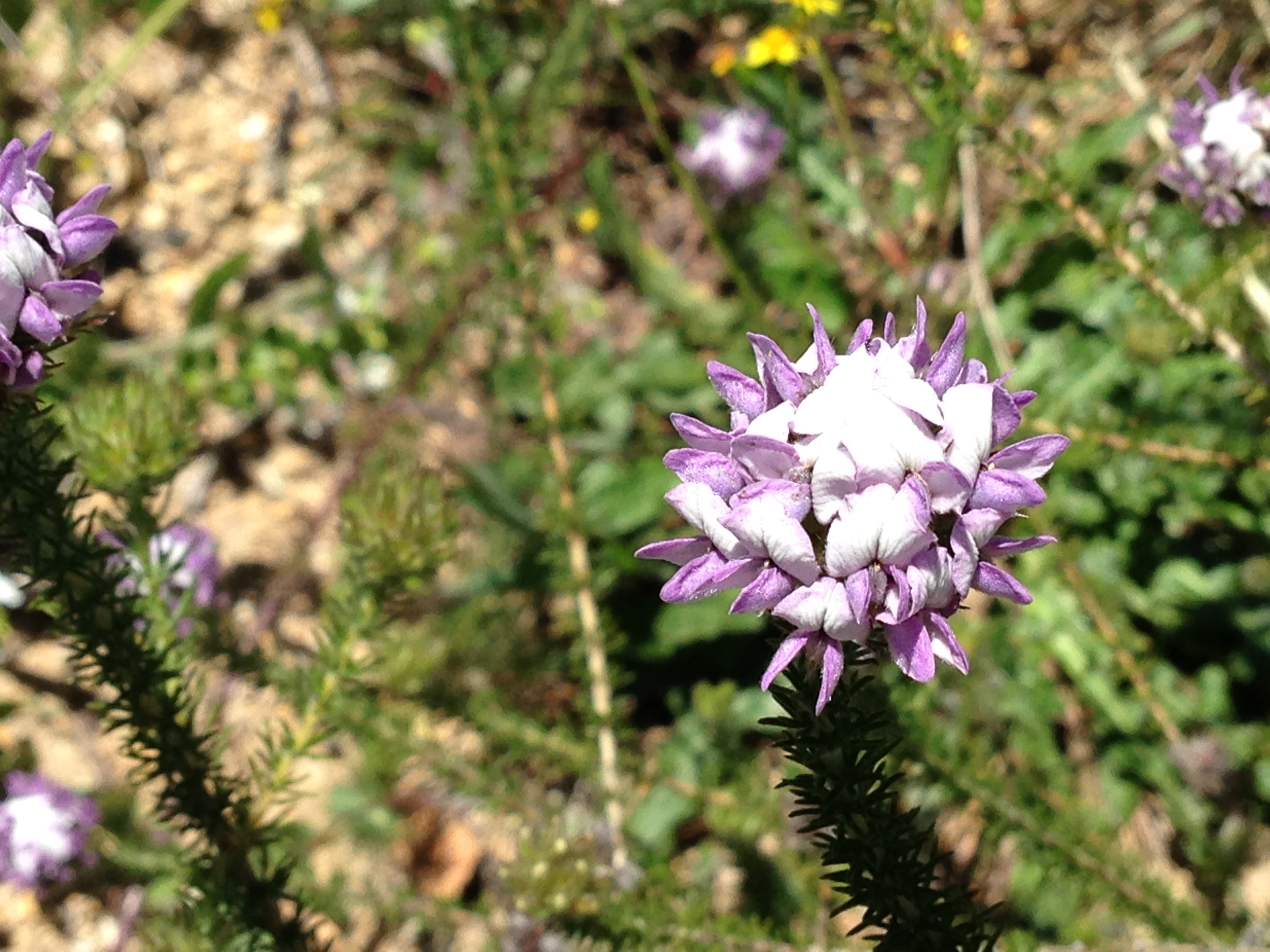
Although we’ve seen this Microdon dubius before I can’t resist posting another picture. It’s in full flower at the moment and these yellow-purple spikes are all over the farm, lighting the roads and profilic in the buchu lands.

Microdon dubius

Microdon dubius

The next couple of weeks are going to be taken over by a work project that will take most of my time and much of my energy so blogs might be in short supply. This year our Christmas/summer break was curtailed by a project in Stockholm in December and this one in Johannesburg that starts a week before I’d planned to get back to work. We are driven by the client and grateful to have them, but sometimes a holiday break would be nice!

Even a short holiday on the farm is a joy – the dogs love having us aournd, lots of friends come to stay for a night or three and we are blessed to live on this mountain.

As work takes over again the Fynbos Blog resolves to carry on in 2014, with the aim of capturing even more of the amazing diversity of flowering shrubs and bulbs that flourish on this little farm.

Wild windy summer sunsets

I never get tired of looking at the view from the balcony and because we look west we have wonderful sunsets. Tonight’s was special by any standard. I took this photo just as the sun had gone down – no filter, just the last light of the setting sun reflected from the clouds onto the dam.

Sunset over the dam

Sunset over the dam

We had Christopher, the brother-in-law, to stay and before he left I offered to take him up the mountain and show him the flowers. All spring we’ve had a wonderful time showing our guests the wonders of the mountain fynbos flowers. That time has passed.  He loved being up on the mountain but the flowers have become sparse and less interesting to the casual visitor. A really passionate gardner might still enjoy it – for the less passionate there is merely fading and die back and the fucundity of the land has passed into dryness survival mode.

It doesn’t mean that there is nothing of interest out there, I’ve often mentioned that yellow daisy-like flowers are among the hardest to identify. This one could be the rock daisy, Heterolopis, or perhaps Leysera. If I see it again which is quite likely we’ll take a closer look.

Heterolopis or Rock Daisy?

Heterolopis or Rock Daisy?

The wind continues to blow – it has been more than a week now, which is quite unusual and not a let up in the forecast. The dogs love it particularly the wolfhounds and here is Maebh standing in the wind, allowing it to stream through her coat.

Maebh poses in the evening light, letting the wind slip through her coat

Maebh poses in the evening light, letting the wind slip through her coat

Jemima Chew on the other hand finds her solace in water and the permanent streams. She loves to wallow and lie the flow and then stands up, looking about her, thoroughly pleased with herself.

Jemima Chew - life is good

Jemima Chew – life is good

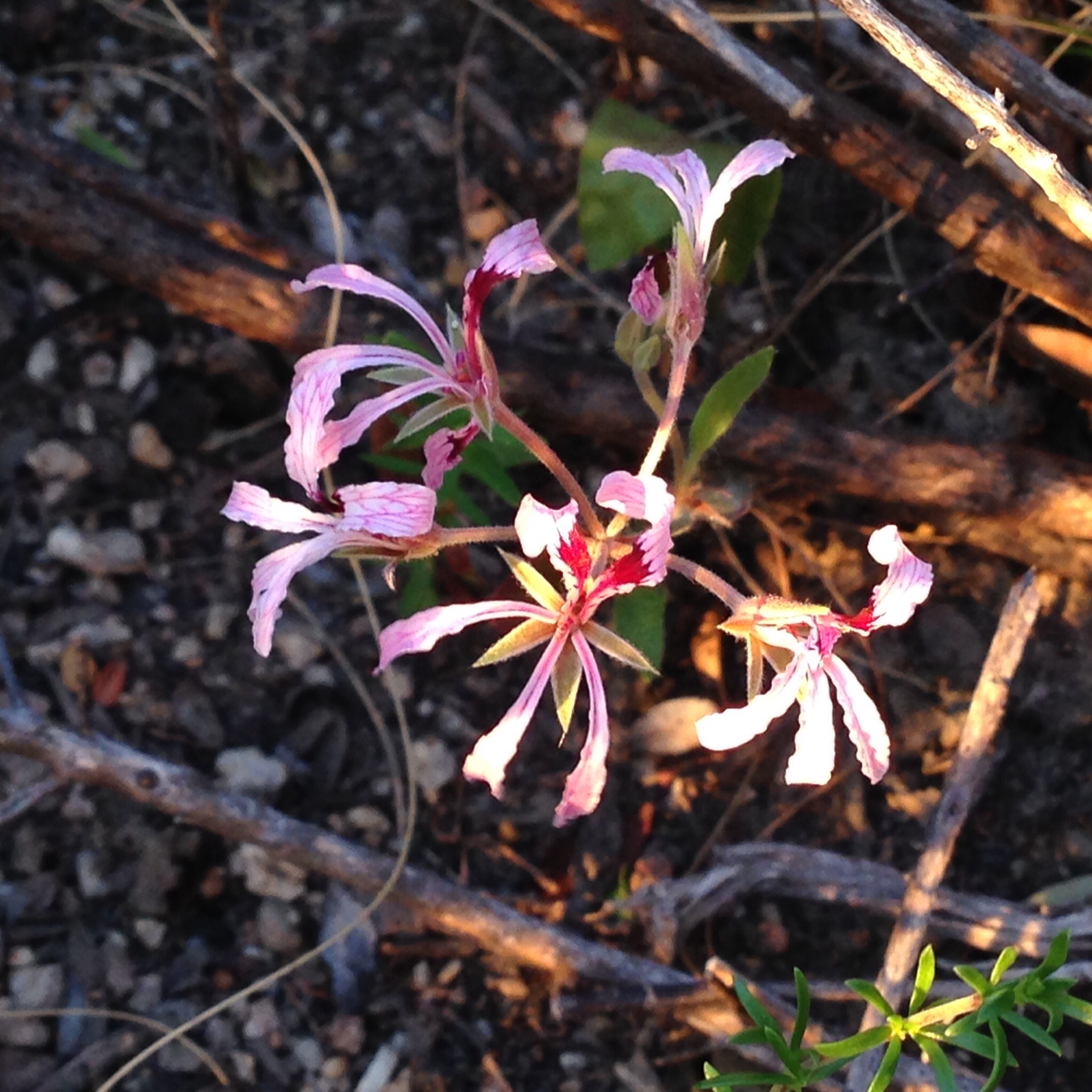
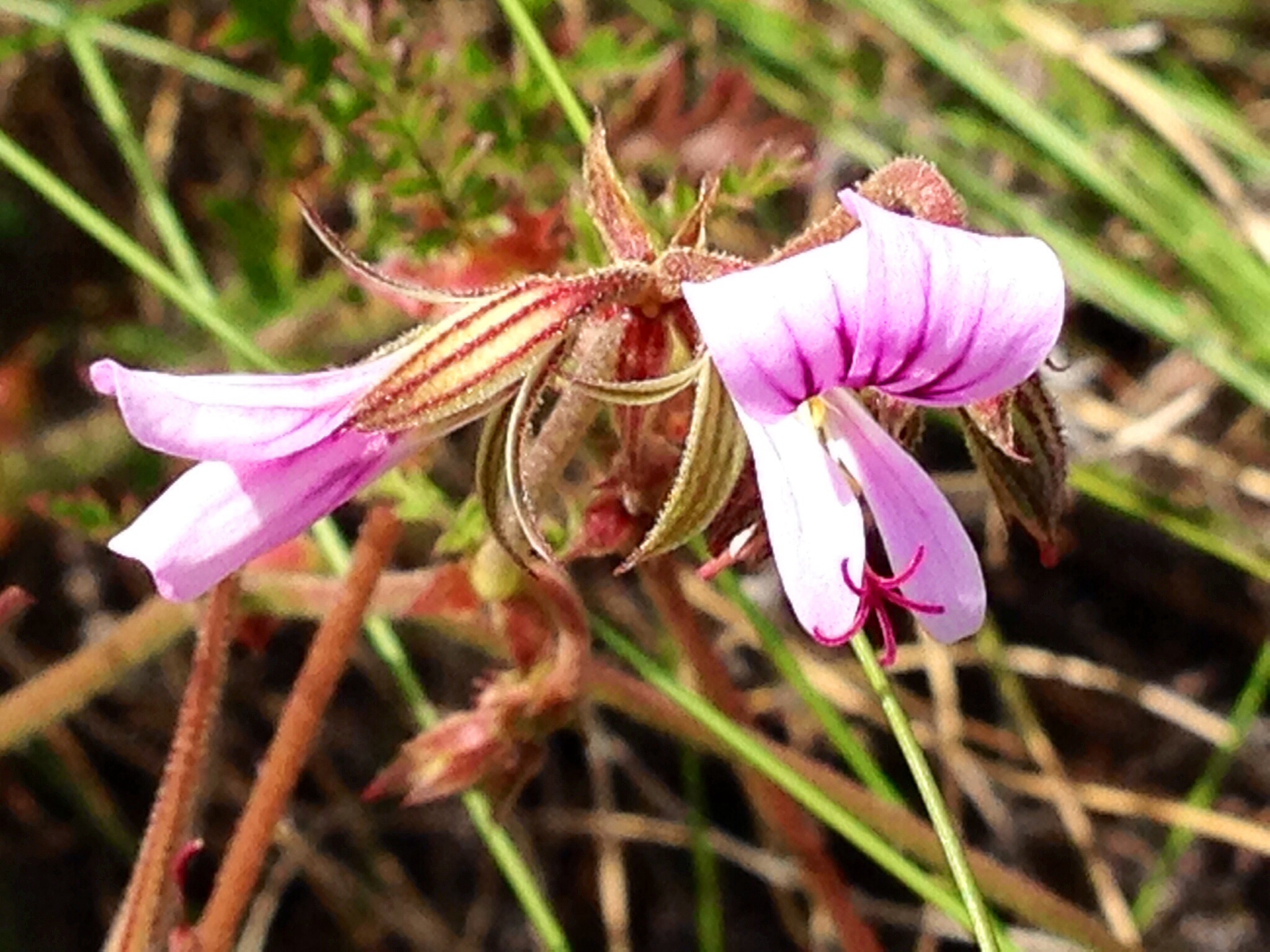
As Christopher and I chatted and walked I kept my eyes open for anything new and exciting, expectations low. And here we are, hidden beneath some fynbos scrub, this exquisite pelargonium. There are nearly 300 subspecies, 150 in the fynbos region of which only 20 or so are in the book. This one is so lovely, the colours, the delicate shape of the petals. I would be tempted to move it to the garden but my fingers are not the greenest and what if it’s the only one? I only ever transplant the very common flowers, anything that might be rare, special or precious belongs on the mountain.

A Pelargonium we have not seen before

A Pelargonium we have not seen before

A wet wet weekend

What better occupation on a rainy weekend than to go through all the flowers and spend some time researching those we haven’t yet identified. It’s been pouring with rain since yesterday morning, proper African rain causing floods and mayhem all over the province.  Minor mayhem here on the farm as Peter and I spent an hour trying to clear the weir, him in the river working on a valve that was stuck and me and the dogs providing moral support.  I can report that the new waterproofing that I applied to my raincoat works perfectly.  The dogs loved it, running in the rain, offering advice and admiration to Peter as dug and cleared the pipes and valves.

So it’s a good evening to catch up with some flowers that I haven’t identified or posted.

Like this Common Button Daisy or Cotula turbinata. It’s regarded as a weed in some places, but not on our mountain where it’s welcome to take all the space it needs.

Cotula turbinata

Cotula turbinata

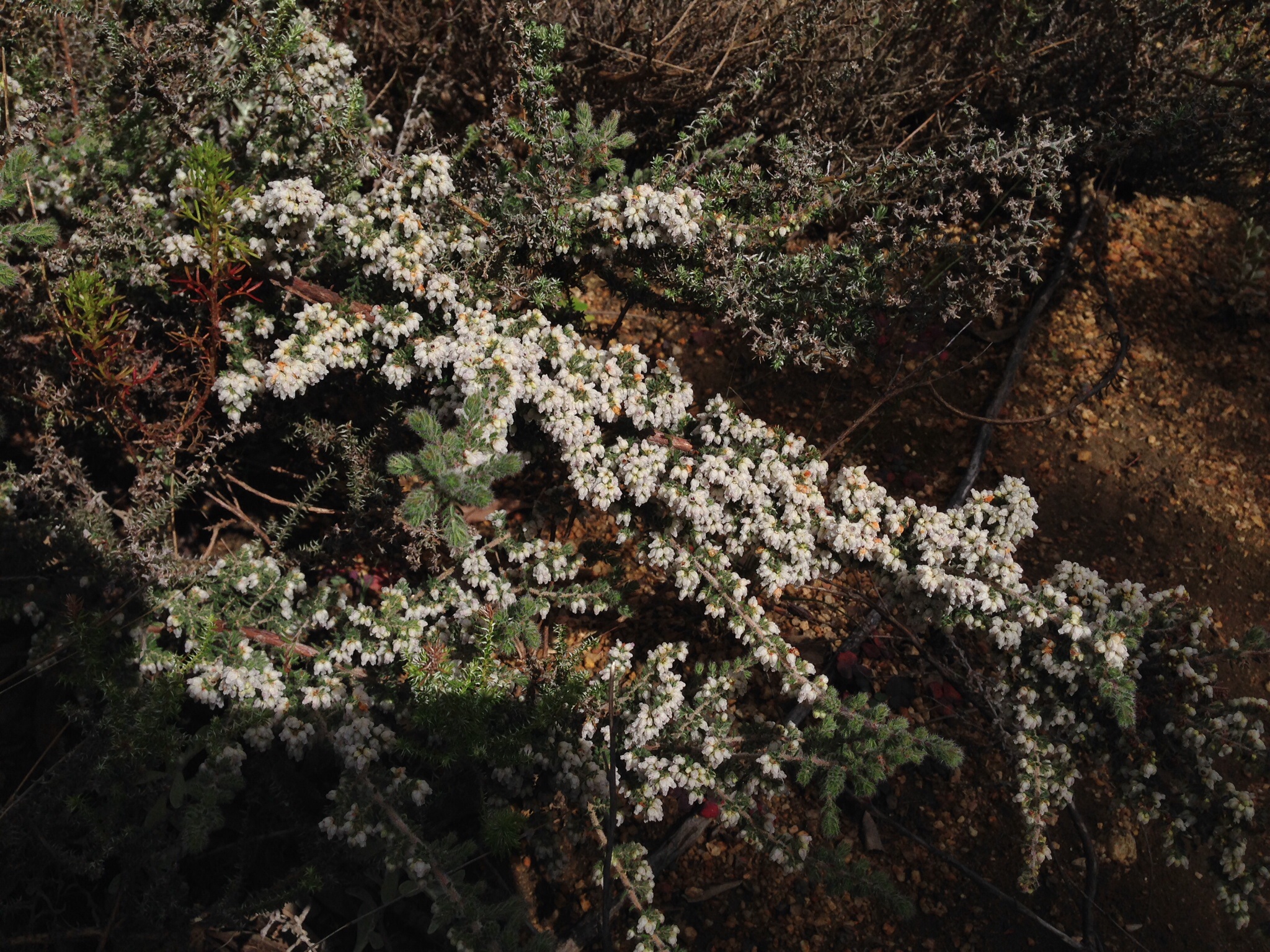
As is this spreading Erica. I have no idea which Erica it is, it rambles along the ground and can really take over in areas it likes.

Rambling white Erica

Rambling white Erica

Close up the little white flowers with their serrated edges are amazing.

Close up of the rambling white Erica

Close up of the rambling white Ericaa

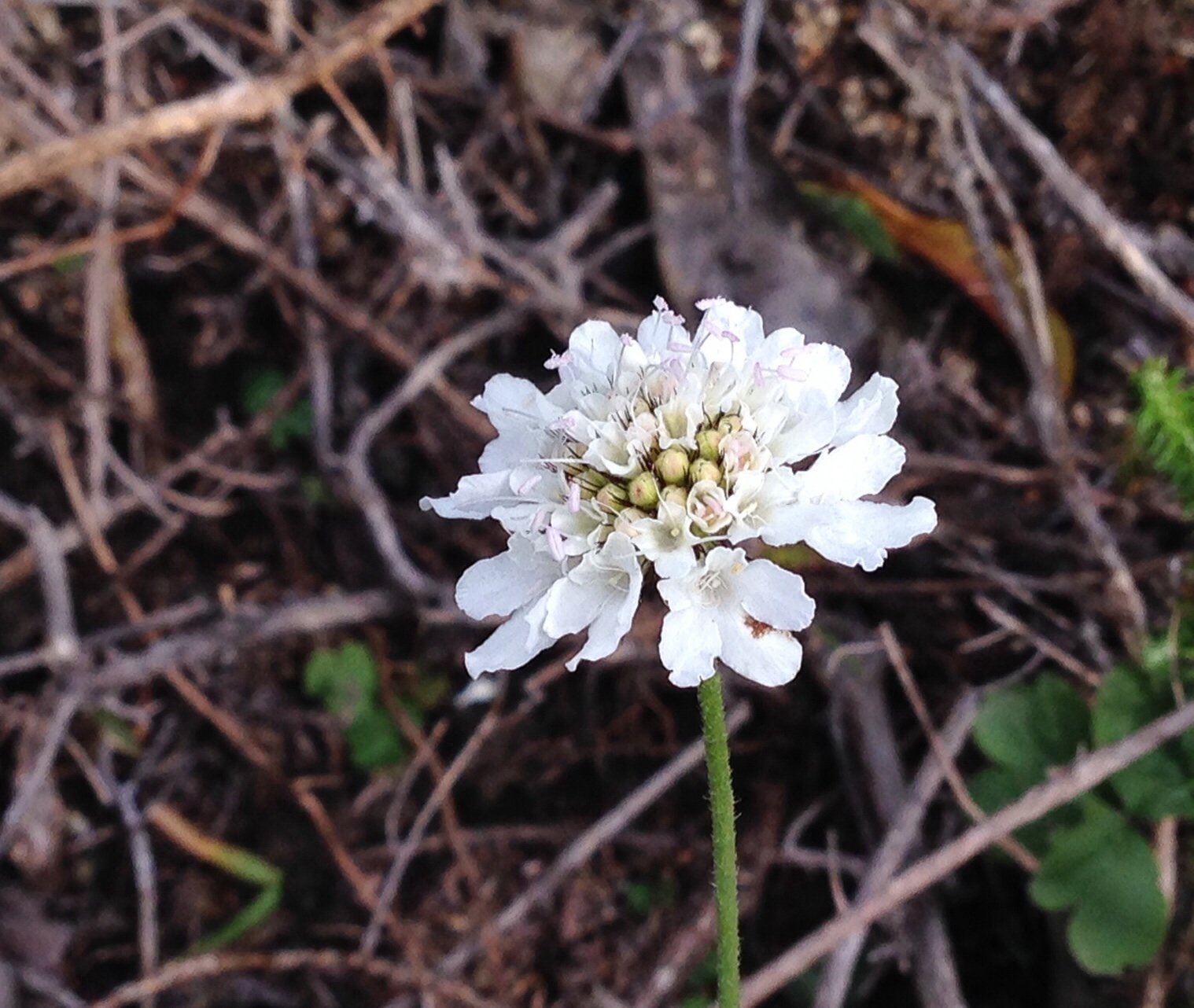
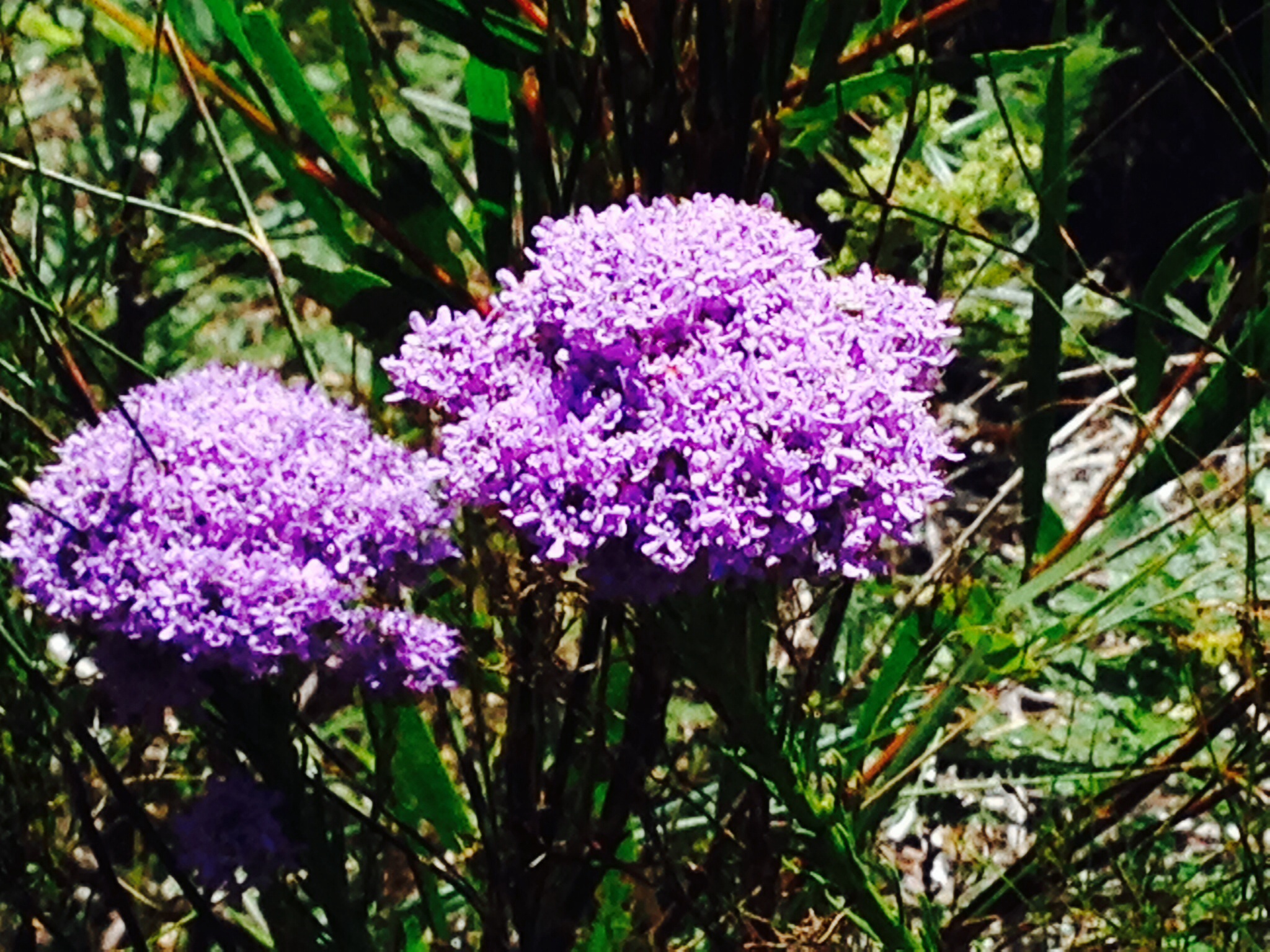
Somehow I don’t think I’ve posted this Scabious columbaria yet. They are very common all over the mountain and they make great garden flowers.

Scabious columbaria

Scabious columbaria

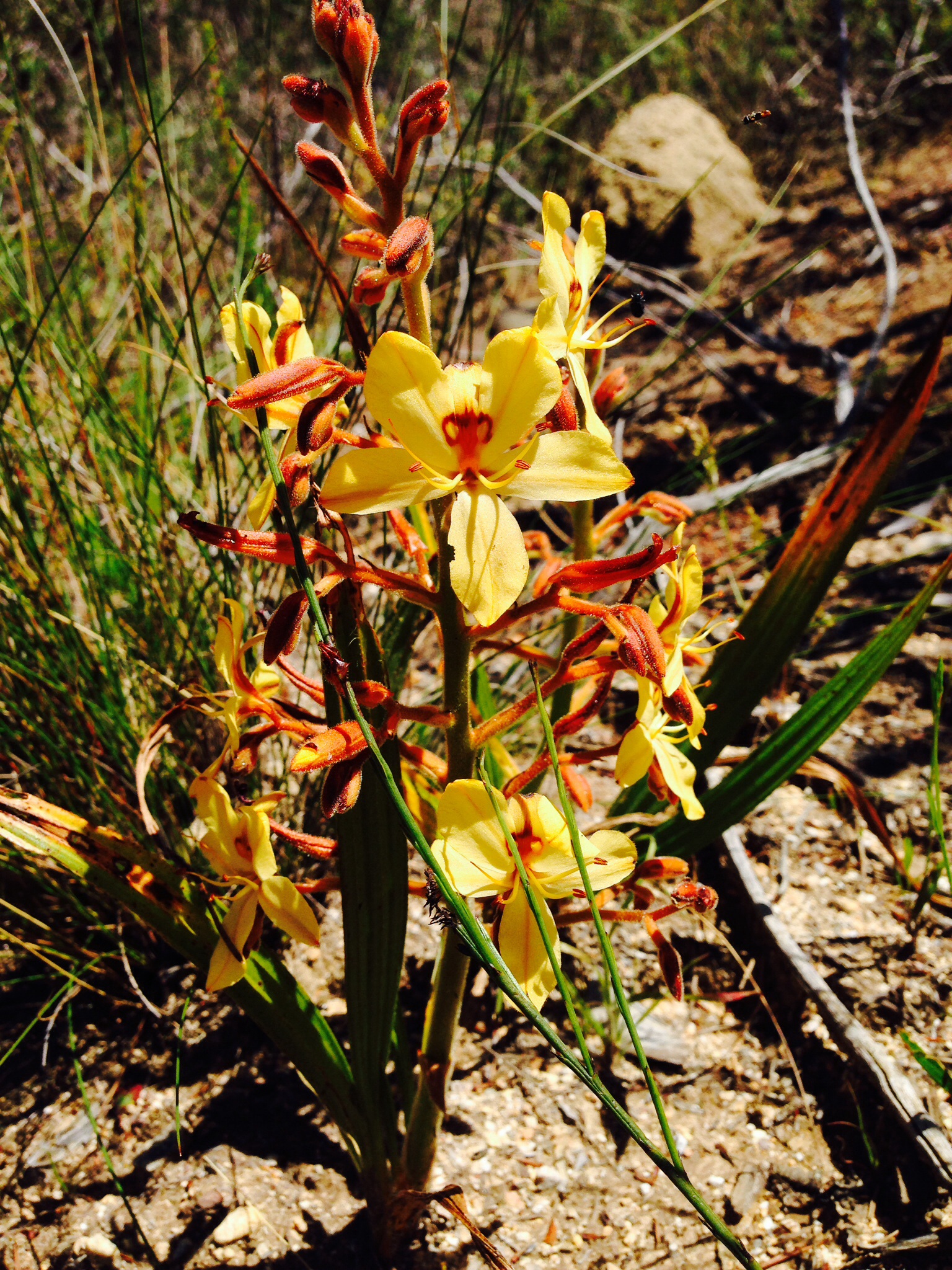
This Common Butterfly Lily has the rather grand Latin name of Wachendorfia paniculata. It’s quite common and pops up in all sorts of places.

Wachendorfia paniculata

Wachendorfia paniculata

I always find blue flowers particularly attractive. So I was delighted to see these bright Purple Powerpuffs or Pseudoselago serrata close to the river.

Pseudoselago serrata

Pseudoselago serrata

I’m not sure I’ve correctly identified this. I think it is a Relhania as the leaves generally fit the description but this is not the subspecies that is photographed in my book.

Relhania

Relhania

This lovely blue flower is only about 10mm in size and it is another common, delicate flower found all over the farm. It is Lobelia pubescens.

Lobelia pubescens

Lobelia pubescens

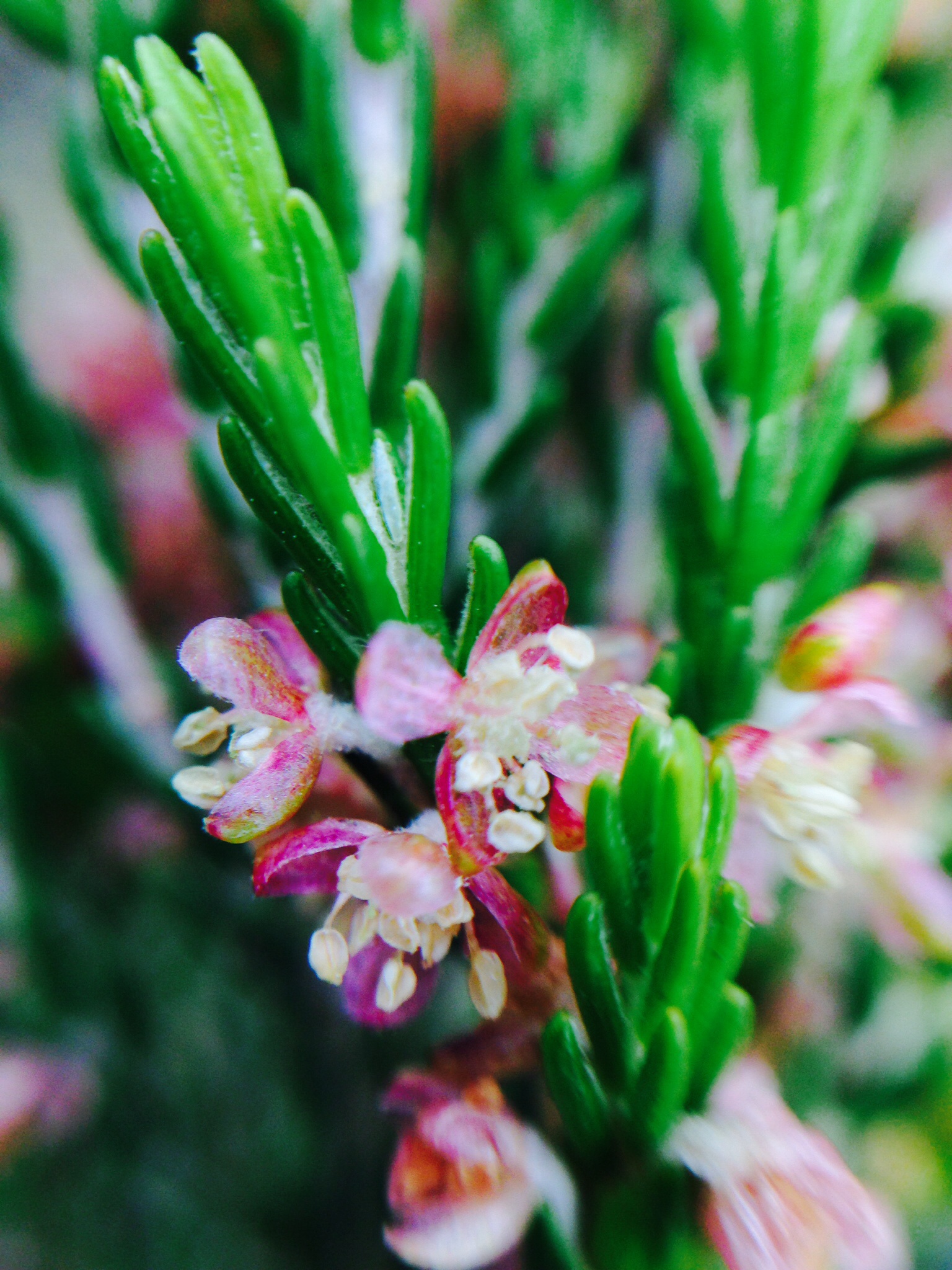
I posted this shrub in the last blog, promising to identify it in the next one. It is Passerina corymbosa. It grows on disturbed ground, such as roadsides right acoss the Western and Eastern Cape. A little scruffy in appearance, and with flowers that can be either red or white. They are exquisite when photographed in close up.

Passerina corymbosa

Passerina corymbosa

This is a Roepera though I’m not quite sure which one as it most resembles Roepera flexuosa which is costal. Either its lost, or its a subspecies not included in my books. No doubt about the species though, the curled back yellow petals with red-brown splashes at the base and the oval leaves are all quite distinctive.

Roepera subspecies uncertain

Roepera subspecies uncertain

These lovely little flowering bulbs are called Ornithogalum dubium and they have suddenly emerged on the road that leads to the waterfall. It’s particularly satisfying when we find new colonies of lovely flowers in areas where we have cleared alien vegetation, as is the case here.

Ornithogalum dubium

Ornithogalum dubiumm

This however  I can’t identify – it is tiny fragile and shortliived.

image

This is another flower I can’t identify, though I’m pretty sure it’s a Selago of which there are over 100 subspecies and they do grow at the top of stems covered in spiky leaves, sometimes with very pretty flowers, as here.

Selago?

Selago?

Finally I’ve posted this a couple of times, unidentified. But now I suspect it is Aspalathus cephalotes, or possibly Aspalathus nigra. More likely the former as we see them in pink as well as blue.

Aspalanthes cephalotes

Aspalanthes cephalotes

Catching up and naming the flowers

Metalsia - unidentified subspecies

Metalsia – unidentified subspecies

Real life took over blogging life for a few days and we now have a backlog of flowers to document.  The first few are the ones I last posted without doing the research to identify them.  Here there are at last, first, above, is the Metalsia, though I am not certain of the subspecies.  This is common all over the farm and a delight to see as it has a long flowering season.

This lovely blue flowering bulb has popped up in lots of damp places.   It turns out to be Aristea africana, a close relation of Aristea capitata which was recently our Flower of the Day.

Aristea africana

Aristea africana

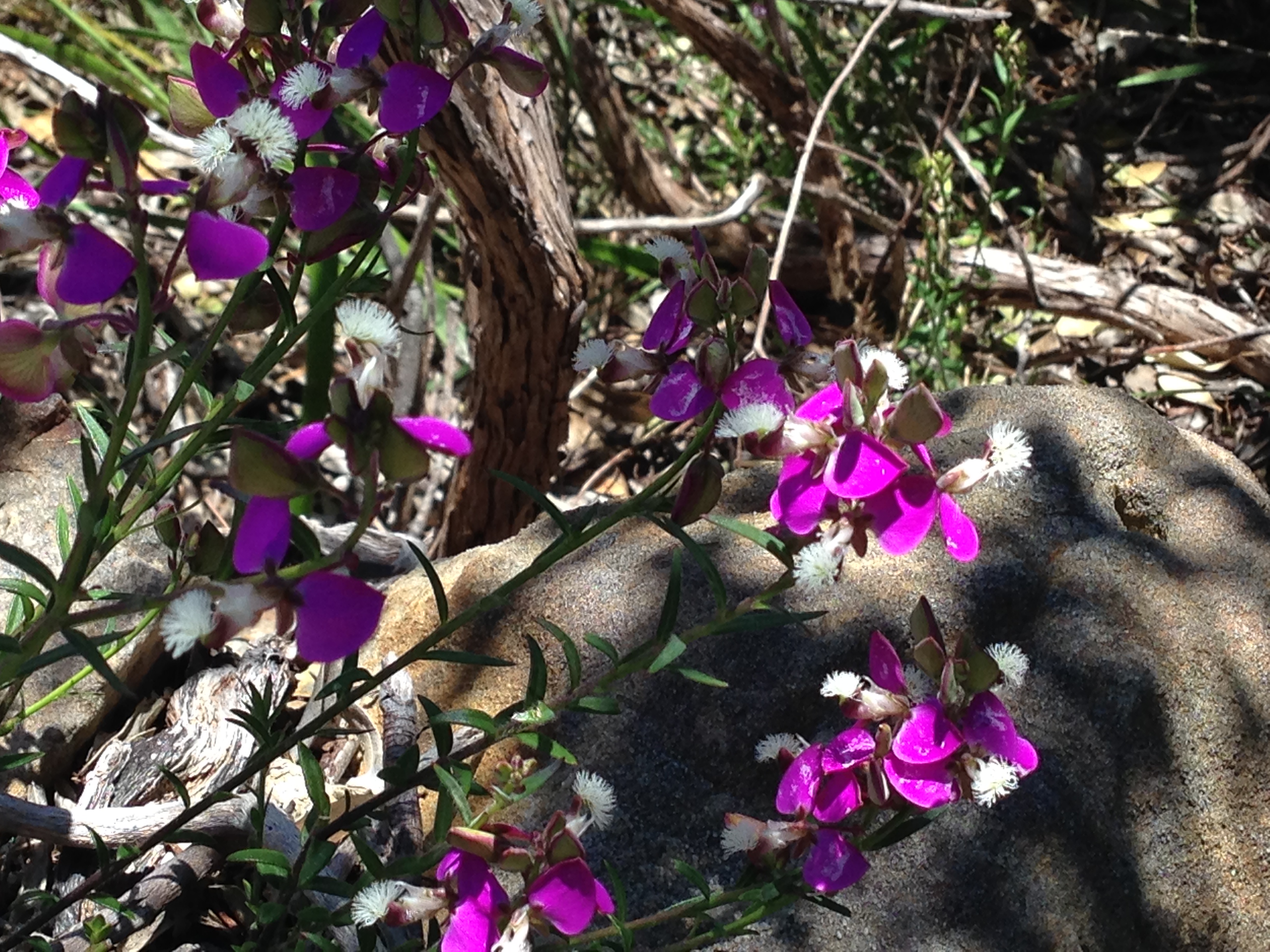
Polygala is a common fynbos flower and this one is either refracta or bracteolata or indeed one of the 30 other fynbos subspecies.

Polygala refracta or bracteolata

Polygala refracta or bracteolata

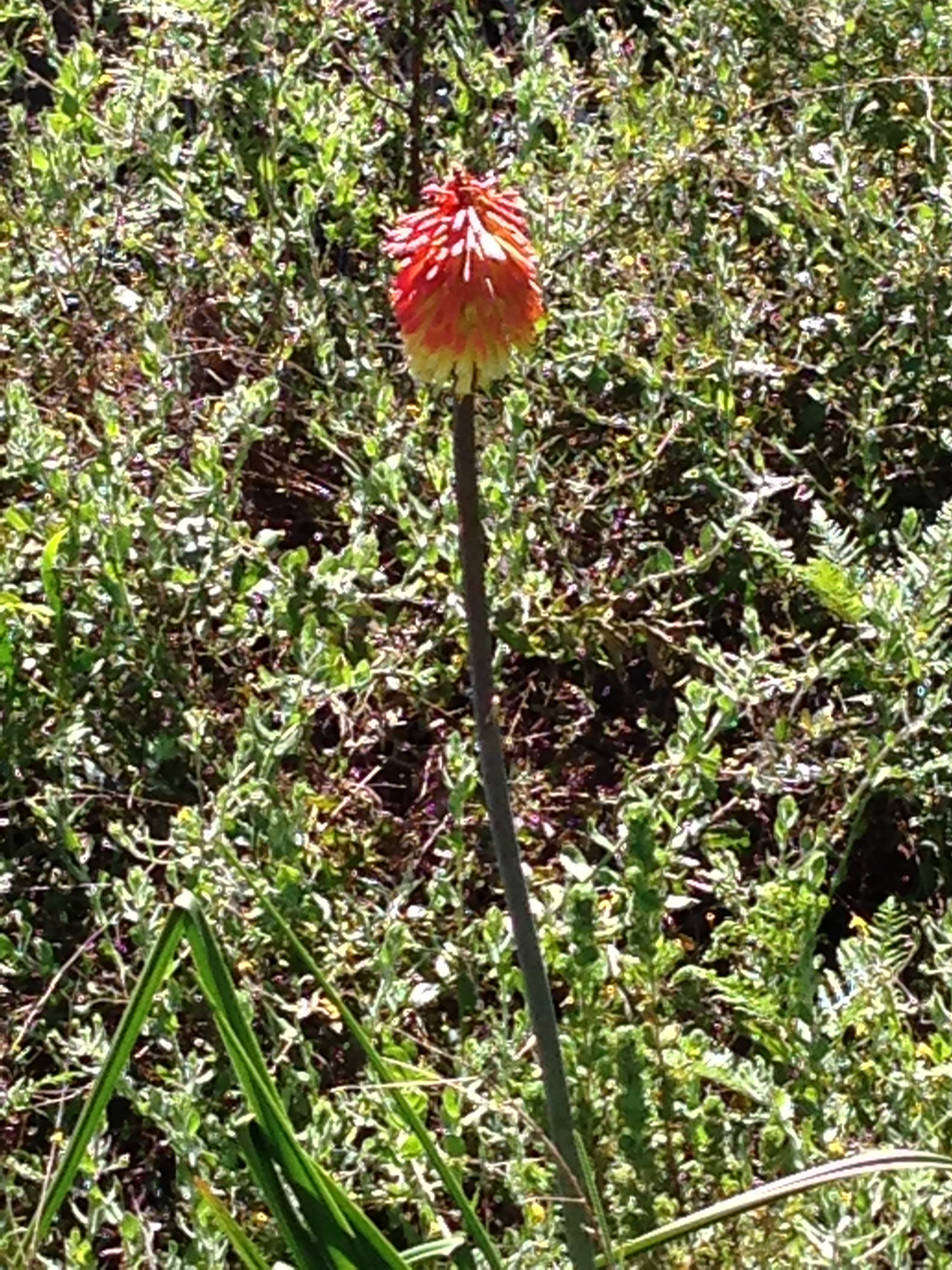
In a previous blog I incorrectly identified this as an aloe.  Its not of course, it is a red hot poker,  the Latin name is Kniphofia uvairia and it is a common and much loved wild flower in these mountains, though this is the first one I have seen on this farm.

Kniphofia uvaria

Kniphofia uvaria

Finally what a delight to see that this little yellow flower, distinctive because of its four petals, is Sebea aurea, a relation of Sebea exacoides which we posted quite recently.


Sebea aurea

Sebea aurea


Fire on the Mountain

In South Africa people rise early, so a call at 7 am is not necessarily worrying. Peters kids get up early to avoid the Johannesburg traffic and often call at that time for a chat. Anything earlier than that signals trouble, so when the phone started forth with ‘Gangnam Style’ (yes, that really is my ringtone) at 6.15 on Saturday morning I jumped out of bed to get it, knowing the news wasnt going to be good.

It was our neighbour and she was clearly concerned. A fire on the mountain, right by their house. We leaped into action – Peter quickly got dressed while I equally quickly manned the phone and made him a coffee to take with him. He’d call the local fire marshal, get down there, assess the situation, and they’d decide how much support was needed to get this under control quickly.

We have terrible fires here on the mountains, last year one burned all the way from Franschhoek to the N1, which must be over 20 kilometres. They go far further than that when they are out of control and the wind is high. But we’ve had a very wet winter and the past few days have brought the first southeaster of the season, a howling wind that comes with the dry spring weather and frays all our nerves.

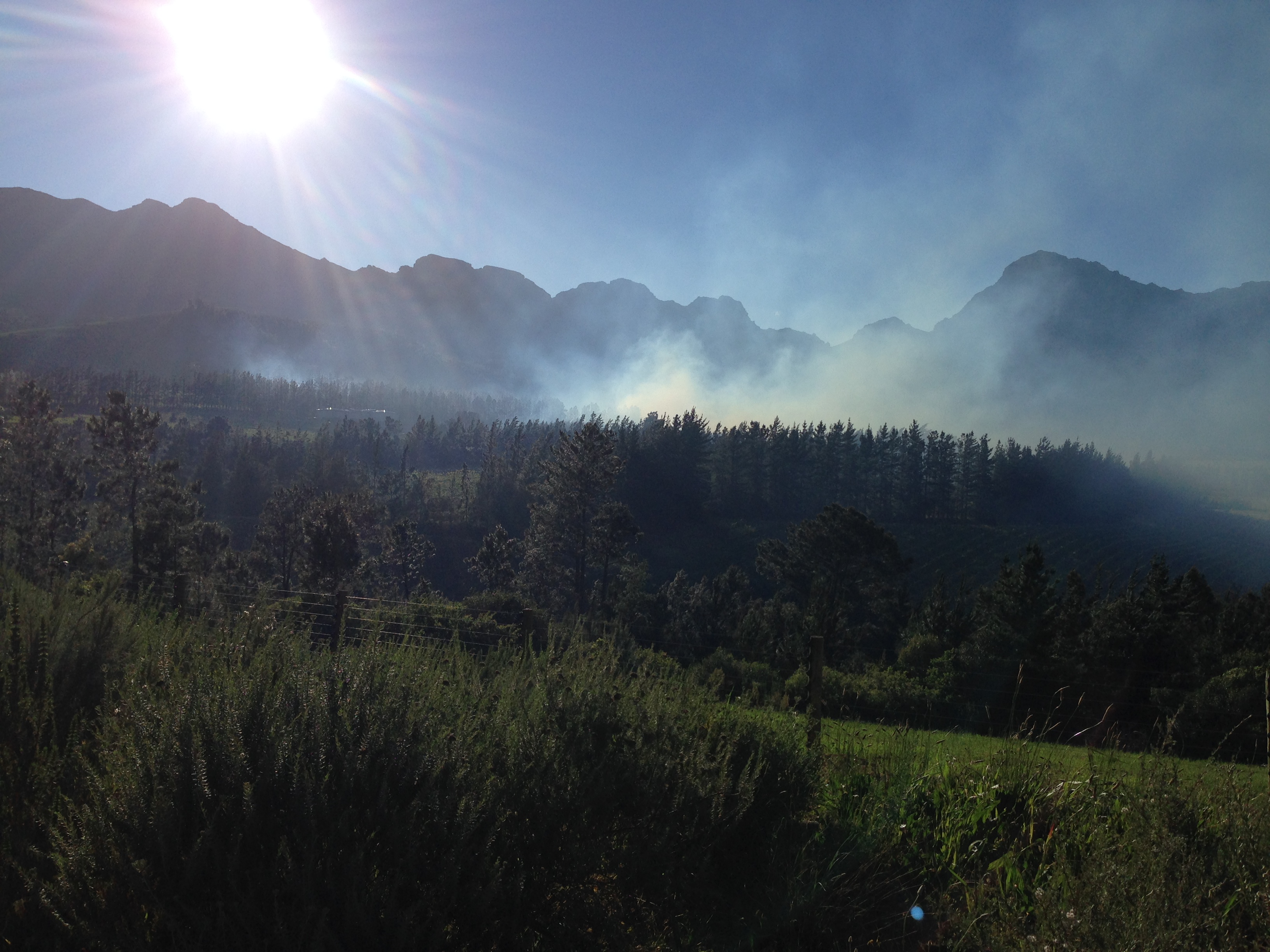
We predicted this fire a few days ago. Another neighbour was burning in his lands and he didn’t seem to have taken care to put out the smoldering embers. “There’s going to be a fire” said Peter on Wednesday evening as we drove down the mountain on our way to dinner. Sure enough….

This was not a particularly dangerous fire. Frightening when it’s close to your house, but with the ground and the undergrowth still cold and wet, it was never going to be the frightening inferno we’d see later in the season. By mid-morning it was under control. Still, a good warning and we are very diligent about clearing potential fuel and firebreaks on the farm. In the season, January and February, we are on high alert. 

Fire on a neighbours farm just below us.

Fire on a neighbours farm just below us.


Today was altogether calmer. I went for an early run with the dogs and then we had some friends who came to lunch and were very keen to see the flowers. As ever plenty of new sightings emerged. Rather frustratingly I am writing this on a plane (London this time) and have left my books behind. So here are some pictures of new flowers, taken in case they are no longer flowering when I get back and I will do the research when I get home in a few days time and repost with some names.
 

This beautiful flowering bulb is all over the farm.  It must be common but I cannot find it in the books.

Blue flowering bulb

Blue flowering bulb

This kind of flower emerges in summer.  Lots of fynbos have these short spikey stems covered in leaves and a single flower on the tip.  We’ll see lots more and identify as many as we can.

Pink flowering shrub

Pink flowering shrub

Polygala is identified by the fluffy bits on the flowers and this creeping plants is everywhere at the moment.

Polygala

Polygala

Maebh resting under the shade of a protea tree

Maebh resting under the shade of a protea tree

I’ve never seen a wild Aloe on the moutain before and this is growing in the area along the river where we’ve cleared huge amounts of alien vegation.

Aloe on the moutain

Aloe on the moutain

Another of these flowers on the end of a prickley spike.  Quite distinctive so I have hopes of identifying it.

Blue unidentified flower

Blue unidentified flower

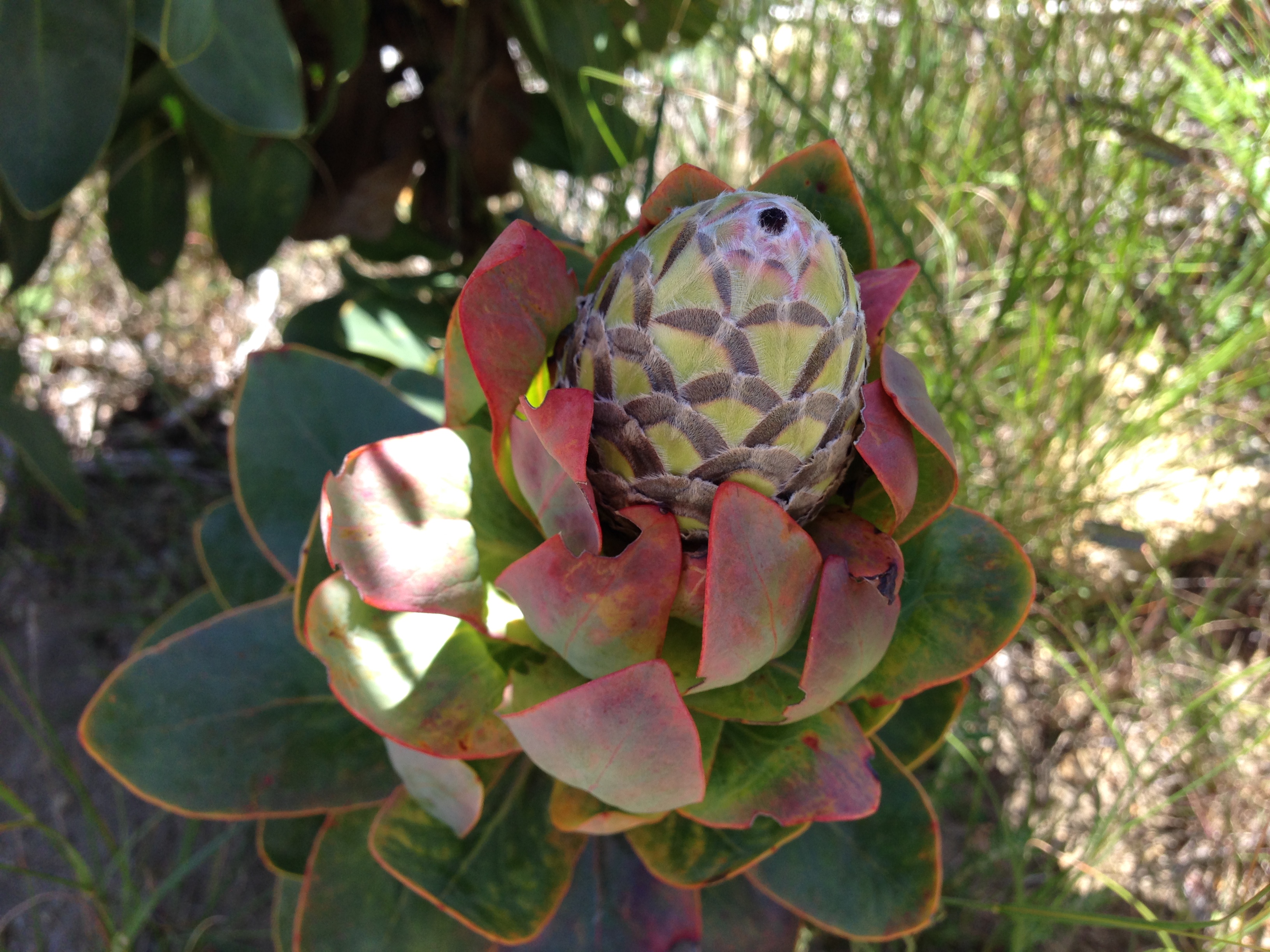
This stunning Protea bud is almost architectural.

Protea flower in Bud

Protea flower in Bud

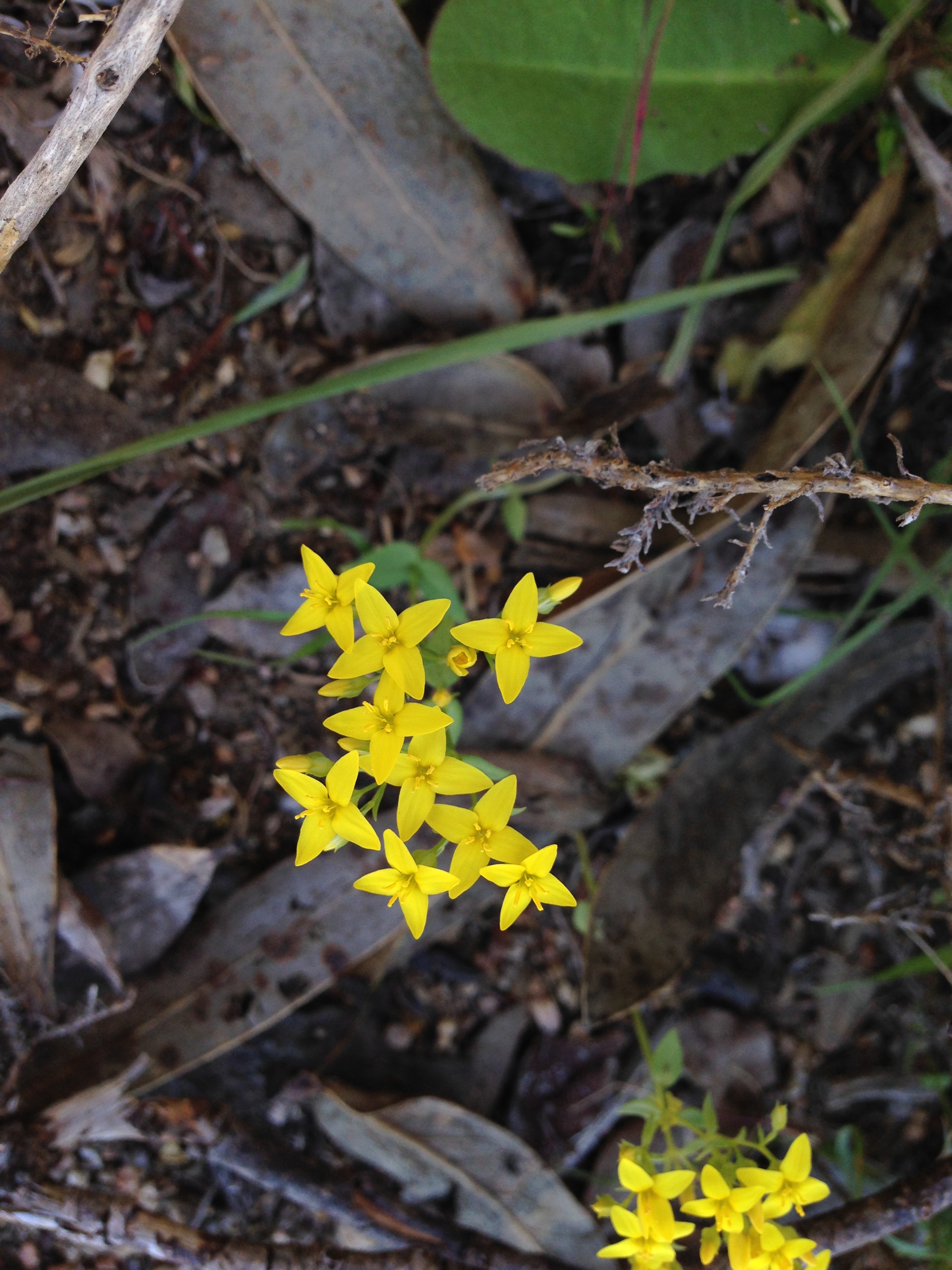
Tiny yellow stars appear everywhere.

Tiny yellow flowers

Tiny yellow flowers

These clusters are also found in several different areas.  I had to use myself as a shadow to capture them in the bright sunlight.

Clusters of yellow and white flowers

Clusters of yellow and white flowers


Springtime – Pelargoniums, Proteas and Polygalas

Last week was a bad week for running with the dogs.  I’d hurt my leg and I had to go to Johannesburg on business and then when finally I was motivated to get out there, it rained.  But on Friday evening friends came to do a “flower safari” and it is always wonderful to see the mountain through their eyes – the wild beauty of it and the spectacular blooming of the fynbos all the more marvellous.

Sunday morning came with glorious sunshine, the dogs’ tails were wagging in anticipation and there were no excuses or reasons to avoid an hour of excercise interspersed with photography.  The morning light as the sun slants over the mountain lends itself beautifully to photos, so we were up at a reasonable hour and the four of us panted up the hill.

I probably repeat this too often, but although this is the 42nd blog this year, I have seen something completely new every single time I’ve been up the mountain and I know I’ve missed flowers as well.  Shrubs tend to bloom for a while, but flowering bulbs sometimes have only a brief moment of glory and the saddest thing is to come back from a trip, head up the moutain and see the withered shape of some lovely thing that we shan’t see again until 2014.

Yesterday we saw old friends and some completely new flowers.  The first to greet us was this coral-pink protea.  The buds have been there for ages and the anticipation was worth the wait when it finally bloomed. It could be Protea eximia, the large leaves with a distinctive border and the black tips of the outer petals seem indicative.

Protea eximia

Protea eximia

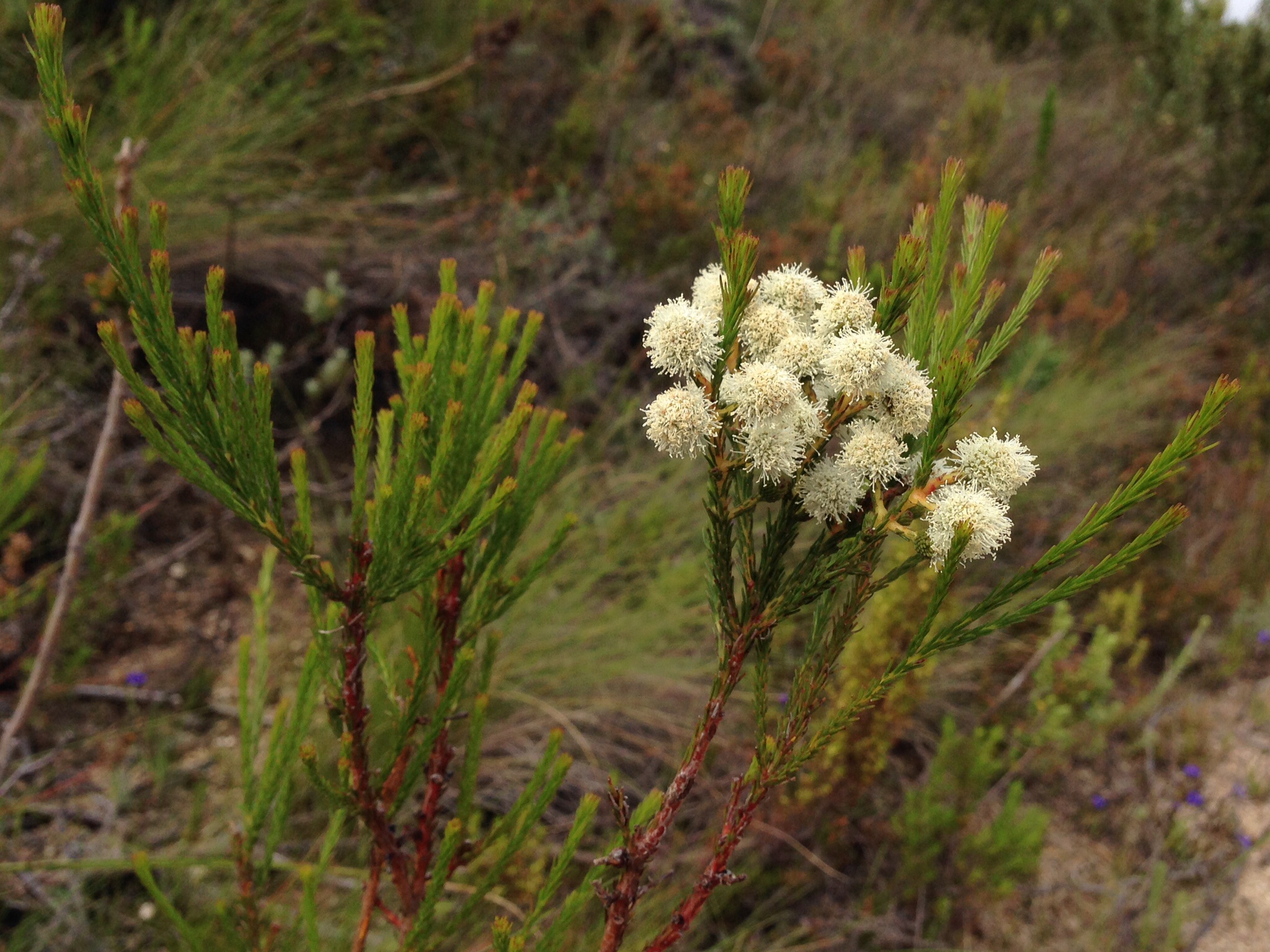
There are quite a few of these gorgeous fluffy white flowers just below the area we call the lookout and I think it might be Stilbe vestita.

Stilbe vestita

Stilbe vestita

Some flowers really create the feel of the mountain as there are prolific flowering shrubs all over the place.  I should do a blog dedicated to them.  I caught a lovely image of one, Oftia africana, on Sunday.

Oftia africana

Oftia africana

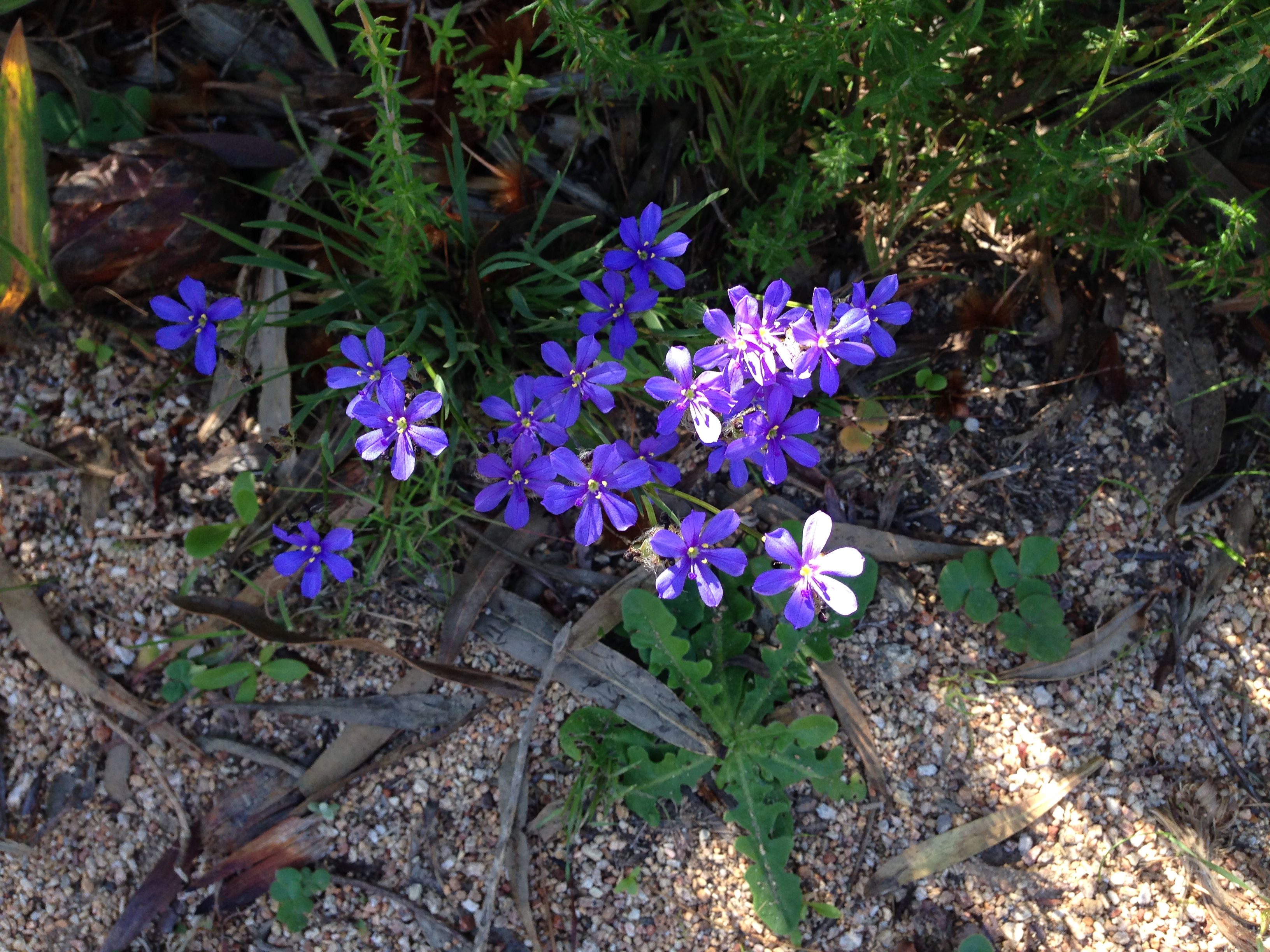
This pretty blue flowering bulb has been present in the same part of the farm as the Stilbe vestita and I’m also not sure what it is.  Further research will probably find it though, as I have lots of books on bulbs, but not always the time to read them before I post the blog.

image image

This white erica is really amazing – in one small part of the farm it has taken over and at this time of year there is a carpet of tiny white blooms – spectacular.  It’s a flat Erica that grows close to the ground.

Spreading white erica

Spreading white erica

The white Erica in close up

The white Erica in close up

Another Erica we love to see is this one.  It resembles several in the books, most closely abietina which one of my books says grows only on Table Mountain.  A close relation perhaps?  In any case it seems to flower for most of the year, with a brief break only over the worst of the winter months.

An Erica related to abietina?

An Erica related to abietina?

From time to time I post a photograph of the many Pelargoniums on our slopes, they are prolific, there is a variety of subspecies but not that I can identify for certain.

Pelargonium

Pelargonium

Strangely the same is true for this gladioli.  You really would think that something so very common and prolific would be easy to identify.  I often struggle with gladioli and for this one I have been through the Encyclopedia of Cape Bulbs several times.  The flowers are pink when in bud and turn pure white as they flower.  On the bottom petals there is a hint of yellow.  They are prolific and flower everywhere the slopes are damp.

Gladiolus - strangely unidentified

Gladiolus – strangely unidentified

A while ago I posted a blog entitled The Red Protea, fascinated by these red “flowers” that were growing on a protea bush.  It turns out that it’s the new growth of the lovely Protea nitida (see the Protea page for a picture of the lovely Protea nitida in full bloom).  Here is the very beginning of that new growth – it does indeed look like a flower in bud.

The new growth of Protea nitida

The new growth of Protea nitida

This flower, growing on a damp road right at the very top of the farm is clearly a member of the pea family, though unidentified at present.

image

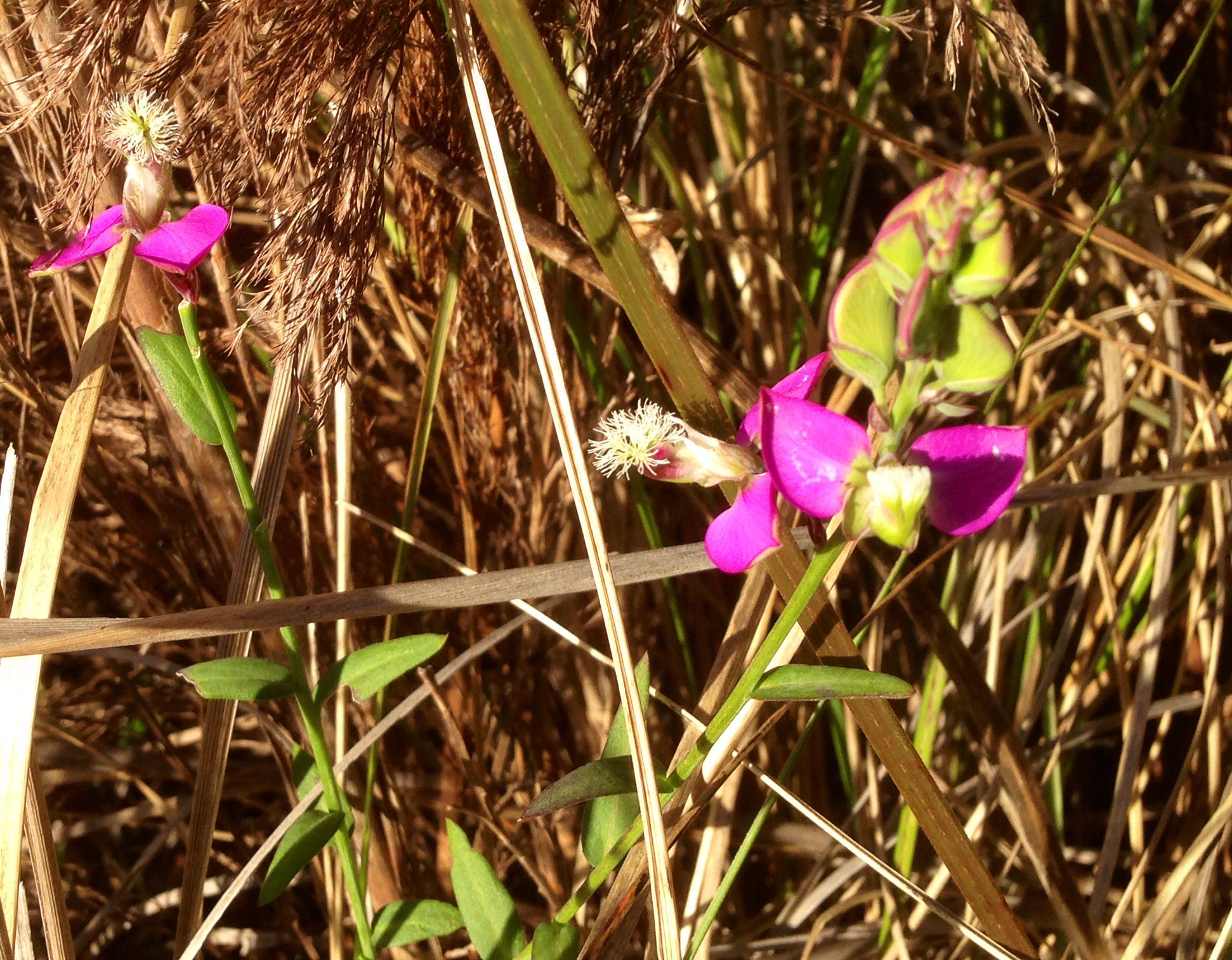
Another member of the pea family is Polygala.  There are quite a few of these and I’m not sure which one we have here but they are prolific in quite a few areas of the farm during the spring months.  The little white fringe confirms the identification as Polygala.

Polygala

Polygala

Finally, also at the top of the farm, we saw the first flower of Scabiosa columbaria.  Part of the charm of this flower is that it can survive the hot weather and will continue to flower all the way through the summer months when not much else is happening.

Scabiosa columbaria

Scabiosa columbaria

« Older Entries Recent Entries »