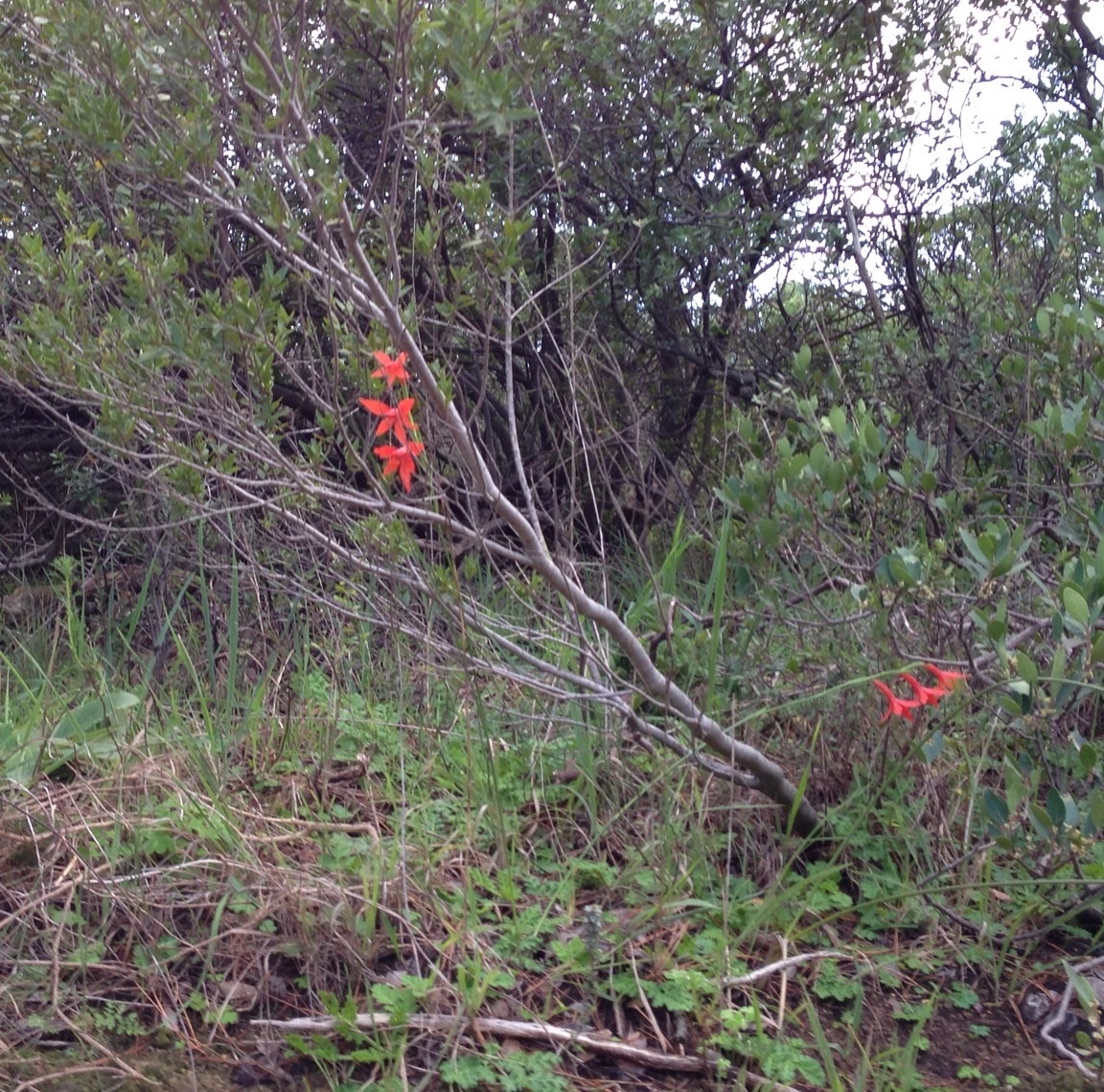
Tag Archives: fynbos flowers

Catching up and naming the flowers

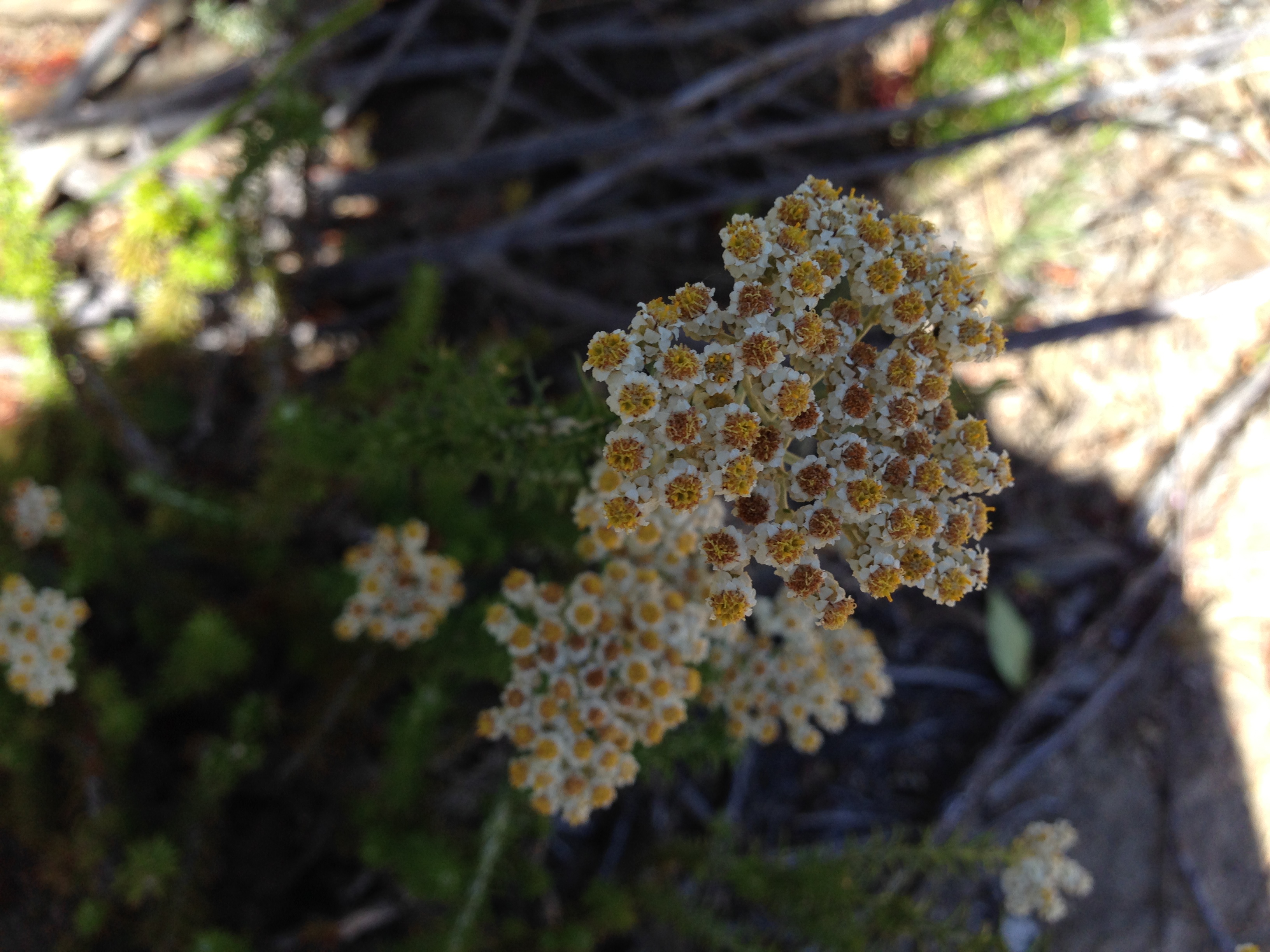
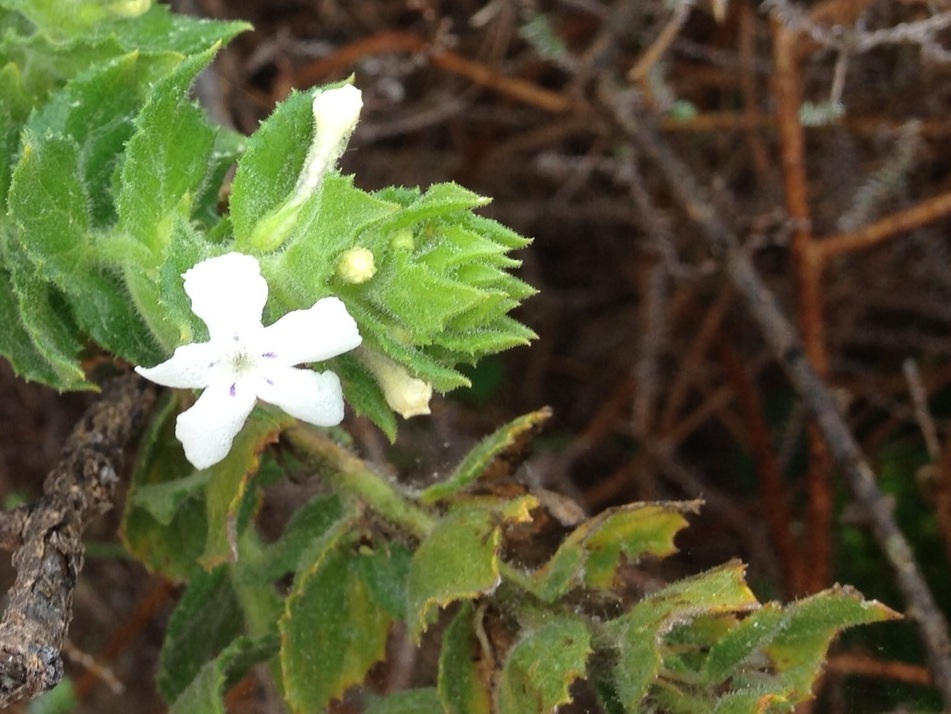
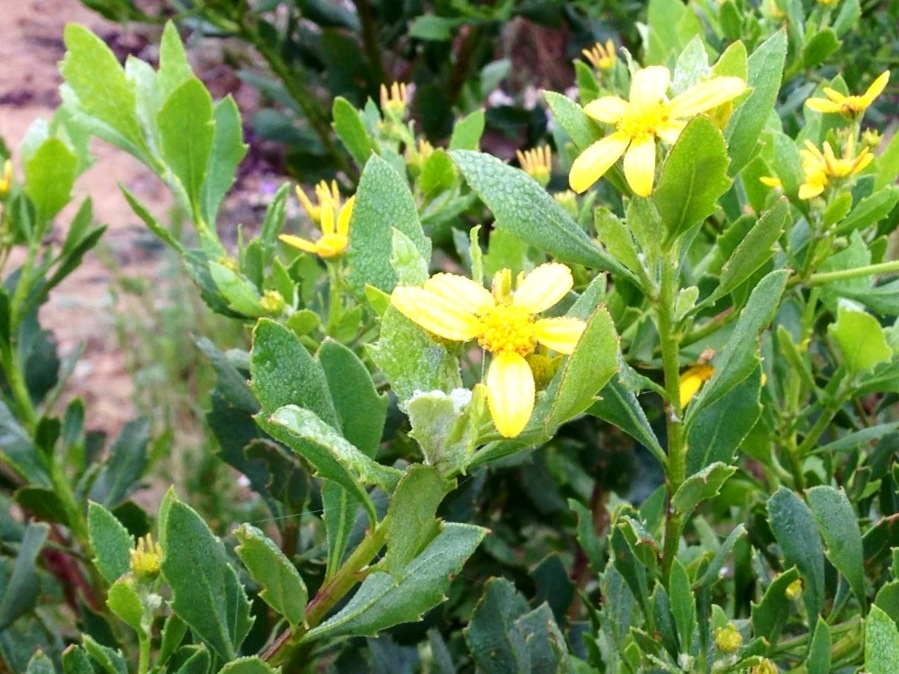
Metalsia - unidentified subspecies

Metalsia – unidentified subspecies

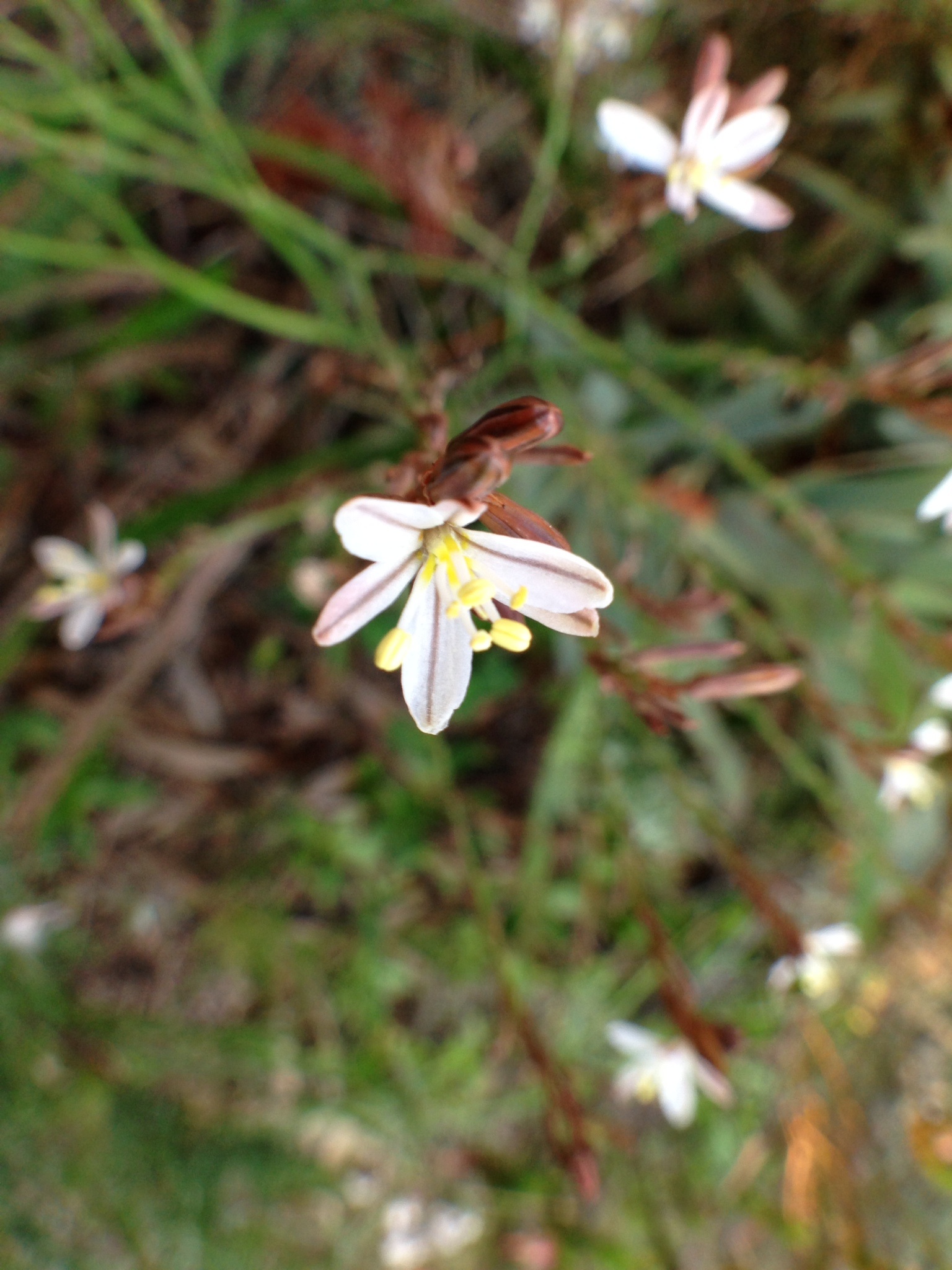
Real life took over blogging life for a few days and we now have a backlog of flowers to document.  The first few are the ones I last posted without doing the research to identify them.  Here there are at last, first, above, is the Metalsia, though I am not certain of the subspecies.  This is common all over the farm and a delight to see as it has a long flowering season.

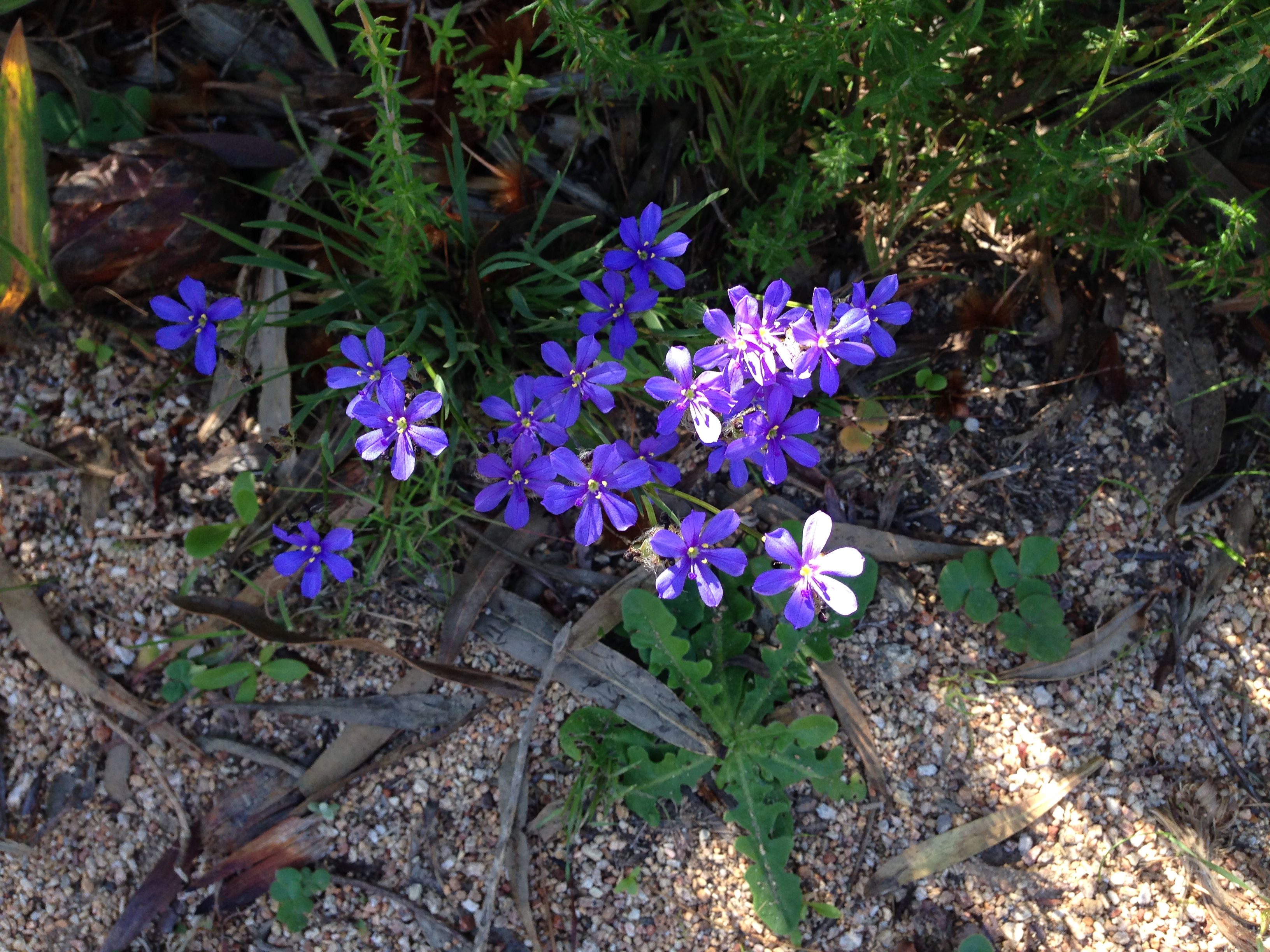
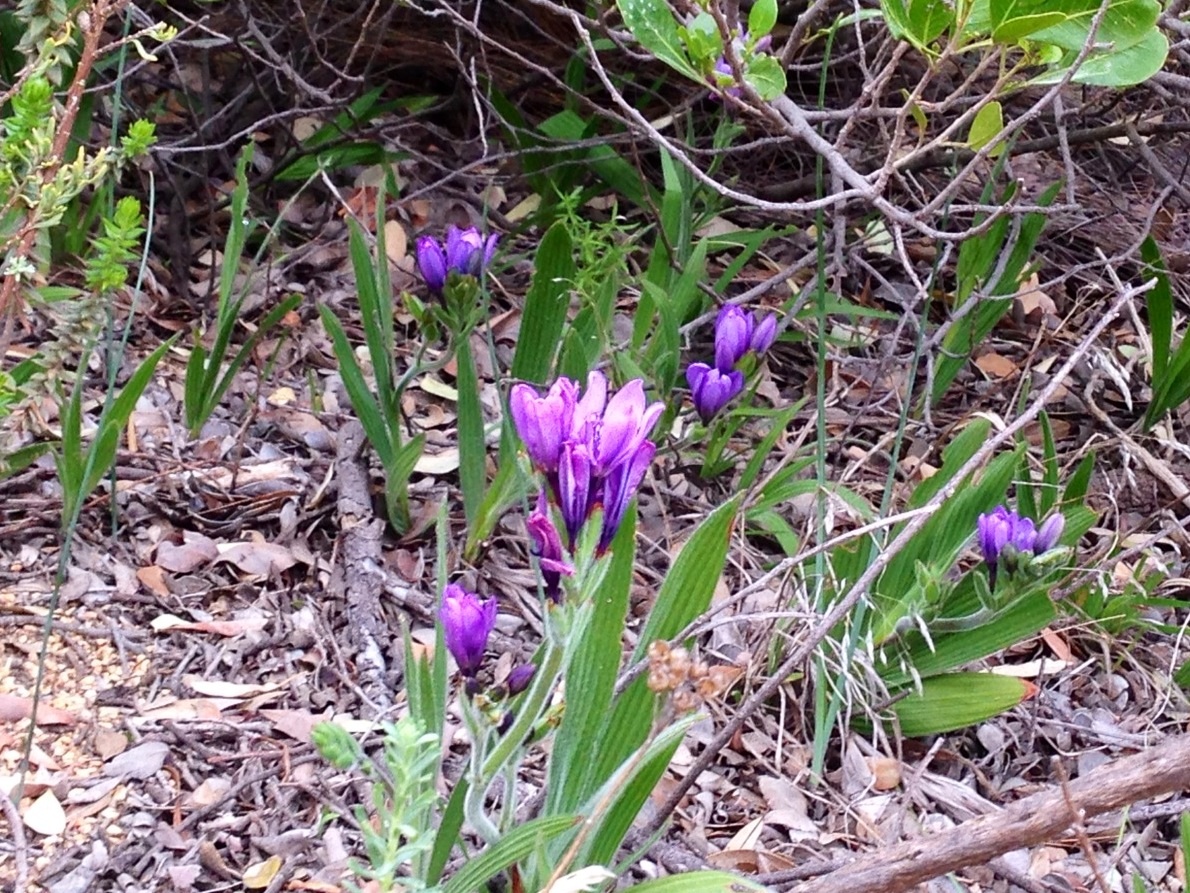
This lovely blue flowering bulb has popped up in lots of damp places.   It turns out to be Aristea africana, a close relation of Aristea capitata which was recently our Flower of the Day.

Aristea africana

Aristea africana

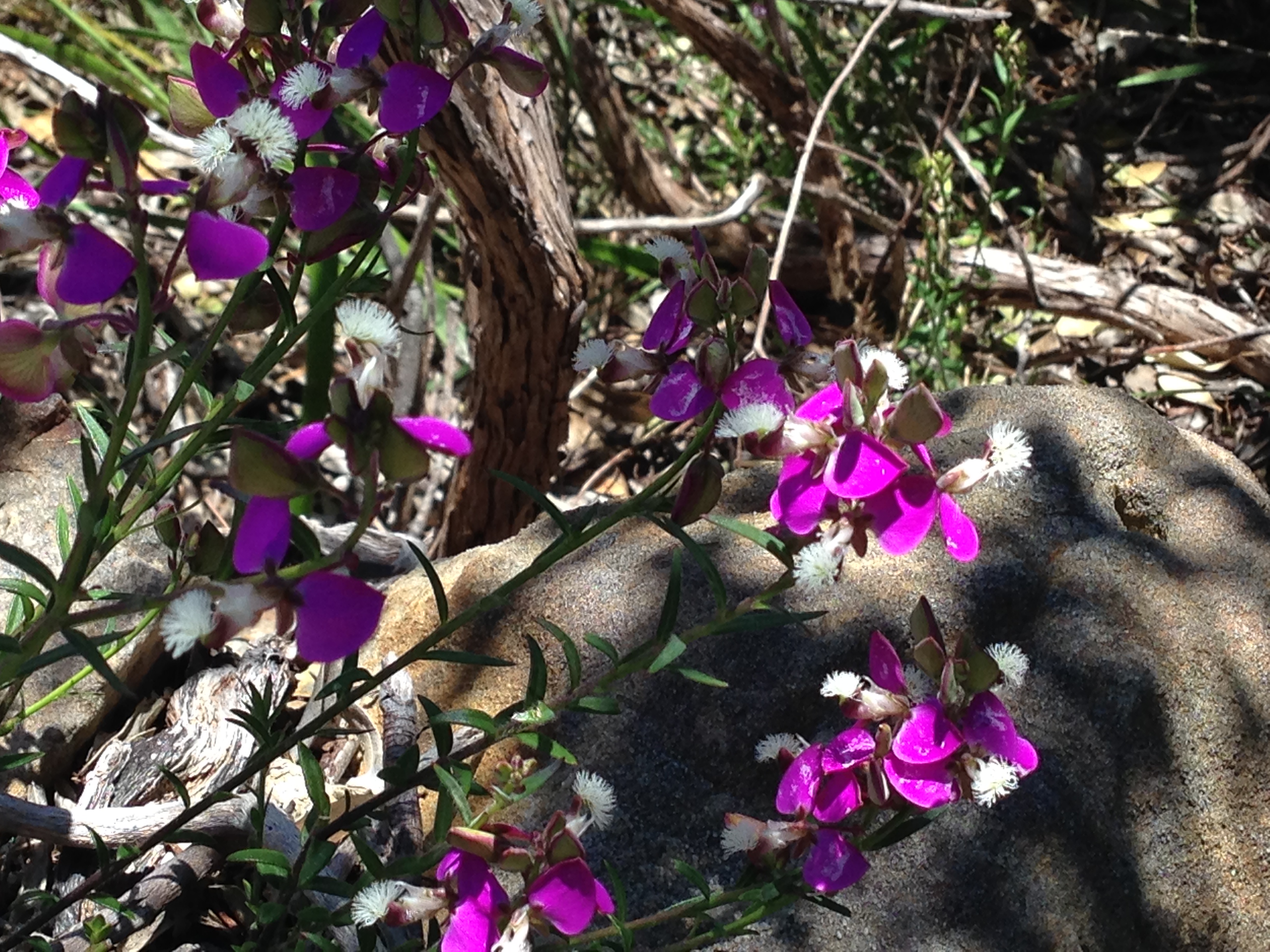
Polygala is a common fynbos flower and this one is either refracta or bracteolata or indeed one of the 30 other fynbos subspecies.

Polygala refracta or bracteolata

Polygala refracta or bracteolata

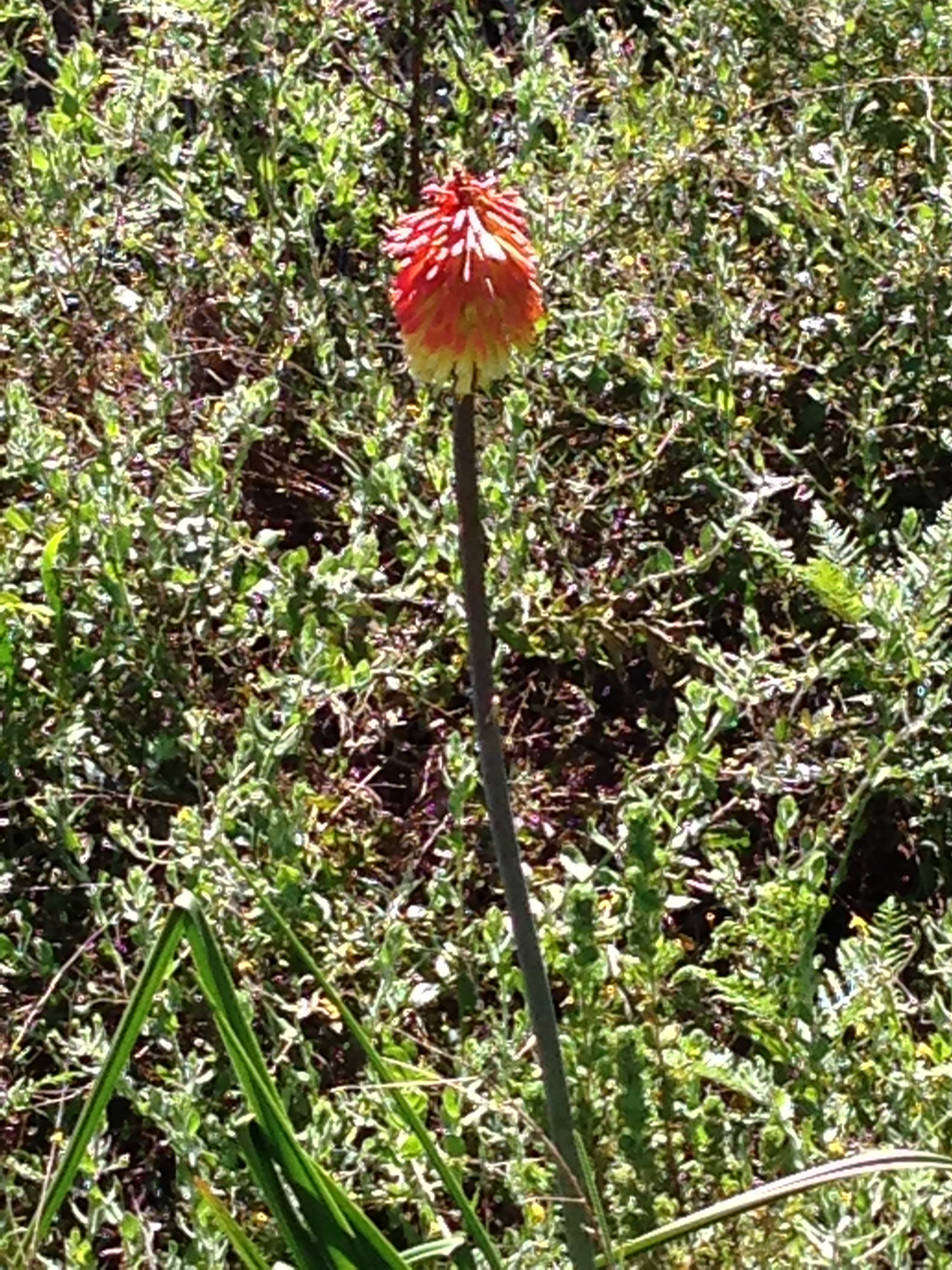
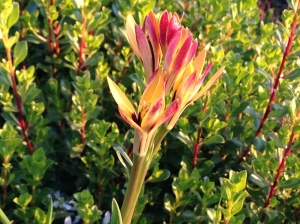
In a previous blog I incorrectly identified this as an aloe.  Its not of course, it is a red hot poker,  the Latin name is Kniphofia uvairia and it is a common and much loved wild flower in these mountains, though this is the first one I have seen on this farm.

Kniphofia uvaria

Kniphofia uvaria

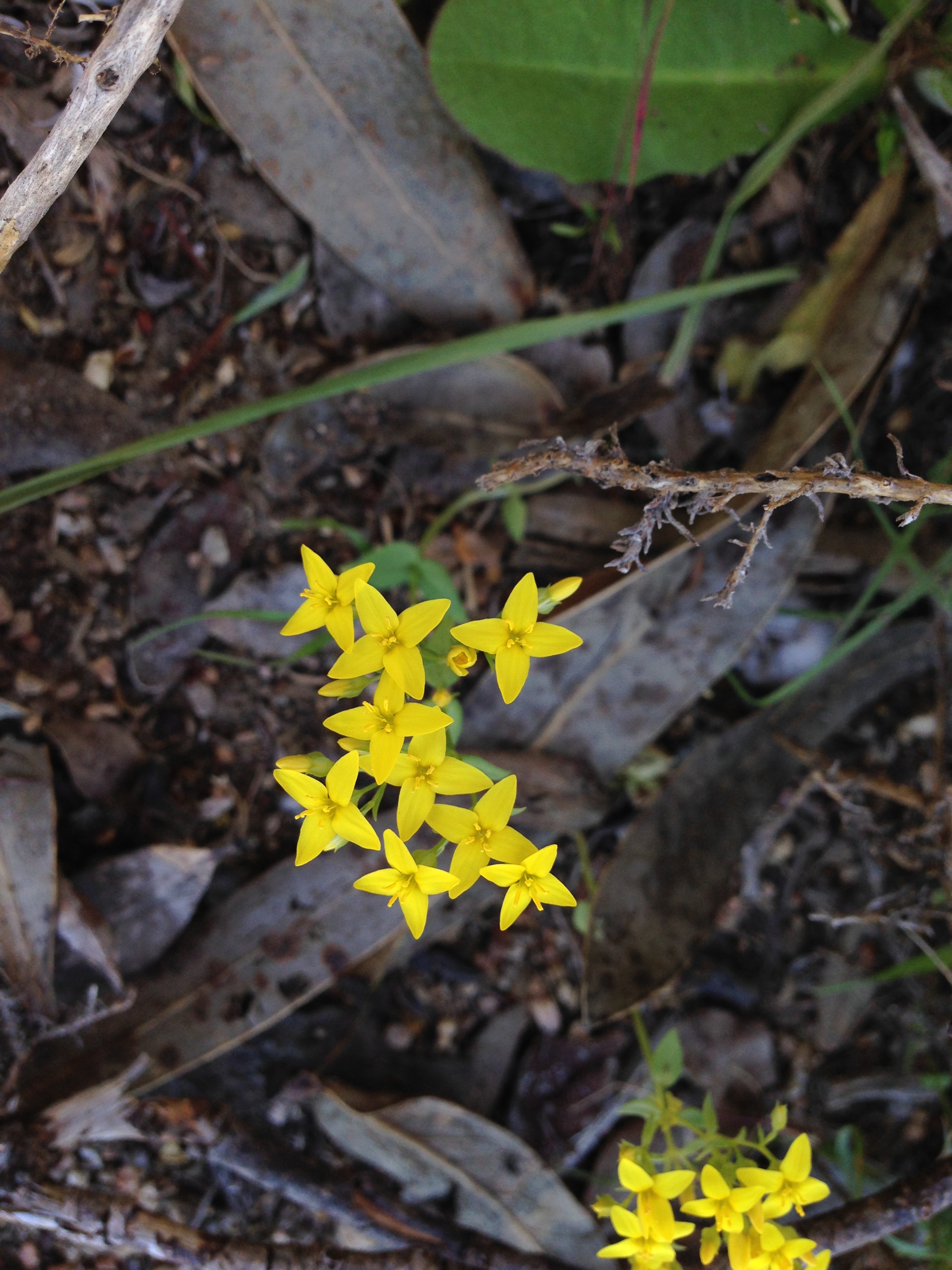
Finally what a delight to see that this little yellow flower, distinctive because of its four petals, is Sebea aurea, a relation of Sebea exacoides which we posted quite recently.


Sebea aurea

Sebea aurea


Fire on the Mountain

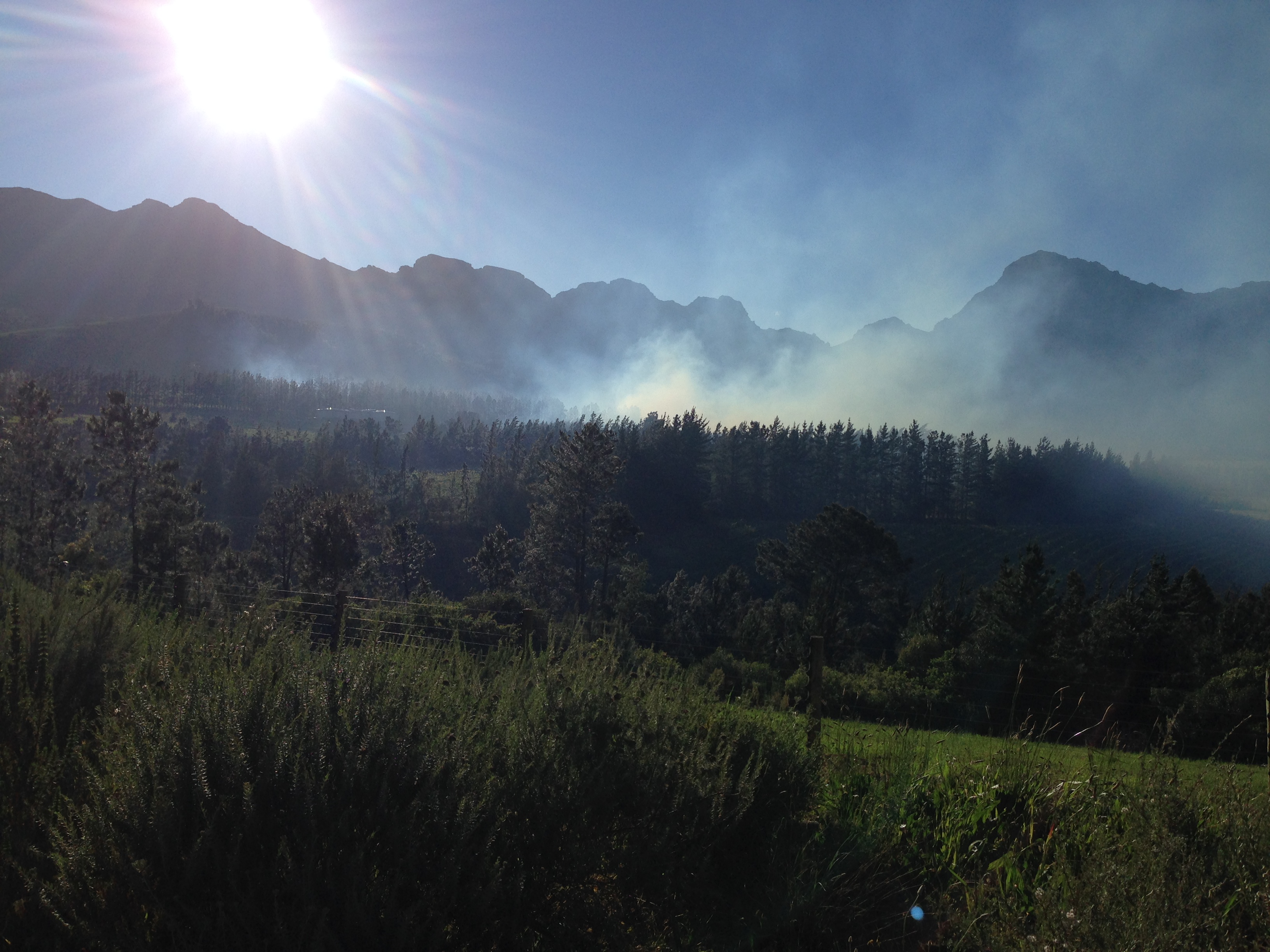
In South Africa people rise early, so a call at 7 am is not necessarily worrying. Peters kids get up early to avoid the Johannesburg traffic and often call at that time for a chat. Anything earlier than that signals trouble, so when the phone started forth with ‘Gangnam Style’ (yes, that really is my ringtone) at 6.15 on Saturday morning I jumped out of bed to get it, knowing the news wasnt going to be good.

It was our neighbour and she was clearly concerned. A fire on the mountain, right by their house. We leaped into action – Peter quickly got dressed while I equally quickly manned the phone and made him a coffee to take with him. He’d call the local fire marshal, get down there, assess the situation, and they’d decide how much support was needed to get this under control quickly.

We have terrible fires here on the mountains, last year one burned all the way from Franschhoek to the N1, which must be over 20 kilometres. They go far further than that when they are out of control and the wind is high. But we’ve had a very wet winter and the past few days have brought the first southeaster of the season, a howling wind that comes with the dry spring weather and frays all our nerves.

We predicted this fire a few days ago. Another neighbour was burning in his lands and he didn’t seem to have taken care to put out the smoldering embers. “There’s going to be a fire” said Peter on Wednesday evening as we drove down the mountain on our way to dinner. Sure enough….

This was not a particularly dangerous fire. Frightening when it’s close to your house, but with the ground and the undergrowth still cold and wet, it was never going to be the frightening inferno we’d see later in the season. By mid-morning it was under control. Still, a good warning and we are very diligent about clearing potential fuel and firebreaks on the farm. In the season, January and February, we are on high alert. 

Fire on a neighbours farm just below us.

Fire on a neighbours farm just below us.


Today was altogether calmer. I went for an early run with the dogs and then we had some friends who came to lunch and were very keen to see the flowers. As ever plenty of new sightings emerged. Rather frustratingly I am writing this on a plane (London this time) and have left my books behind. So here are some pictures of new flowers, taken in case they are no longer flowering when I get back and I will do the research when I get home in a few days time and repost with some names.
 

This beautiful flowering bulb is all over the farm.  It must be common but I cannot find it in the books.

Blue flowering bulb

Blue flowering bulb

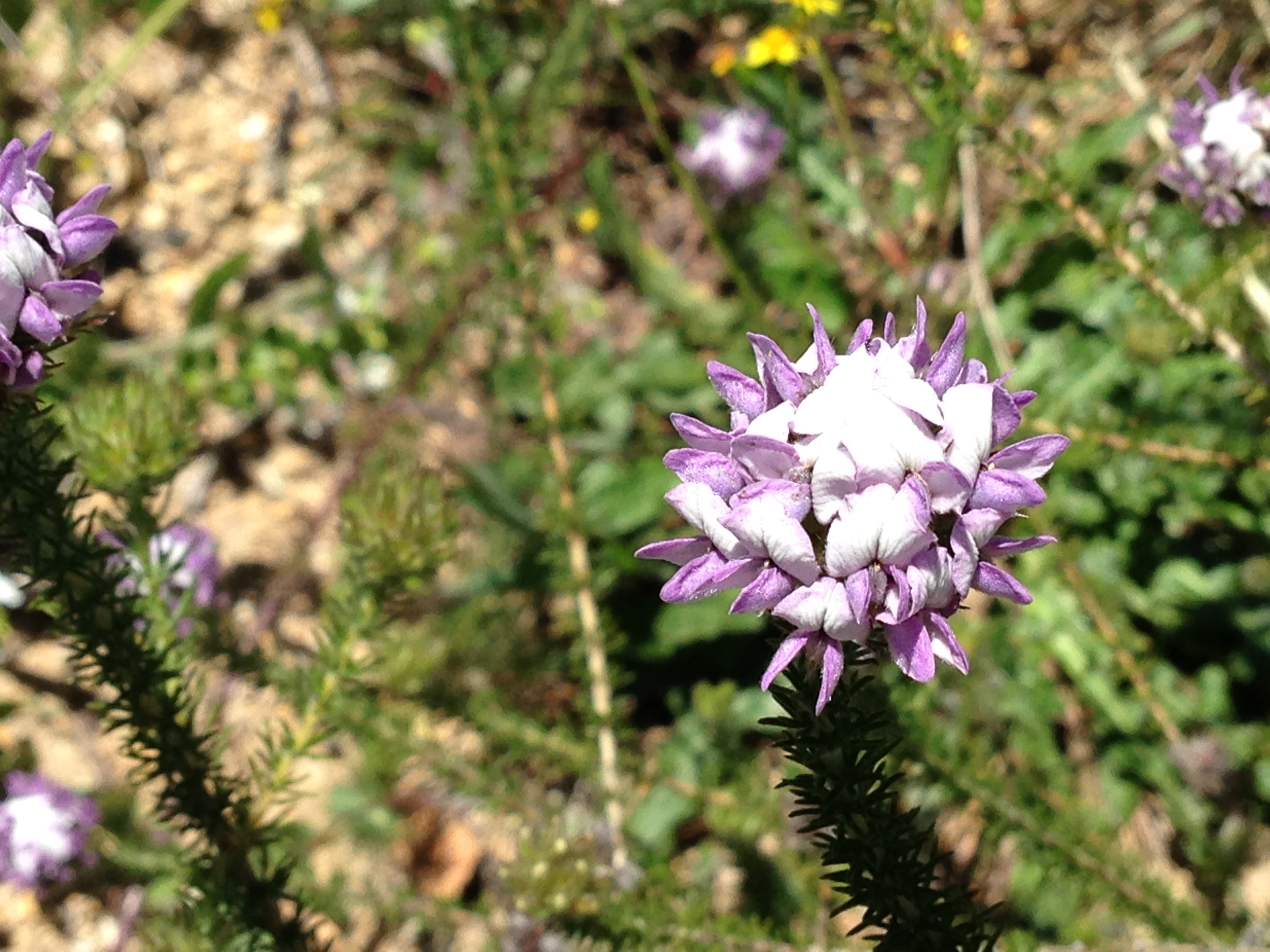
This kind of flower emerges in summer.  Lots of fynbos have these short spikey stems covered in leaves and a single flower on the tip.  We’ll see lots more and identify as many as we can.

Pink flowering shrub

Pink flowering shrub

Polygala is identified by the fluffy bits on the flowers and this creeping plants is everywhere at the moment.

Polygala

Polygala

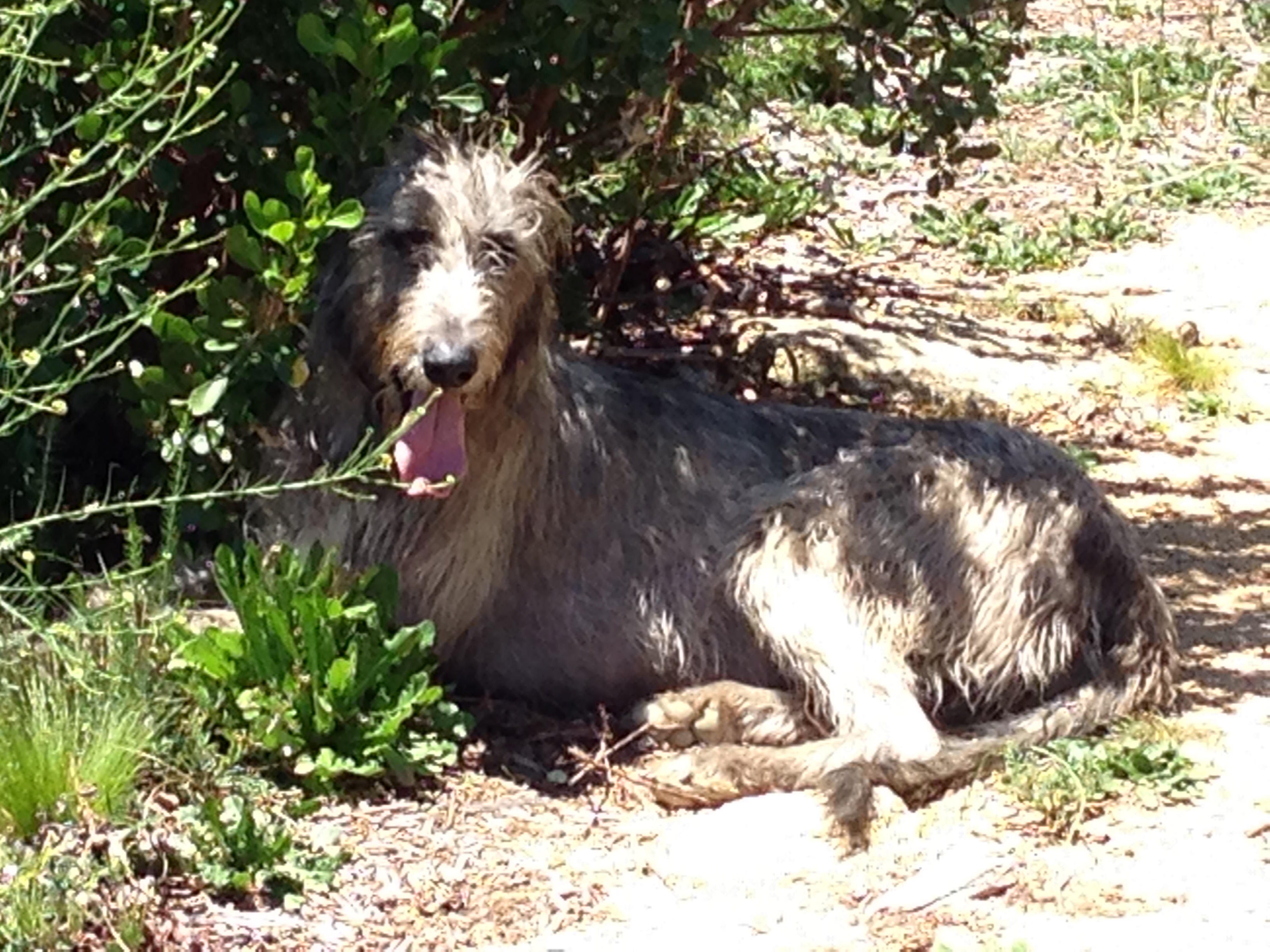
Maebh resting under the shade of a protea tree

Maebh resting under the shade of a protea tree

I’ve never seen a wild Aloe on the moutain before and this is growing in the area along the river where we’ve cleared huge amounts of alien vegation.

Aloe on the moutain

Aloe on the moutain

Another of these flowers on the end of a prickley spike.  Quite distinctive so I have hopes of identifying it.

Blue unidentified flower

Blue unidentified flower

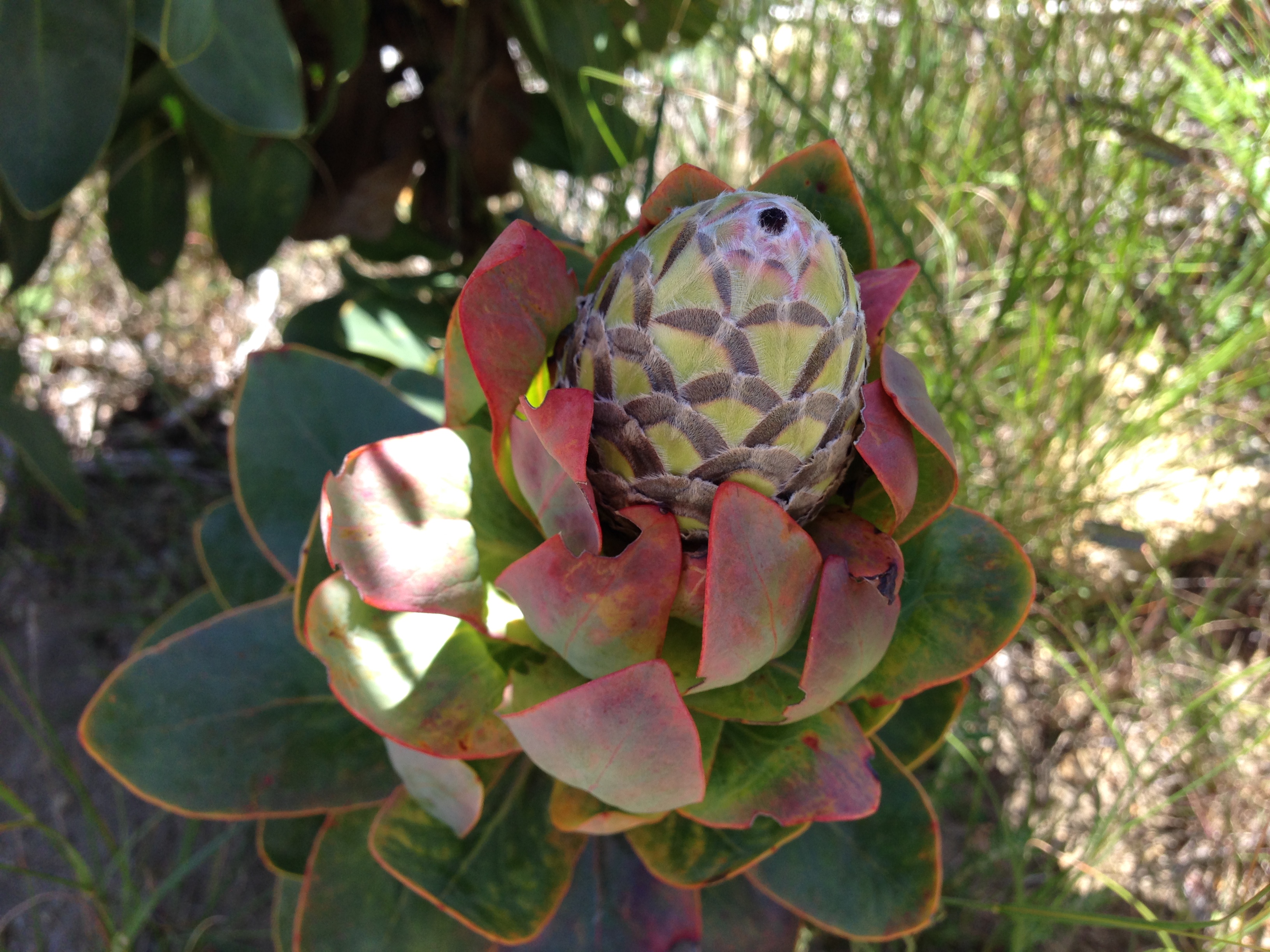
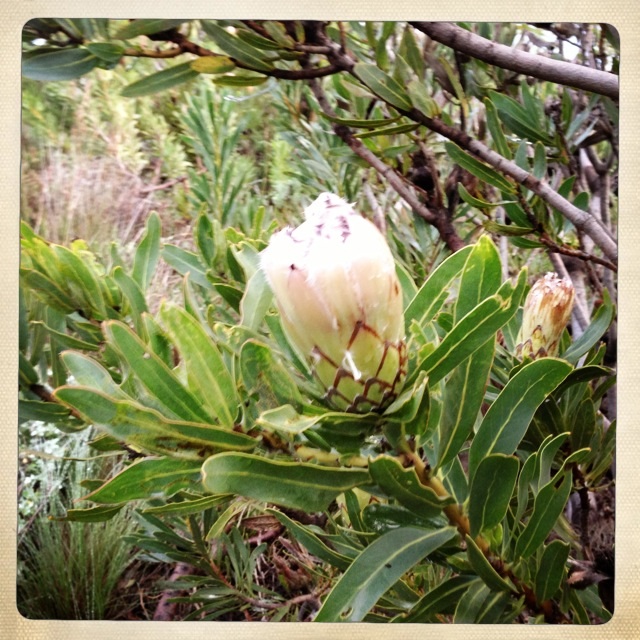
This stunning Protea bud is almost architectural.

Protea flower in Bud

Protea flower in Bud

Tiny yellow stars appear everywhere.

Tiny yellow flowers

Tiny yellow flowers

These clusters are also found in several different areas.  I had to use myself as a shadow to capture them in the bright sunlight.

Clusters of yellow and white flowers

Clusters of yellow and white flowers


Lilies and peacocks: prolific flowering on the mountain

When you wake up morning after morning and the first thing you hear is the thudding of rain on the zinc roof it is not really conducive to getting out on the farm to run and photograph flowers. Even the dogs stand at the doorway and barely want to get their feet wet.

The weather finally improved on Sunday and late in the day we finally got out onto the mountain. There is so much out there, the rain has made flowering prolific and the frustration is that we must have missed so many flowers that have had their brief moment of glory and disappeared.

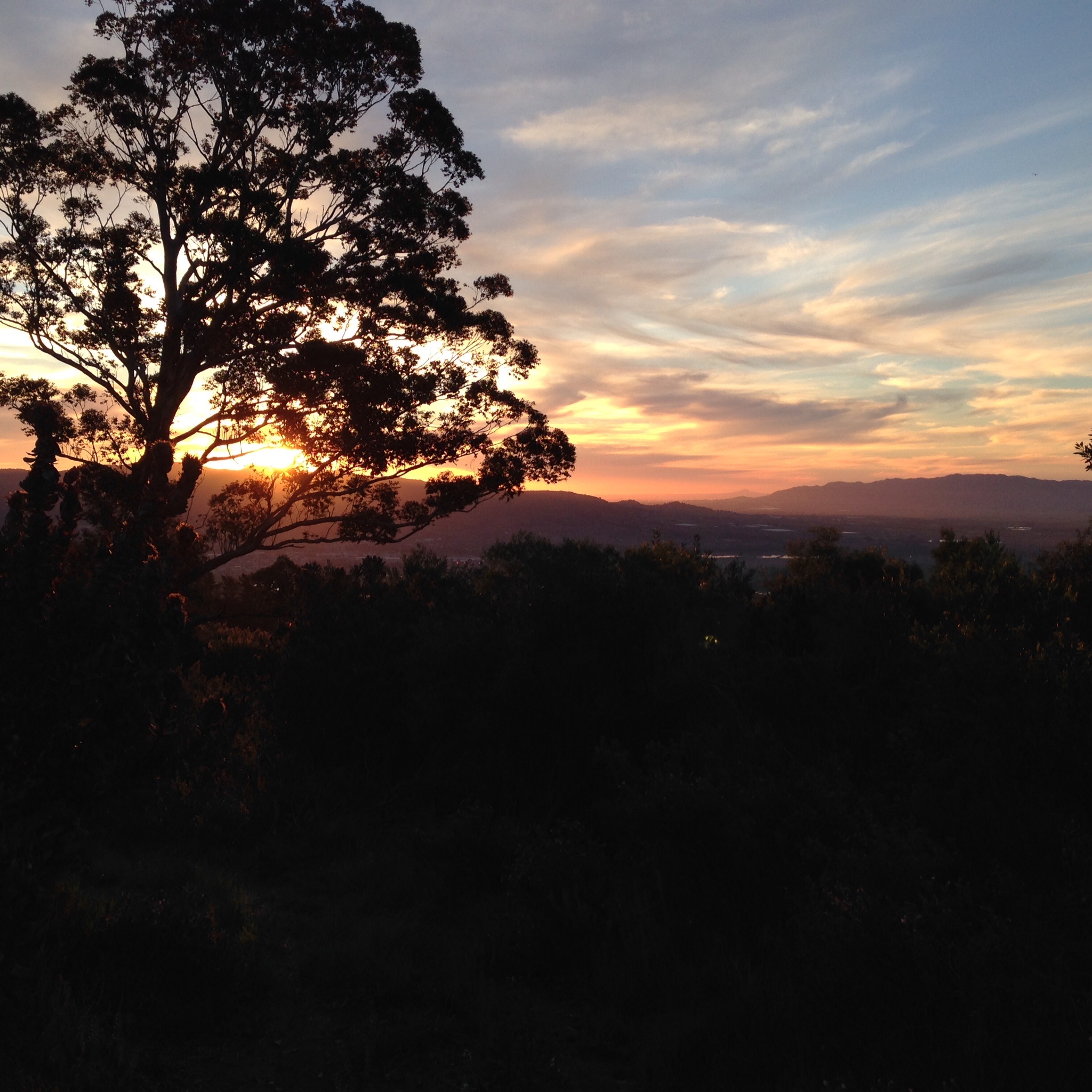
There is something about this mountain at the end of the day, as the light fades to the east and the last glow of sunlight flares in a spectacular display of light and colour. There is one huge tree, a bluegum or Eucalyptus that stands in splendid isolation high on the mountain. An alien, it doesn’t belong here and I cannot imagine how it came to survive so high; it must have found a spot where it is slightly sheltered from the howling winds. This evening it made a frame for the setting sun.

image

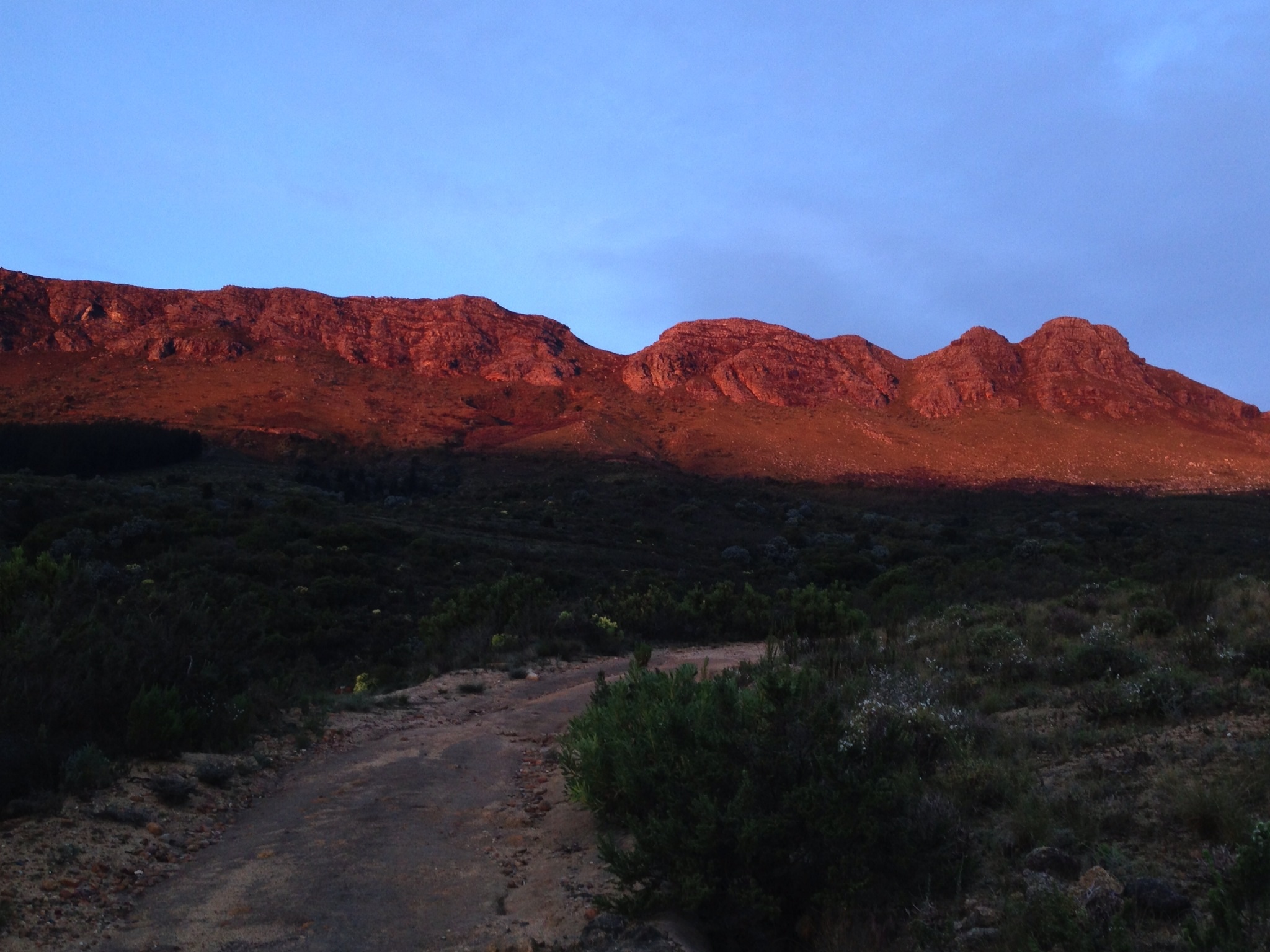
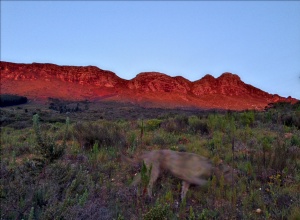
As we descended I caught this shot of the mountains behind us caught in spectacular orange.
image

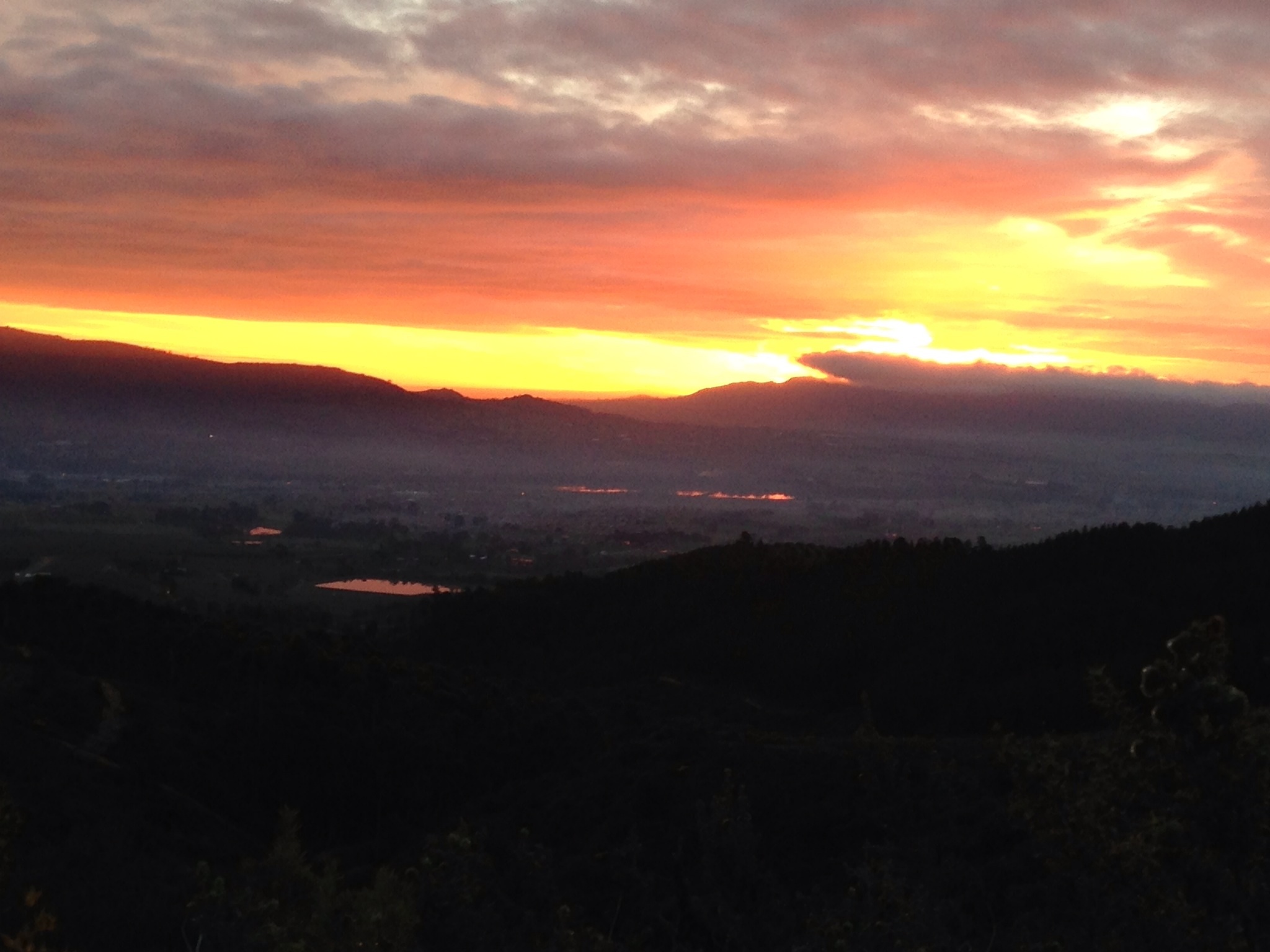
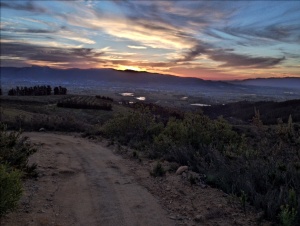
Before us the sun was just about to go down behind Paarl mountain and you can see the mist gathering over the Berg River at the bottom of the valley.
image

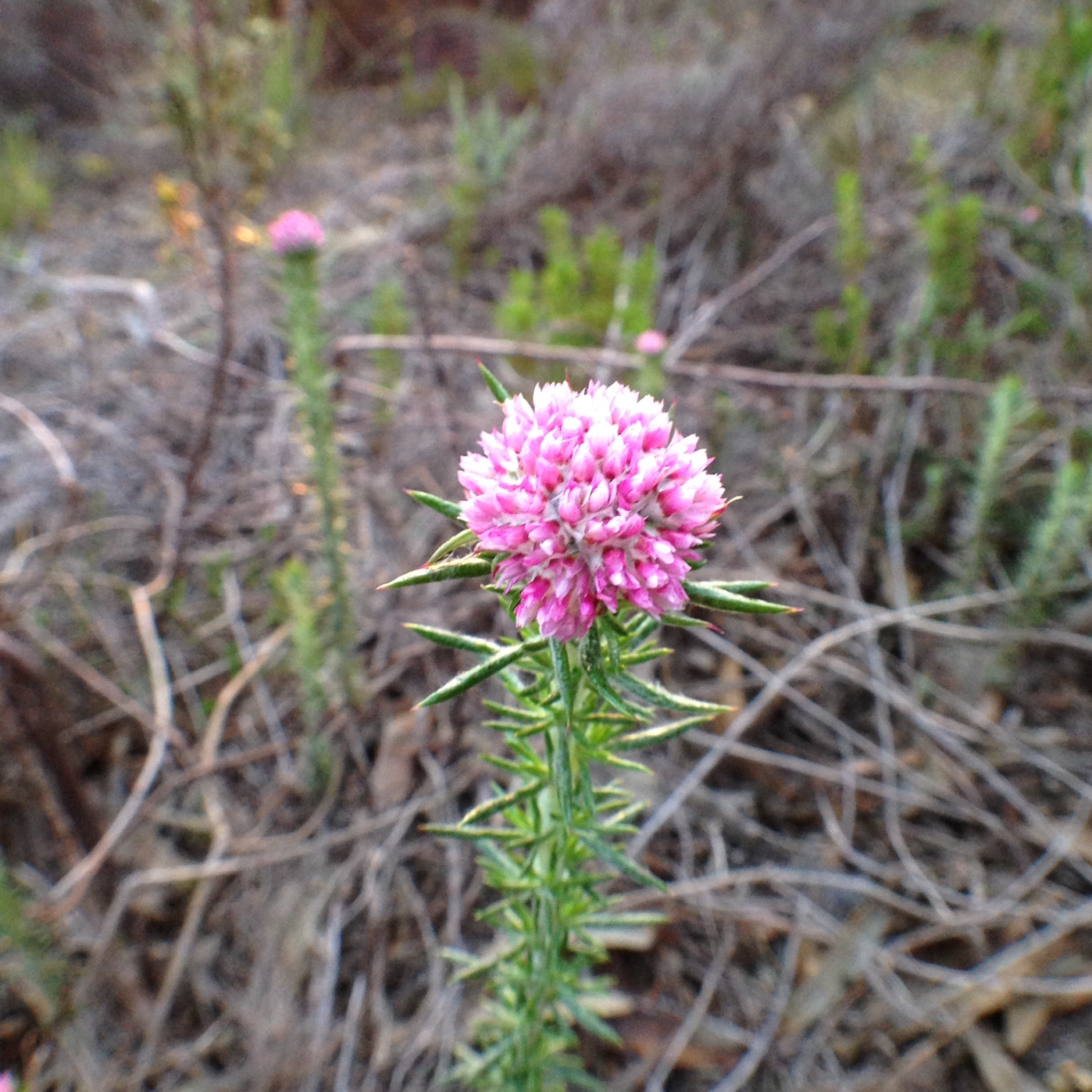
The light was perfect as we ran up the mountain and captured flowers. There are many that flower like this, at the top of a spike of needle or threadlike leaves and this is a lovely one that we found right at the top of the farm. I couldn’t find it in the book and generally these are hard to identify.
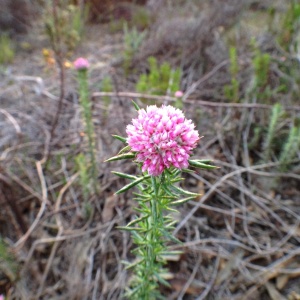
Unidentified spike

Unidentified spike

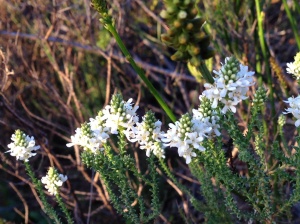
Another beautiful spikey thing is this white one. Again I haven’t identified it yet – it’s gone into the unidentified folder for when I have some more books and helps.
White spikes unidentified

White spikes unidentified

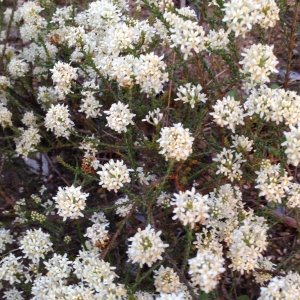
While on the theme of unidentified shrubs, here’s another one. In one damp and quite shady place there are lots of these, little shrubs covered in white flowers, pretty enough to be cultivated in any garden. And indeed they probably are – so if any reader knows what they are please do let me know.
White flowering shrub

White flowering shrub

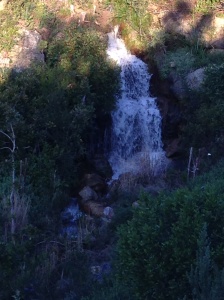
The waterfall is pounding away and my theory that at some point it will be flooded with evening sunshine seems likely to come true as the sun needs to be just a little higher and a little further to the south and the whole fall will be lit up for a few weeks.
image

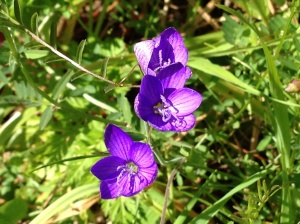
I had a lot more luck identifying the flowering bulbs and there are lots of them. Just behind the house the bank is full of these brilliant blue flowers, Geissorhiza aspera.
Geissorhiza aspera

Geissorhiza aspera

And just above it the bank and many roads on the farm are littered with these white stars. I think it might be Strumaria spiralis but I do need to check as the identification is not 100 % confirmed.
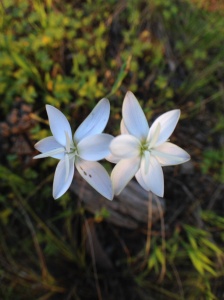
Identity uncertain

Identity uncertain

I am completely sure of this one however. It is Baeometra uniflora, known as the Beetle Lily and there are plenty of them in damp areas at the top of the farm.
Baeometra uniflora - the Beetle LIly

Baeometra uniflora – the Beetle LIly

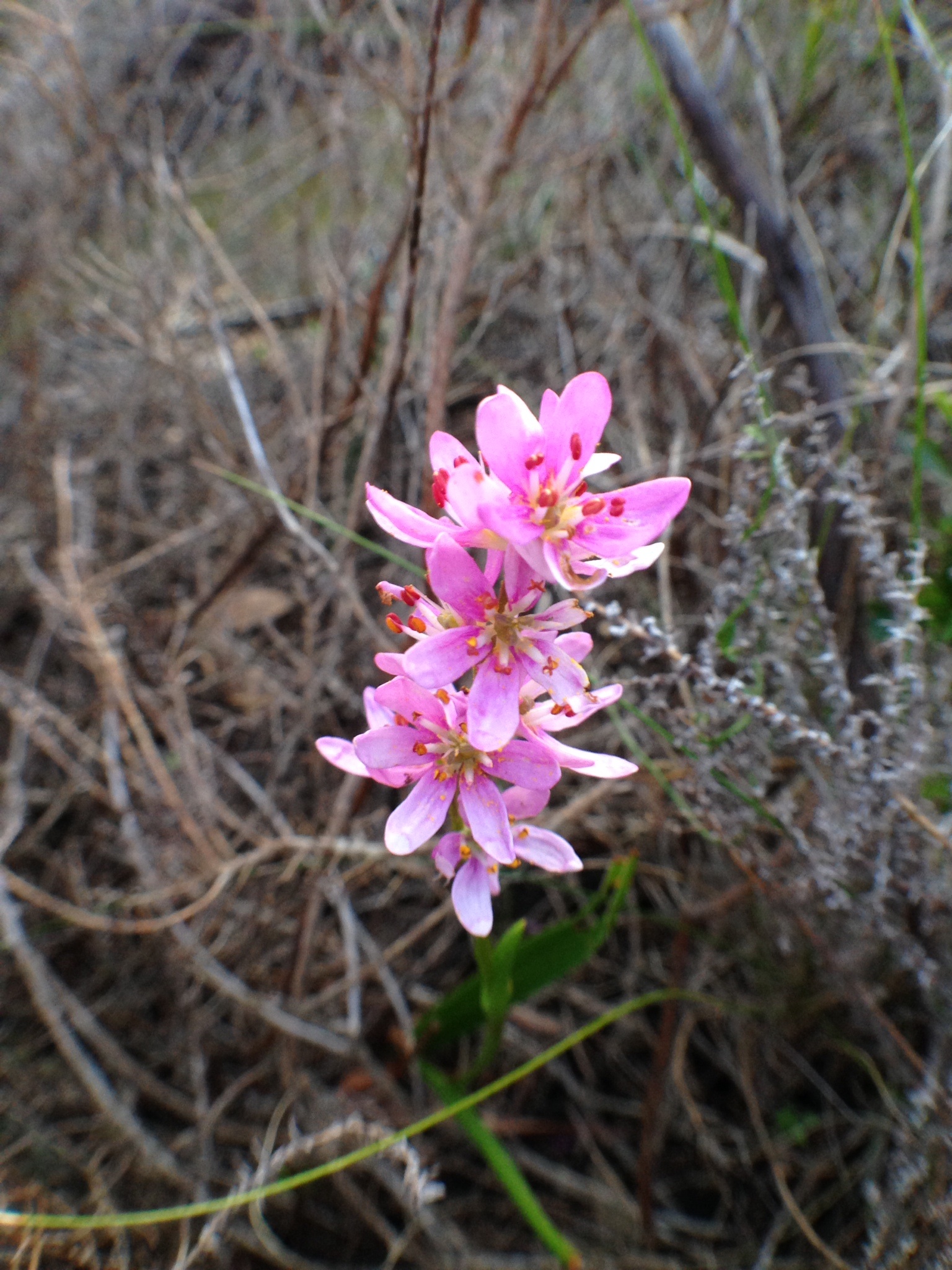
This was a busy run, a lot of flowers needing recording and worrying about more weather to come, and a lot more flowers, I wanted to be sure we’d capture them. One I saw during a quick morning run in the week, in between the showers, is this lovely little pink spike and I was worried that it might have disappeared by the time I got back to that part of the farm again with good light and time to do a long run. But no, here it is and it is known as a Spike Lily, Wurmbea punctata. I love it when we get a really clear identification of something new and there is no doubt about this one.
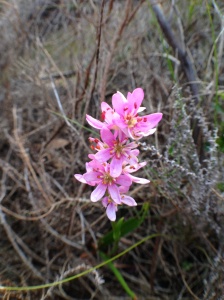
Wurmbea punctata - the Spike Lily

Wurmbea punctata – the Spike Lily

Another absolutely unmistakable flower and always a treat when they appear, as if out of nowhere, is the lovely Spiloxene Capensis, one of the Cape stars and known as the Peacock flower. We were rewarded by this sight at the very top of yesterday’s climb and before the light abandoned us.
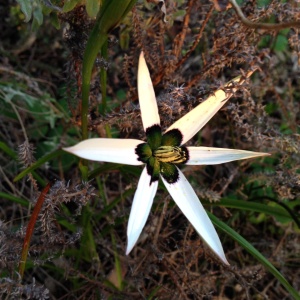
Spiloxene capensis - the Peacock flower

Spiloxene capensis – the Peacock flower

This was much harder to identify and I think it must be the Grass Lily, Chlorophytum rigidum perhaps? It has a very localised habitat and this is exactly the right area. But the picture in the book isn’t great so I would be happy to be corrected.

Chlorophytum rigidum?

Chlorophytum rigidum?

Glorious Sunday Fynbos Flowers

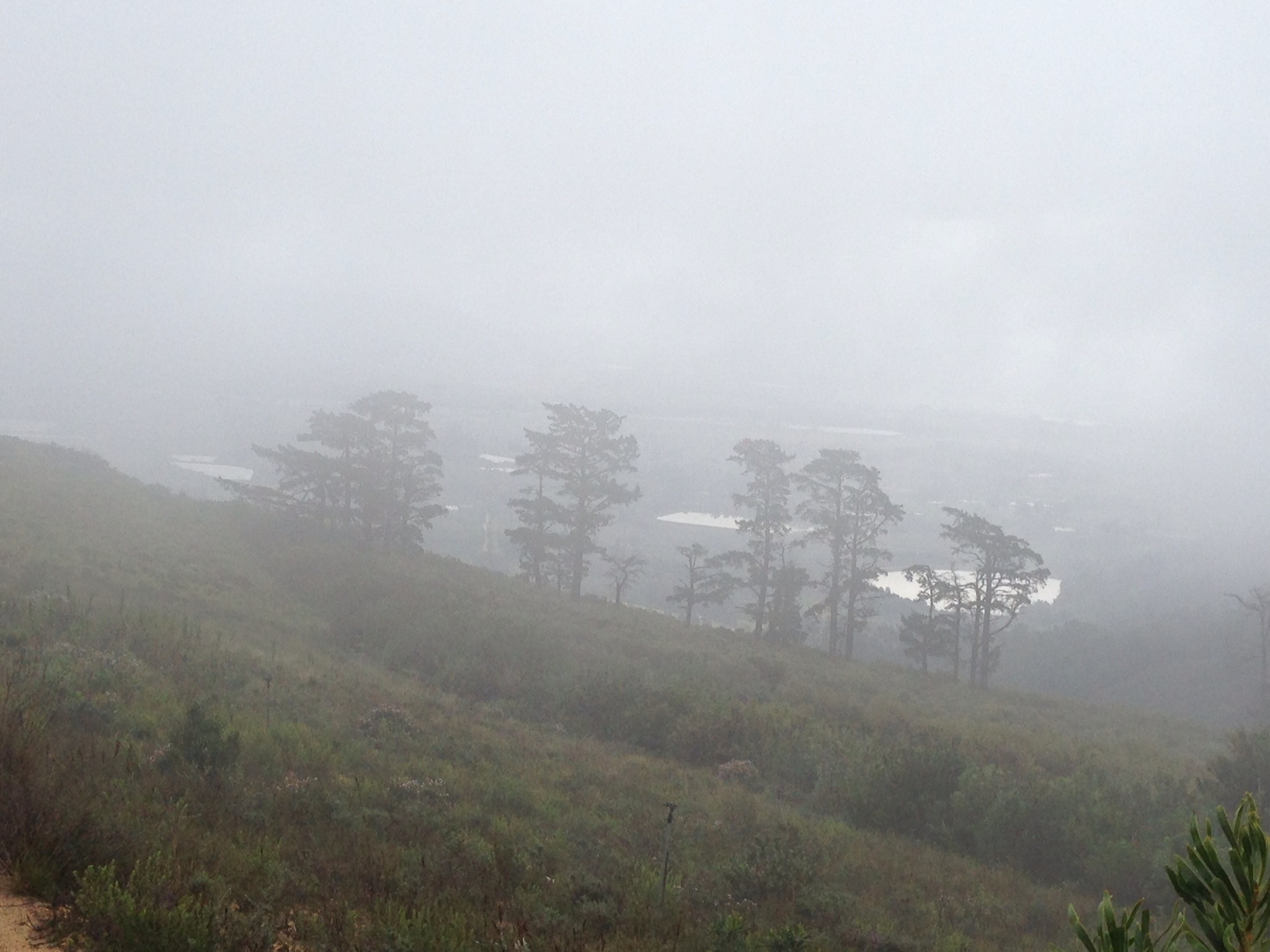
After a golden day on Saturday when we were out all day with no time to run on the farm, we finally set off late on Sunday morning, the dogs and I.  Just as we left the house a light drizzle began to fall and I went back, wisely as it turned out, for a rain jacket.  It was only drizzling as we ran down the drive and then started to climb, but by the time we got high on the farm the weather had closed in.  Somehow this line of pines with the dams below always seems a little Japanese to me – is that an odd thought here in the uplands of Paarl?  Perhaps it is.

The landscape Japaned by the mist and the light

The landscape Japaned by the mist and the light

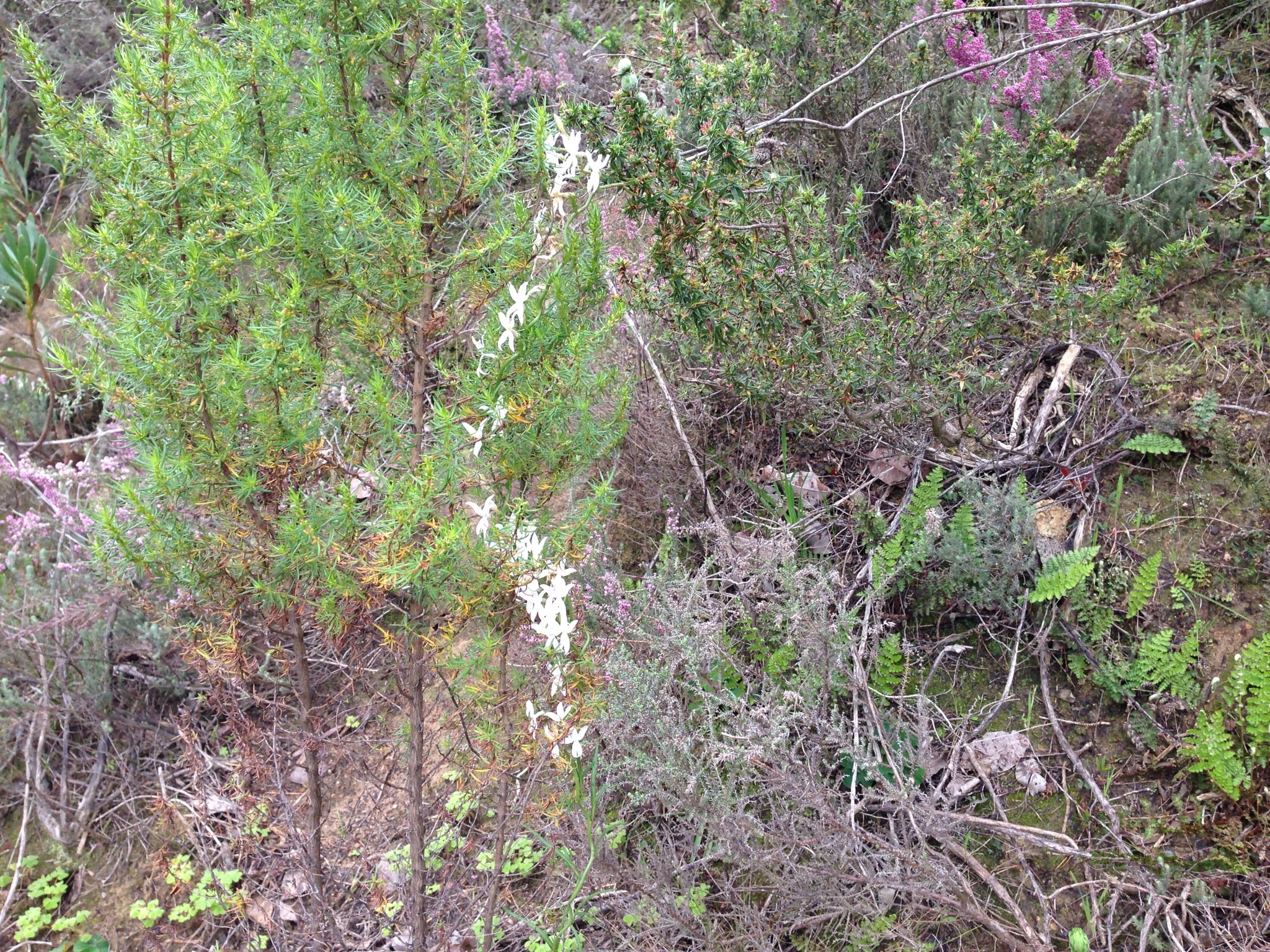
Luckily the weather hadn’t deterred us and some flowers glow and seem to photograph even better in the rain.  Take this Cyphia volubilis, the delicate white creeper.  There is one on the drive that is climbing all the way up this unidentified and rather plain shrub.

Cyphia volubis

Cyphia volubis

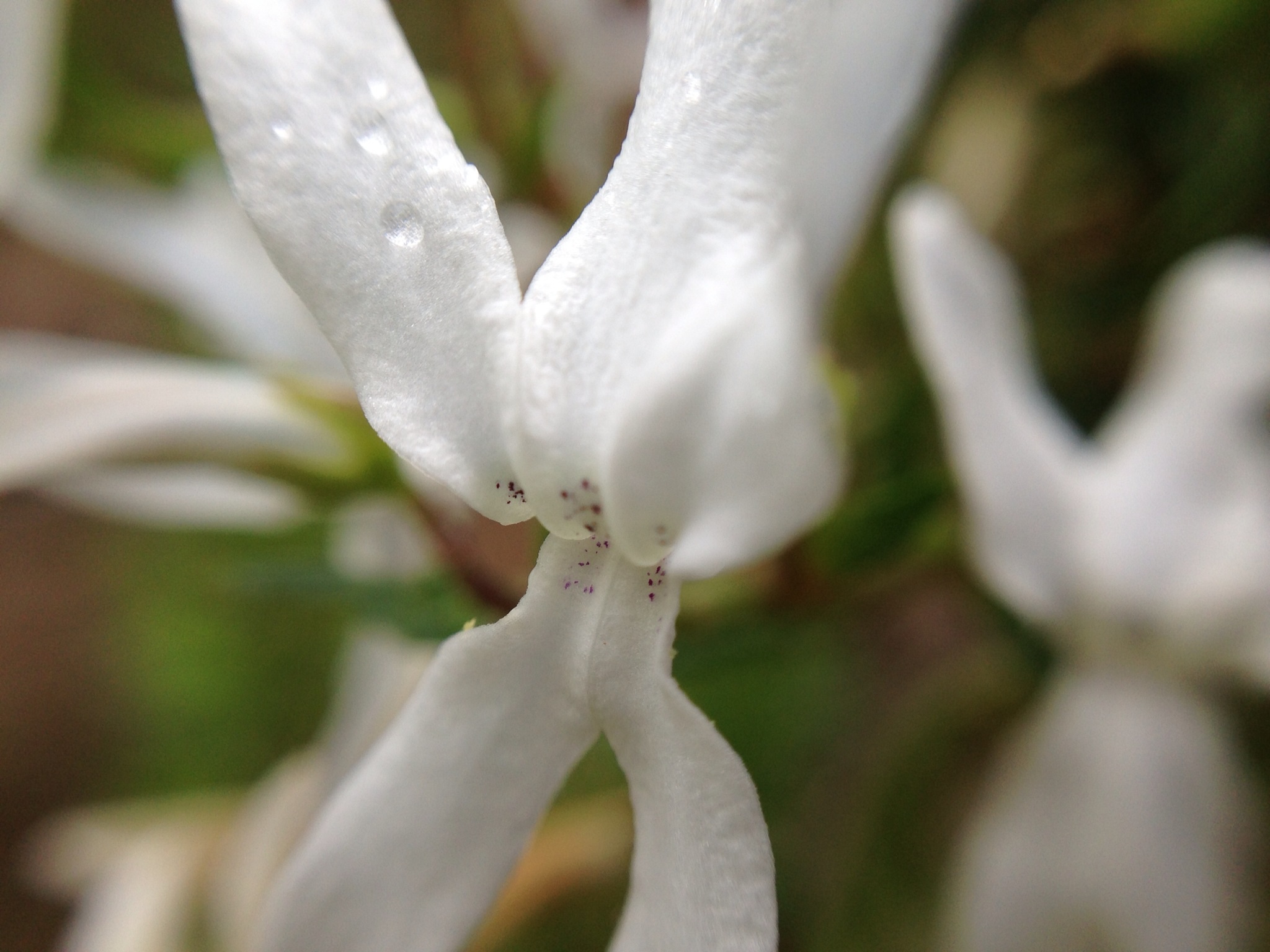
A close up reveals the charm and beauty of this delicate flower, notice the tiny pink spots at the centre, and of course the drops of rain, proof of our damp run.

Cyphia volubilis - detail

Cyphia volubilis – detail

All over the farm these yellow shrubs are flowering profusely, it is Hermannia grossularifolia I believe; there are as many as 60 fynbos subspecies but this one looks right, it belongs on these sandstone slopes and is flowering at exactly the right time of year.

Hermannia grossularifolia

Hermannia grossularifolia

Another flowering shrub is this one that I’ve posted before, unidentified until a friend pointed out that it is the common Tickberry (thank you Gilly), which used to be called Chrysanthemoides monilifera but is now correctly identified as Osteospermum moniliferum.  This shrub, although included as fynbos, is not unique to the fynbos region but grows happily, wild and in gardens, all the way up to tropical Africa.

Osteospermum moniliferum

Osteospermum moniliferum

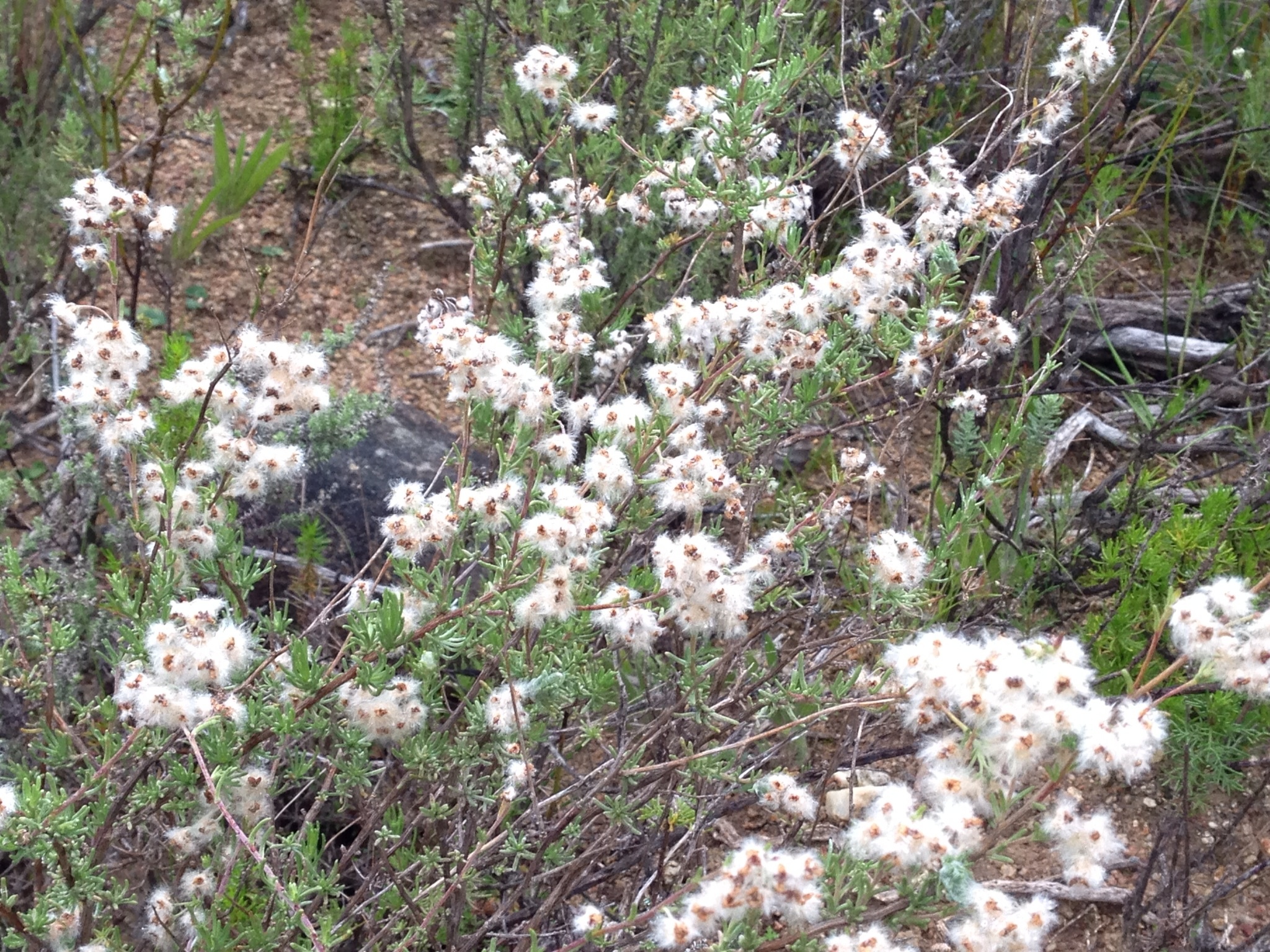
An oft-posted winter flower was the wild rosemary, Eriocephalus africanus and I though it would be interesting to post it now that it has gone to seed.  With so many seedheads one can understand why it is so prolific on the mountain.

Eriocephalus africana - gone to seed

Eriocephalus africana – gone to seed

The light lent itself perfectly to capturing the magnificent white Erica which I believe to be the plukenetii.  It could be the coccinea, but the book says that particular subspecies does not exist in white and this is most definitely white.  Magnificent with its protruding anthers.  This is a common Erica and occurs all over the farm in many colours.

Erica plukenetii (?)

Erica plukenetii (?)

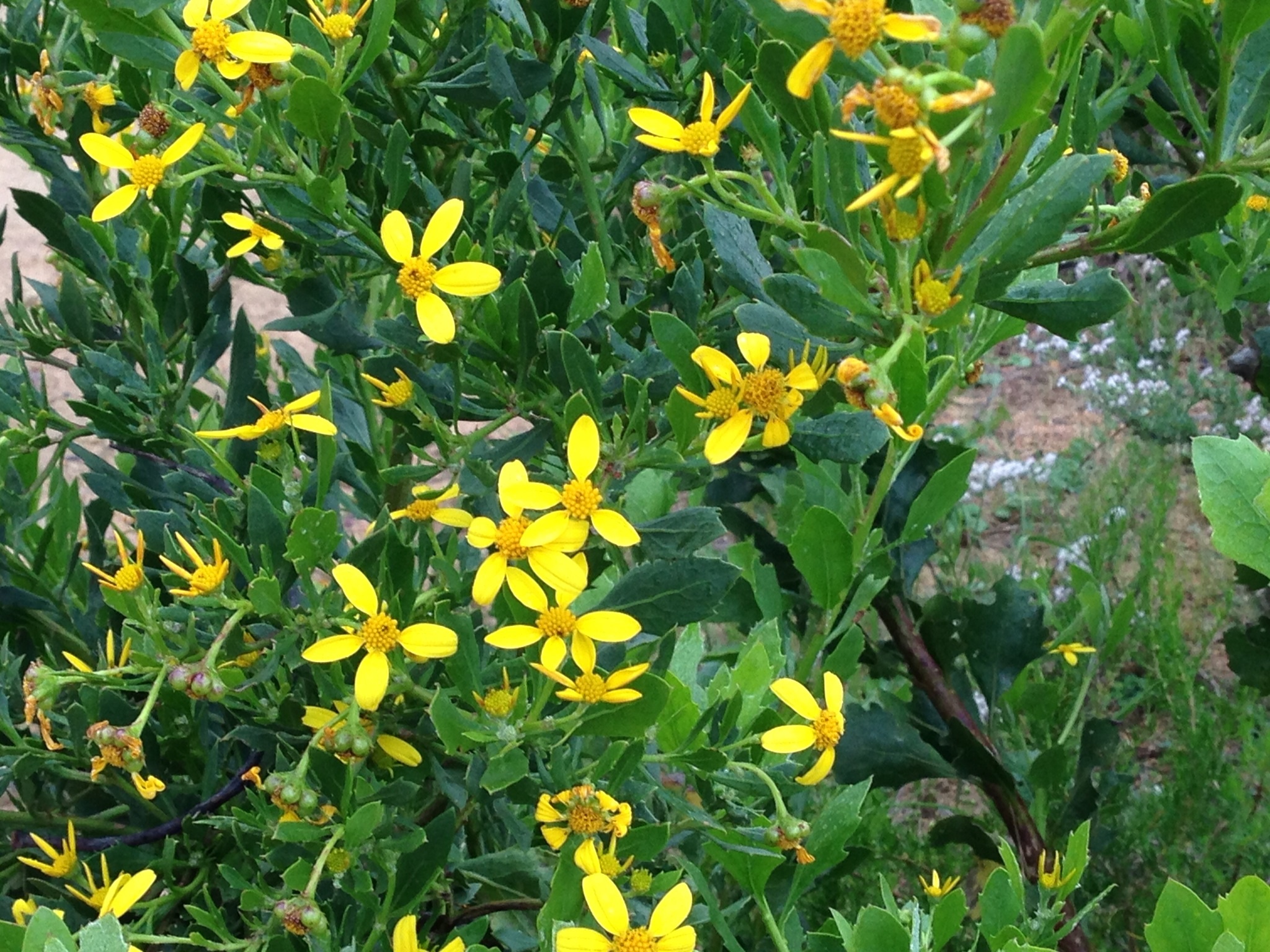
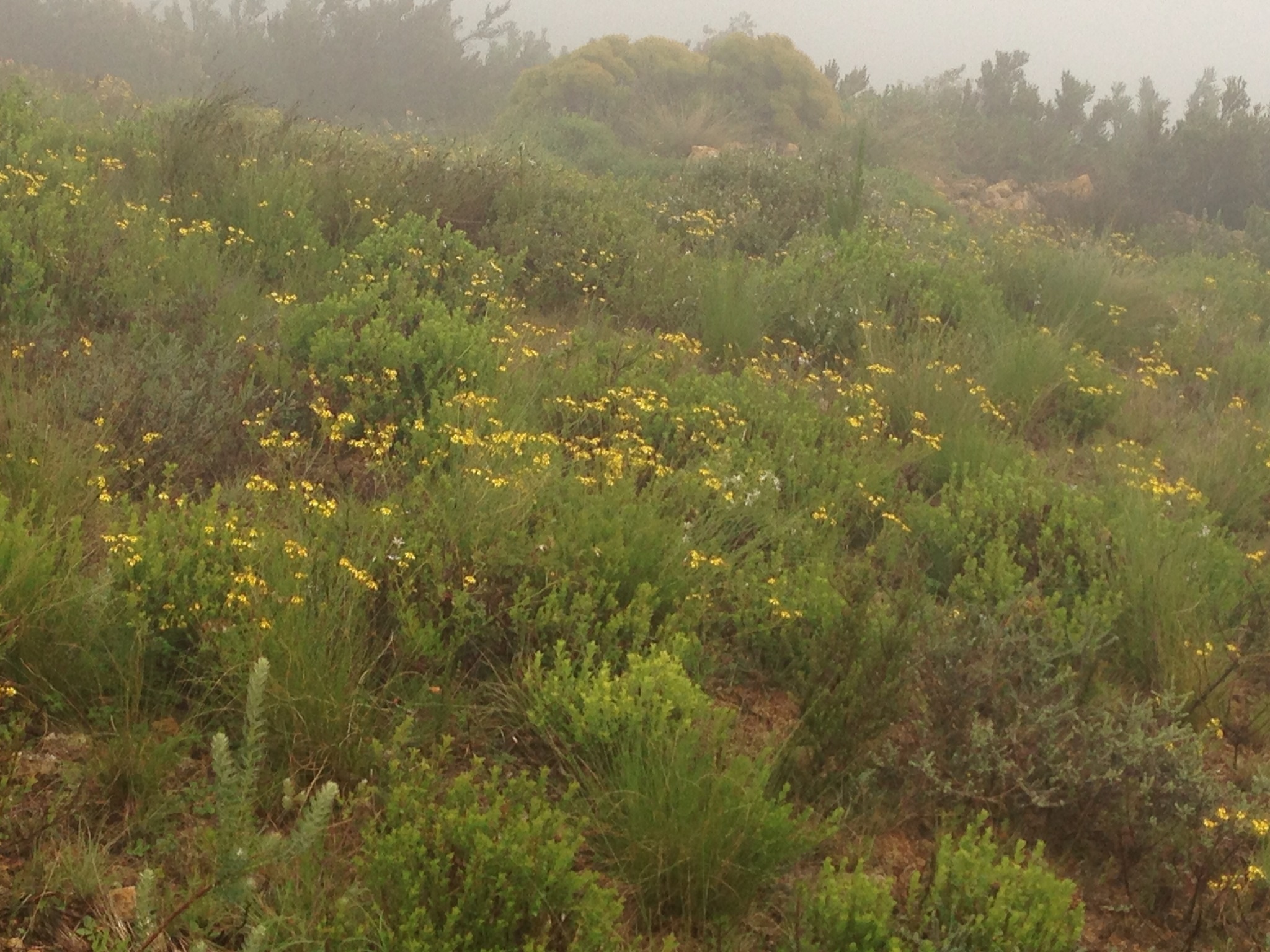
At this time of year the lands are full of flowers among the buchu.  The overall effect can be hard to photograph although this field of senecio high up in the lands gives a good sense of the colour and effect even on a dark day.

The lands full of flowers, primarily Senecio

The lands full of flowers, primarily Senecio

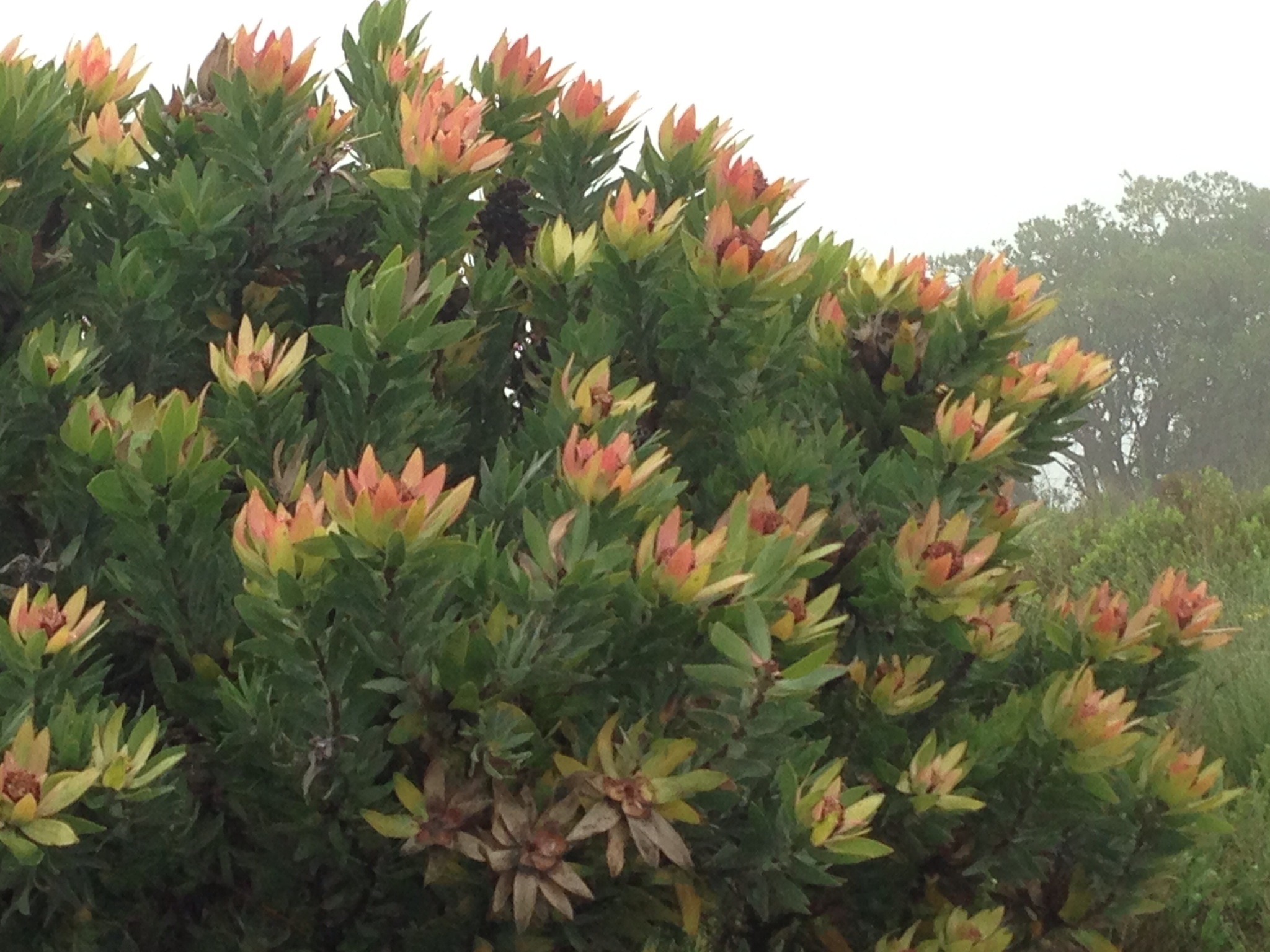
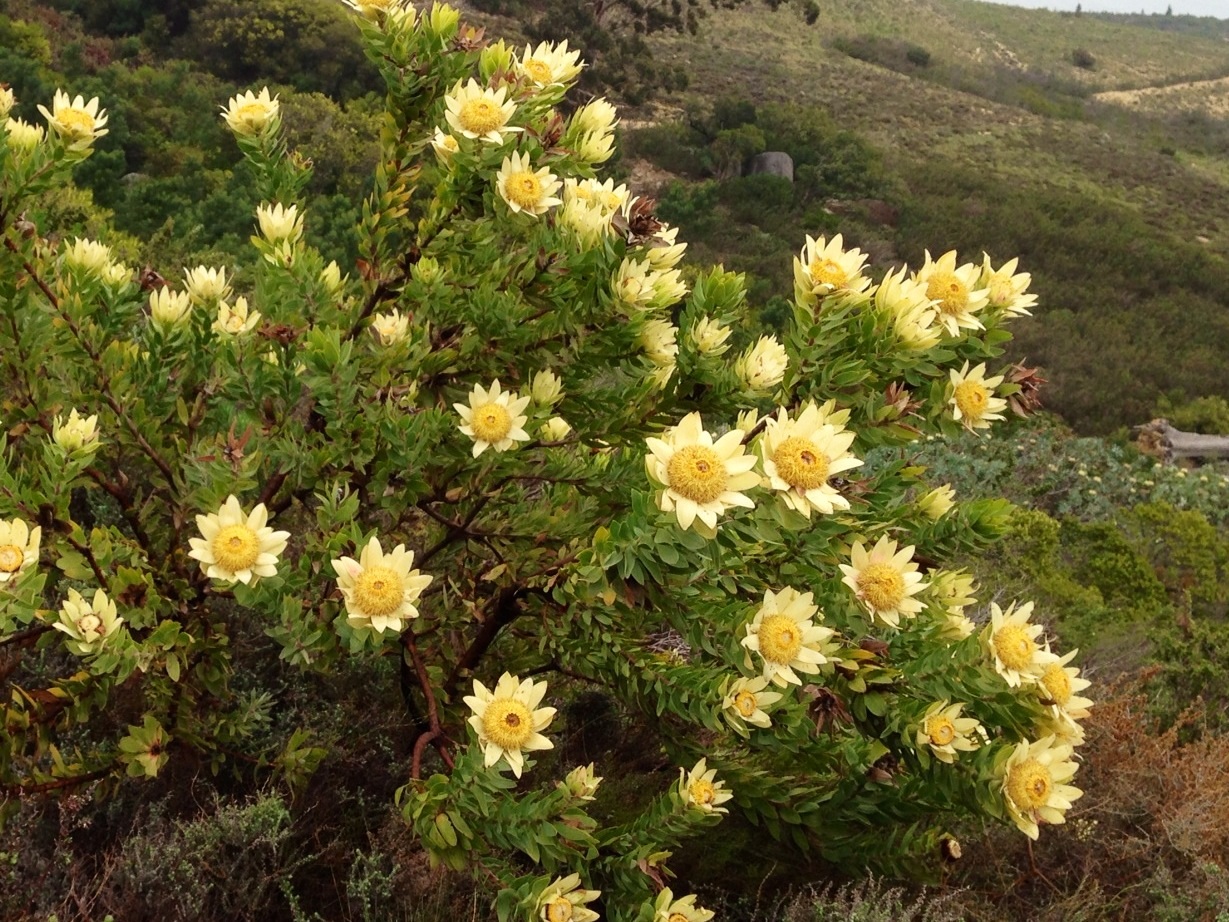
Saving the best for last.  One of the loveliest sights on the farm occurs at this time of year when this particular Leucadendron turns coral coloured. One of the interesting things about the Leucadendron family is that although less flashy than the protea to which it is related, it tends to be highly localised, fussy and choosy about where any particular subspecies will grow.  This appears to be Leucadendron tinctum, the name giving away the remarkable change in colour at this time of year.  The shrubs are everywhere in the higher parts of the farm and the effect is magnificent, one of our all time favourites.

The magnificent Leucadendron tinctum

The magnificent Leucadendron tinctum


I hsd planned a long run covering most of the farm, but by the time we reached what we call the look out it was raining heavily, I was tired slow and a bit sore after a lot of travel and show jumping on Saturday. The dogs were soaked and had been very patient as I took photos on the way up, not that they care, they happily sniff and hunt although Seamus, who misses us when we are gone, never left my side. So we put away thoughts of fynbos and plodded a little wearily down the hill to lunch, a fire and an afternoon in front of the TV.

A spell of good weather and a burst of new flowers

It has been a gorgeous week on the mountain, with new flowers popping up all over the place.  We had a damp start and one morning when it was too wet to run but the dogs and I have had several stunning runs all over the farm and this morning’s weather is glorious so as soon as this blog is finished we’ll be out there again.  Next week we are expecting a big storm and our running might be curtailed, so this weekend we are keen to do as much as possible.  Poor Jemima Chew is limping and on anti-inflammatories so she can’t come and howls in outrage when we leave.  They would go in any weather; for my part I don’t mind the damp mist at all but the pouring rain is not my thing.
Talking of being rained under I’m deluged with work at the moment so haven’t had much time for research.  Luckily some things just jump out of the book – instantly and clearly recognisable and this is one of them.   Oftia africana, widely dispersed throughout the Cape and apparently flowers all year round though seems to prefer the spring flowering here on the mountain.  it is coming out all over the place.
Oftia

Oftia

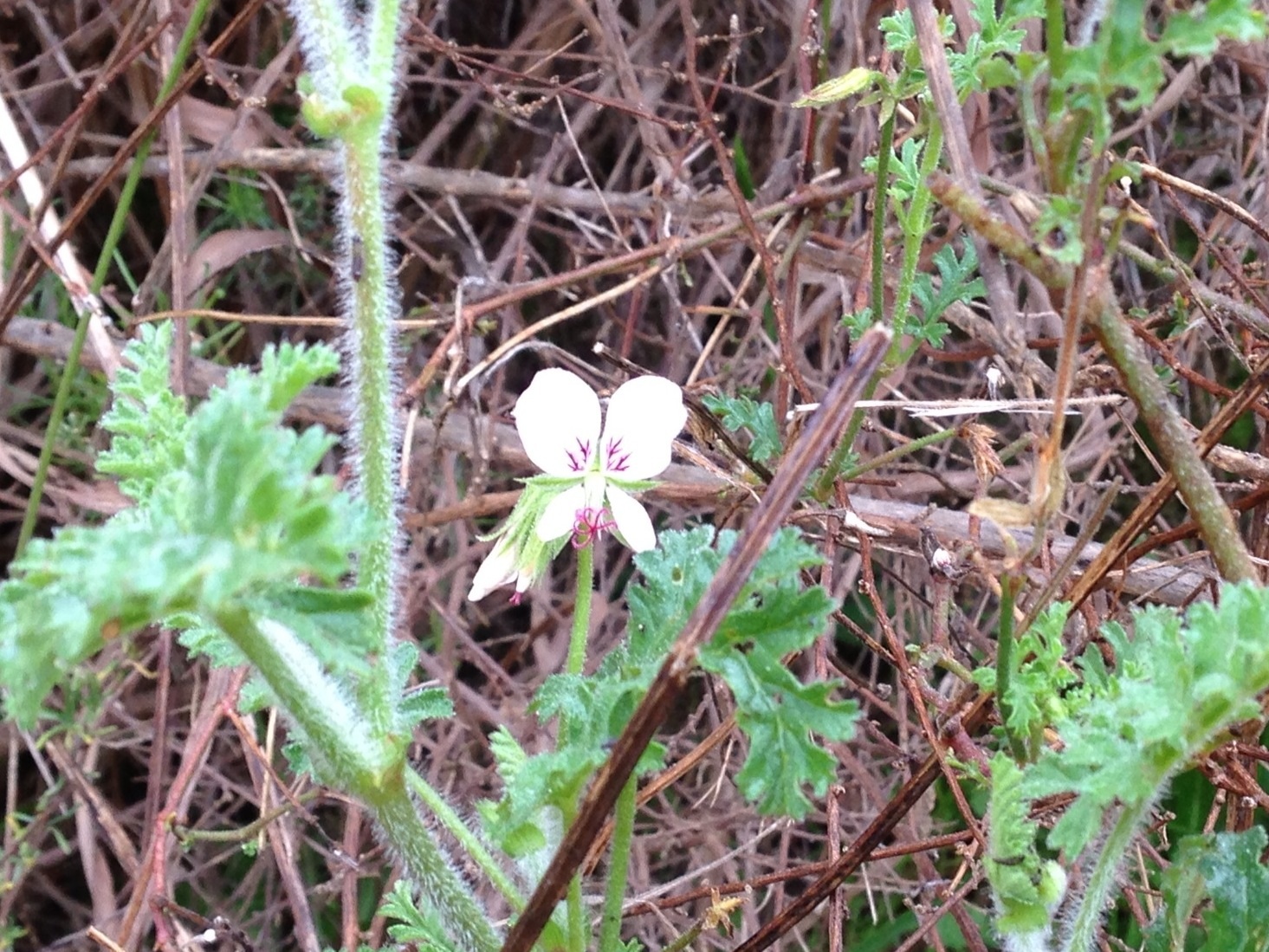
Pelargoniums and Babinias are also everywhere, the latter flowering decorously in groups under trees and the former peeping out from thick undergrowth along the roads.
 image
image
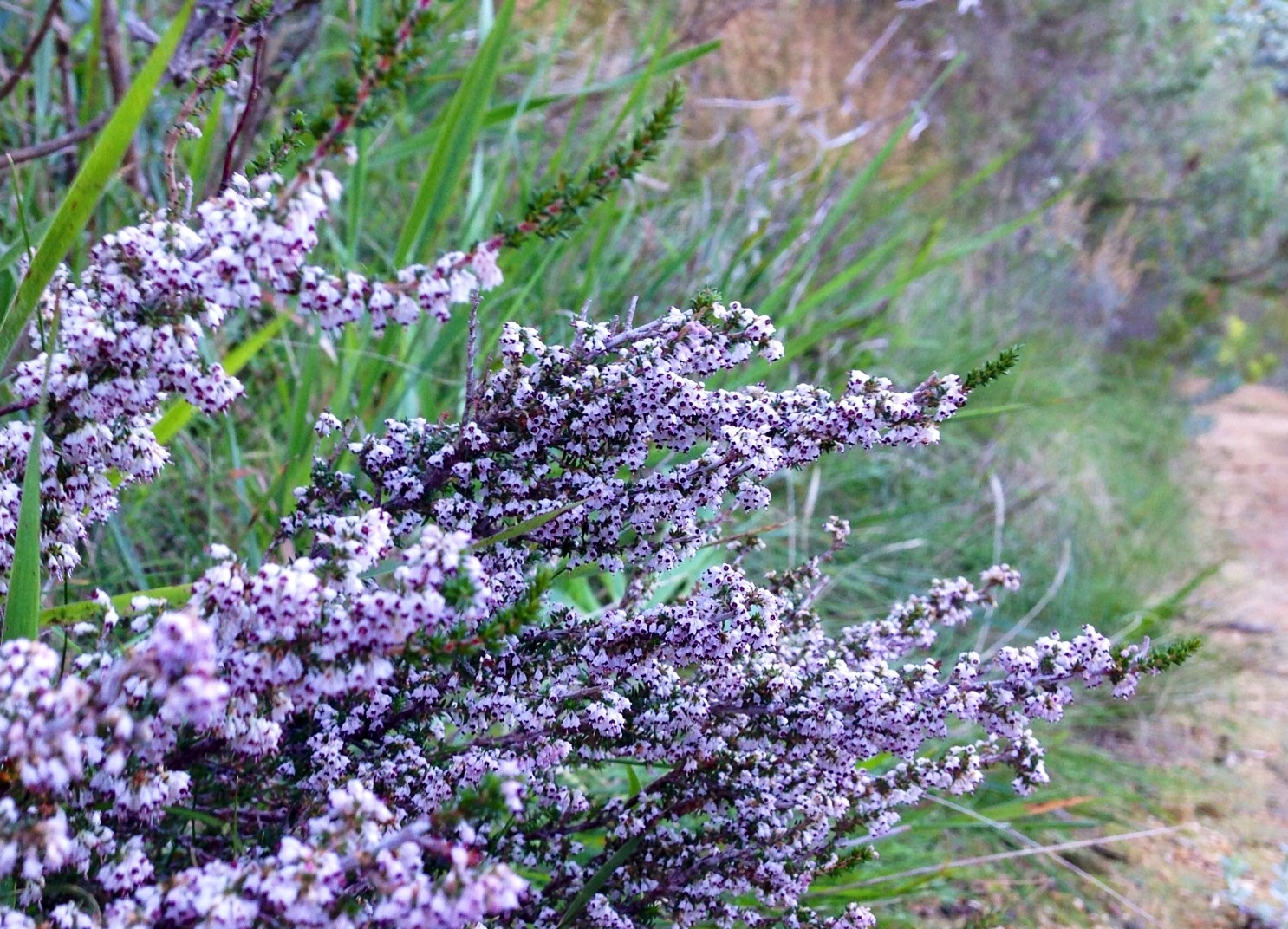
As we climbed up the mountain we saw this Erica with tiny white bells on it, despite my best efforts you can only just see them in this picture.  The same variety seems to come with pink bells as well and sometimes they grow side by side
Erica with tiny white bell-like flowers

Erica with tiny white bell-like flowers

I can’t find this shrub with a yellow flower in the book so its gone to the unknown album and I’m hoping to get to Kirstenbosch Botannical Gardens this week or next to get some help with these and possibly some additional reference books in preparation for the continued spring explosion.
Unidentified yellow flowering fynbos shrub

Unidentified yellow flowering fynbos shrub

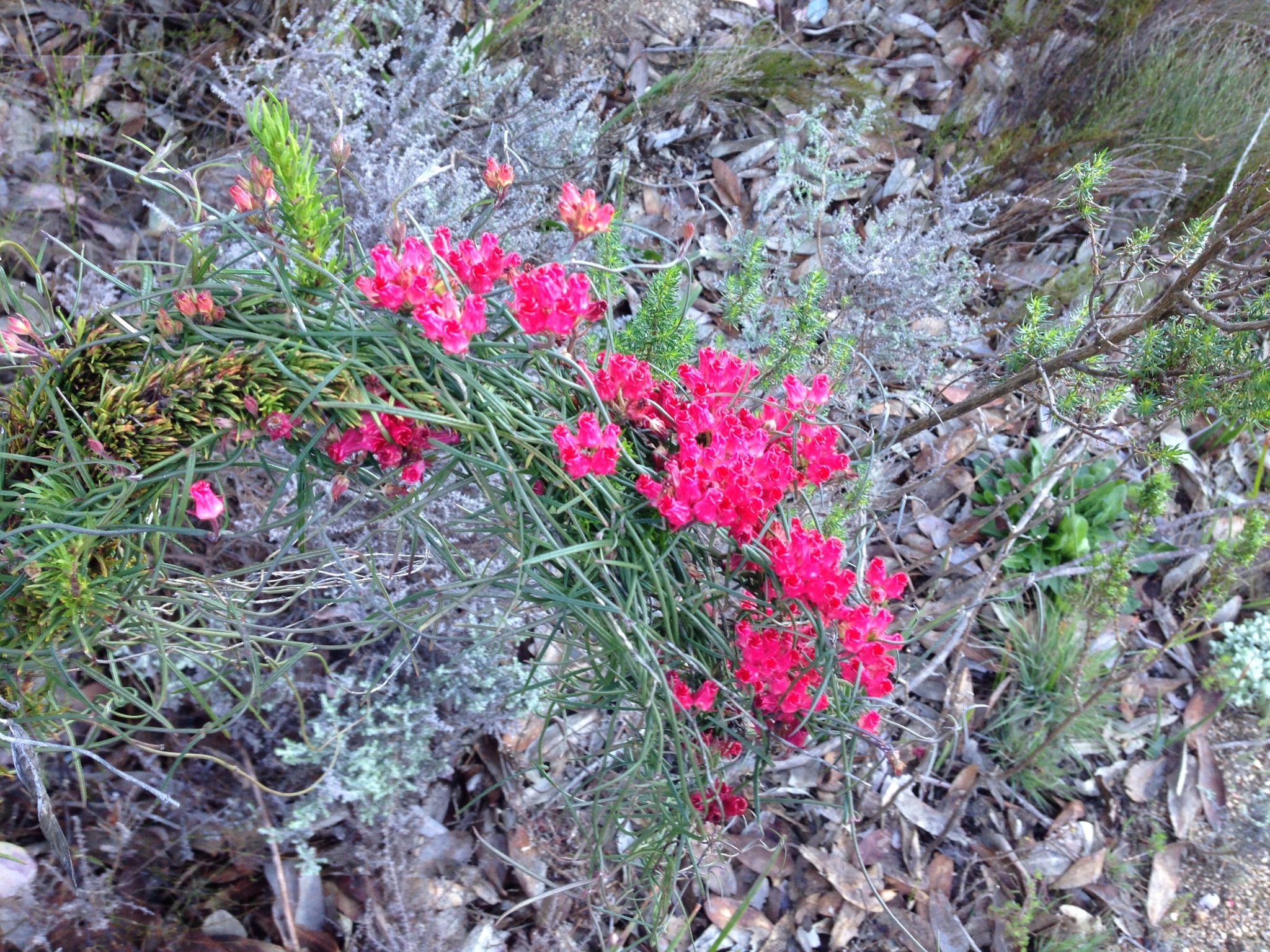
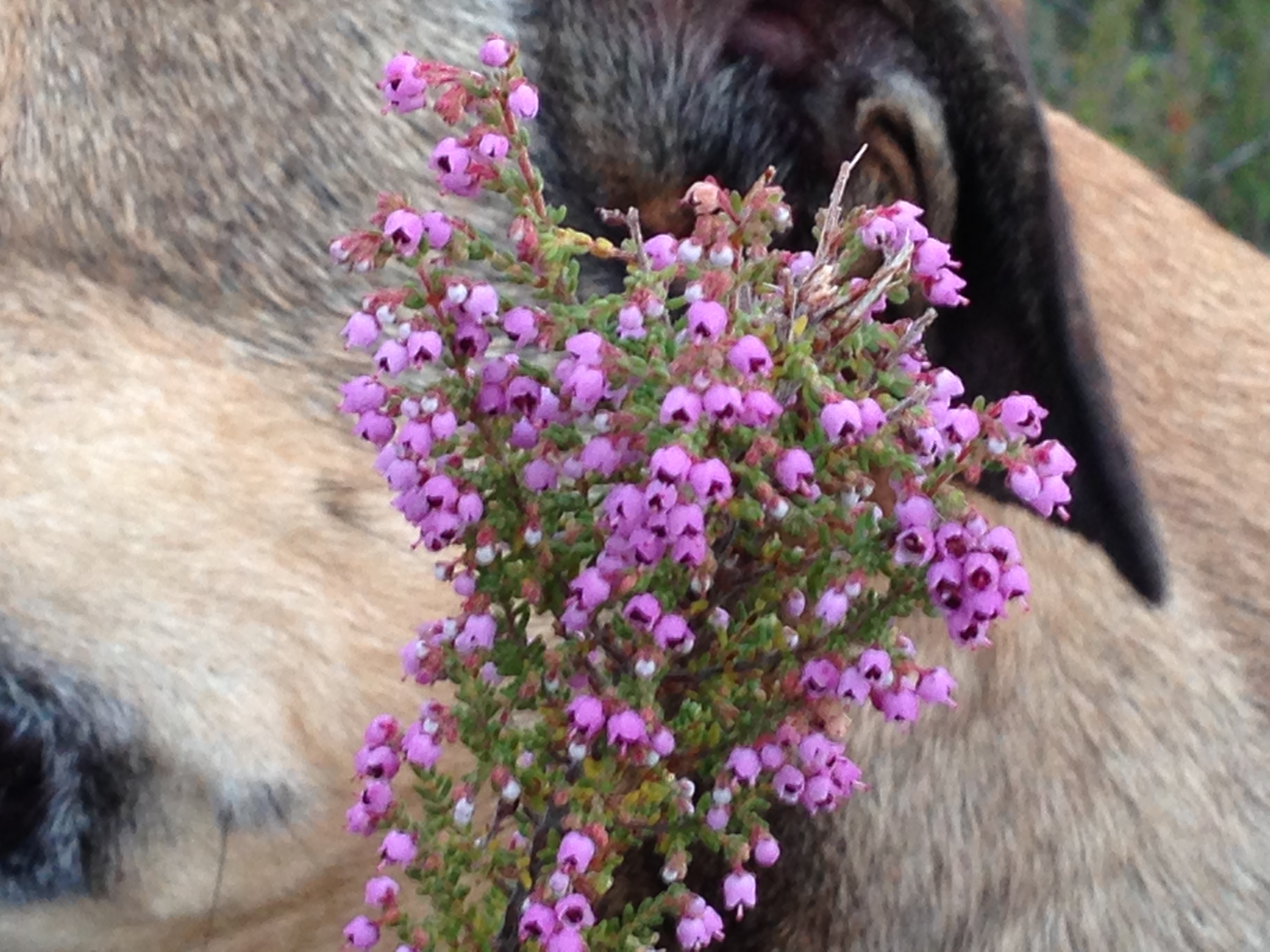
There is no difficulty recognising the Microloma tenuifolium, it’s tiny bright coral flowers jump out of the tangled thickets at you.  Normally you see them like this one curling and creeping around a wild helichrysum.
Microloma tenuifolia

Microloma tenuifolia

But yesterday we saw this unusual sight, the Microloma has gone and wound itself round and round this bit of bush and is flowering as a massive head of colour.  Amazing!
Microloma tenuiffolia

Microloma tenuiffolia

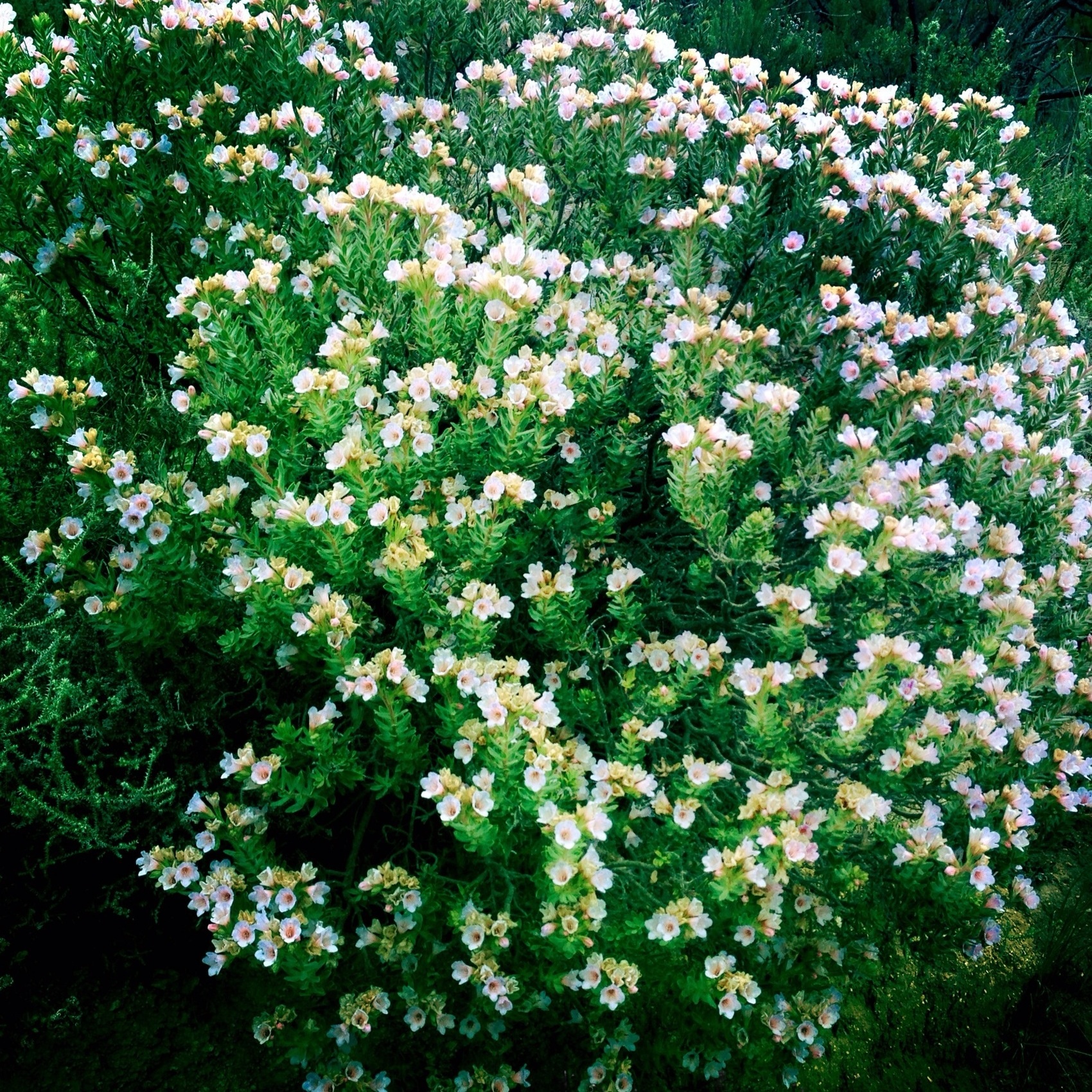
The Lobostemum continues to blossom all over the mountain, often they are pink, or pinky-blue.  In this particular area at the top of the farm they are all blue.
Lebostemum with blue flowers

Lebostemum with blue flowers

Finally as we ran down the mountain we came across this magnificent Lucodendrum.  Later in the spring these yellow flowers will turn the most beautiful shade of coral.  There are masses of them and we look forward to their arrival at the height of spring.
Leucodendrum

Leucodendrum

Babinia Fragrens, the Harbinger of Spring

I got home on Tuesday morning and of course my first thought was to get up on the mountain and see new flowers though I didn’t achieve it until late in the day.

Every year as we reach the end of July, the coldest and wettest six weeks of the Cape year, a flower emerges that is for me the harbinger of spring.  Like hearing the first cuckoo, I always note where and when I see the first Babinia fragrens.  These crocus-like flowers cover the farm, they are everywhere – and the bulbs are particularly loved by porcupines.  Last year I was running up a steep hill on the farm when I came across a 300 metre stretch of road where a happy porcupine had wandered up and dug up every single plant to munch on the bulbs.  There are plenty to share and it was fun to think of him happily crunching not far from the house in the night as we slept.

Babinia Fragens, the first of the year

Babinia Fragens, the first of the year

Next up was this delicate white flower.  I didn’t get a great picture of it – I think it’s a Cape Snowflake, to give it it’s common name, but will pop it into the research folder and see if we can get a better shot.  These are quite common so I’m sure we’ll see more.

Image

Opposite the Cape Snowflake, the water was tumbling in huge volumes down the waterfall in the evening sunlight – there’s been a lot of rain while I’ve been away.

Image

One of the other wonderful sights of late winter and early spring is the Lebostemum.  Another very common flowering shrub which flowers now and for several months.  I have tried several times to transplant these to the garden, but they have a long fragile tap root and even very young ones invariably die.  They are magnificent shrubs and flower in blue, pink or anything inbetween.

Lobostemon fructicosus

Lobostemon fructicosus

We wanted a good view of the sunset and went to the highest point of the farm on a road we don’t often run.  This wonderful combination of Protea nerifolia and Protea nitida blocked our route at one point and forced a detour.

Protea nerifolia and Protea nitida in the evening light

Protea nerifolia and Protea nitida in the evening light

On the detour we came across this stunning Erica with little pink bell-like flowers in full bloom.  Pink ericas with bell-like or urn-like flowers are like yellow daisies, there are an aweful lot of them and they are hard to tell apart.  Thanks due to Jemima Chew who stood behind them, making them much easier to photograph!

One of the many ericas that flowers with a tiny pink bell-like flower

One of the many ericas that flowers with a tiny pink bell-like flower

The Cape Sugarbirds are in full mating feathers at the moment and they are having a lovely time in areas where the proteas are thickest.  Their tails are so long they can hardly fly – that’s the males of course, the females look drab and take their pick.  I haven’t yet managed to get a really good shot of one but hopefully it’s a matter of time.

I don’t believe we have posted and recorded this protea which is now in full flower.

Protea - indentification will be confirmed in a further posting

Protea – indentification will be confirmed in a further posting

Finally – another sunset.  As dusk gathers and the sun sets you can see the mist from the Berg River gathering on the valley floor.  No wind, the light is stunning and in the far distance table mountain and the whole of Cape Town is covered by a dark wall of cloud.  The rain is coming.

2013-07-24 17.59.37

Proteas, Montinea and another glorious sunset

Most of this Sunday it drizzled, a slow cold Irish-type drizzle, the kind of soft grey day we don’t often get here.  We huddled up in the study before a blazing fire and watched Andy Murray win the tennis at Wimbledon.  He wrapped it up pretty quickly, and by the time he’d finished it wasn’t yet dark and I felt in need of exercise after a cold damp weekend, so I put on some running shoes, to the delight of the dogs, and set off up into the mountain with pounding paws and wagging tails leading the way.

I hesitate to say we see something new every single time we go out, but it does feel like it.  On Wednesday we came across this Montinia caryophyllacea by the side of the road as we ran up the mountain.  I’d taken a picture of it, but these white flowers are hard to photograph when there isn’t enough light.  Today was a bit better, though I still need to go up in full daylight to get a better picture.  There seems quite a lot of it coming into flower so I’m sure we’ll find more in better light.
Montinia caryophyllacea

Montinia caryophyllacea

That part of the mountain is covered with Muraltia heisteria – it’s not supposed to be flowering at this time of year but this does seem a perfect match.  They are lovely, the colours vibrant in the evening light.  We’ve seen these before; their vibrant colour means they deserve the occasional picture as they are long flowering and dominate the winter months.
Muraltia heisteria

Muraltia heisteria

I’m learning to question everything, and although our Protea nerifolia does come in cream as well as pink and this is probably nerifolia (looking at the leaves) we need a bit more research to be sure.  It’s a lovely flower and there are hundreds of these shrubs flowering on the farm at the moment.  The house is filled with vases full of proteas, leucadendrons and oddly enough the most wonderful camelias which thrive in the acid sandstone and decomposing granite (and lots of good compost) of the garden here and flower all winter long.

Protea (nerifolia?)

Protea (nerifolia?)

Quite quickly it was far too dark to take good pictures of flowers and although I saw the first of one of our favourite late winter shrubs, we will have to wait another day for a photo (that’s today’s new flower).  As the sun dropped behind the Paarderberg mountain, we trotted quietly down the montain, remembering to turn around from time to time to see the glow reflected in pink and orange on the moutains behind.

image
There is something emotional about a sunset.  This evening the air was completely still, quite rare here in the montains.  After a rainy day, the sky cleared and the sun broke through, flooding the mountains with colour.  The river and dams in the valley reflected the deepening sky.  The smell after the rain is clean and scented with flowers and rain, washed and pure and you want to breathe deeply, happily.  We were so glad to be up there this evening, thanks to Andy who polished off his victory  in time for us to catch this glorious sunset on the night of his even more glorious victory.
imageimageimage

Sunsets and Pelargonium

This morning’s surprise is this lovely Pelargonium. When I’ve had a series of new sightings I’m not necessarily expecting something new every time I go up on the mountain and I’m delighted when we (the dogs and I) come across some enchanting flower waving its petals at us in the dawn light.  This is another of the mysterious Pelargoniums – I was so pleased to see this one, and thought we must be able to identify it, it’s so clear and distinctive.  Well, I must tell you it is not in the book and a visit to Kirstenbosch with the hopes of a specialised book on Pelargoniums (or is it Perlargonia?) is on the cards very soon.  This doesn’t appear to be in the rather good Fynbos Field Guide where 24, presumably of the most common, of the 150 fynbos subspieces occur.  This farm is a source of lots of different sub-spieces of Pelargonium and Ericas.  I will catalogue them and maybe work through them over time…

Image

The farm sits on an East West Axis, and from here, 70 km away through the clear air, we see Table Mountain, behind which the sun sets in the spring and autumn months. Some nights, at any time of the year, the sun floods the mountains behind us with pink light. It’s not every night, in fact it’s not common at all. Last night I was working away at my desk when an instinct brought me out to look at the light – sure enough, pink mountains. I grabbed the iphone, ran to the dam wall, pursued by delighted dogs, and took this photo. We’ll see have better and pinker mountains to come, but this is the first I’ve captured for the blog. It’s about the flowers, but it’s not all about the flowers.

Image

The Rooi Afrikaner or Gladiolus watsonius – a technical blog

For at least four weeks I’ve been frustrated by this glorious red gladiolus.

Gladiolus watsonius

Gladiolus watsonius

The species is easy to identify, the subspecies has been confusing; our first sighting was at the end of May and the book says it doesn’t flower until August.  Even the more detailed encyclopedia says that it flowers from July to September. Furthermore it grows in clay and granite slopes in renosterveld. We have granite and sandstone slopes which is a subtle but important difference when it comes to fynbos. Over the weekend I got more serious and looked more closely – the only possible suspect was Gladiolus priorii. But Gladiolus priorii has a yellow throat and although I didn’t have a photo of the throat, I was pretty sure it’s not yellow. I couldn’t really bring myself to believe that we have a previously unidentified Gladiolus on the far, tempting though it might be.

Today I picked one.

It had fallen over a bit on the bank above the drive, it’s a bit tatty and it was time to take this whole process of identification a bit more seriously. And I can reveal that Gladiolus watsonius has one particular distinction. The lowermost leaf is narrow and H shaped in cross-section. No I didn’t get the scalpel out – I’m not that much of a geek yet. It’s pretty obvious just looking at it.

The lowermost leaf of Gladiolus watsonius

The lowermost leaf of Gladiolus watsonius

We have a positive identification – it may be the wrong time of year, it may not be quite the right soil-type but there is no doubt: Gladiolus watsonius likes Du Toitskloof and it likes our farm. It flowers when it chooses to and it’s not going to change, so the sages who write the books may need to change a word or two.

Gladiolus watsonius

Gladiolus watsonius

Magnificent Proteas, more water and some new finds

There is a lot to share so today’s blog is all flowers and less about the run.
Up until now I’ve been going by the flowering dates shown in my reference book but I’m now not so sure.  I know from the records I’ve kept over the years that the different weather can mean flowering even in the garden here can vary by a month or six weeks from year to year, so why not the fynbos.
Stachys aethiopica, for instance, is supposed to flower in August and September, in the early spring.  But we saw one in May and there are small groups of them in different areas at the moment.  They are unmistakeable with their flower reminiscent of a pelargonium and distinctive mint-like leaves.  Indeed they are a member of lamiaceae, the mint family
Stachys aethiopica

Stachys aethiopica

The red gladiolus has cropped up in a few places.  There was one by the road when I left in early May that was easily photographed.  The latest two are high on the bank above the drive, but worth sharing even if the photo isn’t great.  The nearest possibility is gladiolus priorii, though in that case the flowers should be dull red and these are a vibrant scarlet.  It should also have a distinctive and easily visible yellow throat and I can see no evidence of that in our flower. I will look again as the size, shape and flowering season fit.  I need to look a little closer if one appears in a more accessible area.  If not, we’ll have to wait until next year to be sure.
Gladiolus - unamed

Gladiolus – unamed

The dogs and I had a wonderful run today and we visited the weir to see how much water is flowing.  This is always a lovely place; the whitish trunks of the Ilex Mitis or Cape Holly, are magnificent and the permanent water flow makes it a favourite of the dogs.
An ancient Ilex Mitis with its feet in a permanent stream

An ancient Ilex Mitis with its feet in a permanent stream

Jemima Chew enjoying the water in the weir

Jemima Chew enjoying the water in the weir

While I’ve been away the magnificent protea trees have come into flower.  They are tall and have spikey white flowers and silver leaves.  I believe they are Protea nitida.
Protea - probably nitida

Protea – probably nitida

Near them stands this delicate pink protea.  It is probably a nerifolia, though the flowers are barely bearded and a paler pink than most of the nerifolio on this farm.
Protea nerifolia - a very pale pink specimen

Protea nerifolia – a very pale pink specimen

Flowers found in the forest that abutts the farm are included in our blogs as they are on our regular running route.  We’ve seen Ursinia paelacea before and there is lots of it along the forest roads.
Urisinia palaecea

Urisinia palaecea

Not everything is easily identified. This little clump of yellow daisy-like flowers is lovely and quite distinctive but I can find no record of them. Suggestions welcome.

A mystery flower - yellow daisy-like flowers are the hardest to identify

A mystery flower – yellow daisy-like flowers are the hardest to identify


As we ran into the forest the path is lined with Leucadendron salignum.  There are hundreds of these all over the farm.  At this time of year they glow in the dark, another plant that seems to absorb the sunlight and render it back to us on the darker days.  Today was bright and they gleam in the early winter sun.


Leudadendron gleaming in the winter sunlight

Leudadendron gleaming in the winter sunlight

« Older Entries Recent Entries »